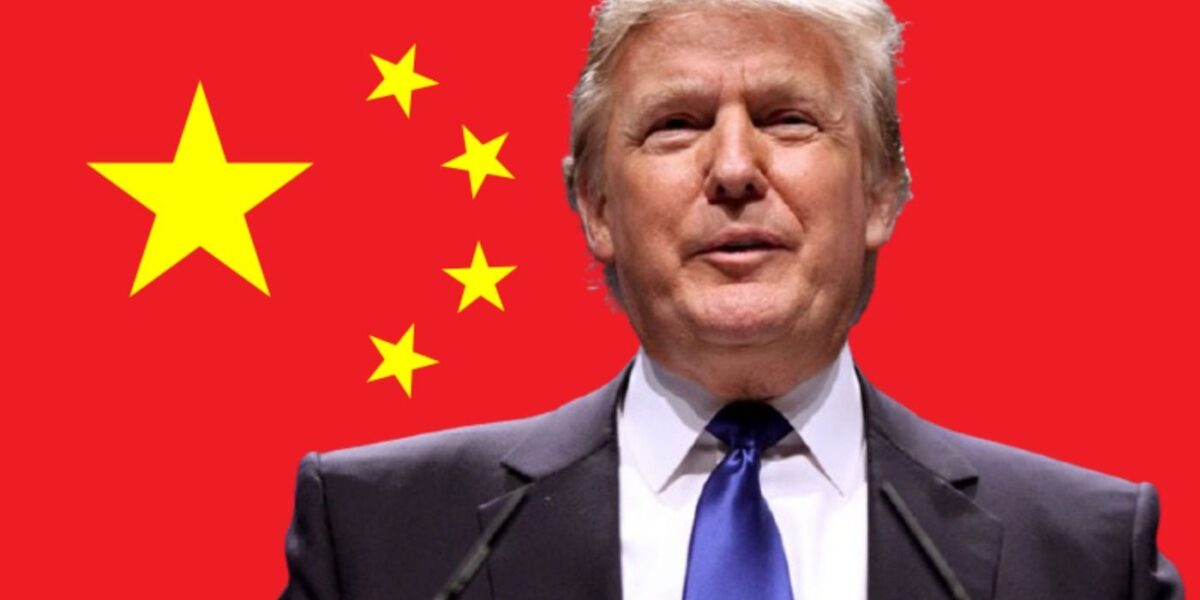
Donald Trump & Tariffs Are Killing the Hollywood Blockbuster
Apr 19, 2025
America’s biggest trade surplus is technically cultural; we export culture, rather than import it. For instance, Hollywood films do well across the world, but even the best subtitled international films never perform anywhere near the level of America’s homegrown productions. As a result of this, billions of dollars come into the United States, and millions of people get jobs. China, the world’s second-largest movie market, has only become more economically significant for America and Hollywood over the years. That’s about to change, and the consequences could fundamentally alter America’s cinematic industrial complex. Goodie!
It was all but inevitable that the United States and the People’s Republic of China would enter into an economic Cold War of sorts; that was the collision course America steered into when neoliberals mandated globalized free trade and chose cheap imported goods over more expensive domestic manufacturing. The situation could have been prepared for or handled gracefully, but U.S. President Donald Trump has a bad case of TDS (Tariff Derangement Syndrome); blame it on McKinley, or Peter Navarro, or dementia, or anything else, but this is the world we live in now, with 145% tariffs placed on China (and their 125% tariffs on America).
While Hollywood is hardly the most important victim of this trade war (“I think I’ve heard of worse things,” said Trump when asked about the film industry), its cultural effect on the world is unmistakable and significant. Considering the problems the film industry has been facing, from the effects of COVID-19 and the strikes to streaming and AI, the loss of the Chinese market may be the final straw. And boy, am I here for it.
How China Became a Hollywood Importer
First, how did we get here? How did China, the so-called “Communist enemy” of America, become so important for Hollywood? Well, they have a sh*t ton of audience members. Duh. First Blood (1982) was the first Hollywood blockbuster to make its way to China; it sold 76 million tickets, with 63% of the film’s profits ultimately being from the international market. It kind of makes sense when you view it from a CCP perspective, especially with the kind of synopsis The Christian Science Monitor provided:
“Oppressive capitalist authorities (represented by US Army troops and officers, state police, and a sheriff wearing a US-flag shoulder patch), turn on a brave, although somewhat distraught, citizen who has faithfully served his country in the Vietnam War. The veteran soldier is driven to resist the arbitrary brutality of his own government and leads his pursuers through an action fantasy that both glorifies violence and affirms one man’s right to rebel.”
Related
China and the MCU’s Long Complicated History
The MCU has benefited greatly from China’s box office, but with censorship issues and all Phase 4 movies denied release, what does the future hold?
There would be a lull in Hollywood exports to China until 1993’s The Fugitive, which was another big success. Due to issues of trade, culture, and politics, China then only allowed 20 non-Chinese films to be distributed in the country each year, and they had low distribution fees (what they pay the American company, be it Warner Bros. or Disney). That all changed in 2012 when none other than Joe Biden struck a deal with President Xi Jinping and the China Film Group Corporation. According to The Wrap, the deal added an extra 14 films that China would import and increased the distribution fee they would pay (from 13% to 25%).
At the time, the deal was largely pushed for by Disney CEO Bob Iger, DreamWorks Animation chief Jeffrey Katzenberg, and Chris Dodd, chairman of the Motion Picture Association of America. This makes sense; Disney desperately wanted to flood China’s market, having bought the Star Wars franchise that year (not to mention, of course, their lucrative Marvel and Pixar movies). It’s hard to even fathom how much money the movie studios have made since this deal (especially when they edit their films to specifically appease Chinese authorities). Things were going very well (Avengers: Infinity War grossed $200 million in China in its opening weekend alone), but all the while, China was building its own studio and distribution system in exponential ways.
Related: Top Gun 2 Controversy Ignites Over Missing Flags on Maverick’s Jacket
The People’s Republic of China No Longer Needs Hollywood or America
China had roughly 8,000 cinema screens in 2012; by 2024, that number had shot to 90,000. They needed the theaters to accommodate the increasing number and popularity of Chinese-made productions. From 2002 to 2012, only two Chinese films reached number one at the box office for the year; from 2013 to 2025, eight Chinese films were number one. Chinese studios are making bigger and better films while Chinese audiences are becoming less interested in American productions.
This isn’t just the trajectory for the Chinese box office, but for China itself. The country has become increasingly self-sufficient, with much of the world relying on them for their goods. China can easily withstand tariffs, because they import much less than America. Meanwhile, America simply doesn’t have the infrastructure and labor force to create things like iPhones and broadcasting equipment. Just as they don’t need American films anymore, they also don’t need American products, and so the tariffs hurt Americans more than the Chinese.
Related
10 of the Best Chinese Action Movies of All Time
Enjoy the best action films produced in China. See how different they are from their American counterparts!
China’s National Film Administration released this statement in response to questions about whether the US tariffs on China will affect US film imports:
“The US Government’s erroneous act of indiscriminately imposing tariffs on China is bound to further reduce the domestic audience’s favorability of US films. We will follow the rules of the market, respect the choice of audiences, and moderately reduce the number of American film imports. China is the world’s second-largest film market, and we have always adhered to a high level of opening up to the outside world, and will introduce excellent films from more countries in the world to meet market demand.”
Related
10 Best Chinese Sci-Fi Movies to Watch Next
From The Wandering Earth series to Shanghai Fortress, these are some of the best Chinese sci-fi movies to watch next.
As the tariffs continue to target other countries, and as China creates stronger alliances with them, it’s safe to say that Hollywood may be box office-blocked by more countries. It’s easy to see Canada, the European Union, Latin America, and other areas creating quotas or laws regarding American movies, as well. Additionally, many of the physical materials that are required to create films are being subjected to tariffs and will become more expensive. Considering the great importance of the international box office for Hollywood, the results would be catastrophic.
How China Will Change Hollywood for the Better
So, why do I think this is a good thing? First, I don’t want to see anyone lose their jobs or get paid less, even if that is likely the result of America’s new economic policy (for now). The film industry employs roughly 2.3 million people, according to the Motion Picture Association, and it’s projected that U.S. studios will make more than $23.5 billion in 2025. So while, like Trump, we may flippantly say, “I think I’ve heard of worse things,” there is nonetheless a tangible negative effect on America. On top of that, other countries will begin to experience an influx of other cultures via their films, reducing the proliferation of American cultural norms around the world.
That is probably a good thing in and of itself, but there’s another silver lining regarding the financial difficulties Hollywood is about to face. The grotesque inflation of Hollywood budgets over the past two decades has resulted in a studio system and cinematic culture which is dull, homogenous, and predictable in the most corporate of ways. Studios mainly bank on proven “intellectual property” which has an existing audience, resulting in an endless number of cookie-cutter superhero movies and Star Wars titles, 10 Fast & Furious flicks, and constant remakes and reboots.
Related
China Confirms Devastating News About Hollywood Movies Amid Donald Trump Trade War
The China Film Administration (CFA) has now released a statement.
The upcoming Mission: Impossible – The Final Reckoning has a reported budget of $400 million. As a consequence of these kinds of budgets, films like this need to make an exorbitant amount of money. To do so, the marketing budget for different studios is swallowed nearly whole by these familiar titles, and the available screens in movie theaters are occupied by them, even if the cost of just one big-budget movie could be spent on 20 smaller, better films. For instance, in 2024, the film company A24 literally made 16 movies for the same amount of money it took to produce the Dwayne Johnson holiday movie, Red One (roughly $250 million).
Burning Down the House
Warner Bros.
Hopefully, what the Trump administration and China’s response will do to Hollywood is effectively shrink production budgets. This is an exciting prospect. Instead of creating blandly universal, bloated, assembly line-style films that can make tons of money in China, American studios will have to spend less on each film, and will no longer have to take China into consideration. Smaller movies, even niche ones, can be made, and even more of them; more jobs could become available if film studios begin making 20 pictures with $20 million budgets instead of one with a $400 million budget.
Related
‘The Electric State’ Burns $320 Million on Bad Filmmaking
It’s like watching $320 million burn over two interminable hours.
The budget for The Godfather was $6 million; the budget for the original Star Wars was $11 million, more than the $10.5 million budget of 2001: A Space Odyssey, and those were expensive movies for their time. The first season of The Lord of the Rings: The Rings of Power supposedly cost $58 million an episode; Stranger Things began costing $30 million an episode in its fourth season. On the other hand, The Twilight Zone was getting into trouble with the network for costing about $65,000 per episode (roughly $710,000, adjusted for inflation). Even The Office and The X-Files cost between one and two million dollars an episode in their prime.
The point is, great art doesn’t need great amounts of money; in fact, mo’ money, ‘mo problems. The higher the budget, the more intrusive the production companies, and the less inventive, exciting, and unique the title becomes. We’ve all heard nightmare stories from directors and actors about studio executives coming in and ruining a film. With less to lose, the creatives have more room, and my money is always on the filmmakers, not the producers.
So bring it on, China, bring it on, Trump. Sometimes the only way out is through, and suffering is needed to transform and improve. The landscape needs a controlled burn from time to time, and I’m all for Hollywood going up in flames if smaller, better films emerge from its ashes. The next few years will be fascinating for the film industry, and despite living in the worst timeline, I still have a sliver of hope.
Publisher: Source link





A Flame The Colour of Air – Film Threat
SLAMDANCE FILM FESTIVAL 2026 REVIEW! You will shimmer and shake, like you’re riding the snake while being wowed by the dynamite animated short A Flame The Colour of Air, written and directed by talented Canadian filmmaker Emily Pelstring. Jessica Mensch’s…
Mar 3, 2026

‘9-1-1’ Can’t Decide What It Wants To Focus On in a Lackluster Season 9
Editor's Note: The following contains spoilers for 9-1-1 Season 9, Episode 11.I was hoping that 9-1-1 would take advantage of its month-long hiatus and course-correct after its most recent episode, but while this week is certainly an improvement from last…
Mar 3, 2026
Good Luck, Have Fun, Don’t Die Review
Mercy was a film about AI that AI could’ve written. Good Luck, Have Fun, Don’t Die also tackles AI, although it could only come from the mind of Gore Verbinski. As he did with his Pirates of the Caribbean trilogy…
Mar 1, 2026
Investigative Screenplay Review: Suspenseful but Weak Antagonist
Vadh 2 (2026): When Murder Is Justified — Starring Sanjay Mishra as prison guard Shambhunath Mishra When evil tries to take control, its destruction becomes necessary. With this theme, Bollywood brings you a spiritual sequel to its 2022 crime-thriller “Vadh”.…
Mar 1, 2026