’Dying for Sex’ Creators Discuss Depicting BDSM in the Show
Apr 8, 2025
Summary
Dying for Sex’s creators recall the “magical” chemistry read between Michelle Williams and Jenny Slate.
The pair discusses how conversations around sex have changed and how they incorporated that into the show.
The duo breaks down casting Robby Hoffman and exploring BDSM in the series.
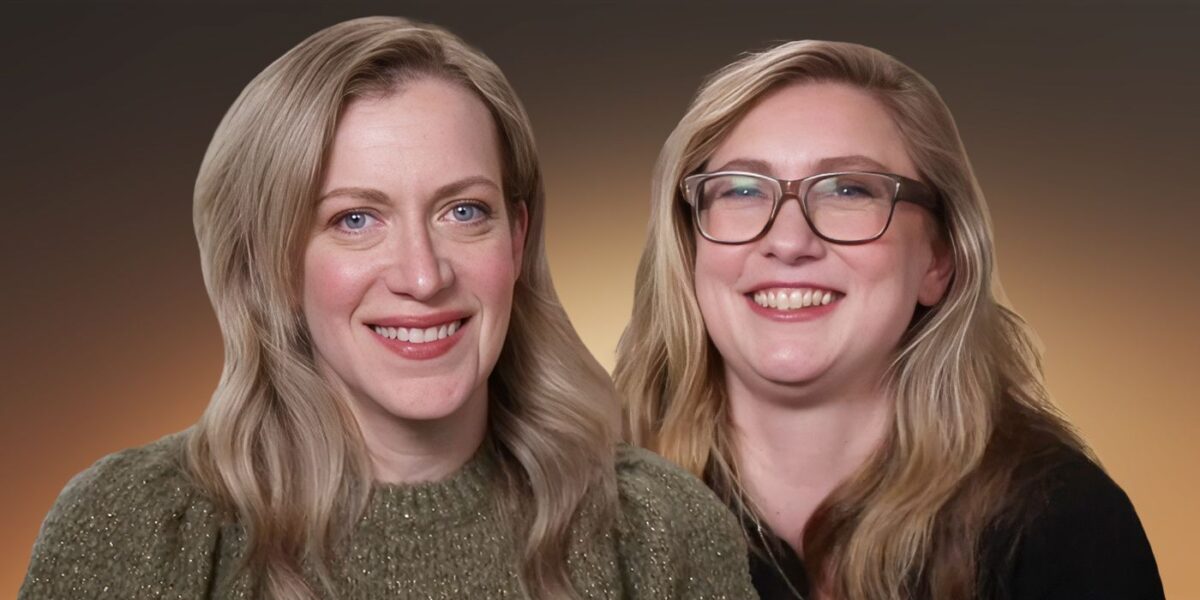
Having collaborated on shows like New Girl and Single Parents and individually earned credits on acclaimed series like The Dropout and Only Murders in the Building, Liz Meriwether and Kim Rosenstock are two of the most interesting voices in television today, and I mean that in the most literal sense. Not only do the two excel at crafting fresh, interesting plots and multi-dimensional character dynamics, but their dialogue is some of the very best in the business, with Dying for Sex no exception. Finding the perfect balance between sharp, laugh-out-loud comedy and devastating emotional beats, Dying for Sex will have you laughing countless laughs and crying just as many tears.
The series follows a woman named Molly (Michelle Williams), who decides to divorce her husband of a decade and a half (Jay Duplass) after being diagnosed with Stage IV cancer to discover what truly brings her pleasure. On her journey of sexual and self-discovery, she encounters an array of romantic partners — including an enemies-to-lovers dynamic with a man in her building known simply as Neighbor Guy (Rob Delaney) — and is supported by people like her progressive palliative care counselor, Sonya (Esco Jouléy), and best friend, Nikki (Jenny Slate). The show tackles everything from child molestation to BDSM to death in a refreshingly nuanced — and often surprisingly hilarious — way.
Collider got the chance to speak to Meriwether and Rosenstock about casting Williams and Slate, addressing the fact that women are often not listened to by medical professionals through Sonya, that wild but beautiful scene with Robby Hoffman, and more.
‘Dying for Sex’s Creators Recall Casting Michelle Williams and Jenny Slate
Image via FX
COLLIDER: First of all, congratulations on the show — it blew me away on so many levels. I will say, the dialogue, in particular, really stood out to me. Can you talk about the work that you did to both establish the tone of the show but also just the cadence and the rhythms of these characters’ voices and the way they interact with each other?
LIZ MERIWETHER: That was something that, in the podcast, just really grabbed us from the beginning — the way that these two women interact and talk.
KIM ROSENSTOCK: They had like shorthand. They’re not trying to handhold you — you have to catch up with them to figure out what they’re talking about, and you’re like a fly on the wall.
MERIWETHER: They challenge each other, but they do it with so much love that they’re just constantly sort of questioning each other’s reactions to things but then immediately laughing about it. It was there in the podcast, and I think we knew we wanted that feeling for the audience to just feel you’re friends with them, too.
ROSENSTOCK: You want to hang out with them, be with them.
MERIWETHER: Yeah, because it is such difficult material, so it felt like — if you didn’t immediately love those women and kind of want to go on that ride — it was gonna be too hard to go on that ride. It was so fun to write, and then I think Jenny and Michelle just brought this incredible chemistry and just sort of filled in the gaps. I think they both have really close female friends as well, so they kind of really knew what that felt like — those rhythms in the way that old friends talk and the people who kind of know you a little too well. Those conversations. [Laughs]
ROSENSTOCK: You cut the bullshit and just get to the point because they’re not gonna let you do your normal thing.
MERIWETHER: I feel like those looks — sometimes it’s just a look like, “Are you really doing this again?” That was what we wanted to capture.
ROSENSTOCK: The show is a love story between these two friends, and I think you also want to know — right in that pilot — why she’s going to leave her husband and go be with her best friend on this journey. And the moment you hear them start talking, you understand why this is different from her other relationships. This is not how she talks to her husband. She gets to be the version of herself that she loves the most with her best friend.
Yeah, absolutely. That leads really well into my next question because Michelle and Jenny do have this undeniable chemistry. I’m curious what the casting process for them was like. Was there a chemistry read involved?
MERIWETHER: Yeah, there was. The wild thing was that they had never worked together before — and they knew each other, I think, indirectly — but you really feel that they’re friends. And that was a huge issue for us going in — it’s hard, on television, to believe best friendship sometimes.
ROSENSTOCK: We don’t have that much time. You have to get it so quickly.
MERIWETHER: You’re just jumping in. You’re on set, and suddenly, you’re playing friends that have known each other for 20 years. So yeah, Jenny read with Michelle, which was that magical casting moment. Kim and I were in the back of the room and we were both just so moved.
ROSENSTOCK: It was like, “Oh, that’s it.” It was also that moment where you’re like, “Oh, it works.” We had this hypothesis, which is always what the scripts are until you have actors, and then you’re like, “Oh, okay — proof this is gonna work, but we have to have these two people.”
MERIWETHER: Jenny just has this amazing quality of breaking your heart and making you laugh at the same time, and she was just doing that in the room, and it was beautiful. And Michelle, obviously. When we were going into the production of this show, FX was pretty clear with us — they were like, “We have to find an actress who can do this part because this is like…” [Laughs]
ROSENSTOCK: “We’ll wait until we have…”
MERIWETHER: This is the part — this is the show: this actress kind of taking it on and doing it and being fearless and getting it. Michelle was all of those things and more, and just from the beginning — like our very first conversation — she had listened to the podcast, she had listened to it multiple times. Molly’s voice was just with her. It was under her skin. Later, when we were talking to her about how she decided to do it, she said that she just couldn’t get it out of her mind. She couldn’t get Molly’s story out of her mind. And just from that first conversation, I think we both understood that she got it. She got what the podcast was about, what Molly had been trying to do, what we were trying to do. That was that amazing feeling of, “We can do this. We can tell this story. It’s possible, and she’s gonna be the person for us.” It was really an amazing meeting.
ROSENSTOCK: An amazing meeting. None of the questions that she asked came from a place of fear. There was no conversation about nudity. We had those later on, but initially, it was just about the character. It was just about excitement. None of it was about…
MERIWETHER: What she won’t do.
ROSENSTOCK: “Here’s what I’m worried about. Here’s what I’m scared about.” Which, as I’m thinking about it now, is so amazing, really. Because there are so many things that are scary about playing this role and I would have asked if I were playing her.
MERIWETHER: And so much like Molly. Because Molly went into things with that sort of openness and excitement and this, again, bravery.
ROSENSTOCK: And sense of adventure, really.
MERIWETHER: Sense of adventure, yeah. I can’t say enough about our cast and those two women. Everyone is just incredible.
Even the supporting characters are.
MERIWETHER: Yes, totally.
ROSENSTOCK: Oh, they’re amazing.
‘Dying for Sex’s Creators Unpack How Conversations Around Sex Have Changed
Image via FX
Sonya has to be one of my favorites.
MERIWETHER: I know.
ROSENSTOCK: Esco. Liz saw Esco in a play and texted me and our producer Katherine was like, “I think I found Sonya.”
MERIWETHER: That night. I went to a play. I saw the play, and I was like, “It’s Esco.”
ROSENSTOCK: And then it was.
They’re incredible. And I also really love the fact that that character brings up — briefly and subtly — the fact that they’re in this because women are not listened to often in medicine, and Black women, in particular. Can you talk about forming that character and wanting to address that issue? Because I feel like that’s not ever talked about and it really needs to be.
MERIWETHER: Honestly, I wish we could have talked about it more.
ROSENSTOCK: It came up a lot in our writers’ room because we had a really diverse group of writers and a lot of writers who had different experiences with cancer or chronic illness, who had been patients, who have been caretakers — people who had really encountered the medical system and had encountered this pattern time and time again. It’s also documented and written about and talked about: women — and especially women of color — not being listened to or treated differently by not all doctors, there are amazing doctors, but a lot of times, that’s just the reality. And so it felt like — like Liz is saying — it’s not like we were making a whole show about that, but we wanted to make sure that we put that in where we could. That’s just the reality of what it’s like.
MERIWETHER: That’s also the great thing about making a television show as opposed to a podcast is you can create characters who have different points of view. We knew, going into it, we wanted to have a younger character — a character who had these experiences with BDSM and kink and sort of thought that they were normal.
ROSENSTOCK: Someone with a totally different relationship to sex.
MERIWETHER: Had a totally different experience with sex, so, I think that had always been on our minds because there has been such a generational change around these conversations. It was fun to think we get to put that on screen or we get to show that people of different ages have really different attitudes towards sex these days. I think it’s a cool thing to explore and area for comedy, too — how different people see the world.
ROSENSTOCK: But opening up that conversation and getting to see, “What if we all talk to each other about it?” I’m personally scared to talk to a lot of cool young people because I’m so embarrassed and ashamed about what they’re gonna think. Our generation, shame is a huge part for certain women — how you grow up and how you’re taught about sex and your body, everything that’s wrong, everything that you should be afraid of. I think we are hopefully seeing some progress in how we are raising young people, especially girls and women, to think about their bodies and to think about their agency and their ability to advocate for themselves.
‘Dying for Sex’s Creators Discuss Depicting BDSM in the Show
Image via FX
I want to talk about the scene with Robby Hoffman, who’s so great in this, and I feel like that really sort of showcases that in a lot of ways. That scene is just so intimate and tender and vulnerable and really left an impact on me, so I’m curious if you can talk about how you approached that scene in particular.
MERIWETHER: The world of BDSM was new to me, and diving into some research about that — we read this book about topping. Obviously, some of it was our writers’ room, like I said, had lots of different experiences, so it was talking to other writers who kind of had more experience with it. But what really just blew my mind was the idea of being in the moment and sensation and how powerful simple sensation can be and what it feels like to receive that and then what it feels like to give it in a safe space. It was this kind of beautiful discovery I made working on the show — just thinking about touch, just the power of a simple touch. That was the genesis of the scene — how do we show how difficult it is for Molly just to be touched? — but then, how her breakthrough is this small moment of a hand on her body as opposed to a whole sort of sex scene with a lot of hoops being jumped through. It’s just about touch, and Robby did such an incredible job.
ROSENSTOCK: Robby was amazing, but Molly’s issue is so much — in the beginning — with feeling in control, being afraid of feeling powerless, and equating being submissive with being powerless. It was so exciting to us when, again, the discovery like, “Oh, wait.” And we talked to some doms who were like, “Actually, the submissive has all the power in that dynamic, and they control when it stops, they can say no.” Letting our character learn this concept through a very loving, careful, thoughtful BDSM scene play moment felt like it was doing so many things for us at the same time — her realizing that she could have control and she could have power and she could also allow herself to feel things at the same time and that there’s a safe way to do it. This idea — again, was new to us but not new to a lot of people — of actually, it’s so safe. These situations are actually almost safer because there’s so much communication, and boundaries are talked about — all these things that I think often don’t happen in, “vanilla sex.” I think we were really excited to put that onscreen.
MERIWETHER: I love Robby’s tough love with Michelle.
ROSENSTOCK: Robby’s version of the character was amazing.
MERIWETHER: So great and sort of no bullshit like, “Just get over yourself. Let’s just do it.” That was a surprise.
ROSENSTOCK: It was like cranky Jewish dom.
MERIWETHER: Watching Robby audition, I was like, “This is not how I pictured this character, and it’s amazing. I just want to watch this show.”
ROSENSTOCK: Because we’re used to seeing a version of that that’s whips and chains and somebody who does this professionally as a professional dominatrix, and like, no — here’s just a person who likes doing this, is very good at it, is experienced at it. It can look like anything. I think that’s something we really wanted to make sure we were getting across with this show — sex can look like a lot of different things, and there’s no such thing as “normal sex.” Let’s explode that idea. Let’s put it somewhere else. Let’s ask what feels good, and what do I like, and how do I listen to my body.
All episodes of Dying for Sex are now available to stream on Hulu.
Watch on Hulu
Publisher: Source link



Mason Gooding & James Van Der Beek’s Bad Night Is Aggressively Dull
Ever since the Scream franchise helped put him on the map, Mason Gooding has been a great talent to watch. The genre-bending slasher Heart Eyes is still his best non-franchise role yet, but he's also branched outside of horror in…
Mar 15, 2026
A Grumpy Nick Offerman Keeps This Fish Tale Swimming Along
Animated fish films have been done. Finding Nemo. Shark Tale. Ponyo. So to hear about another doesn't feel like anything new. However, The Pout-Pout Fish, starring Nick Offerman as a grumpy ocean pout named Mr. Fish, is a little different.…
Mar 15, 2026
‘The Rookie’s Best Season 8 Episode Goes Completely Different With Full Zombie Horror
Editor's Note: The following contains spoilers for The Rookie Season 8, Episode 10.It's crucial for procedurals to come up with a winning formula that entices viewers to tune in every week. But it's just as important for these types of…
Mar 13, 2026

Sidney Prescott Leads a Brutal Throwback
Walking into Scream 7, I wasn’t sure if this entry would be a new reinvention. I know I wanted tension. I know I wanted that uneasy calm before the snap. And most of all, I wanted to see why Sidney…
Mar 13, 2026