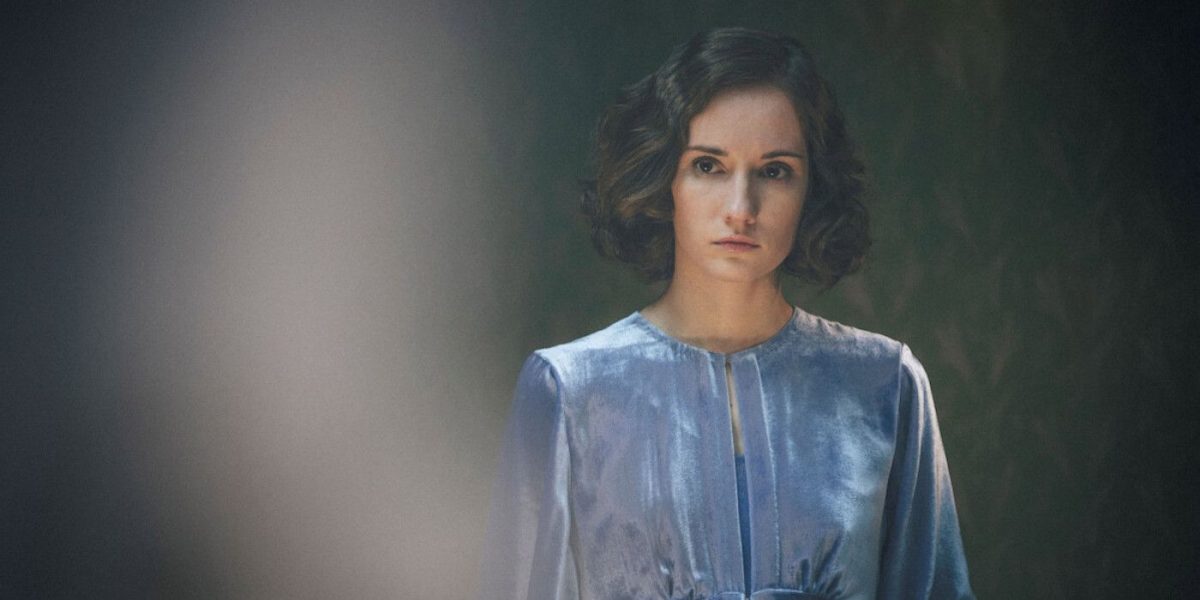
Eliška Křenková Shatters in Period Drama
Jul 12, 2023
Period movies are often restrained by factuality, with directors and scriptwriters bending under the weight of history. There’s also the case of movies that drastically revise history, imagining the worlds that could have been. Director Matěj Chlupáček’s We Have Never Been Modern (Úsvit) stands somewhere in between, presenting a fictional story with contemporary concerns that still accurately reflects the hardships of its historical setting.
The film is set in 1937, long before Czechoslovakia was split into the Czech Republic and Slovakia. Between the two Great Wars, the Eastern European country has tried to modernize its internal structure, hoping that the progress of its industry would stop the threat of a communist revolution. That’s why, in We Have Never Been Modern, Helena (Eliška Křenková) and her husband, Alois (Miloslav König), have moved to Svit. In this rural region, Alois erects a synthetic fabric factory and is now trying to buy the surrounding lands to turn green landscapes into a concrete paradise.
RELATED: The Karlovy Vary International Film Festival Announces Lineup 2023: Russell Crowe to Receive Award
‘We Have Never Been Modern’ Turns Its Investigation on Ourselves
Image via Karlovy Vary International Film Festival.
From the very start, it’s obvious that We Have Never Been Modern intends to explore the conflict between the ideals of progress and the supposed imperatives of nature. Still, things take an unexpected turn when an intersex baby is found dead on the factory site. For Alois, the baby is a freak of nature that could derail his business plans. To Helena, they symbolize that her pregnancy might be at risk since her baby could also be born with what she sees as a deformity. To appease their concerns, both will start a thorough investigation of the matter, with Alois hunting down the culprits that want to sabotage his enterprise while Helena seeks in the medical sciences the support she needs to ensure her baby is healthy.
At first, neither Alois nor Helena is concerned for the baby, whose intersex condition reduces it to less than a person. However, as Helena learns about intersexuality, she slowly becomes more sympathetic to the people involved. Like a crime story, We Have Never Been Modern revolves around Helena’s investigation as she pursues the truth about the baby and its mysterious mother. Along the way, she’s forced to confront the gender violence intersex individuals suffer, which she can understand better than her husband because, as a woman, her role in society is also similarly defined by external expectations. It’s a bold take for a story set in the first half of the 20th century, but Chlupáček is well aware of that. While We Have Never Been Modern does gloss over the transformative process of Czecholosvakia’s industrialization, the movie’s goal is to denounce how our hopes for progress didn’t help us to overcome prejudice when it comes to gender identity.
This all reveals how the most well-intentioned people can still fail to understand intersexuality. As a woman of science, Helena wants to learn what can cause a baby to be born without genitals that place them in one of two established genders. As such, she devours medical books filled with illustrations of dead hermaphrodite bodies, hoping that the truth about nature can fight the hate that comes from tradition.
‘We Have Never Been Modern’ Dissects the Messiness of Humanity
Image via Karlovy Vary International Film Festival
In the film, Helena’s studies turn into uncomfortable animated scenes focused on the shape of genitals, accompanied by a narrator that echoes the formal biological approach to gender identity. While these scenes might shock more sensible viewers, they are crucial for the movie’s message, as We Have Never Been Modern is also about how strict scientific investigation can only take us so far regarding the complexities of the human mind. Even as it’s commendable that Helena tries to understand, there’s only so much she can see through the lens of reproductive biology. In the end, the human mind is too complex for anyone to reduce someone’s identity to their genitals. In fact, as a pregnant woman, Helena is also fighting to have her worth recognized beyond biological imperatives.
It’s admirable that We Have Never Been Modern has a protagonist that can be flawed, as Helena’s journey also invites the audience to reflect on their worldviews and realize how ignorant even the most open-minded person can be about a reality they don’t experience firsthand. Furthermore, the script by Miro Šifra is willing to recognize that humans are messy, and good intentions can also harm those we think we are protecting from a hostile world. We Have Never Been Modern is also brave not to put itself or any of its characters on a moral pedestal, refraining from the accusatory tone many movies dealing with complex social issues show. Instead, it is willing to recognize that ignorance is part of the human experience and that most of us try our best, even if we often fail. We have never been modern, indeed, because humanity’s journey on earth is never over, and we are constantly trying to overcome the same issues we faced throughout history.
If We Have Never Been Modern had been produced in Hollywood, Křenková would be an early candidate for an Academy Award thanks to her passionate take on Helena. Chlupáček knows that character should be at the center of a movie that’s all about the human experience, which is why the director gives Křenková plenty of space to shine. And shine she does. Křenková shows an impressive range as an actress, guiding Helena through the turmoil of emotions she’ll be caught in with We Have Never Been Modern. It’s an emotional performance that helps to set the tone for each scene, making us laugh at Helena’s quick-witted provocations or shudder at the desperate look of her piercing eyes. One review is not enough to praise her performance and We Have Never Been Modern as much as it all deserves.
Rating: A
We Have Never Been Modern had its world premiere at 2023’s Karlovy Vary International Film Festival.
Publisher: Source link






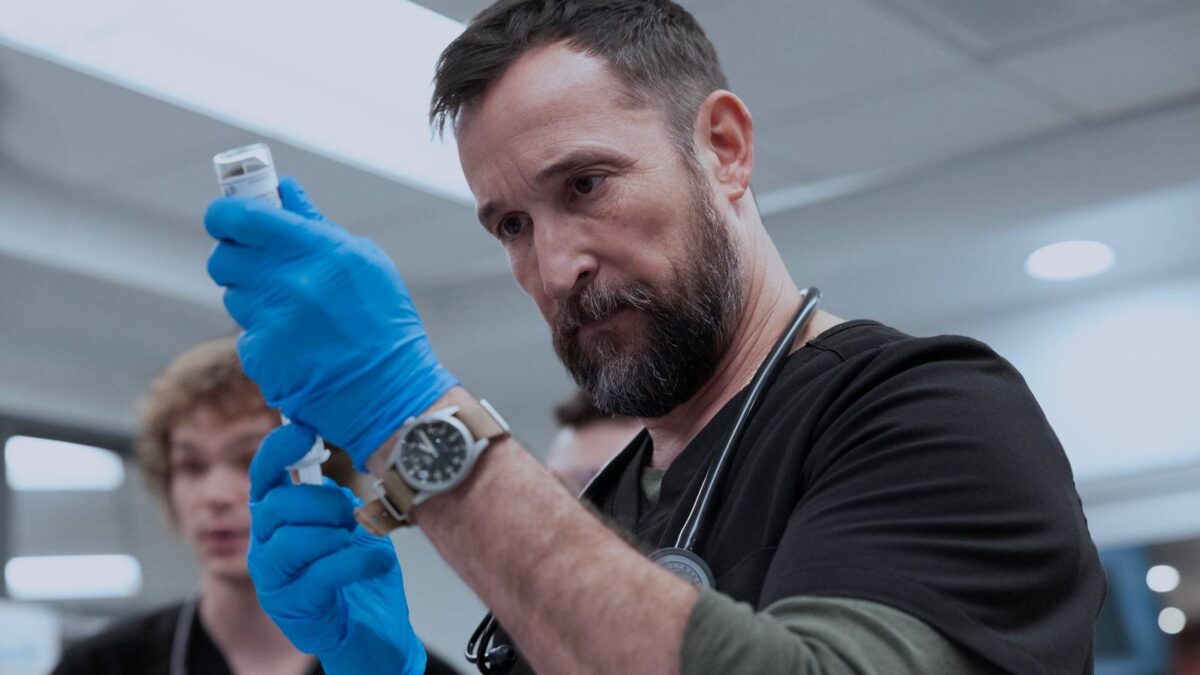
‘The Pitt’ Star Noah Wyle Teases Season 3 Time Jump & Winter Setting
As The Pitt heads toward an even final few episodes for Season 2, the stage is already being set for the upcoming third season. The star in front and behind the camera has revealed new details about what audiences should…
Apr 11, 2026
Earth’ Season 2 Casts Peter Dinklage as Series Regular
While screenwriter, television showrunner, and director Noah Hawley is already lining up his next feature film project, that seemingly hasn't stopped developments on the second season of Alien: Earth. The series, which premiered on FX last year, was a project…
Apr 10, 2026
‘Foundation’s Lee Pace Teases Even “Bigger” Story in Season 4
The return of Apple TV’s critically acclaimed, yet somehow still sorely underrated, three-part science fiction epic has just been given the perfect hype, with a returning star not only offering a production update but also calling the next outing “bigger”…
Apr 9, 2026
‘Star Wars: Maul – Shadow Lord’ Is the Perfect Jumping-on Point for Newcomers [Exclusive]
Lucasfilm and Disney are jumping back into the animated Star Wars universe with the release of Star Wars: Maul — Shadow Lord, centered on Sam Witwer's iconic animated Sith villain. Spinning off from Star Wars: The Clone Wars, Shadow Lord…
Apr 8, 2026