Eugene Kotlyarenko Refuses to Make Second-Screen Movies
Jan 6, 2025
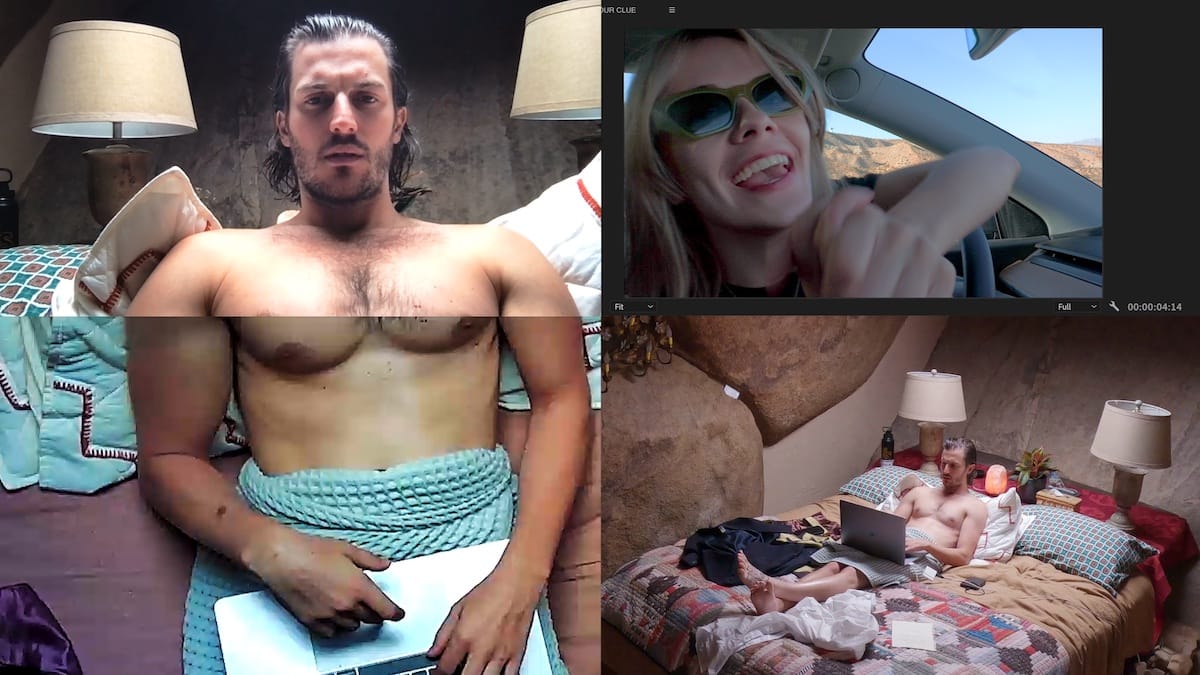
Director Eugene Kotlyarenko fills the screen with screens. In his 2020 streaming hit Spree, the story of a rideshare driver (Joe Keery) on a live-streamed rampage, he personally wrote 7,000 comments from a Greek chorus of imaginary viewers. In his latest, The Code, he packs the screen with FaceTimes, DMs, spyware recordings and intrusive documentary footage to track the emotional jousting of a sexless couple (Dasha Nekrasova and Peter Vack) on a pandemic staycation. His goal is to make sure you never glance at your phone during one of his movies. In the following piece, he explains how.—M.M.
I’m not trying to make what they call “second-screen” movies. Home viewing has seen cinema relegated to the role of background ambiance, as the phone screen calls out to us with urgency: Come be the central character of your own narrative! As much as we don’t want to accept it, this siren call has led to a new normal.
Eugene Kotlyarenko. Courtesy of the author.
Eugene Kotlyarenko’s The Code Is No Second-Screen Movie
My new movie, The Code, uses this central-character syndrome to question who the author of the film is. Like Kurt in my previous film, Spree, the characters in The Code are the ones making the movie you’re watching.
But where Spree explored the cinematic potential of a new medium like livestreaming, The Code interrogates the very foundation of cinema: editing. By foregrounding “the edit” and using modern sources (phones, surveillance cams, spyglasses) for the footage, the movie highlights our new role as anxious, ceaseless auteurs, grappling for narrative control of our lives. While this too is normal now, we blind ourselves not to see it.
Also Read: In The Code, Eugene Kotlyarenko Looks Back on Love in the Time of Covid
Marshall McLuhan analyzed how technology leads to “amputations” of evolutionary “limbs.” McLuhan pointed out that when people are on a phone call, they often doodle or pace around. Before the phone, if you were talking to someone, you were probably next to them. When the phone was invented, it created disembodied conversations.
Suddenly, the part of your brain that says, Oh, I’m talking to someone, becomes anxious when there’s no one around to scratch the itch related to the physicality of immediate communication. So you compensate for the missing eye contact and non-existent body language by doodling or walking around.
Our limbs have been amputated even more intensely by smartphones, whose touchscreen neurologically conflates messages, selfies, news, romance and more into a maelstrom of intimacy. Total access in the palm of your hand is then combined with an undeniable promise: agency! You get a complete audio-visual experience where you not only participate, but feel a sense of “control” over “the story.”
Spree, directed by Eugene Kotlyarenko. RLJE Films.
This activates a very different part of the brain than a movie. Cinematic narrative is experienced vicariously, a dream immersion. Once the harbinger of technological overstimulation, cinema is now fading into the shadows.
We now have new itches when we look at screens: scrolling, typing, swiping. So when you have a screen experience that doesn’t do those things (a movie), you feel the lack. For some, it may serve as a welcome respite from the overwhelming stimuli of contemporary life, but for most I fear it devolves into anxiety, placated only by second-screen mania.
Also Read: Spree Director Eugene Kotlyarenko Wrote All 7,000 Internet Comments That Appear in the Film
Since my first movie 15 years ago, I’ve been trying to develop a form of storytelling that scratches our new itches, while still channeling the spirit of classic cinema. The originators of our medium innovated because they had to, and I feel the same urgency.
My movies invite viewers to synthesize multiple screens, text, jokes, and all sorts of cinematic elements that are usually kept apart. I’m trying to redefine what mise-en-scene can be. I want to create new forms of dialectical viewing. I’m proposing a new voyeurism.
By using this approach, I hope that the part of our minds expecting more from a screen is satiated enough for us to lean back, relax and immerse ourselves in cinema.
Eugene Kotlyrarenko’s The Code is now on the festival circuit and slated for a release in Spring 2025.
Main image: Peter Vack and Dasha Nekrasova in The Code. Courtesy of Eugene Kotlyarenko.
Publisher: Source link


Born Again’ Showrunners Detail How the Media Ties into Season 2
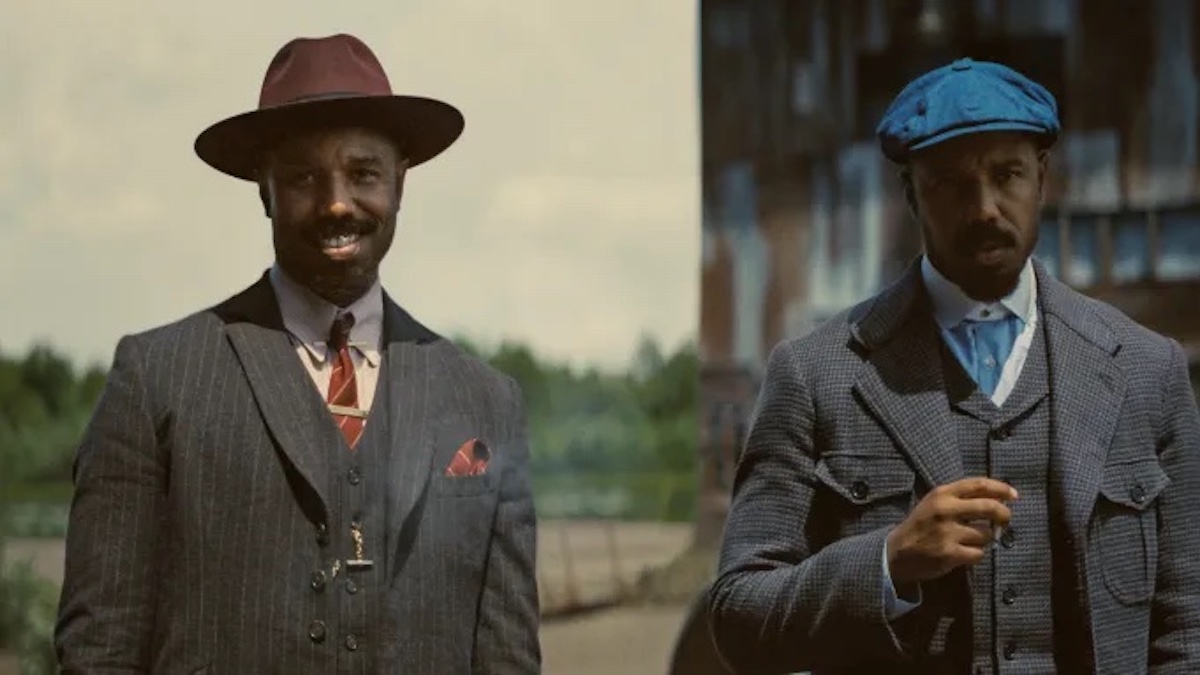
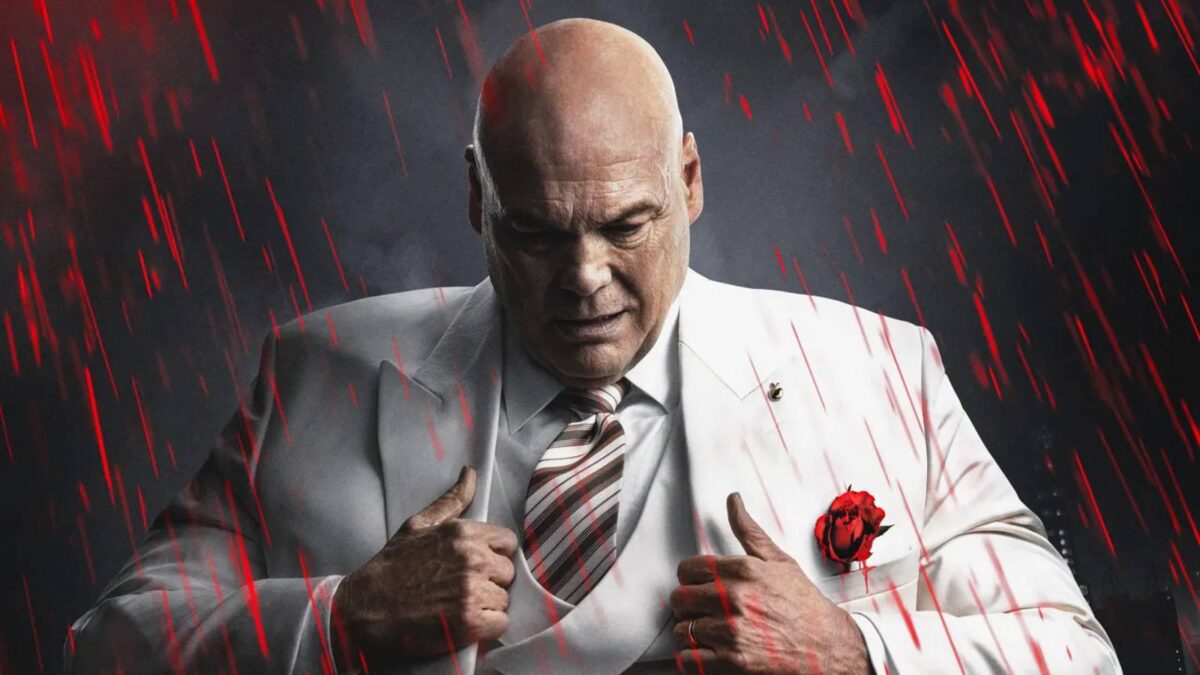
Marvel is fast approaching the release of Daredevil: Born Again Season 2, marking its second live-action Disney+ show of 2026. Bringing back Charlie Cox's Matt Murdock and Vincent D'Onofrio's Wilson Fisk, this season picks up where Season 1 left off,…
Mar 23, 2026
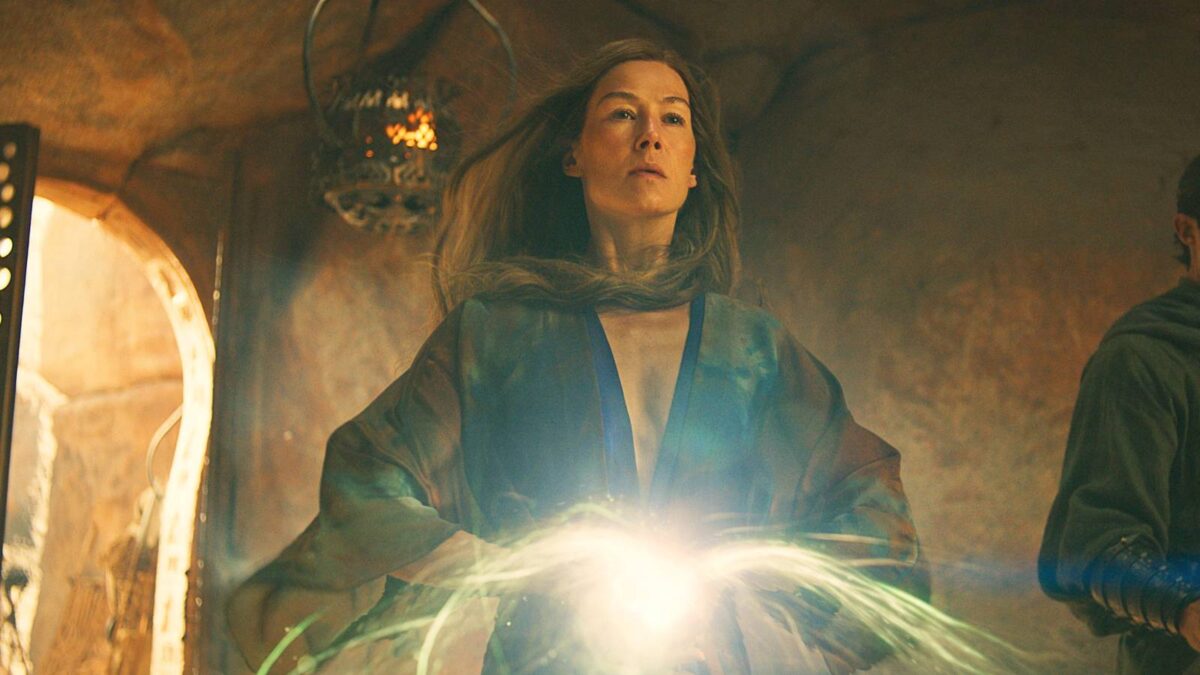
New ‘Wheel of Time’ Animated and Video Game Adaptations Are in the Works
Amazon might be finished with The Wheel of Time, but we haven't seen the end of the story when it comes to adaptations of Robert Jordan's bestselling high fantasy saga. Fans were left blindsided when Amazon abruptly pulled the plug…
Mar 22, 2026
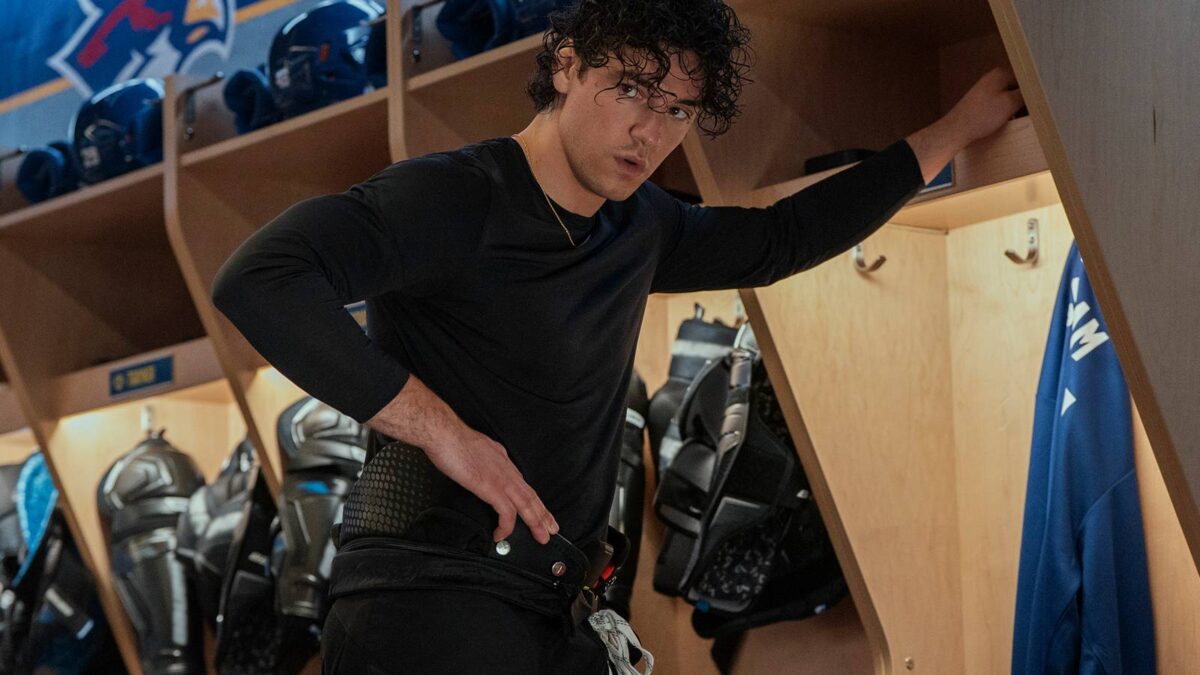
‘Off Campus’ Teaser and Release Date Revealed by Prime Video
No one expected a love story between rival hockey players to become one of the most talked-about TV shows of 2025, but there's a lot more where Heated Rivalry came from, as a new teaser for Prime Video's foray into…
Mar 21, 2026
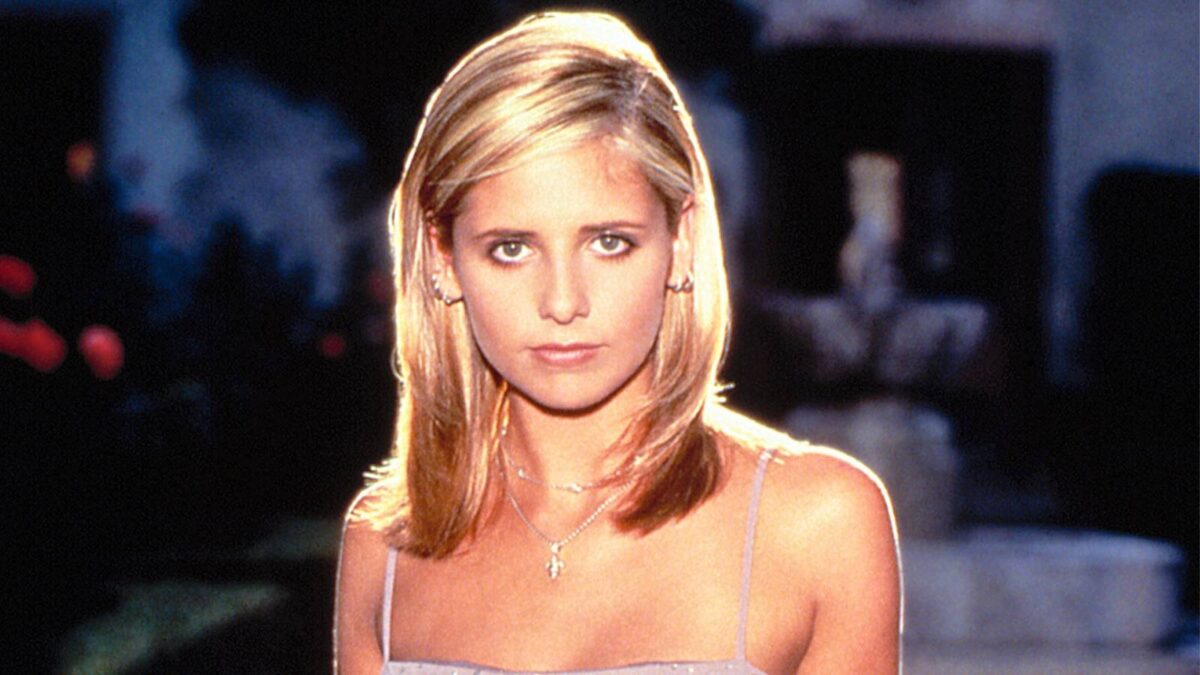
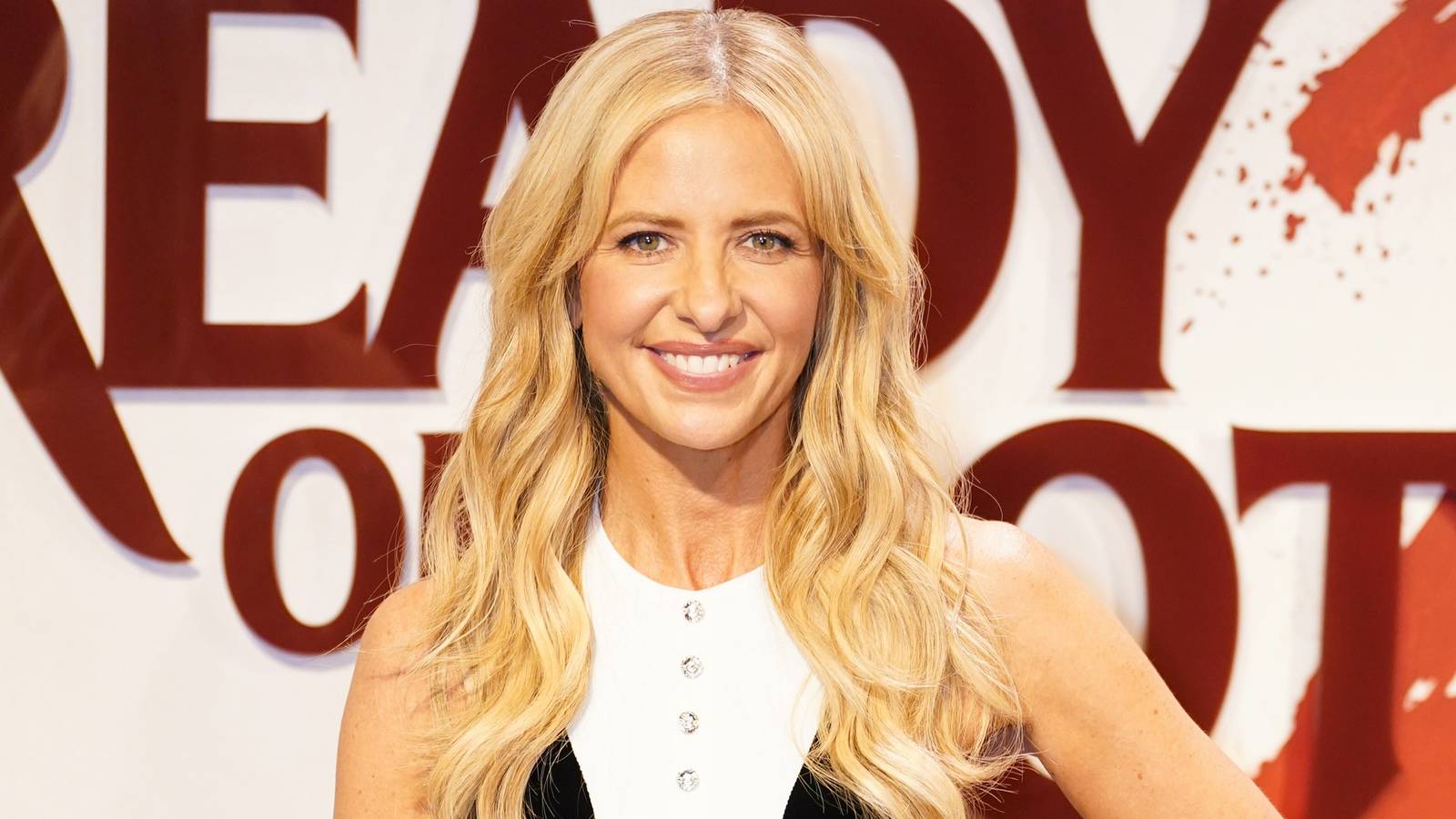
Sarah Michelle Gellar Urges ‘Buffy’ Fans to Avoid Reading Leaked Reboot Scripts
Buffy the Vampire Slayer fans have had a rough few days after Hulu officially pulled the plug on a revival of the series, which would have brought star Sarah Michelle Gellar back as the titular heroine. Described as a continuation…
Mar 20, 2026