Four Quartets | Film Threat
May 3, 2023
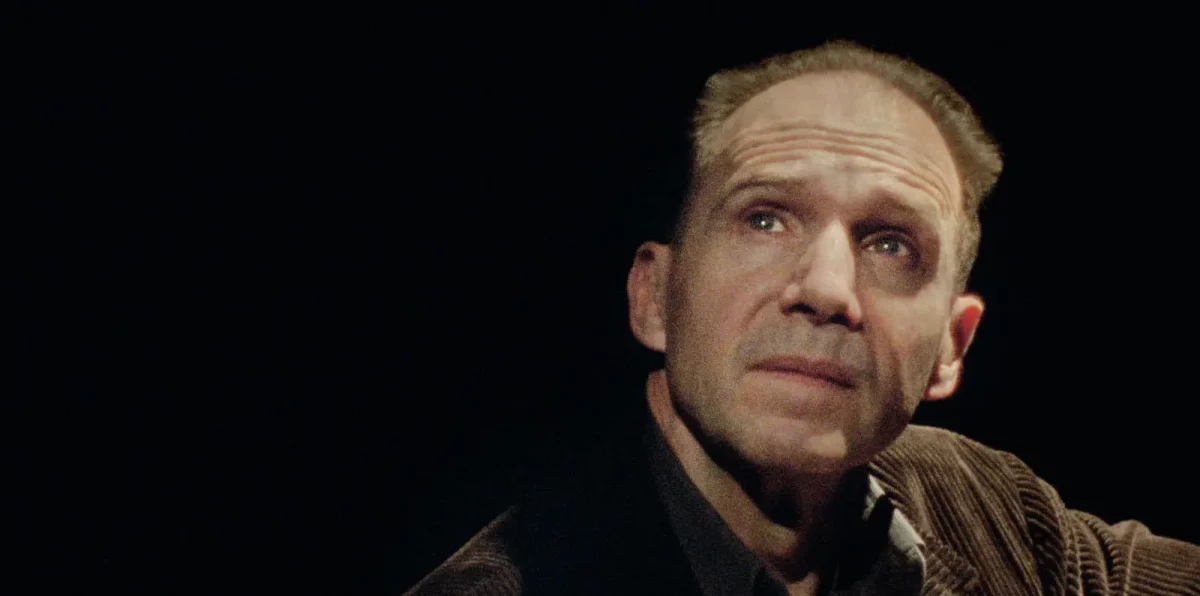
“And so each venture is a new beginning, a raid on the inarticulate with shabby equipment always deteriorating…” So goes one of the many richly etched lines in T.S. Eliot’s Four Quartets. Eliot, one of Britain’s, as well as the world’s pre-eminent poets, felt that any poem’s essential meaning had to be contended for and discovered. So it is, then, that director Sophie Fiennes has ventured with Four Quartets, creating something wholly distinctive and unquestionably resounding but also something imprecise. The film is an adaptation of Ralph Fiennes’ one-man theatrical performance of the very same work. To note, the director and the actor, in this case, are sister and brother.
Eliot’s work was penned in the wake of the Second World War. Split into four smaller poems, this is a dense but sumptuously considered series of ruminations on time, purpose, faith, and existence. Particularly noteworthy of Fiennes’ performance on-stage is that he memorized the poem in its entirety — nearly 1,000 lines of intricate and difficult poetry, to put it in perspective. However, therein enters the imprecision mentioned above: The magnitude of that fact certainly cannot be felt in any direction when witnessing it on screen, and so too is the intimate theatrical context lost.
“…series of ruminations on time, purpose, faith, and existence.”
What’s left is a suite of oddly integrated visuals. At times they are wonderfully transportive, showing, for example, the verdant garden of the manor Burnt Norton, which inspired the name of the first poem. For the majority of the Four Quartets, Fiennes’ figure is cast against ghastly monoliths of concrete, which is starkly dull. What makes the latter particularly confusing is that the inherent nakedness of this setup is occasionally utilized to rather profound effect, such as when the actor performs whilst sitting at a table, speaking into a wartime microphone, alluding to the era of the poem’s inception.
I suspect the stripped-down aesthetic was designed to highlight the harrowing nature of the time and to highlight Fiennes himself, who is in riveting form. His chosen articulations and emphases give Eliot’s work a trancelike persona. And the words are as intensely metaphorical and as decadently sublime as ever. Thus, it is a pity that the program runs for an hour and 20 minutes, 20 minutes too long. It is meticulous work to digest poetry of such a nature, and without better visual aid, one’s attention wanders almost invariably. Splitting the performance into four episodes would have served the presentation and substance better.
Still, Four Quartets is a special experience. There is something quite prescient about this work being rendered on the screen in the frenetic modern age. For those who can gather the patience, it is a reminder of the wisdom Eliot so treasured, with all its overt Christian inspiration, birthed with such difficulty in the fires of war. There are many who will feel the stanzas require too much toil; it is nonetheless timeless and unendingly beautiful. Thanks in large part to Fiennes’ fine performance.
Publisher: Source link




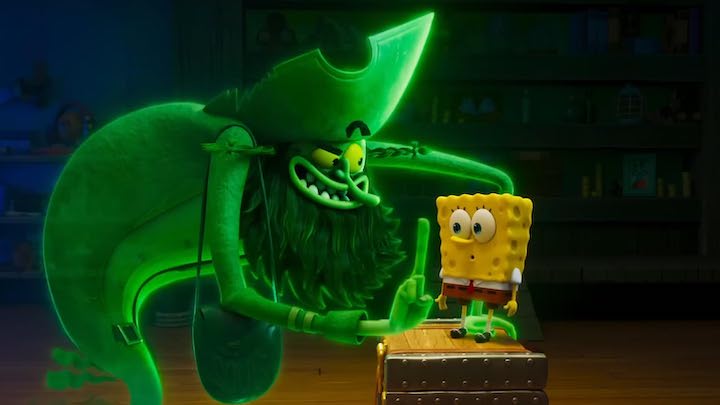
The SpongeBob Movie: Search for SquarePants Review
It raised more than a few eyebrows when The SpongeBob Movie: Search for SquarePants was selected as a closing night film at AFI Fest. It made more sense within the screening’s first few minutes. Not because of the film itself, but the…
Feb 5, 2026

28 Years Later: The Bone Temple Review: An Evolving Chaos
Although Danny Boyle started this franchise, director Nia DaCosta steps up to the plate to helm 28 Years Later: The Bone Temple, and the results are glorious. This is a bold, unsettling, and unexpectedly thoughtful continuation of one of modern…
Feb 5, 2026
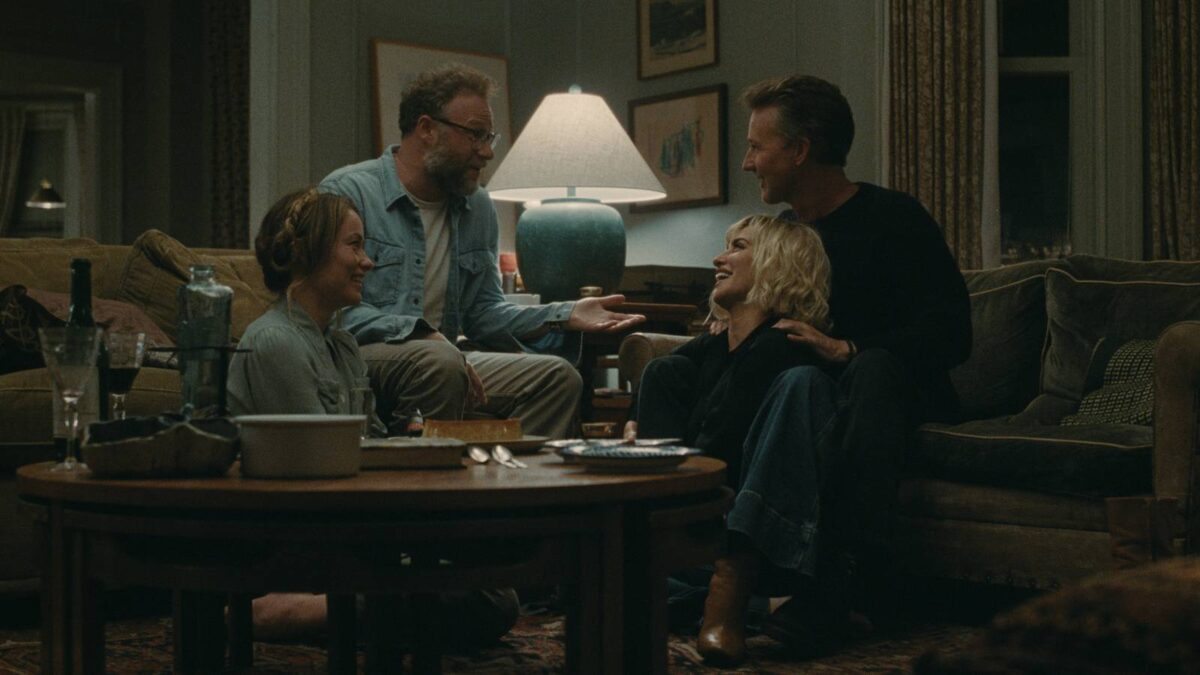
Olivia Wilde’s Foursome Is an Expertly Crafted, Bitingly Hilarious Game of Marital Jenga
If you've lived in any city, anywhere, you've probably had the experience of hearing your neighbors have sex. Depending on how secure you are in your own relationship, you may end up wondering if you've ever had an orgasm quite…
Feb 3, 2026
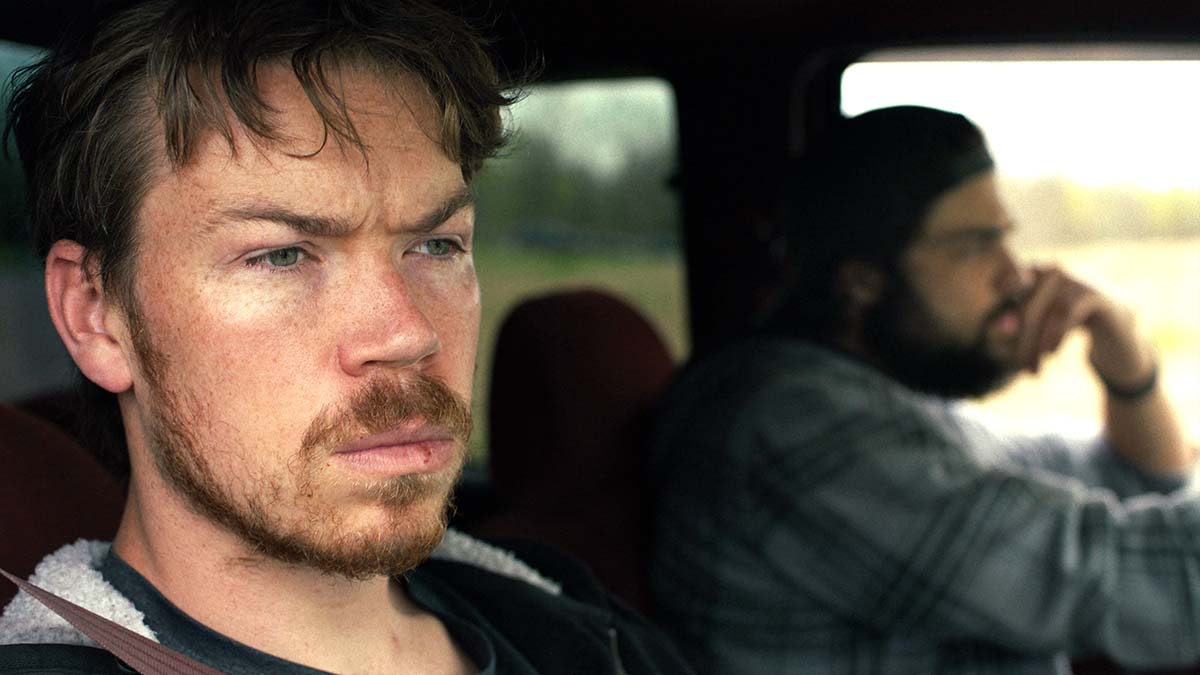
Will Poulter Is Sensational In An Addiction Drama That Avoids Sensationalizing [Sundance]
Despite all the movies made about addiction, the topic does not naturally lend itself to tidy cinematic narratives. (At least, when portrayed accurately.) While actors often visualize the condition of substance dependency through expressive physical outbursts, the reality of recovery…
Feb 3, 2026