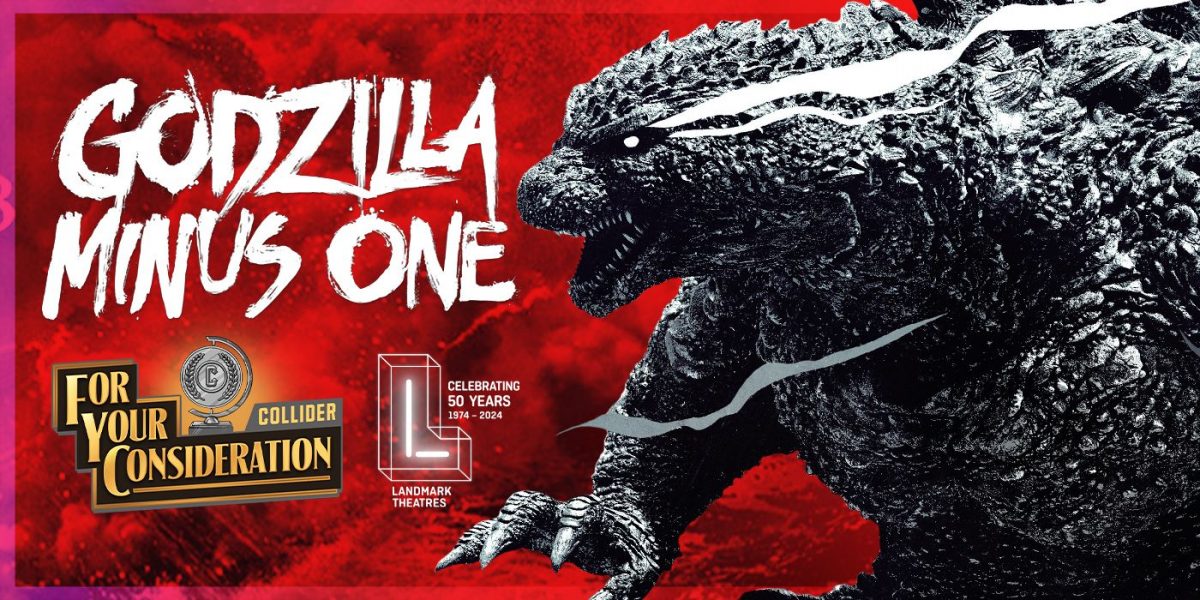
‘Godzilla Minus One’ Director Reveals 35 People Did 610 VFX Shots in 8 Months
Feb 24, 2024
Back in the late 70s, Steven Spielberg and George Lucas are taking audiences to the final frontier — or bringing the final frontier to Earth. A young Takashi Yamazaki is rapt at the massive spacecrafts onscreen, and whatever doubts he’d had about this Spielberg person quickly give way to awe. Coincidentally, the very same VFX studio that captured Yamazaki’s starry eyes in middle school, George Lucas’ Industrial Light & Magic, would someday become his competition, contending for an Academy Award with his colossal epic, Godzilla Minus One.
For the final feature in our FYC screening series with Landmark Theatres, Collider was excited to sit down with Yamazaki to discuss what our own Chase Hutchinson calls, “one of the most thrilling takes on the character in recent memory.” Godzilla Minus One smashed into theaters in December 2023 and has since garnered critical acclaim, an Academy Award for Best Visual Effects, and has even become Japan’s highest-grossing film in the U.S. in history. It’s an ambitious take on Toho’s most iconic kaiju that explores another look at the titan’s World War II origins, and the people and homes that were devastated by them.
During a conversation with Collider’s Steve Weintraub, Yamazaki talks about how Spielberg, a filmmaking god as far as he’s concerned, first inspired him to become a director, what it was like meeting him at the Oscar luncheon, and what this nomination means to him and his crew. This marks only the second time a director has been nominated, placing Yamazaki in the same ranks as Stanley Kubrick. He discusses how they managed to tackle 610 VFX shots in only eight months, which scenes proved to be the most challenging, the Godzilla Minus One sequel timeline, and so much more. You can check it all out in the video above, or read the transcript below.
Godzilla Minus One Post war Japan is at its lowest point when a new crisis emerges in the form of a giant monster, baptized in the horrific power of the atomic bomb.Release Date December 1, 2023 Director Takashi Yamazaki Cast Ryûnosuke Kamiki , Minami Hamabe , Yûki Yamada , Sakura Andō Runtime 124 Minutes Main Genre Sci-Fi Writers Ishirô Honda , Takeo Murata , Takashi Yamazaki
COLLIDER: If people have never seen anything else you’ve done before, what’s the next one they should start with and why?
TAKASHI YAMAZAKI: I would like everyone to see Eternal Zero.
Related The 10 Best Takashi Yamazaki Movies, Ranked According to IMDb Fans of ‘Godzilla Minus One’ should check out these movies also directed by Takashi Yamazaki.
Is there a reason?
YAMAZAKI: I try to depict the truth behind a lot of the kamikaze pilots, which might not be a very well-told or spread story.
We Have Steven Spielberg and Star Wars to Thank for Takashi Yamazaki Films
Image via 20th Century Fox
I read that you became interested in moviemaking from seeing Star Wars: Episode IV – A New Hope and Close Encounters of the Third Kind.
YAMAZAKI: I was still in middle school at the time, so very, very young and impressionable. I think it was one of the first times I’d been to a movie theater and I saw Close Encounters of the Third Kind and Star Wars. Going back and forth between them, I thought, “Man, this is it. This is the job I want to do.”
When I first heard that Spielberg was gonna be directing a UFO movie, I thought it was gonna be like the [George] Adamski UFO silhouette. At the time, I still hadn’t seen Jaws yet, so I think I was probably a little cocky. I didn’t know who this Spielberg guy was, and I thought, “Well, I’ll see something else in a different UFO movie before I see Star Wars.” When the flying saucer shows up in the film, the mothership, where it kind of flips, I mean, it wasn’t just the mothership that flipped; I think my entire life flipped upside down from that moment onwards. I went home and told my mom for four hours how amazing this film was, and she was like, “Leave me alone! I have to cook dinner.” But I said, “Mom, you don’t understand. This movie is so amazing.” [Laughs]
When I was still reeling back from the shock of Close Encounters of the Third Kind, that’s when I went to see Star Wars. The shot where the Star Destroyer is coming in just felt endless, this mothership. I thought, “Oh my goodness, what are they making over there in the United States? This is the life I want to live.” When you graduate middle school, you have to write down what you want to be in the future, and I put down “tokusatsu director,” which is like a special effects director.
What’s cooler, being nominated for visual effects at the Academy Awards, making a Godzilla movie that many consider to be the best Godzilla movie ever made, or meeting Steven Spielberg and knowing he has seen your movie multiple times?
YAMAZAKI: Well, they’re all amazing, but it’s hard to top Spielberg. He’s like a god to me, so meeting a god in person just seems very surreal.
I saw a picture of you with Spielberg. I can’t imagine what that was like for you.
YAMAZAKI: I’m still having a hard time thinking that this photo is real, first of all. It was at the Oscar luncheon.
TRANSLATOR: It was actually me. I was like, “Hey, Yamazaki-san, I think that’s Spielberg over there a few tables down.” And he didn’t believe me. He said, “No, no, no. No way. Spielberg wouldn’t be here. He doesn’t exist. He’s a god.” I was like, “No, I think that’s actually him. Let’s go talk to him.”
YAMAZAKI: So, we did and he actually existed. He was talking to someone from Disney, it was Bob Iger.
TRANSLATOR: So there’s Bob Iger and Steven Spielberg, and Yamazaki-san here is trying to sneak in between and getting into Spielberg’s line of sight, saying, “Hey, I’m here!” [Laughs]
YAMAZAKI: I happened to be carrying a scale Godzilla toy with me, and that’s when he noticed, “Oh, hey, what did you do on Godzilla?” And the conversation started. He talked about how he saw the film three times, and he was really passionate about it. I thought I saw him eyeing my toy, and I was like, “Well, maybe he wants it.” So, now the little Godzilla found a home at Spielberg’s residence.
‘Godzilla Minus One’ Takes on Real-Life Titan at the Oscars
This film is the first Japanese language film to be nominated for Best Visual Effects at the Academy Awards. What does that honor mean to you?
YAMAZAKI: That also doesn’t feel very real, and sometimes I wonder why we were among the other four amazing films that were nominated in the same category. But I hope that the lesson here is that if you just pour in your blood, sweat, and tears into something that the gods of filmmaking will let you reap the benefits. There are five films nominated for the category, and if you look at the VFX studios that spearheaded it — ILM, ILM, ILM, ILM, Shirogumi. [Laughs] Here I am thinking to myself, “This is the VFX studio that worked on Star Wars,” and I’m just kind of smirking as I look at the list.
We had the pleasure of visiting ILM at a similar screening and Q&A session like we’re having right now, and it’s amazing just to be as Lucasfilm. But that’s when, we had dinner afterwards, and I told some the artists, I said, “Hey, if you look at the 10 films on the shortlist right now, five of them are ILM, so if you guys just withdraw all five, I have a guaranteed nomination,” because the nominees weren’t announced yet. With a big smile on their faces, “No.”
I think you and Stanley Kubrick are the only directors to be nominated for visual effects. What does it mean to you to have your name next to Stanley Kubrick in terms of history?
YAMAZAKI: I can only imagine the challenges that Kubrick had to go through in his time to achieve the type of VFX that he did. But I think 2001: A Space Odyssey was as amazing because he was in charge, or overseeing the VFX process. The only thing I have to say to that is he probably had more money than I did to work on it.
I’m sure of it. [Laughs] One of the things I really want to touch on is there were only 35 people that worked on the VFX, and you did 610 shots in, I believe, eight months. How?
YAMAZAKI: [Laughs] I don’t know. It’s interesting, because as we’ve done more of the interviews and Q&As, that’s a question that comes up constantly. “How? How did you do it? It’s impossible.” What’s interesting for me is that it’s not too different from what we usually do on all of our other films. So there’s really no sensation of us doing something completely revolutionary, we were just doing what we usually do. So, if I do have to say one thing, maybe our team should kind of rise up and see how they’re being complimented so we can ask for more money. [Laughs]
I am 100% sure that if you make another Godzilla movie, you will have more money.
YAMAZAKI: I just want to make sure all the Toho people in the theater heard that.
I am very curious, there are so many shots in this movie that are so impressive, but which shot was — pardon my language — the ball-buster?
YAMAZAKI: When Godzilla’s fins begin to protrude as he’s charging up his atomic breath. I think that’s my favorite shot. I was actually in production on a different film at the time when I thought of this idea, “Oh, this is it. This is how we’re gonna show Godzilla’s atomic breath.” I was quite distracted for a few days on my other film.
Image via Toho
I’m fascinated by the editing process because it’s where it all comes together. How did this film change in the editing room in ways you did not expect?
YAMAZAKI: This might be a byproduct of how Japanese productions operate, but once you have the screenplay and storyboard, a lot of the overall film structure is kind of set in stone there. So, what I had built and imagined in my head was quite well-executed in the editing room. Although, that being said, one of the big surprises for me was when you add the music and effects. Then it dawned on me, “Wow, this is a Godzilla film.”
Did you end up with any deleted scenes?
YAMAZAKI: Very few. Very, very few. Almost everything is as it was shot. There was one scene, however, on Odo Island in the beginning when Shikishima lands. I had a scene in my mind. I thought of it after we were done with production, though. Unfortunately, they wouldn’t let me shoot pick-ups. But it was when the other mechanics and crew were kind of consoling Shikishima, saying, “Hey, man, it’s okay. The war’s almost over. You don’t have to do the kamikaze thing.” They were very kind to him, which is when Godzilla comes in and just smashes everything. We couldn’t put it into the film, so I did sneak it into the novelized adaptation of it.
Will ‘Godzilla Minus One’ Relase in 4K?
Image via Toho
When I was asking for questions, the number one question was, “When can I own this on 4K?” So, when can they own it on 4K?
YAMAZAKI: I don’t know. I throw it over to Toho Studios. [Laughs]
I know we’re here to celebrate the theatrical release, but when it comes out for home viewing, will it have the black and white version and the color version?
YAMAZAKI: …Toho people? [Laughs] I can only imagine there will be a version that has everything, like the super duper deluxe version of Godzilla Minus One.
Are you saying that as something you know or as something you’re hoping for?
YAMAZAKI: As someone who’s hoping for it. But I remain confident that it will happen because Toho’s the kind of company that will try to use everything they’ve got.
Smart. [Laughs] When you saw the shooting schedule, what day did you have circled because you were so excited to film something, and what day were you like, “How are we going to film this?”
YAMAZAKI: When you think of kaiju film, of course you need people running away from the kaiju, so in my mind I was really excited about when Shikishima and Noriko are just running through the city, surrounded by other civilians. We had a drone shot planned where we’re pulling away and ultimately going into a very, very, wide shot. The other one, of course, was I was wondering what it would look like when Noriko was just hanging from that train. I was excited about those two shots. The other one was the Shinden, the fighter that shows up towards the end. I knew that we were building a one-to-one scale model of that, so I was so excited. I got up early, showed up to set early, and was just gazing at it.
I don’t know if there were any days I really dreaded, so to speak. I knew that when we were on set some scenes were going to be a challenge once we got to post-production. But everything we were shooting on set that was practical, I don’t think there was anything where I was like, “Oh my god, how are we gonna get this?” Although, one moment that had me a little concerned was when we built the practical set for the deck of the ship. This was per my direction and orders, we had just enough to make a portion of a deck. We used that one deck to shoot all 10 ships, all the battleships, everything you see. I told the crew, “We’re gonna extend this production with VFX, so just give me one small set.” But then, when I actually saw it in person, it dawned on me, “Wow, how are we gonna turn this into 10 different ships?” [Laughs]
Image via Toho
There are a lot of superfans in this theater, and a lot of superfans watching. What do you think would surprise fans to learn about the making of Godzilla Minus One?
YAMAZAKI: Well, Akiko, the girl you see in the film, she was really a baby. She was actually two-years-old. So the whole crew, everything stops when she gets sleepy. We got really good at sensing when she was about to cry, so whenever someone was like, “Oh, guys, I think it’s coming,” we’d all take our positions and get ready to film the shots where she was crying. So during the shots that she’s in, she became the center of it. She was the queen.
There was a very serious scene where we didn’t want her to cry. It was a really important part of the drama, so Akiko was supposed to look over at Noriko, and we couldn’t get her to look over. So, there’s a children’s TV show in Japan called Anpanman, and right behind Noriko, who’s doing this super serious performance, we had this kids’ TV program running just to get her attention. So everyone’s in a super serious mode. It’s a very surreal picture if you look at that on set.
I read that originally that was going to be a boy and not a girl.
YAMAZAKI: Yes. We auditioned a lot of kids. They were all to age, so all two-years-old, and when they’re in front of the camera, they oftentimes just freeze up and they can’t take direction really well. Akiko was the only one who was somehow able to respond and give me something I can work with. So, it was during the audition process that we changed them from a boy to a girl to match the cast.
When Will the ‘Godzilla Minus One’ Sequel Take Place?
Image via Toho
You’ve talked about a sequel to Godzilla Minus One. Do you think this will be your next film?
YAMAZAKI: Well, I can tell you it’s not going to be my next film. I already have my next film in development right now that I’m working on. But will it be the one after that? That remains to be seen…
If you were to make a sequel, do you think it would take place five or 10 years later so the character could develop a little bit more?
YAMAZAKI: Hypothetically, if there is a Godzilla sequel, then I would like to date it with how long it’s been in our timeline as to what the characters have gone through. So, if we film it three years from now, I would set it three years from Godzilla Minus One. And I hope that by then Akiko has worked on her acting a little bit.
How much have you actually thought about the sequel and what monsters you might want to include?
YAMAZAKI: It would be difficult to say with the Toho people in the room right now. [Laughs]
They actually left. They’re not here anymore.
YAMAZAKI: [Laughs] I can’t. But, if you look at it a different way, the fact that I can’t say might be good.
Oh, that’s true.
YAMAZAKI: I don’t know.
Image via Toho
What has this experience been like for you? I would imagine there are many American people, studios, filmmakers that now want to meet you and talk to you. Do you think you could make an English language film, or do you see yourself staying in Japan?
YAMAZAKI: It would depend on what I want to make at that time, and how the different projects develop, what they require. If it’s a better film to be produced using an English cast then that’ll be the case. But regardless, I think Godzilla’s played a pivotal role in opening this door. I’ve had a lot of interest, to your point, and a lot of people that I’ve had conversations with that wanted to work together. So, I have to give thanks to Godzilla, of course. But because Godzilla opened this door, I feel a slight obligation to walk through it and see what’s on the other side. At the same time, sometimes it’s a little scary, so I want to close it.
I believe Godzilla Minus One is the highest grossing Japanese film in history in America. What does that mean to you?
YAMAZAKI: Well, first I want to say thanks to everyone who went to the theaters Godzilla Minus One, because to your point, it’s not just critical acclaim. The box office success, in addition, has again opened up many doors and many paths. So, that’s thanks to all the many moviegoers out there.
When did you actually realize that this was becoming something special, and that people in America were going crazy for it? Because this is not the norm, what happened with this film.
YAMAZAKI: When we released the first trailer on my social media, I started getting a lot of reactions and response in English, and I thought to myself, “Huh. What’s going on? That’s weird, but I guess it’s Godzilla, so that kind of thing happens.” It was actually during the LA premiere, when we rolled out the red carpet and I was doing some photo ops, and everyone was going, “Takashi! Takashi!” That’s when it dawned on me, “Wait a second, something’s happening.”
Takashi Yamazaki Is All for a New ‘Space Battleship Yamato’ TV Series
Image via Toei Company
This is not about Godzilla, but I’m curious — this is a real curveball — years ago, you directed Space Battleship Yamato. I grew up loving Star Blazers: Space Battleship Yamato 2199, and I think it would be an amazing TV series, not just a movie. What are your thoughts on Space Battleship Yamato being a TV series? What do you think?
YAMAZAKI: As a kid, I was watching the anime, as well, and Yamato has a very special place in my heart. So, through a very odd twist of fate, that project was actually presented to me. At the time, I already had a different film that I was scheduled to direct, and beyond, and I asked the producer, “Can we just somehow shift this? This is Yamato. I really gotta do this.” And he helped make it work.
But I think if there is a TV series, that would be a lot of fun because that story, what that franchise has, is something that should be told over a much longer experience as opposed to a single film. So, I think it would be really interesting.
Publisher: Source link



Paramount+ Renews ‘Criminal Minds: Evolution’ for Season 19
The start of its new season is still weeks away, but fans of Criminal Minds: Evolution won't have to wait that long to learn the fate of the long-running hit crime procedural. Execs at Paramount+ have already decided what the…
Mar 27, 2026
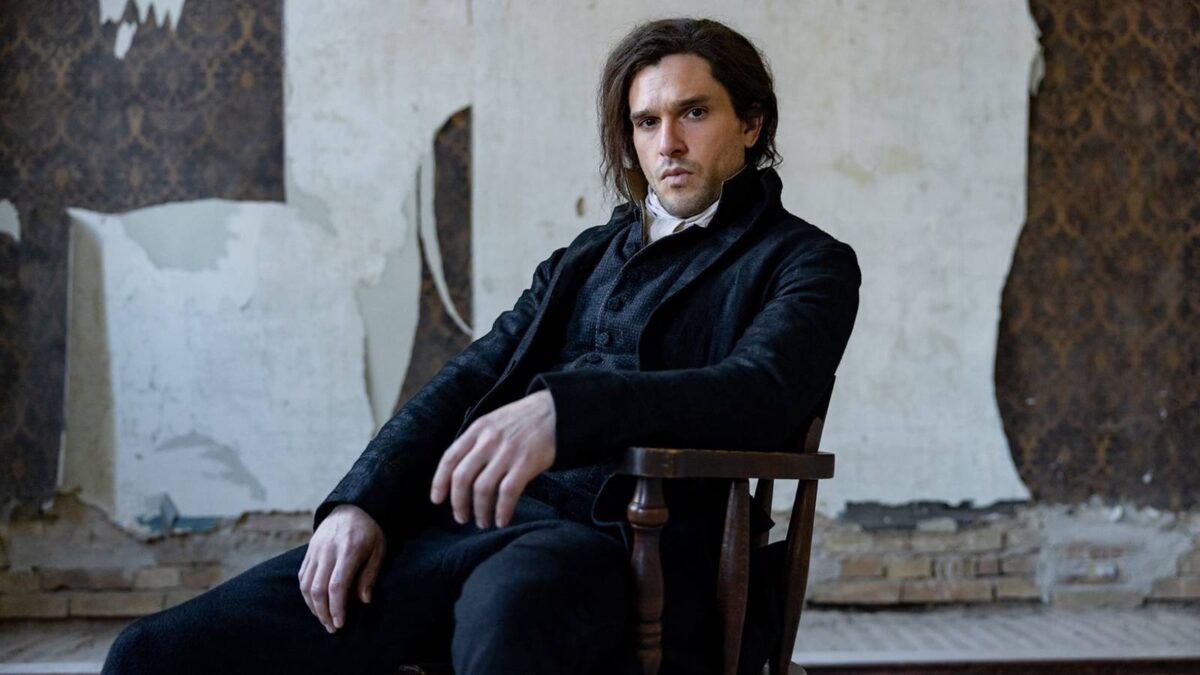
‘A Tale of Two Cities’ First Look Reveals Kit Harington in MGM+ Series
The BBC and MGM+ are teaming up with a new four-part limited series adaptation of Charles Dickens' classic 1859 novel A Tale of Two Cities. Game of Thrones veteran Kit Harington will play Sydney Carton, a cynical English lawyer who…
Mar 26, 2026
HBO ‘Harry Potter’ Series Image Reveals Dominic McLaughlin in Title Role
The first official look at HBO's upcoming reboot of Harry Potter has finally arrived, and it is already teasing a magical trailer release. As we inch closer to the show's expected 2027 release, the network has begun to reveal more…
Mar 25, 2026
‘Dutton Ranch’ Trailer Reveals ‘Yellowstone’ Sequel Release Date
Rip Wheeler and Beth Dutton gamble everything on a new life in South Texas in the first trailer for the Yellowstone spin-off, Dutton Ranch. The footage reveals all manner of gun fights, fist fights, explosions, galloping horses, and even mysterious…
Mar 24, 2026