Greta Gerwig Explains What Barbie’s Bench Scene Really Means (& Casting An Oscar Winner As The Old Woman)
Aug 1, 2023
Summary
The bench scene in Greta Gerwig’s Barbie movie is the heart of the film, depicting Barbie’s first encounter with aging and the beauty she finds in it. The scene is important in informing Barbie’s decision to leave the perfect world of Barbieland and embrace the discomforts of the human experience. Gerwig emphasizes the significance of women talking to each other through generations and challenges the idea that everything needs to be optimized, highlighting the positives in the breakdown of things like aging.
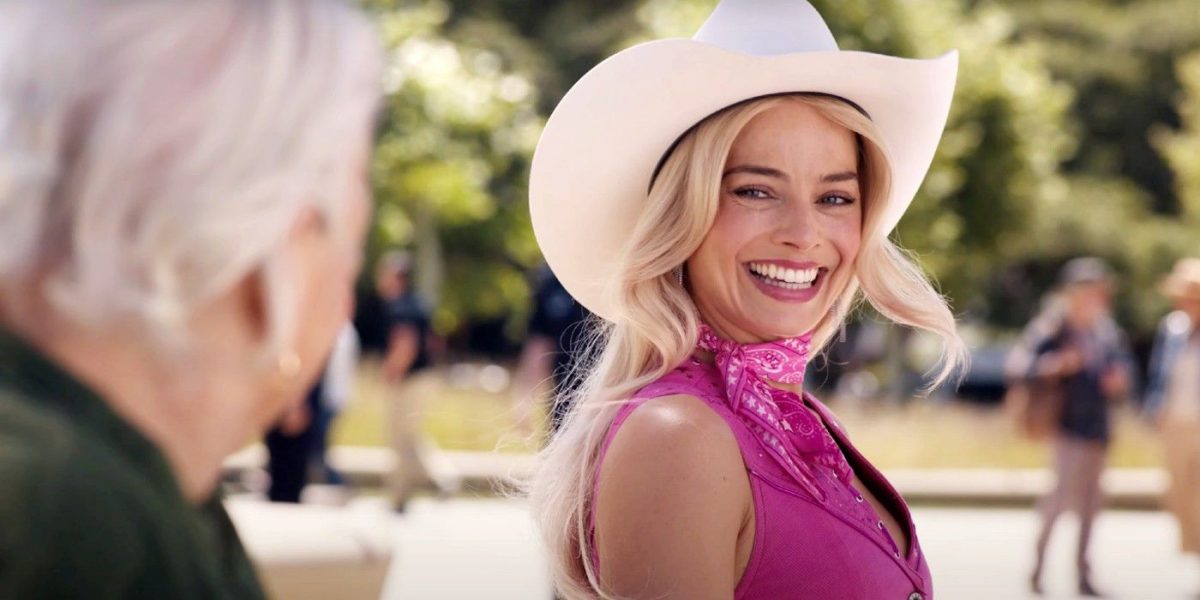
Greta Gerwig explains what the Barbie movie’s bench scene really means and the story behind the casting. Co-written and directed by Gerwig, the film follows Margot Robbie’s Stereotypical Barbie who is suddenly stricken with worries about death and leaves the utopian Barbieland in search of self-discovery in the real world. In Venice Beach, Barbie finds herself on a bench next to an elderly woman, and the two have a brief back-and-forth.
During a recent appearance on the Kermode & Mayo’s Take podcast, Gerwig explained what Barbie’s bench scene actually means. The director also explained that the elderly woman on the bench is played by a friend of hers, Ann Roth, a legendary Oscar-winning costume designer for The English Patient and Ma Rainey’s Black Bottom. Read Gerwig’s full explanation below:
She looks at a woman who is actually a friend of mine, brilliant costumer Ann Roth. She was 91 when we shot that. She’s looking great. She did the costumes for Midnight Cowboy and Klute. She’s a legend. I think she’s one of the oldest people to ever win an Oscar, recently. Anyways, she’s fabulous and I had to really promise to have a lot of martinis with her to get her to do this movie.
Barbie’s sort of looking around at the world and then looks at her and takes her in, and she’s never seen aging before, and she’s struck by her, and she says, “You’re so beautiful,” and Ann, as this woman says, “I know it.” It’s such a wonderful moment because A) Ann is fabulous and B) it’s just this kind of connection through time and I think one thing I’m always interested in as a filmmaker is women talking to each other through generations. I think that’s fascinating to me and it’s this first glimmer of humanity with idealization of this is the ideal way that someone looks or is.
Even with optimization, like “We’re gonna make you better stronger faster.” There’s this hysteria around maximizing everything and I think sometimes the part where you age or things break down isn’t without its own beauty. I always think of the paintings that Monet made when his sight was going and they’re unbelievably beautiful, so I don’t know that everything always has to be optimized.
Why Barbie’s Bench Scene Is So Important
Despite being one of its standout moments, Gerwig had to fight to keep Barbie’s bench scene from being cut, which she calls “the heart of the movie.” Even though it may be not vital to the plot, the short scene does depict something important about Barbie – she’s never seen aging before. When confronted with the sight of an elderly woman for the first time, Barbie isn’t repulsed or frightened, but she sees the beauty in this unpleasant aspect of this uniquely human experience and is comforted by the confidence and effortless self-affirmation of her response, “I know it!”
The bench scene also subtly plants the seeds for the Barbie movie ending and is crucial to informing the main character’s decision. Rather than remaining in the utopia of Barbieland, a plastic paradise where everything is perfect, Barbie decides to become human despite all its discomforts like aging and death. Just like the scene on the bench, Barbie is able to look past this and see the beauty of the human experience, and rather than fearing death, realizes that it can give meaning to life.
Source: Kermode & Mayo’s Take
Publisher: Source link


Born Again’ Showrunners Detail How the Media Ties into Season 2
Marvel is fast approaching the release of Daredevil: Born Again Season 2, marking its second live-action Disney+ show of 2026. Bringing back Charlie Cox's Matt Murdock and Vincent D'Onofrio's Wilson Fisk, this season picks up where Season 1 left off,…
Mar 23, 2026
New ‘Wheel of Time’ Animated and Video Game Adaptations Are in the Works
Amazon might be finished with The Wheel of Time, but we haven't seen the end of the story when it comes to adaptations of Robert Jordan's bestselling high fantasy saga. Fans were left blindsided when Amazon abruptly pulled the plug…
Mar 22, 2026
‘Off Campus’ Teaser and Release Date Revealed by Prime Video
No one expected a love story between rival hockey players to become one of the most talked-about TV shows of 2025, but there's a lot more where Heated Rivalry came from, as a new teaser for Prime Video's foray into…
Mar 21, 2026
Sarah Michelle Gellar Urges ‘Buffy’ Fans to Avoid Reading Leaked Reboot Scripts
Buffy the Vampire Slayer fans have had a rough few days after Hulu officially pulled the plug on a revival of the series, which would have brought star Sarah Michelle Gellar back as the titular heroine. Described as a continuation…
Mar 20, 2026