Guilty Conscience | Film Threat
May 1, 2023
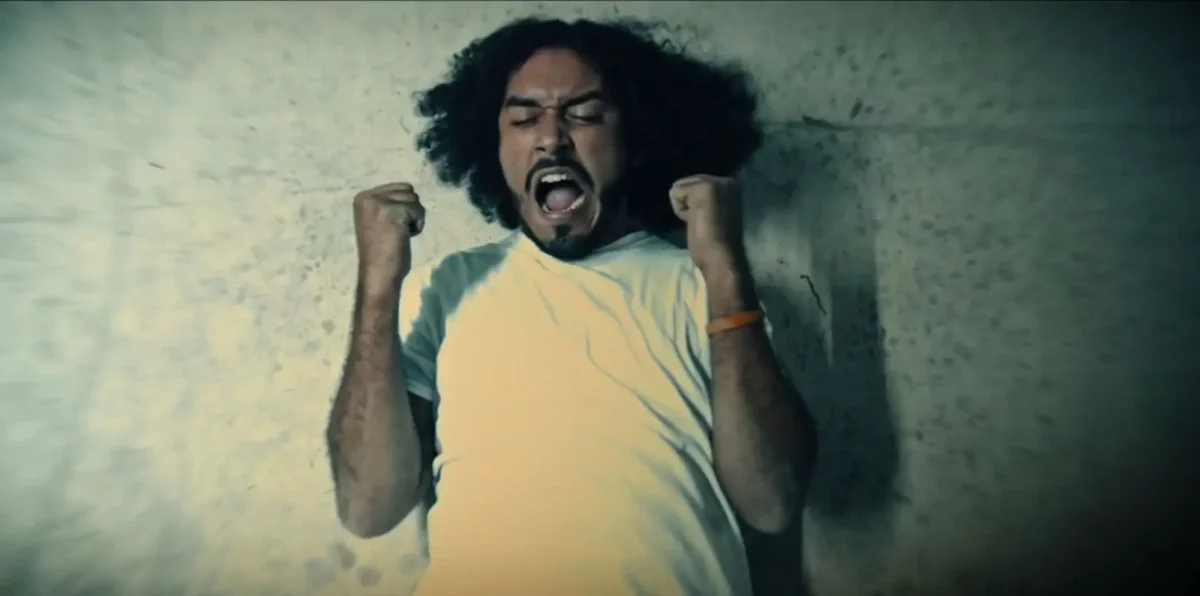
“Just forget about me, okay? Like you forgot about everything else.” These are the scathing words directed at James Winters (Giovanni Marine), the bemused and mentally unwell protagonist of Guilty Conscience, Gregg DaCosta’s unnerving psychological thriller/horror about the processing of trauma and the inability to confront reality because it’s just too painful and unfathomable.
DaCosta immediately implants the idea that James is an unreliable and anguished narrator, opening with a ground-level shot of James sleeping on the floor of a garage and then waking up in his bed. Was it all a dream or more like a nightmare? We aren’t sure, and James isn’t either. James phones his psychiatrist, Dr. Selene (Johanne Kesten), who arrives for a house session. During the session, James is once again transported to that garage; this time, he isn’t alone. A guy dressed as an orderly is demanding that James takes his pills, and James reacts aggressively. What is real? Well, what appears real is James’ relationship with his fiancé, Chanel (Asia Niema), who is trying to help him make sense of his surroundings. She is planning a birthday party for him, hoping to guide him back to some semblance of normality. But James continues to have episodes, which affects his relationship with Chanel.
“Was it all a dream or more like a nightmare? We aren’t sure…”
Through the immaculate editing by Patrick Flynn, James is plucked from one location and hauled to another in the blink of an eye. For example, James is about to open the garage door on one side, and a slick invisible cut takes us to James opening the door from the other side, distorting our sense of place as we’re now in the doorway of a brightly lit bedroom. Since we’re watching the film unfold through James’ eyes, there is no way of knowing if what we’re seeing is a hallucination manifested by his crippling anxiety and trauma.
So many films have featured a protagonist losing their grasp on reality (from big-budget movies like Shutter Island to small-budget affairs like You Go to My Head). But DaCosta upholds the suspense robustly with tightly framed compositions, smooth transitions, and intermittent leaps and gaps in time. These ingredients allow DaCosta to make a typical suburban house feel frightening and unreal. The garage, for example, is unusually moody. The minimal use of props and flickering, buzzing lighting renders the space into a psychological cell of James’ own making.
Publisher: Source link






The SpongeBob Movie: Search for SquarePants Review
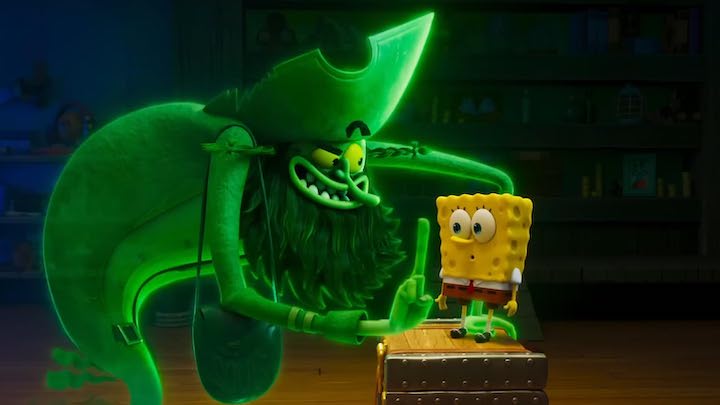
It raised more than a few eyebrows when The SpongeBob Movie: Search for SquarePants was selected as a closing night film at AFI Fest. It made more sense within the screening’s first few minutes. Not because of the film itself, but the…
Feb 5, 2026

28 Years Later: The Bone Temple Review: An Evolving Chaos
Although Danny Boyle started this franchise, director Nia DaCosta steps up to the plate to helm 28 Years Later: The Bone Temple, and the results are glorious. This is a bold, unsettling, and unexpectedly thoughtful continuation of one of modern…
Feb 5, 2026
Olivia Wilde’s Foursome Is an Expertly Crafted, Bitingly Hilarious Game of Marital Jenga
If you've lived in any city, anywhere, you've probably had the experience of hearing your neighbors have sex. Depending on how secure you are in your own relationship, you may end up wondering if you've ever had an orgasm quite…
Feb 3, 2026
Will Poulter Is Sensational In An Addiction Drama That Avoids Sensationalizing [Sundance]
Despite all the movies made about addiction, the topic does not naturally lend itself to tidy cinematic narratives. (At least, when portrayed accurately.) While actors often visualize the condition of substance dependency through expressive physical outbursts, the reality of recovery…
Feb 3, 2026