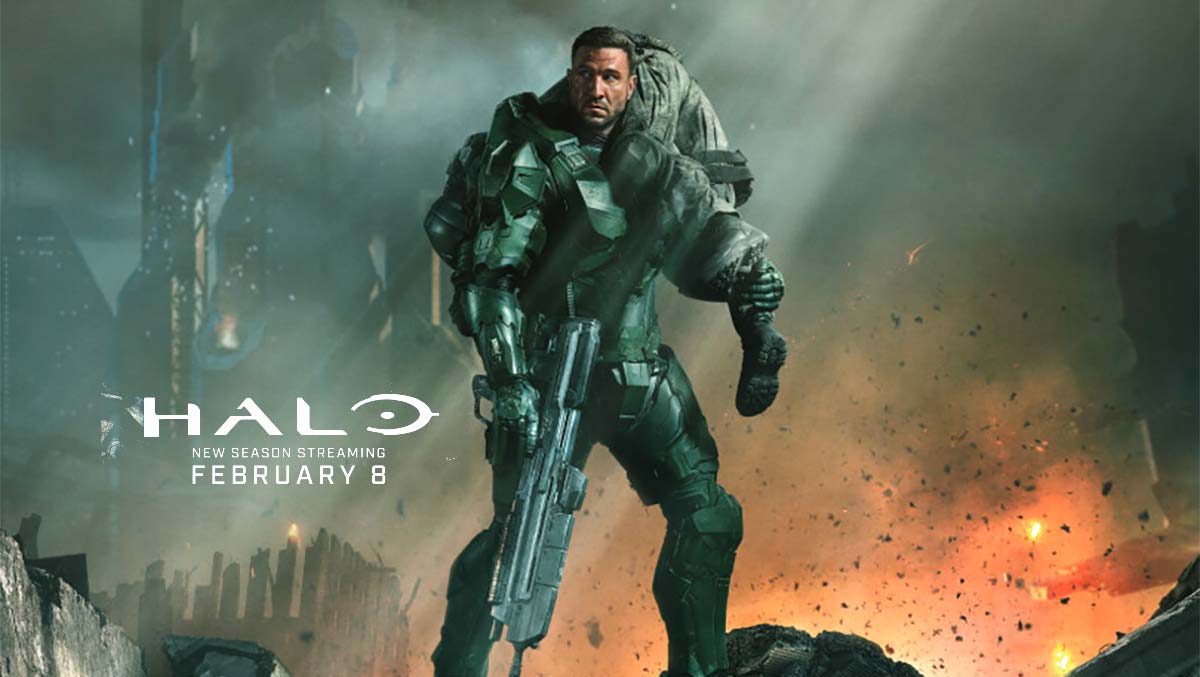
‘Halo’ Season 2 Resets the Tone & Expands on the Games
Jan 26, 2024
The Big Picture
Halo Season 2 brings big changes, including a new showrunner, David Wiener, who has a well-thought-out vision for the series. The costumes in Season 2 have been upgraded and improved aesthetically, but they are still heavy and challenging to move in. Gamers will recognize and appreciate certain specifics in Season 2, and the show has received massive international feedback and success.
It’s no secret that video game adaptations are a tricky beast. With so much lore to mine through from an entire franchise, and a dedicated fan base, Paramount+’s Halo series managed to capture the action of the beloved game through impressive sequences and A+ performances, notably from the show’s lead, Pablo Schreiber, who takes on the controversial helm of John, or Master Chief. Even before the show premiered, a second season was greenlit, but big changes were in store for the production.
Ahead of the streamer’s Season 2, Collider’s Steve Weintraub and a group of other reporters visited the set in Hungary where they got to chat with the cast and creatives behind Halo. A big topic of discussion while talking to Schreiber and co-star Kate Kennedy, who plays Kai-125 in the show, was the onboarding of Season 2’s showrunner, David Wiener, and the adjustments made with his joining the show.
Check out the full conversation below to find out what changes were made, why Schreiber believes they were for the better, and how he’s determined to fight for what he feels serves the show. The duo talk Season 2 additions like Joseph Morgan’s James Ackerson and Cristina Rodlo’s Talia Perez, new suits, the relationship between Cortana (Jen Taylor) and John going forward, if we’ll see more of the Covenant’s arc, and filming in Iceland. Schreiber also talks narrative, why Master Chief will still remove his helmet throughout the season, working with Wiener on the tone and the storytelling, introducing Forerunners, and tons more.
Halo Aliens threaten human existence in an epic 26th-century showdown. Release Date March 24, 2022 Creator Steven Kane, Kyle Killen Main Genre Sci-Fi Seasons 2
How much of your costumes are the real thing and how much of it is CGI, because they look like they’re heavy?
KATE KENNEDY: Our costumes are all real.
PABLO SCHREIBER: Costumes are real [laughs].
KENNEDY: Yeah, they’re new this year. We’ve got a new custom designer, and they’ve been upgraded. They spent months trying to learn from the feedback of last year and make them new and improved. I think they look pretty fantastic.
SCHREIBER: They look fantastic. Aesthetically, I think they were definitely improved. The look is much improved. Functionally, you know, I just don’t know how much you’re gonna improve those hunks of plastic. They look great, they work great, so that’s all we’re focused on.
Related ‘Halo’ Season 1 4K Review: A Video Game Adaptation With Solid Action Worth Praising It isn’t a perfect show by any means, but there is still much to appreciate in its new physical release.
Last year you told me that it was very difficult to move in them, so I figure it’s still the same. Is it still very difficult?
SCHREIBER: Yeah, it’s just a big load to carry around. But we’ve incorporated some in the stunt work, and we’ve incorporated some motion capture this year. Oh, I guess that’s where sometimes the costume is not real, but it’s very sparse, and it’s only for specific sequences where you need to have a little bit more freedom. I would love to go even further in that direction and do more of that, mostly because of what you’re able to accomplish when you go motion capture, the movements that you can get. As amazing as our stunt people are, if they’re wearing a 55-pound piece of plastic they’re only going to be able to do so much, you know? So, I definitely would love to try to do even more mo-cap.
How much are you guys doing of the stunts?
SCHREIBER: How much are we doing on the stunts? Very little. We let the professionals do [that]. [Laughs] She’s really good physically at stunt work. So, I think she gets thrown in more often than she would like because she’s maybe better than some of her stunt doubles. But yeah, we try to let the stunt doubles do their work.
KENNEDY: Yeah, they’re pretty amazing.
SCHREIBER: We have a great department.
Can you tell us a little bit about where we meet you guys at the start of Season 2 after how Season 1 ended with Cortana and John becoming one? Are you back with everybody again?
KENNEDY: What is it, like 6 months later? How far later is it?
SCHREIBER: Yeah, four, five, or six months. Something like that. There’s a bit of a time gap. I think that’s probably almost all we’re allowed to reveal. But a bit of time has passed, and not all of the things that were set in stone at the end of Season 1 are set in stone at the top of Season 2. There has been some change and time has passed, so exactly where we are, I can’t tell you until you tune in, but that’s the broad strokes.
Can You Watch ‘Halo’ Season 2 Without Watching Season 1?
Image via Paramount
Do you think people can start Season 2 if they haven’t seen Season 1 and not be lost? How integral is the plot and story and development of everybody in Season 1?
KENNEDY: I think you’d be able to grasp what’s going on.
SCHREIBER: Yeah, I think you could jump in on Season 2, but there’s no need to because it’s on Paramount+, so you can watch it. [Laughs]
When you make the first season of the show, you’re learning the infrastructure of how you can make something like this, how many stunts you can do in a week, and just everything about it. How is making Season 2 different than the first season because of how much you learned making that first season?
SCHREIBER: So much. I think, obviously, the biggest change is we have a new showrunner. David Wiener is our showrunner for Season 2, and that’s the biggest change because, essentially, we’re paid to live in worlds that other people create. So, this year we’re living in David Wiener’s world, and he’s an incredibly intelligent guy with a really well-thought-out vision, and it’s a story that I am happy to live in and a world that I’m happy to live in. I’m really excited to be telling his story of this version.
So, that was the biggest change from Season 1 to Season 2, but in terms of logistics and all that kind of stuff, yeah, it’s a massive, massive show. You don’t really appreciate it until you’re in the middle of it. I think that was also one of the growing pains is that it’s David’s first time doing a show of this magnitude, so he came in with all his preconceived notions of what it would be like to work on a show this big, but then his mind was blown by how big it was. So he’s going through his own learning process while we already went through one the first season. So, we’re meeting somewhere in the middle. It is a massive show that you have to take your lessons as they come. A lot of those were above our pay grade as actors. They’re producer questions, and that’s another factor is that you can only do so much as an actor. You can bring to life the world that you’re given to bring to life. So, you can offer your ideas or opinions, and it’s up to other people to implement those.
Get Used to Seeing Pablo Schreiber’s Face in ‘Halo’ Season 2, It’s Not Going Anywhere
Image Via Paramount+
Obviously, you’re dealing with very, I would say, conservative funding. What was the reaction to the feedback? Gamers very often give negative feedback to all the creative liberties that showrunners take while plotting something that is a video game adaptation. So, what would you say to gamers that are not happy with certain decisions? For example, Master Chief taking his helmet off.
SCHREIBER: Hmm, well, that one you’ll have to get used to. [Laughs] We established that in the first episode that was going to happen. That’s what our show is about; it’s about exploring the dynamic between John and Master Chief. So, if you’re not on board with that one, you might as well give up. As far as what to say to gamers, come on back and see the differences between Season 1 and Season 2 and see if you like it. And as far as the feedback that came in, it was massive across the board. The show was incredibly well-received internationally, as well as domestically, but the numbers we did internationally for Paramount+ are off the charts and insane. So we’re pretty happy with where we landed in terms of feedback and in terms of business that we did for the network.
Now it’s about creating the kind of show that we all can be the most proud of, and that’s a mission that I never give up on. I’m going to push that until I die, or until I’m asked to leave. I want to make the best show possible, and I want to try to surround myself with people that are helping do that, like this one here.
Don’t get me wrong, I’m a gamer myself and I don’t want to see the same story on screen. That would be pointless.
KENNEDY: Yeah, I think David’s done a good job this season of establishing and developing the characters that we already know, and then he’s brought in some new characters. I think the gamers will be happy with certain specifics within this series. I can’t reveal what they are, but there are things that they’ll recognize.
Last year, when I was talking to Pablo in the junket, you were already very excited about David coming in on Season 2, and you said this season will be darker and more grounded as a war story. So I’m wondering, in practical terms, what does that mean? How do we explore the intergalactic part this time?
SHREIBER: Yeah, that’s one of the things that I’m the most happy with in seeing the results this year is, it just feels vastly more authentic. The tone is the biggest improvement that I’ve seen from the footage that we shot. “Darker” is a description of the tonal palette more than, I’ll say, the drama. It’s more the visuals. It is dark in other ways, as well, but it’s mostly the visual palette. It’s one of the things when you’re working with costumes that are plastic and not real, you have to hide that a little bit, and one of the best ways to hide that is if the visual palette is darker. If there’s more between the camera and the thing that you’re shooting, if the camera is more alive and in the action rather than being back here and seeing everything, then everything feels more authentic and more real, and you feel like you’re in the action, and the action is more subjective. So that tonal shift, for me, is the biggest thing that I’m the most happy with. And that’s a function of the person who’s telling the story, creating the world that we’re living in. That’s when I say I’m happy to live in his world. It’s one of the shifts that I was the most happy with.
KENNEDY: There’s a huge difference in the action sequences this season. I think they look so impressive and very visceral because you’re following them in a different way. But then we also straddle the personal stories of the effects of war, as well, in a stronger way this Season 2. So it’s a good dichotomy of both.
What Is the Status of John and Cortana’s Relationship in ‘Halo’ Season 2?
Image via Paramount+
I really enjoyed the evolution of Cortana and John’s relationship, and where it ended up in the finale. I’d love to hear from you, now that those two are kind of working together, does that call for changes to you when Cortana is in control? Can you talk about what that is doing for John, and what that’s doing for your performance in Season 2?
SCHREIBER: As I said, certain things that are set in stone at the end of Season 1 may not be set in stone at the end of Season 2. But one of the things you’re dealing with when you talk about John and Cortana is that you’re dealing with a relationship that’s steady through the video games, right? It’s a functional relationship. She’s your tour guide through the video games, and he’s you through the video games. So that relationship, by nature, can’t change that much in the dynamic of the video games. So, if you’re telling a long-form TV series, you don’t want to go right to whatever that relationship is in the games immediately because you’ve lost the opportunity to tell some kind of arc or some kind of story. So, that relationship evolved over the course of Season 1, and it will continue to evolve over the course of Season 2. I think it goes to some very interesting places in Season 2. I’m curious to hear what you think about it when you see it.
I’m not sure how many episodes this season is.
KENNEDY: It’s eight.
SCHREIBER: Are we allowed to say that? [Laughs]
You’re filming the last block of episodes now. Of the eight-episode scripts that you’ve gotten, were there certain scripts that you can’t wait for people to see? Like Episodes 1, 4, and 7? I’m curious about your reactions to the scripts, and if you have a favorite.
KENNEDY: I think 4 is very exciting. It encompasses a lot of the stuff that wasn’t there in Season 1. I think I’ve managed to sneak a little look at it, as well, and it’s looking pretty incredible. That’s a really exciting episode.
SCHREIBER: Yeah, I would echo that. I think [Episode] 4 is kind of the action peak of the first half of the series, and it has a plot point that is very, very beloved by Halo fans and people who love the game. It covers some territory that I think people will be very interested in seeing, and I personally can’t wait to see myself, as well.
Related How ‘Halo’ Humanizes Master Chief Via His Relationships and Backstory The Paramount+ series is exploring what forged the super-soldier into the person he is.
What do you think is the biggest challenge of this season, not only in front of the camera but outside?
KENNEDY: Just raising the bar. Getting better. Making it better.
SHREIBER: Getting better, yeah. I mean, you always want to continue to try to improve things, and that’s been the fight. That’s the thing that you can see when you look at the screen is you can mark the improvement in very real ways, and so that feels exciting. But the challenge is, again, when I say this is a massive show, it goes hand-in-hand with the fact that the challenges are huge, and across the board, the challenge of bringing the costumes to life has always been a massive challenge, and continues to be. I think we went a long way in shooting it in a way that really helps that. So, that’s a challenge that I think we rose to this season.
Incorporating a new vision. The biggest thing being, a new showrunner and what story is he gonna tell? I’d say that’s maybe one of the biggest challenges is getting everybody on the same page around a vision that’s different than the one that we started with. A big challenge, but I think successfully done, and everybody’s happy with the results we ended up with.
You started filming this season in Iceland, and I know that’s part of the first two episodes. What does that location bring to the series that will be unique that wasn’t in Season 1?
KENNEDY: It was just so beautiful. Aesthetically, it was so impressive there. And to start there, I think it really set the tone for the rest of the season because we weren’t in the studios that we know so well. It was like a really lovely new discovery. But I think it’s just the vastness, the space — it was huge. The conditions were very interesting at the time. [Laughs] We were in the midst of a storm, like a grade-five storm, or something crazy. It kind of really helped raise the stakes of the whole piece.
SCHREIBER: And then shooting under a waterfall.
KENNEDY: Shooting under a waterfall, yeah. It was mad. What a start, actually.
SCHREIBER: I think scope is the thing that it adds the most, you know? The show is this massive, sci-fi, futuristic opera epic, right? When it’s functioning its best, it should be. It should be massive in scale, it should span centuries and galaxies, and that’s a hard amount of scope to bring to the screen at any budget. And so, trying to get the scale and scope and the size of the landscape, the impressiveness of the landscape when you’re going from this planet to that planet, to really put that onscreen, Iceland offers you the opportunity to shoot nature that’s just kind of mind-blowing, that feels otherworldly and like you’re on a different planet.
Image via Paramount+
The thing that I found about Iceland is that it does feel like you’re on a different planet than Earth. What was Iceland recreating in the Halo universe?
SCHREIBER: The interesting thing about that is, we could tell you the names of the planets — I’m not sure we’re allowed to — but Iceland itself is not responsible for some beloved moment in the lore. It’s more just that thing of the “other.” You start the season in the location of Iceland, and it feels very “other.” In the early parts, we shot this sequence that’s just in the fog, and it was in a volcanic area where everything looks exactly the same. It looks like, literally, you’re on another planet, and then we use this waterfall for a completely different location that is just massive and brings that scope and size and scale. So, in both situations it was about creating the sense of the “other.” But neither one was this thing that people would recognize, or need to be reminded of.
The Games Are the Blueprint for ‘Halo,’ but Not the Script
To what extent did you use the Halo games as your point of reference while approaching your characters?
KENNEDY: I just had a flatmate that was a big Halo fan, so I knew about it, but I wasn’t a massive, huge gamer. But yeah, I knew quite a lot about it.
SCHREIBER: The games are the blueprint. The games are what people love, and what they interact with, so it has to be the touchstone. It has to be the first thing you relate to, and it was for me. I’m not a massive gamer myself, so it wasn’t, for me, about playing the games. For me, it was about studying all the connective tissue that’s in the game, everything that’s been established in the five mainline games, and looking at all the cinematics, because that’s the story that gets told to you when you’re experiencing it. I played it some, but it would take me so long to get through the games where it’s sort of not functional to my process, right? So that was a touchtone. That was a place to start because it was what most people who come to this IP begin their Halo interaction with.
That being said, making a TV show, by necessity you want to create a different experience than what you had when you play the video game. If all you’re doing is recreating the same experience you had when you played the video game, then what are you adding to the franchise? You’re not adding anything. So, it was the touchstone, it was the beginning point. It was the thing that I think everybody who works on the show is very reverential about and wants to get right, but then it was also the thing that you had to expand upon, and you had to find a way to put it into a context that was going to work for this medium that you’re telling the story in.
What may have been changed in Season 1 that your character, Master Chief, takes off his helmet so often, not like in the games? In Season 2, will there be a shift in that? Will there be a change, or are you going in a Mandalorian way?
SCHREIBER: Again, we started the first episode by taking the helmet off. He takes the helmet off throughout the season because that’s the story we’re telling. We’re telling a story about the dynamic between the supersoldier, Master Chief, who’s been stuck in this suit of armor for his entire life, and his burgeoning humanity and his experience with humanity — that’s John. And so to tell that story, you have to have both sides. You have to have access to the actor’s face. You have to create a dual experience for the character. That’s our show.
The video game is a video game. He doesn’t take his helmet off because he’s you. He’s an avatar for you, and you’re supposed to believe, realistically, that that’s you. If you take the helmet off, it blows the illusion, right? So that’s where I talk about how the experience of the video game is very different from the experience of a television show. That’s the show we’re making. It’s the show we’re going to continue to make. I think, if anything, in Season 2 we’ll be a little more careful about the way that the helmet is used. For me, it’s very important that the scenes when Master Chief is Master Chief, he’s Master Chief, and we experience that. We experience what his experience is, and it doesn’t include taking your helmet off in the middle of a battle or at the end of a battle just so you can get face-time, right? That’s the stuff that I want to do away with, and I think we’re keeping control of that pretty well this season. But you’re gonna have experiences with John because that’s the story we’re telling. We’re telling the story of both sides of this character.
Image via Paramount+
I have a follow-up to that, because acting with your helmet on is literally acting with a mask on your head. Is it more liberating or limiting for you guys to act having a helmet/mask on?
KENNEDY: Yeah, it’s liberating. It’s very different. You have to rely on absolutely everything else, and it’s a real technical sport because what you think you look like, what you think the helmet is saying, you need to keep checking and seeing which angles and vibes– but I often do find it quite liberating because you can really lose yourself. Especially, the majority of my scenes this year are helmeted, and it’s full battle, so it increases the stakes within you and how you move anyway. But it is like puppetry, it’s a totally different skill.
You guys have some new cast members this year. How do you guys welcome them into the family, and who have you really enjoyed working with? What can you tell us, if anything, about scenes together?
SCHREIBER: Oh, just a lot of practical jokes. I really just razz them as hard as possible, TP their trailers… [Laughs] No, I think the biggest new editions are Cristina Rodlo…
KENNEDY: And Joseph Morgan, who is [James] Ackerson.
SCHREIBER: They’ve been lovely. They’ve been great. Really, really, really talented folks, both of them. I’ve been watching their work, and they’re both raising the bar in terms of performance on the show.
KENNEDY: In terms of their characters, they don’t tiptoe in. They really arrive with a bang.
SCHREIBER: They make a splash. It’s fun to play scenes with them. Cristina, particularly, has a very fulfilling arc over the course of the season, and I’ve really loved watching her work. And Joseph is a powerhouse, a very, very centered and solid performer who can go to a lot of different places in the course of the scene. So, to me, they both have been really, really wonderful additions.
Related ‘Halo’ Season 2 Adds Joseph Morgan and Cristina Rodlo The announcement comes as season two begins production.
So, Kiki [Wolfkill] told us that Tárnok, Hungary is a big, really cool-looking location, and it’s integral to the season. I’m curious, what can you tease about this location for the season?
SCHREIBER: We shot in Tárnok the first season. So, if you remember, when Chief goes into the caves and finds the artifact for the first time in Episode 1, that’s Tárnok caves. It looks all Indiana Jones-y and bizarre. That’s Tárnok. It’s one of the joys and limitations of shooting in Hungary is that there are some really, really cool locations that you can use, but not that many of them. So, Tárnok was a big location for us last year, and it’ll be a big location this year. I don’t know what we can reveal about its implications. Can I say Forerunner…? I already said it. It came out. [Laughs] There’s some Forerunner action that may or may not happen in the Tárnok caves. So, that’s the use for this season, and it plays a big part at the end of the season.
Have you had a personal favorite set that you’ve seen, just by design?
KENNEDY: Yeah, most recently, actually. Again, in the second half of the season, the Covenant corvette.
SCHREIBER: There’s a Covenant corvette.
KENNEDY: There’s a Covenant corvette, and it is quite amazing. It’s huge, and what the set guys did for it, and the art department, is really, really impressive. They turned it around so quickly, and it’s, like, awe-inspiring. It’s huge.
SCHREIBER: I’ll call attention, just in general, not to a specific one, but in terms of change from Season 1 to Season 2, the showrunner was the number one change, but then when you change that culture, he brings a lot of people with him. That’s been the biggest joy for me is to see the level of talent that has come with our new showrunner. James [Foster], who’s our production designer, really far and away, like one of the biggest joys for me of the season is seeing the world that he’s creating. The sets are astounding. When you say the tone has changed and it’s gotten darker, all of that is his purview. Well, David tells him how he wants to create it, but then it’s up to him to create it. He has really, really, really brought the show alive in terms of the visuals that we’re shooting and the sets that we’re shooting on. That part is really exciting for me.
Image via Paramount+
I know you were excited about David coming on since this time last year, and now that you guys are almost done with Season 2, I know you and David have had a long-running relationship for a while. What’s it been like to work together? Can you talk about how your relationship has evolved through the years and what it’s been like to come together for the show?
SCHREIBER: Oh, man, that’s one of the more complicated aspects of my life. It’s one of the hardest things I’ve done, honestly. Just being completely honest with you. It’s really hard to work with somebody that you really love, because when you don’t have a really close relationship with someone, you can just be brutally honest with them, and you can tell them what you think, and you can enforce your will on them. You can create a situation that you feel is the best for the show, regardless of what they feel. When you’re working with someone that you really love, you have to be really careful. So for us, we have, like, now a 20-something-year relationship going back. I mean, he was the best man at my wedding — I’m divorced now, so maybe that was a bad sign [laughs] — but we had this long, long, long-running relationship, and one of the things we brought early on into this was the decision that, regardless of what happened with the show and the dynamic and all that, we wouldn’t let it affect our friendship. So, keeping those two things separate, but also trying to fight for the things that you believe in — I’m a very passionate guy, and he’s a very passionate guy, so you can’t always see eye-to-eye — you have to figure out how to do those disagreements gracefully. It’s been one of the biggest challenges of my professional career, I’ll be honest.
I wanna do a follow-up to that. What’s an example of something that David fought for and won on, and what’s an example of something that you fought for?
SCHREIBER: You know I’m not gonna do that. [Laughs]
This is what my job is, to ask these questions.
SCHREIBER: I won’t give you specific examples. I’ll just say that a lot of this story is yet to be told. You know what I mean? We’re gonna see the results eventually, we’re gonna see who is right [laughs], and I’m sure it’s gonna be both. There’s gonna be things that I’m gonna be telling him, “I was just completely wrong on that. Sorry, I fought you so hard on that,” and there are other things I’m gonna be telling him at the end, like, “Snooze, you lose! You fucked that one up dude.” But, you know, that’s how it is. You can’t get everything you want, and when you’re dealing with a relationship with somebody that you love, you just have to be a little careful with it. So, it’s in process and in dynamic, and the specifics of the battles and the conversations. I won’t go into it, or tell you… [Laughs]
KENNEDY: From looking in at this relationship, it comes from two people that care so much, and they’re both so passionate about it that it would be a totally different story if it was two lackluster guys being like, “Yeah, sure. Do whatever.” But these two, it’s really wonderful to watch the care.
You probably can’t answer, but I’ll risk it anyway: will we receive some action on actual Halo this season?
SCHREIBER: Should we shake the Magic 8 Ball? “Chances are good!” [Laughs] We are optimistic!
Kai-125 Is on a Journey of Emotional Discovery in ‘Halo’ Season 2
Image via Paramount+
Alright, let me try a different approach. Kai is probably my favorite character throughout the first season, so I’m really curious as to what her story will be like now that she has her emotions back? And dyeing her hair as a sign of her freedom, I can relate to that.
KENNEDY: I think Season 1 was Kai very much discovering being emotional for the first time and how she was feeling, what those emotions are. Season 2 has moved on in a way that she’s able to control them a little bit better, and she’s trying to discover what lies beneath those emotions. So, it’s a lot of discovery of a moral compass. She’s trying to figure out what is right and who is right, and who to trust, I think, in this series. I think all the Spartans go through a real sea change this season. I think Kai is trying to hold on very tightly to the structure that she recognizes, which is the mission with her Spartan colleagues, and maybe when that is shaken a bit, it rattles Kai.
SCHREIBER: I think I’ll just blow some smoke at her for a second because one of my favorite things about this season has been, in addition to the influx of talent and the great set design and production design we’ve got, seeing the story branch out in different directions, and seeing some of the characters that didn’t have as much of a life or an expression get some kind of expression. That goes hand-in-hand with getting to see my friends who I’ve had, now, a three-and-a-half, four-year relationship with get to have real performances. Obviously, Kate had more stuff in Season 1 than Vannak [Bentley Karu] or Riz [Natasha Culzac] in terms of character development, and she nailed it, but seeing her character go even further this season, seeing Riz come to life — she’s got a really, really wonderful storyline in this season — seeing Vannak get to individualize himself a little bit, that’s been one of the big joys for me of Season 2 is getting to see other people come alive a little bit more.
Will ‘Halo’ Season 2 Explores the Covenant More?
Image via Paramount+
I have to say, what I always liked about Halo is that even though we have these good guys/bad guys division, the Covenant actually has a very legit motivation for what they’re doing. Will you explore that more in Season 2? Because I think that the TV show does it better than the games, actually, when it comes to showing their side of things.
SCHREIBER: Yeah, we definitely go into the Covenant mind-state mentality. Through one particular character, you explore it. Two characters together, you explore it a little further, and a little deeper. It’s one of my favorite things about the games, too, is how you’re constantly learning both sides. I wouldn’t say your allegiance is ever with the Covenant, but at least their opinion is expressed, and you learn that story. I believe that the opportunity for that, while we do flesh it out more than we did the first season, I believe the real fleshing out and the real Covenant perspective will come in subsequent seasons.
In your opinion, what makes Halo different from other science fiction TV shows?
KENNEDY: I think the scale of it and the diversity of characterization, because we delve into so many different types of worlds. I think it’s not as 2D. It’s really fleshed out.
SCHREIBER: The size and the popularity of the IP, obviously, is one thing that gives it its uniqueness in the world of science fiction. It’s not just a science fiction show, it’s a show based on a massively popular video game that many people know and love. I believe, and this came up earlier, that the IP is perfectly positioned to tell a really, really amazing story about humanity through the lens of war – why we fight wars, what war means, and the inner struggle that creates war, and why people, in general, can’t get along, why we fight each other. So, to me, I don’t know that it’s entirely new in science fiction. There’s probably other shows that have had similar conceits, but to me, that’s the opportunity of the show that I think we’re all still learning how to use to its best effect.
How much do you want to take the costumes with you to, like, a South by Southwest or a Comic-Con and actually walk around in the costumes and take pictures with people, and then eventually take off the helmet and reveal it was you?
SCHREIBER: I love that question because I really want to do that, but I just wouldn’t take the helmet off at the end. I just wanna be the guy doing cosplay, taking pictures with people, but nobody knew that it was the actual guy from the TV show. To me, that would be absolutely perfect.
KENNEDY: That would be a good prank.
SCHREIBER: We should do that.
Related Who Is Master Chief? The ‘Halo’ Hero Explained Who is Master Chief, the protagonist of Paramount+’s newest sci-fi show ‘Halo’?
Now with every Spartan at ComicCon, people are gonna be like, “Who’s under there?” The real question is, will the studio actually let you take them?
SCHREIBER: Why would they not?!
It’s good social content.
KENNEDY: It only fits us.
SCHREIBER: Tailor-made.
‘Halo’ Season 2 Resets the Series’ Tone
Image via Paramount+
I know it’s only Season 2, and who knows how long the show goes for, but do you guys have final destinations or completions of arcs in mind for your characters, and for the show as a whole? Where you hope it goes? Has anybody talked about that at all? When it’s all said and done with, whether it’s Season 2 or Season 10, do you guys have places you have already discussed, “This is where it could go, this is where we want it to go?” Is that even a conversation at this point?
SCHREIBER: Again, the beauty of our job is that it’s relatively simple. We bring other people’s worlds to life. We don’t have to decide on what our character arc is or where it goes. We can certainly have some influence on that. It’s one of my major goals is to have a long-reaching plan for subsequent seasons. We just switched showrunners at the beginning of this season, so I think that conversation now is…The problem with this show is it’s so big, and it takes so long to get it going because of visual effects, and to finish it, that we’re trying to get the season going as fast as possible. Now, when we finish this season, it is a golden opportunity for everybody to sit down and talk about, like, “What does the larger landscape look like?” Because I think we did a lot of great work in kind of resetting some things from first season to put it in a place that feels tonally better, tonally more appropriate. And now we have a real opportunity to be like, “Okay, so what’s the long play here?”
One of the challenges of a show like this, and a lot of streaming shows in general, is the time between seasons. So it’s gonna be, I’m estimating, two years between seasons.
SCHREIBER: Cannot confirm that. I did not say that. You did.
But it’s gonna be two years between Season 1 and Season 2 because it’s basically a year after you finish for visual effects and everything else, and languages, because of the worldwide thing. Have you guys discussed, “How can we shrink this time down, even to 18 months, between [Seasons] 2 and 3 if we’re lucky enough to get Season 3?
KENNEDY: Well, it just takes as long as it takes the VFX. You can’t rush that because it’s just so integral to the piece, and it does take a really long time.
SCHREIBER: I try to stay out of those conversations as much as possible, but I will say that when I do get in those rooms, which I’m in relatively often, literally every conversation, is, “How do we shrink the time between seasons?” So it’s high on the minds of the people that make the show, and it’s what we would very much like to do, but it’s a really, really, really complex issue and problem with all of the moving parts that this show has.
It seems that video games are the next big thing for TV and Hollywood after comic books. Amazon is making God of War, HBO has The Last of Us, Henry Cavill is making his own Warhammer series. Does it matter to you as an actor at all what the source material is?
SCHREIBER: Does it matter at all? Yeah, the source material is everything. I mean, the scripts are everything, right? What the source material is, or where it comes from, is…
KENNEDY: Inspiration.
SCHREIBER: Inspiration, and a factor to consider, but ultimately, what is put on the page to make this show, or to make whatever show you’re making, is the thing that makes the biggest difference in how it feels as a product. So, I’m not sure exactly what the question is.
If you have source material, such as video games compared to the original script alone.
SHREIBER: I think it makes such a big difference as to what the source material is. In other words, there’s a big difference between the writing of different video games — huge difference, right? — in how certain video games are written versus other video games, which changes the source material. There are video games that are written in such a way that you can take them, put them on screen as a TV show, and they just work, right? There’s others that maybe don’t make that translation as well. So, there’s a lot of variance between source material when it comes to video games, comic books, any of those things.
Related 7 Video Game Adaptations to Get Excited About Get set, gamers! There’s a lot of exciting content coming your way and this guide has all the details.
For Halo fans, what do you think would surprise them to learn about the actual making of the show?
KENNEDY: The length, I reckon. [Laughs]
Can you clarify? I forget what it is. Is it eight months? Is it nine months for the shoot?
SCHREIBER: By the time I leave, I will have been here for a year.
To film each season?
SCHREIBER: One season. Well, I mean, the first season we got hit with a pandemic in the middle of it. That was almost 18 months, or something, from beginning to end. But nine months is what they put aside as production. Shooting for nine months. I came two-and-a-half months early, so by the time I leave it’ll be almost a year.
Yeah, I don’t know how you’re shrinking the in-between. There’s no way to shrink that.
SCHREIBER: Yeah, there are some very complex ways, but it’s not going to shrink by much.
The only thing that I know would be to start shooting Season 3 a hell of a lot sooner. I mean, that’s the only way, is to almost do a month hiatus and then, if you had scripts, jump right back in. That’s the only way to shrink it.
SCHREIBER: I’m gonna submit all of these ideas to corporate parents, if you guys don’t mind, and we’ll have this solved by the end of the day. [Laughs]
You guys do a million interviews about the show, but what does nobody ask you about that you’re like, “This is actually the best thing to talk about, but nobody’s asking,” or, “This is interesting…”?
SCHREIBER: Nobody in the history of this show has asked Kate about her flute skills.
KENNEDY: That’s true. I have been waiting.
SCHREIBER: She is an incredibly talented flutist, and nobody will ask her.
KENNEDY: And I’ve asked David, “Kai – flute? Can I Pie-Piper the Covenant into the wrong place?” But it’s not happening. Season 3, maybe. I can probably get it in the suit somehow.
SCHREIBER: That’d be a good little TikTok video – Kai with a flute.
Image via Paramount+
What did you enjoy the most about being on set?
KENNEDY: I think being with these guys. My favorite days are with all four of us because we’ve been through so much over the last three or four years that it feels like a very safe place, in some way, where you can really explore and try new things because you know you’re in safe hands. And especially working with this guy because he is a very, very impressive, not only actor but leader for all of us.
SCHREIBER: I would agree with that in that I think we now have a shorthand with each other where we can really be honest with each other, in terms of what’s being effective and what’s not, and nobody is super precious. So I can easily say to them, “Oh, think about this moment, or look at this moment,” and they’ll take it, and I look for the same thing from them. Like, if something’s not happening or working about a scene, I look to them and say, “Well, what can we do to make this better?” And I think to be able to have that kind of dialogue with your castmates is pretty [great].
KENNEDY: I think we got there quite quickly because of the physicality of the show. Like when your hearing is impaired, and you can’t see through the mask, you have to really figure out a different way of communicating.
SCHREIBER: When the mics aren’t working. Supposed to be doing a scene, but you can’t hear them… [Laughs]
How to Get in (and Keep) Spartan Shape
Image via Paramount+
Speaking of the physicality of the show, every time you post a photo on Instagram, I’m like, “Damn, this dude maintains an insane physique to carry that suit around.” I’d love to hear about the process of trying to do so many hours on set, but also, you’re eating, you’re working out, and you’re making sure you maintain Spartan shape. I’d love to hear both of you guys speak to that. What’s the training like? How do you maintain that throughout the course of a year? Because getting there is one thing, keeping it for the duration of the production is a whole other. It’s really hard to do.
KENNEDY: Yeah, it comes in seasons throughout the season because you need to be very strong constantly for the suit. But then, when the suit comes off, you have to be much leaner and look strong, and there’s a difference between those two things, I think. Because you also don’t want to be too bulky within the suit because it’s just too hard to move around in it. So you have to vary it within the 10 months. It’s a constant kind of change for me.
SCHREIBER: Yeah, the physicality, it’s almost like another job, you know what I mean? I think of it as I have, like, three or four full-time jobs — saying my lines, producing the show, eating 7,000 calories, training every single day — and they’re all like their own kind of job that could be a full-time job on its own. So, yeah, as Kate said, it varies. Like when you’re out of the suit, and specifically if you’re showing parts of your body, you have to look a certain way so that the lean and the rip stuff is there. Then you want to have enough strength to be able to carry the suit at different times. So, this season there were three or four cuts that I had to do where I had to be lean and ripped, and then the rest of the time is just eating as much as I can and getting to the gym as often as possible.
When you were filming, you have three or four cut scenes. Do you ask them, “Hey, what are the chances of us filming all these cut scenes within the span of a short amount of time?”
SCHREIBER: It’s not a terrible question. The problem is, they span the entire season. They’re in different blocks, so there’s different directors. It almost ended up being a one cut per block kind of thing, but it’s actually not a bad rhythm either, because you don’t want to live your life like that. Having abs is not healthy. Actually, I was just reading a New York Times article where they literally said just that. They’re like, “New scientific finding: abs are not healthy!” You have to be at a reduced water retention that is just not good for your body, so you want to kind of space it out. You want to give your body time to recover, you want to do all that kind of stuff.
KENNEDY: And they were quite thoughtful this year in terms of not putting you in the suit before those scenes, the day before.
SCHREIBER: There’s a lot of things that make it more challenging than other things. I’ve pointed those things out, and they’ve been really good about arranging the schedule to fit that. So, I have no complaints in that regard.
Halo Season 2 premieres on Paramount+ on February 8.
Publisher: Source link


‘A Tale of Two Cities’ First Look Reveals Kit Harington in MGM+ Series
The BBC and MGM+ are teaming up with a new four-part limited series adaptation of Charles Dickens' classic 1859 novel A Tale of Two Cities. Game of Thrones veteran Kit Harington will play Sydney Carton, a cynical English lawyer who…
Mar 26, 2026

HBO ‘Harry Potter’ Series Image Reveals Dominic McLaughlin in Title Role
The first official look at HBO's upcoming reboot of Harry Potter has finally arrived, and it is already teasing a magical trailer release. As we inch closer to the show's expected 2027 release, the network has begun to reveal more…
Mar 25, 2026
‘Dutton Ranch’ Trailer Reveals ‘Yellowstone’ Sequel Release Date
Rip Wheeler and Beth Dutton gamble everything on a new life in South Texas in the first trailer for the Yellowstone spin-off, Dutton Ranch. The footage reveals all manner of gun fights, fist fights, explosions, galloping horses, and even mysterious…
Mar 24, 2026
Born Again’ Showrunners Detail How the Media Ties into Season 2
Marvel is fast approaching the release of Daredevil: Born Again Season 2, marking its second live-action Disney+ show of 2026. Bringing back Charlie Cox's Matt Murdock and Vincent D'Onofrio's Wilson Fisk, this season picks up where Season 1 left off,…
Mar 23, 2026