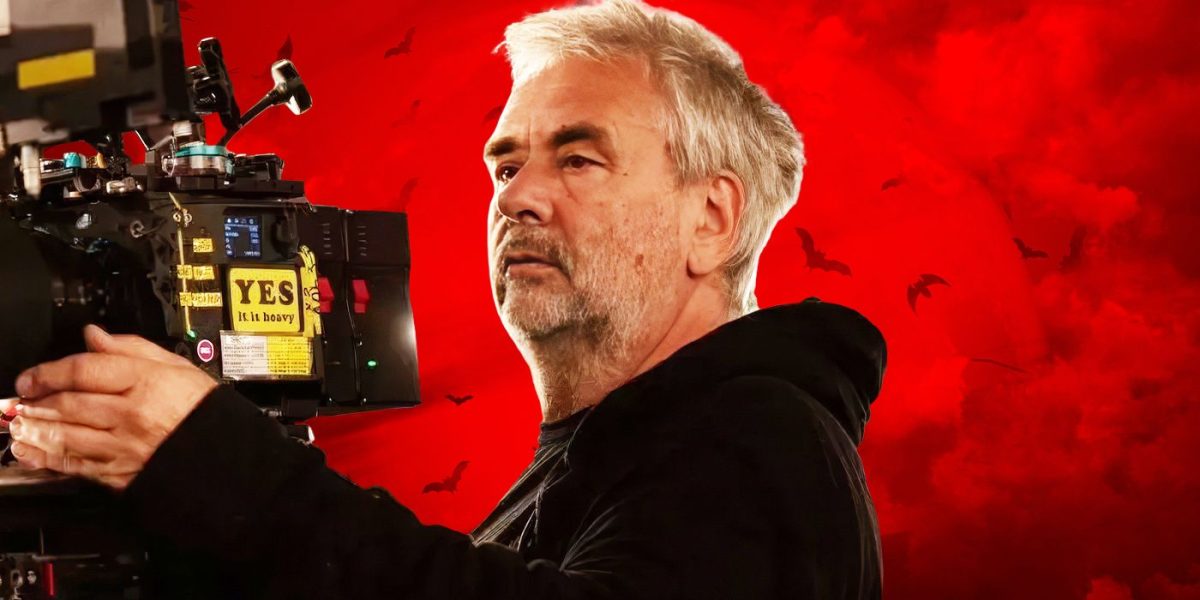
Here’s How Billie Eilish Inspired Luc Besson’s Upcoming ‘Dracula’ Movie [Exclusive]
Sep 3, 2024
The Big Picture
Collider’s Steve Weintraub sits down with Luc Besson on the Paris set of
Dracula: A Love Tale
.
In the movie, starring Caleb Landry Jones and Christoph Waltz, Besson adds a new dimension to Dracula, focusing on a centuries-spanning love story that defies death for eternity.
Besson discusses his approach to the timeless tale, who Waltz plays in the movie, how Billie Eilish inspired the tone of the movie, and tons more.
There’s been no shortage of adaptations inspired by Bram Stoker’s 1867 novel Dracula. In the last couple of years alone, we’ve seen Nicolas Cage in Renfield and a unique take on a single chapter in The Last Voyage of the Demeter. Now, filmmaker Luc Besson is returning to the material, taking inspiration from Francis Ford Coppola’s Bram Stoker’s Dracula, and leaning heavily into what he believes is the untold story. Many retellings get wrapped up in the “pure fantasy” of Dracula the monster, but Besson finds untapped potential in the centuries-spanning love story, which led him to reunite with Caleb Landry Jones as the titular vampire in Dracula: A Love Tale.
While working on DogMan together, Besson extended an opportunity for him and Jones to work together again, this time on a timeless classic that would explore an epic tale of undying love. In A Love Tale, Jones plays Vlad, or Dracul, a fierce warrior and a prince who finds infamy when he is punished by God to walk the earth for eternity. Often, we see depictions of Dracula’s terrors and powers, but Besson explores the romance integral to the story of a man who loves his wife so boldly that he renounces God for her untimely death and attempts to reconnect with her through time.
During this interview, where Collider’s Steve Weintraub sits down with the director on the set of A Love Tale outside Paris, Besson is forthcoming with details about his 2025 film. We learn about the characters Jones and Academy Award-winner Christoph Waltz play, how nine-time Grammy Award-winner Billie Eilish inspired the tone of the film, and details about this star-crossed take on the iconic vampire. For all of this and more, check out the full conversation in the video above, or you can read the transcript below.
COLLIDER: Do you know when you wrap?
LUC BESSON: At the end of next week, and then we have another two weeks in November because I’m waiting for Autumn.
What is that like for your actors when they have to pause filming and then come back?
BESSON: It’s okay because the scene in Autun is in the 14th century anyway. We finished the 19th century, and he will go back to the 14th. So, it’s okay.
Luc Besson Tackles What’s Always Missing From Dracula Retellings
Image via Zanda Rice
What was it about this Dracula story that said, “I wanna make this movie?”
BESSON: There are some versions that are wonderful. [Francis Ford] Coppola’s version I loved when I watched it the first time. But there is one element that I always miss that I feel in the book — it’s the love story. So, for me, it’s the ultimate love story: a man who will wait 400 years to see the return of his wife. It’s just the ultimate love story for me, and that’s, for me, the angle. Of course, there is some blood and some monsters and things, but the main thing is the love story.
There are gonna be people out there who actually are not familiar with the Dracula story.
BESSON: Good.
What do you want to tell those people who have not read the book and don’t know the story?
BESSON: It’s just about the devotion, the devotion of his men. He loves his wife. It’s his only wife, and he has loved her since day one. God took her, and then he wants to punish God.
Dracula has been portrayed in movies a number of times. For your version, is it a grounded, realistic version? Is it a heightened version? Is it a fantasy-type version?
BESSON: I love when you are at the border of it. It looks real, and also totally fake. I love that. I love to flirt with that. You’re wondering, “Is it coming from a true story?” I love that. I love to play with that. So, it’s not totally fantasy — no one’s flying with a cape, for example — but it looks real. The locations we shot are in Palais-Royal and a couple of nice places in Paris, and the studio designer does a great job, so you believe in everything. That’s the magic for me.
One of the biggest moments of the movie is his transformation. How did you envision designing how he would sell himself?
BESSON: He doesn’t make a deal with the devil. He banished God from his life. God gives life, but God can also give death or forbid you to die, so that’s his punishment. “You’re not gonna die.” That’s his punishment. Everybody wants to be eternal, but after 400 years, you wanna die. You want to leave.
I have often wondered what it would be like to live that long, the pros and the cons.
BESSON: It’s probably boring after a while. What’s interesting is he still has this hope, and so many times during the story, he thinks he’s going to see the reincarnation of his wife, and he doesn’t. Then he has to wait again. So, he goes by all the hope, by the desperation, then he wants to finish, he wants to kill himself, but he cannot! We see the ups and downs all the time for four centuries. It was so interesting to play with the 15th, 16th, 17th, 18th centuries — different costumes, different places, different hair, different everything. There is not one Dracula in the film, there are, like, 21, and that’s where Caleb is amazing for that. He’s a chameleon.
I’m curious about that. The movie is two hours long, give or take, whatever the movie ends up being.
BESSON: It’s not three hours. I promise.
Of course. How much time do you spend in the 15th century and, like you mentioned, showing him going through time and then ultimately, you end up in the 19th century?
BESSON: I don’t know exactly, but it’s a good caliber. Most of the time, it’s flashbacks. You tell a little bit of the story of the 15th century, and then we come back to the 19th. Basically, it starts in the 14th century for, I will say, the first act, and then we go to the 19th and back to the past all the time.
We are sitting in an amazing set. For people that are watching, what do you want to tell people about this set?
BESSON: It’s equipped in the Carpathian Mountains in Romania, and it’s actually the real painting from a real chapel in Romania that we copied. It’s painted by hand. All the golden halos are painted by hand. I tried to shoot in Romania in a real [chapel], but it’s too hard. It’s too difficult, and it’s really precious, so I was scared to damage it. So, we redid it here.
Do you spend a lot of time on this set in the movie?
BESSON: We spent a week in it, so lots of things. We see it in the 14th century and the 19th century. Now it’s the 19th-century version, so it’s a little wounded and greasy and lots of spider webs.
Who Does Christoph Waltz Play in ‘Dracula: A Love Tale’?
Image via Universal Pictures
You cast Christoph Waltz as the priest. What can you tease people about his character?
BESSON: He’s not a normal priest. [Laughs] He is very sneaky in a way. He has a little bit of Sherlock Holmes — a little bit. He knows how to navigate between the rules of the government and the church, and he’s playing with the rules. He’s on the border. What happened is you have this source of vampirism somewhere in Europe, and almost no one believes it. But he knows because his congregations have been fighting them for 400 years. He’s in charge of finding the source, and he’s actually never found a vampire alive. His goal in life is to at least have one. So, maybe he will find one and be able to talk with him, and the talk between a vampire and him is very interesting.
That’s what I wanted to know. Caleb is such a good actor and Christoph is such a good actor. When you put the two of them together in a movie, you obviously need to have a scene, at least one, where it’s them two going head-to-head, and verbally, I’m sure that’s gonna be great. What is it like writing that dialogue and making the audience root for both sides.
BESSON: By the way, it’s today.
You’re shooting that today?
BESSON: Yeah, the first time they met together.
But I am curious, what is it like writing that scene?
BESSON: I think it’s not taking a position. I’m rooting for both of them. I just want to basically say to both of them, “Guys, I love you both. Good luck.” They try to convince each other, and that’s why it’s interesting. The priest tries to make him understand that he’s here to help, and Dracula thinks that he’s here to kill him. Now they have to explain to each other to understand each other.
Is there a way for the two of them to work together or not at all?
BESSON: No.
‘Dracula: A Love Tale’ Is Not a “Pure Fantasy” Version of the Vampire
“I try to stay focused on the love story. The movie is very emotional.”
Image via Virginie Besson-Silla
If you don’t mind sharing, there are always rules in a vampire movie about what can kill someone — weaknesses and strengths. What can you say about your version in terms of powers?
BESSON: I try to respect a few rules, the common rules of Dracula. He’s sleeping in a coffin, and to kill him, you have to take a hammer and a silver nail, put them in his heart, and cut off his head. That’s the classical thing. But for the rest, I try not to play with it but to serve the storytelling. I’m using only what served the purpose. For example, in the book he transforms into a bat, he’s walking on the wall, or can be a green fog. I don’t want to use that too much because it makes it too fantastic. I try to stay focused on the love story. The movie is very emotional, in fact.
That’s what I was getting at earlier in the conversation, with the fact that it could be the grounded version or more fantasy.
BESSON: I’m not doing pure fantasy. I’m not doing a version for kids, PG-13, so they can take the popcorn and eat quietly.
I’m assuming this is an R-rated version?
BESSON: Not sure.
So it could go either way?
BESSON: I think it’s going to be at the limit. There are a few scenes where it’s a little bloody, but it’s not the main thing.
Is it one of those things where you wanna shoot it the way you’re gonna shoot it, and then in the editing room, you can figure out what the film needs?
BESSON: No, I’m gonna edit the way I want, and people will tell me, “Oh, this is rated R,” or “No, that’s okay. We can do PG-13.” Then if we’re not far, we will choose. But it’s definitely not a gory film. Rated-R is blood everywhere, and it’s not.
I saw the photo of Caleb in the armor. It looked fantastic. Talk a little bit about how you wanted that armor to look and what were your inspirations when working with your costume designer.
BESSON: What was interesting is, more than 20 years ago, I did [The Messenger: The Story of Joan of Arc], and we had, like, 200 armors everywhere. At the time, I met this English guy, he was 30 years old, he was a young guy, and he did an amazing job. Then 25 years later, I came back and said, “Are you still there?” He said, “Yes.” So, he’s a little older now, he has gray hair, and he did the armor. So, we worked again together and it’s the same inspiration — to look at the real armor from the time and to make it a little bit different, just at the limit of the fantasy. For example, Dracula in Romanian is Dracul, which is a dragon. So his helmet is the head of a dragon. The Ottomans, who were fighting him in the 14th century, called him The Dragon of the Carpathians because they thought that he could spread fire because of the helmet. So, there are a couple of good elements. We try to play with that.
Caleb Landry Jones Goes Method (Kind of) for ‘Dracula: A Love Tale’
Image via Deadline
Caleb is known for spending a lot of time to get ready to play a role. What is it like directing Caleb, and how much do you know about how he’s going to do the voice and all that stuff before he steps on set? Or is it sort of a surprise when you first hear it?
BESSON: We tried to find a voice together for a month. He has a Romanian coach, but he doesn’t have the same voice in the 19th century, and then the 14th is different. There’s a moment where he’s 400 years old, so we have to find the voice, and little by little, “Okay, try deeper, try deeper, less accent, more accent.” And then there’s a moment where you find it. Then we tried to keep it at least when he’s 400 years old. It’s very, very low, and he does this little gymnastic before we say action where he tries to find the voice. He has to do that for like 20 seconds before we shoot all the time. But what’s interesting is he got the Romanian accent four months ago. He keeps it all the time because he’s scared to lose it.
What is it like when you have someone who is going, I don’t want to say “method,” but a little method? How much is it impacting the shooting schedule and where you’re shooting certain sequences, or not at all?
BESSON: Not at all. We’re friends, also, now, so we talk to each other a lot. “What about this? What do you think about this? What about this?” It’s a real exchange. We’re really building together, and the more we go, the more I can adapt, so when we come to the shoot, we know what to do. There’s not so much discussion on set. We know everything before. We went for a rehearsal almost three weeks together, plus Zoë [Bleu Sidel], the princess. We went for three weeks, far from everyone, just about the text, the situation, all the questions were asked at the time, so that when we come, boom, we shoot.
Billie Eilish Inspired This Take of Dracula
But will her music be in the movie?
Image via Disney+
What are you thinking about for music in the movie? Are you thinking about a contemporary score? An old orchestra?
BESSON: To be honest, I will think about it in two weeks. [Laughs] It’s not for me to think about it now. There’s some music that I have on my phone that I’m listening to that inspired me, who are probably not good for the film, but a good inspiration — the last album of Billie Eilish, for example. I’m just listening on a loop, and it’s exactly the mood that I need for for the movie. But will the songs go in the movie? No. It would be strange.
She and her brother are talented and have done a lot of music for movies. Maybe give them a call.
BESSON: I would love that. I mean, they’re so big now. I don’t think they will take my call, but I will try.
I actually don’t know if that’s true.
BESSON: I will try.
You might as well. It can’t hurt, you know what I mean?
BESSON: It’s true.
What’s the worst that happens?
BESSON: And by the way, the last album, I always love all the albums, but the last one is really amazing.
I’m curious about the look of the film and how you’ve worked with your cinematographer, [Colin Wandersman], in designing what you wanted the film to look like and the color scheme. Are certain sequences in the past different colors?
BESSON: It took a lot of time, lots of work. I sent him and the chief electrician to the museum because I wanted them to take in their mind the paintings from the 15th century, the 16th century, the German, the Holland paintings, just to get inspired. Now, there are a lot of TV series that go pretty fast, and I’m not saying they do a bad job — it’s a good job — but it’s not like art. So, let’s go back to the source. We’re very lucky, in Paris we have so many museums, so we went to all of them and tried to get the food from there. I don’t know how it’s gonna be set up in the film, but that’s what we eat for weeks; we eat paintings in the museum. So I hope you will see it one way or another. I don’t know exactly. I’m not taking a painting and saying, “I want this light,” but just to see how the painter at the time constructed their light. That’s interesting because it’s very hard to do in the movie.
I heard you’re going to be shooting a big action set piece later this year. Can you talk a little bit about what the action set piece is and where it fits in the film?
BESSON: In November, it’s the Ottomans who invaded Europe in the 14th century. The Christians tried to stop them, and they asked Count Dracula because he’s Prince of Wallachia, and he has an army, and so he tried to stop them, which is in a book, by the way. That’s a big battle where he’s gonna kill in the name of God. Then, in the next two weeks, it’s the finale of the movie, so it’s in the castle, and there’s also a big fight.
Images via Virginie Besson-Silla
What do you think will surprise fans, once they’ve seen the movie, to learn about the making of the movie? Is there anything unique about this shoot or are all films sort of very similar, just unique problems on each one?
BESSON: I think it’s all the movies now are so technical that they always complicate. The hardest thing is to keep the wire of the storytelling and the emotional journey of the character. That’s where it’s the most difficult to remember, “Okay, at this time, this is how I feel, and this is where I need to go.” There are so many shots and so many technical things to resolve that sometimes you forget. I’ll give you a stupid example. A guy is running in the street, he comes to the apartment, and he’s not breathing [hard] because it takes three months before you shoot outside and inside, so everyone forgot that the guy was running. He should be like this [breathes heavily], and they open the doors, and he’s like, “Hi.” That’s the most difficult, is to keep it emotionally logical.
I don’t think a lot of people realize the importance of a script supervisor and trying to, as you just said, keep everything so that the audience never falls out of believing what they’re watching.
BESSON: Yeah. That was very difficult. It’s the second time I have worked with Caleb, and on this one, he has 20 different characters in 400 years, so it’s very hard for him to keep the emotional link. I have the feeling he trusts me much more on this one because he says, “Okay, I’ll leave that to Luc because I’m getting lost.” [Laughs] “I get lost between the periods.” So, I’m very, very focused on that. I try to never let him down to be sure that I’m holding it and it’s the right thing to do or the right thing to express.
One of the things I think really helps a movie is when there is a break in filming. It allows a director and a production to look at all the footage, and when they go back to shoot, like when you’re shooting later this year, you can see if you missed anything. Do you feel like this helps the movie?
BESSON: I mean, I’ve spent my weekends editing for three months, all the time. The period changes all the time, so you’re really obliged to go to the editing and to be sure. You go from one shot to one century, and then you turn it to another century. You need to be sure that it goes right to left, right to left, and that the value of the shot is good, the light is good. So, no, I go to the editing, and every night the editors send me the pieces, and then we can correct. There are two times where I said, “Okay, let’s redo this shot. It will fit better,” but it happened twice only.
Dracula: A Love Tale will hit theaters in 2025.
Image via Virginie Besson-Silla
Publisher: Source link




Eggs – Film Threat
In writer-director-star James Clair’s short drama Eggs, a man struggling to rebuild his life finds his quiet mornings turning into strange conversations with the very eggs he is meant to cook. I mean, they want him to eat them. So…
Mar 11, 2026
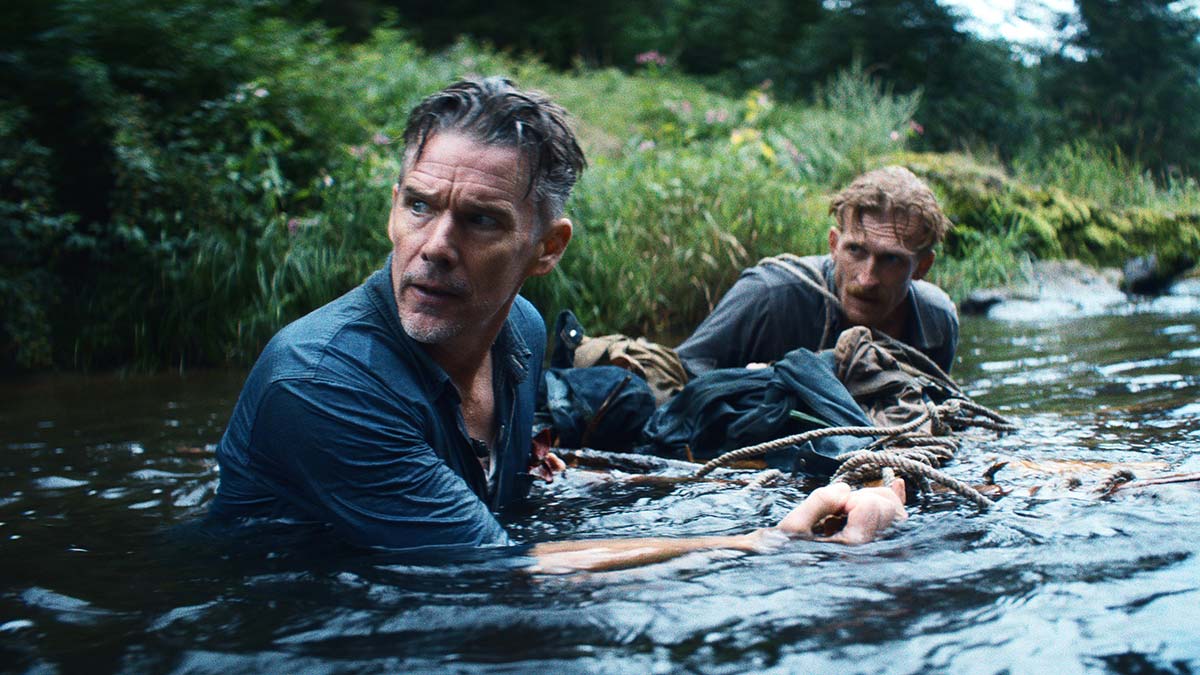
Ethan Hawke Elevates A Rugged, Predictable Gold-Run Survivalist Western[Sundance]
As far as one can tell, Murphy (Ethan Hawke), a father, WWI veteran, and avid car mechanic, has never encountered an insurmountable challenge. Living in Eugene, Oregon, in 1933, four years into the Great Depression, Murphy and his young daughter,…
Mar 11, 2026
The Moment Review | Flickreel
Brat Summer was a cultural phenomenon that I didn’t understand at all. I knew that it was connected to an album that Charli XCX had released. Whenever I asked what Brat is, though, nobody could seem to give a straight…
Mar 9, 2026
Cillian Murphy’s Netflix Crime Hit Delivers a Brutal, Bleak Finale
It’s been four years since we last saw Cillian Murphy play Tommy Shelby, but seven have passed in the world of Peaky Blinders, with The Immortal Man taking place in 1940, in the middle of World War II. Tommy’s gone…
Mar 9, 2026