IMAX Is Looking to Expand Technology, Locations, and Laser Upgrades In the Wake of Christopher Nolan & ‘Sinners’ Success [Exclusive]
May 17, 2025
Summary
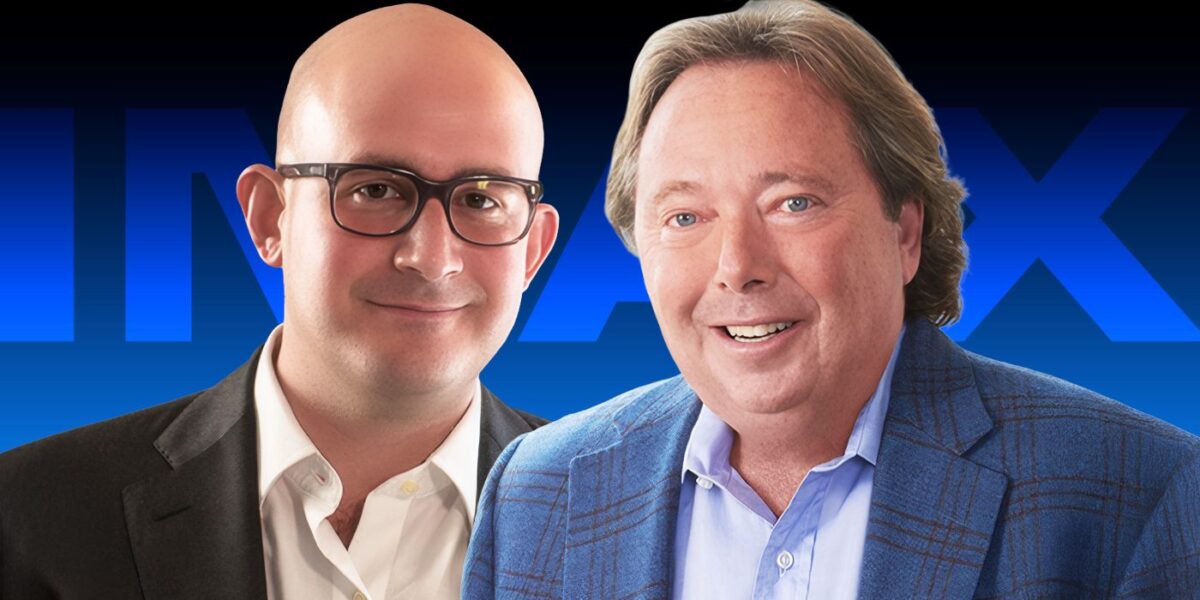
Collider’s Steve Weintraub speaks with IMAX CEO Richard Gelfond and CCO Giovanni Dolci at the Cannes Film Festival.
Gelfond and Dolci discuss IMAX upgrades for more theaters and IMAX Laser for sharper images, vivid colors, and even better sound.
They also talk about Ryan Coogler’s Sinners, Christopher Nolan’s The Odyssey and new IMAX cameras, Greta Gerwig’s Narnia, and James Cameron’s Avatar: Fire and Ash.
At the Cannes Film Festival, Collider’s Steve Weintraub had the pleasure of sitting down with IMAX CEO Richard Gelfond and CCO Giovanni Dolci for an exclusive conversation about the booming present and promising future of one of film’s greatest formats.
In the past decades, Gelfond has overseen IMAX’s shift from a niche way to appreciate nature and science documentaries to a coveted theatrical experience worldwide. We’ve recently seen some of our generation’s most influential filmmakers — Christopher Nolan, Ryan Coogler, Jordan Peele, and James Cameron — take full advantage of the moviemaking possibilities and pioneer new ways of on-screen storytelling with the use of innovative IMAX technology.
In this exclusive interview, Gelfond and Dolci share details on what’s in the works with IMAX technology and upgrades, including more IMAX film projectors, all-new cameras (being used on Nolan’s The Odyssey as we speak), and expanding locations. The executives open up about their collaboration with Greta Gerwig for her upcoming take on Narnia for Netflix, how Cameron could bring more attention to IMAX 3D with Avatar: Fire and Ash, and so much more.
If you’re a fan of IMAX and curious about what’s coming in the future, you’re in the right place.
Filmmakers Like Ryan Coogler and Christopher Nolan Continue to Champion IMAX
And the results are undeniable.
Image by Eli Adé
COLLIDER: With the success of Sinners and IMAX film, and since last year’s Oppenheimer, how many different studios and filmmakers have been calling to be like, “We want to use IMAX film?” Especially in the last year, how has it changed?
RICHARD GELFOND: Demand has definitely picked up. As you know, we built some extra cameras, but as I said before, the new generation of cameras Chris [Nolan] is field-testing, and when he’s done shooting, those will be available. So, there’s not a lot available now. There’s a lot of demand, but we’re managing the demand so that after he’s done shooting, we could do a number of projects at the same time.
I do have a question about Odyssey. I know you have eight or nine IMAX film cameras, and then you have the new cameras that are being used. Is Chris Nolan using literally all the cameras or just the new generation of cameras?
GELFOND: No, some mixture of new and old.
The demand in L.A. and New York to see IMAX movies is through the roof. You look at the re-release of Sinners or any IMAX big release, and every showtime is sold out. How many more screens are coming to L.A. and New York in the big markets, and how soon?
GELFOND: More are coming.
My thing is that in L.A., that’s a film market. AMC Burbank 16, I love that theater, it is always sold out for the big movies. Is there any consideration about putting a second screen in Burbank?
GELFOND: Generally, we don’t love the concept of second screens, because when you don’t have a big movie, what do you do with the second screen? So, no. It’s not a focus of ours to do that.
GIOVANNI DOLCI: To add to that, it’s difficult to find a space for a second screen of equal geometry and quality. We don’t want to have a Tier A screen and a Tier B screen. IMAX is IMAX. So that’s another limitation to get this thing.
IMAX Is Exploring Their Opportunities for “Retro IMAX Theaters”
“The BFI IMAX in London plays a fair share of older IMAX titles.”
Image via Warner Bros.
You look at the success of Interstellar when it got re-released and how much money it made, and now that IMAX is becoming more and more well-known around the world and with film goers, in certain markets like New York or L.A., where there are so many cinephiles, I personally think you could open a “retro IMAX theater,” where you have the new movie theater playing the newest movies, and then you have a second screen near that other one where it’s just playing older movies that people might want to see again in IMAX. One week, you have a Del Toro week, one week you have a Nolan week, and you’re playing all these things. Because once they’re out of IMAX, they’re gone, and I think that there’s a huge amount of people that would love to see The Dark Knight Rises, or whatever it may be, Children of Men or Hugo in 3D, but you can’t do it because they’re gone.
GELFOND: We understand that there’s more demand than there is availability of IMAX theaters. I think in the short run, there’s probably nothing we’re going to do about that, but I think over the long run, we’re exploring the number of opportunities where we could show more content.
DOLCI: That’s important for us in terms of priorities. We want to maximize the utilization of existing theaters. So, an argument could be made: is it worth extending the opening hours of existing screens before you go and think about building a second screen? I’ll make a concrete example. The BFI IMAX in London plays a fair share of older IMAX titles. In a very interesting way, you often see nighttime screenings. After the normal programming ends, they may bring something back on screen. I think there could be an argument to say, is there more to do on the utilization of the current state before you look at a new one?
There Will Be More IMAX Film Theaters, But How Many?
“There’s not going to be a quantum leap.”
Production still courtesy of Warner Bros. Pictures
Right now, there are only very select theaters that can play IMAX film. Is there any talk about opening more theaters that can do IMAX film?
GELFOND: Yes, but the factor is that it’s hard to find the projectors, because remember, they’re 50 years old. We found some more and we’re retrofitting them. We’re trying, but there’s not going to be a quantum leap. They just don’t exist anymore.
Is it more like you might be adding one or two, or maybe five?
GELFOND: Somewhere in that range.
So they are coming. Do you know what markets they’re going to come to?
GELFOND: Yes.
Are they in major cities?
GELFOND: Some of them.
DOLCI: But it’s interesting. Without going into detail, in my 12 and a half years with IMAX, I’ve never had an exhibitor come to us and say, “Do you have a way to put a film system into this flagship location,” until this year. So, something has clearly happened. It’s happening.
You might have to start actually inventing film projectors.
Related
“That Decision Will Go Down in History For Me”: ‘Sinners’ Cinematographer Breaks Down The Unique Way She Filmed The Movie [Exclusive]
DP Autumn Durald Arkapaw digs into filming in IMAX on film and capturing Michael B. Jordan as twins.
With Oppenheimer, the maximum film platter can be 180 minutes. You said last year that that’s the max. Has Nolan asked you to find a way to extend the platter beyond 180 minutes?
GELFOND: Over the history of our relationship with Nolan, yes. But recently? No, because he knows we can’t do so.
So that’s still the threshold?
GELFOND: Yes.
Got it.
With Nolan and Odyssey, we all know this is going to be a monster when it comes out next year in IMAX theaters. Normally, an IMAX release can be three weeks max. With something like Odyssey, are you already working out that this is going to be a month-long thing? Have you figured out the length it’s going to get?
GELFOND: The answer is we booked it for three weeks, so he has exclusive rights. But when we look at what’s going to go afterwards, we’re sensitive to the issue that it may need more time.
Especially when it’s IMAX film. Going back to playing more retro movies, is there the possibility of, on a Tuesday or Wednesday during the week when it’s a slow part of the year, you doing, like, a 10 a.m. retro movie, a 1 p.m. retro movie? How much of a priority is this for you guys?
GELFOND: Retro movies are complicated because you don’t have a marketing budget that comes with that. That’s the biggest issue: how you promote it. There’s no large-scale thought process going in. However, you have to pay attention to what happened with Interstellar and how much demand there was. So, I’d say looking at certain movies and considering it is probably more likely than a large-scale strategy shift.
How is the schedule looking right now for 2027 and 2028, in terms of studios already trying to get very aggressive to secure release dates and IMAX screens?
GELFOND: We’ve had much more interest two or three years out than we’ve ever had before. I feel incredibly good about ‘26, and I feel pretty good about ‘27 and ‘28. The trend is very positive.
Greta Gerwig’s ‘Narnia’ May Make a Major Netflix Push
“I’m hopeful that this will change their minds in how they see their release patterns going forward.”
We talked a little bit about Narnia earlier. One of the things that I heard from distribution is that some of the complexes really don’t want to be in business with Netflix, because they are usually against theatrical release. Have you heard feedback from exhibitors — except for AMC, which is obviously going to do it — like, “Why are we doing this? Netflix clearly doesn’t care about theatrical movies?”
GELFOND: We’ve heard a minor amount of grumblings, but our position is it’s a movie 18 months from now or so, and Greta [Gerwig] is going to make a phenomenal movie. Once it gets closer, and she’s going to incorporate IMAX elements into it, and she’s going to promote it like an IMAX movie, once people have a greater understanding of how it’s being marketed and what the marketing is going to be about, there’ll be less grumbling.
Has she said whether she’s going to use IMAX cameras or not?
GELFOND: We’re discussing it.
I’m hopeful. Do you think that this could open the door? With Netflix executives, do you think this could be a precursor for them releasing more in IMAX, or do you think this is really a one-off?
GELFOND: I’m hopeful that when they see the results — and when I talk about the results, I don’t only mean the IMAX box office, I mean the results in helping to create a franchise for them and creating a real event — I’m hopeful that this will change their minds in how they see their release patterns going forward. Hopefully, they’ll include more IMAX. But my audience for this isn’t just Netflix. There are other streaming services. A lot of people will understand the power of our platform after this comes out, and I’m hopeful and pretty confident that it is going to change some release patterns.
You’ve already talked about how this is your best year, and it’s very, very clear that in the last four years, there has been an absolute shift in terms of the moviegoer’s understanding of what IMAX delivers versus a normal theater. More and more people are seeking it out, because you can watch a movie at home, but to go see that movie in the theater, you want that experience that you cannot recreate at home.
GELFOND: I think it’s about choice. People who want to see it in the way the filmmaker intended, and in a way that blows them away, will see it in IMAX. People who don’t want to spend a premium price can go see it in a smaller theater, and that’s fine too. We’re partners with a lot of the exhibitors, and we’d really like to see them do well. For people who want to sit in their living room, chained to the couch, with 12 breaks in between, they can watch it on streaming. It’s a life.
IMAX Is Testing the Waters for More Sporting Events
They’re in discussions about throwing their hat in for the Super Bowl.
Image via Fox
You did college football games last year. Are sporting events something that you’re thinking about doing more of this year?
GELFOND: We’re testing. I’d say when it comes to sports, we’re in a test mode. We just did soccer in France; we did League of Legends in China; we have a number of things scheduled, like the NBA in Taiwan. We’re just going to keep testing, and if something really works well, we’ll probably do more of it. If it doesn’t work well, we probably won’t do more.
I’m curious if you guys have thought about doing the Super Bowl in IMAX.
GELFOND: Well, how can you not think about that? The rights are complicated.
Sure. People love the commercials. If you ever did the Super Bowl, I’m assuming you would show commercials and everything.
GELFOND: We haven’t gotten that far ahead.
What’s In the Works for IMAX Upgrades?
“It’s a wide array of efforts.”
Image via Warner Bros.
AMC has talked about doing 80 theaters that you’re going to expand and upgrade, 12 new locations, and 68 IMAX with Laser. AMC represents a huge market share in the United States, so talk a little bit about the relationship with them and what the upgrade means when you say you’re upgrading. What’s the Laser upgrade? Will people notice the difference?
DOLCI: Absolutely. If you look at our product line, we’re not putting out a new projection system every year simply because when we put a product out, we want people to be able to tell the difference. That’s all about IMAX with Laser. We have a Laser upgrade program because we firmly believe audiences will notice, will care, and it will make a difference. AMC is an extraordinary relationship for us. We have been building on this relationship now for years and years. We want it to get to a point where we could offer Laser across pretty much our entire North American network. That was the goal of this agreement.
Say you have an IMAX projection system in the AMC Burbank 16. If you were going to upgrade it, what does that actually mean to the average person?
DOLCI: In terms of pure technology, and then if there are, of course, theater and auditorium upgrades, which are considered on a case by case basis, the audience will notice sharper images, more vivid colors, deeper blacks, and in many cases, we may do upgrades, also, to the sound system. That is on a case-by-case basis, of course, depending on where we are. But it’s a significantly better experience.
When you do an upgrade, how long does it actually take to do the install?
DOLCI: It’s really site-specific. It could be anything between two to three weeks, as an average. I would say it depends on whether there are construction material works that need to be done to the projection room, for instance, or screen frame, or anything like that, or whether you can reuse the same structure already in place.
I’m sure you’re doing R&D all the time behind the scenes. What are you guys currently working on that might help the brand? Or are you at a place where it’s the cameras that you’re working on more than anything else?
DOLCI: In terms of in-theater technology, we’re very happy with where we are for the exact same reasons that you were raising. There is a ton of tech out there that people are parading: “Oh, the new projector,” or “Oh, these panels.” If we do something, we want it to be something that people can tell the difference, and we want it to be a tool for filmmakers to express themselves. We wouldn’t just do a new product just because. So, we are happy with where we stand. Interestingly enough, we continue to look at what will be the evolution. There is a lot of exploratory work that goes into our R&D efforts, but we don’t have anything close to your question to be unveiled that will be materially different from what we are offering today, because we are very content.
Then, as you noticed, there are, however, a lot of R&D projects that go into making sure IMAX continues to be this extraordinary tool for filmmakers, and the cameras are one of them. Besides the film cameras, we continue to evolve our camera certification program for digital cameras to make sure that, for example, if a filmmaker needs to use a particular model of camera, they have more choices than they had before, and still be able to shoot in IMAX format. Then, we have a lot of R&D going into other types that may not be obvious to the consumer, such as monitoring technology. One of the technologies that we are using, for example, relates to the way we broadcast live events to the theaters while maintaining quality. We are in 90 countries, and you can’t afford to have a dedicated pipe for each one of those territories, so we have a technology that allows us to stream that content to the theater in a very high quality, using lower bandwidth. It’s a wide array of efforts.
Related
“It’s a Fairly Complex Deal”: IMAX Says Netflix & Greta Gerwig ‘Narnia’ Deal Is an Exception, Not New Normal
“We are not in a rush to do another one tomorrow.”
Does the new camera that you guys have worked on for Odyssey have a name, or have you not named it yet?
GELFOND: There’s a debate at IMAX between whether to name it or not, and we haven’t resolved that.
Are you debating between names? Are you debating if we’re even going to name it?
GELFOND: All of the above.
DOLCI: It’s an interesting one because we had the same debate for in-theater technology. There have been evolutions of our tech. Even the Xenon system went through different iterations, and we decided knowingly not to name those different iterations because IMAX is IMAX. We want that level of quality to be conveyed by one brand.
So it’s basically going to be called “the new IMAX film camera.”
GELFOND: Not sure.
Your CFO, [Natasha Fernandes], did an interview, and one of the things I read was that you were having a 40% increase in system installations year over year. What has it been like for you guys in terms of the last year? Has it been a crazy influx of calls and people wanting to do things? How are you, as a brand, trying to figure out retrofitting, adding screens? It’s almost like you’re taking a quantum leap forward in terms of demand.
GELFOND: Well, we have a backlog, remember. We signed new theaters. There’s a lot of demand this year because the slate is very good. Next year, people want to put them in, but it’s not a step function. You either have to build a new theater or retrofit an existing one, so you can pretty much model it out. So, we give public guidance, and we’re estimating that we’ll have more installs in ‘25 than we had in ‘24. We had more in ‘24 than ‘23. But it’s manageable. It’s not chaos.
DOLCI: The appetite is there. In terms of theater sales, last year we had agreements for 130 IMAX theaters, new and upgrades. This year, we are already at 103, and it’s early May. So, that tells you that.
GELFOND: But those are signings. They don’t install for a period of time.
Totally. But you look at the numbers. You mentioned you used to maybe do 7% of the box office on the film in IMAX, and now it’s 11%, and it can be as high as 20%. These numbers mean there’s money to be made, and when there’s money to be made, people probably want to get it.
GELFOND: The place you should really focus on is that there are 130 events releasing on our platform this year. So think: we have 1,800 theaters, times 130 events a year. That’s the bigger challenge is managing all that than it is to just deal with single movies. It’s become much more complex.
What have you learned in the last few years technologically that has impacted or created the way you want to do things going forward when you open a new theater in the Middle East or in Japan or in the United States? Because some IMAX theaters are 300 seats and some are, like, 600 or 700 seats. I’m curious if you’ve found an ideal situation is a 400-seat theater with this-sized screen?
GELFOND: Yeah, but it all depends on the market.
DOLCI: It’s impossible to generalize. That’s the beauty of being in 90 countries. Every market is different, and every venue is different. Sometimes, also the difficulty of deploying a theater, back to the previous point about installations, in many cases, there are a lot of complications building-wise, etc. So, it’s a trade-off. Do I deploy a theater or not? It’s a lot of learning and a lot of nuances.
James Cameron’s ‘Avatar: Fire and Ash’ Could Put IMAX 3D Back on the Menu
Interest in 3D has declined in the U.S., but Cameron “really understands how to make it look spectacular.”
I definitely have to touch on James Cameron with the Avatar films. He just doesn’t miss. What have you seen from the upcoming Avatar that you’re excited for people to know about?
GELFOND: I saw some of the footage and I thought it was terrific. I know a little bit about the characters and their development. I think it’ll be a more emotional film, and I think it’ll take it in a different direction than it’s gone before. I also think he’s as meticulous as ever about insisting on the standards of projection and viewing and how it looks and how the audience experiences it. I mean, Jim Cameron knows what he’s doing. Clearly, he’s incorporated all those learnings, and I think it’s going to show at the box office.
He’s a genius. Something that I’ve noticed is that with 3D, in America, there seems to be, besides Avatar and movies that really are made for 3D, it feels like 3D is sort of falling away. There doesn’t seem to be as much interest in it. But around the world, 3D still has more demand?
GELFOND: I don’t know about more, but it has demand.
How do you feel towards IMAX 3D versus showing it without glasses?
GELFOND: It depends on the property and how it’s shot and what it looks like. I don’t know if you know this, but a lot of that was shown in 3D in China, and people really like that. I’m sure on Avatar: Fire and Ash, we’re going to lean into 3D again in a lot of places. And that’s because Jim really understands how to make it look spectacular. So, we’re open-minded. We go where the audience wants us to go.
I want to see Avatar: Fire and Ash in 3D because that’s the way Cameron designed it, but there are a lot of others that I have no interest in. There are a number of movies coming out later this year. What have you seen that you’re excited about? Have you watched any of Tron: Ares, Superman, or Jurassic World Rebirth? Any of the big releases of the year?
GELFOND: I’m excited about all of them, but like anybody in the film business, it’s interesting what I’m excited about. What’s more interesting is what the audience is excited about, and I think we’ll find out starting pretty soon.
Publisher: Source link







Wuthering Heights Review | Flickreel
As far as adaptations go, I’ve never viewed any source material as sacred, including The Bible. While a faithful adaptation is always welcome, I’m open to a filmmaker leaving their signature on a classic story, especially one that’s been told…
Mar 17, 2026

Amy Adams Sinks In Vapid, Misguided Alcoholism Drama By ‘Pieces of a Woman’ Director [Berlin]
For a solid decade, starting in the late 2000s with Disney’s charming fairytale comedy “Enchanted” all the way to Denis Villeneuve’s melancholy sci-fi “Arrival,” it was easy to trust Amy Adams, a six-time Academy Award nominee. Then, somewhere around Ron…
Mar 17, 2026
Mason Gooding & James Van Der Beek’s Bad Night Is Aggressively Dull
Ever since the Scream franchise helped put him on the map, Mason Gooding has been a great talent to watch. The genre-bending slasher Heart Eyes is still his best non-franchise role yet, but he's also branched outside of horror in…
Mar 15, 2026
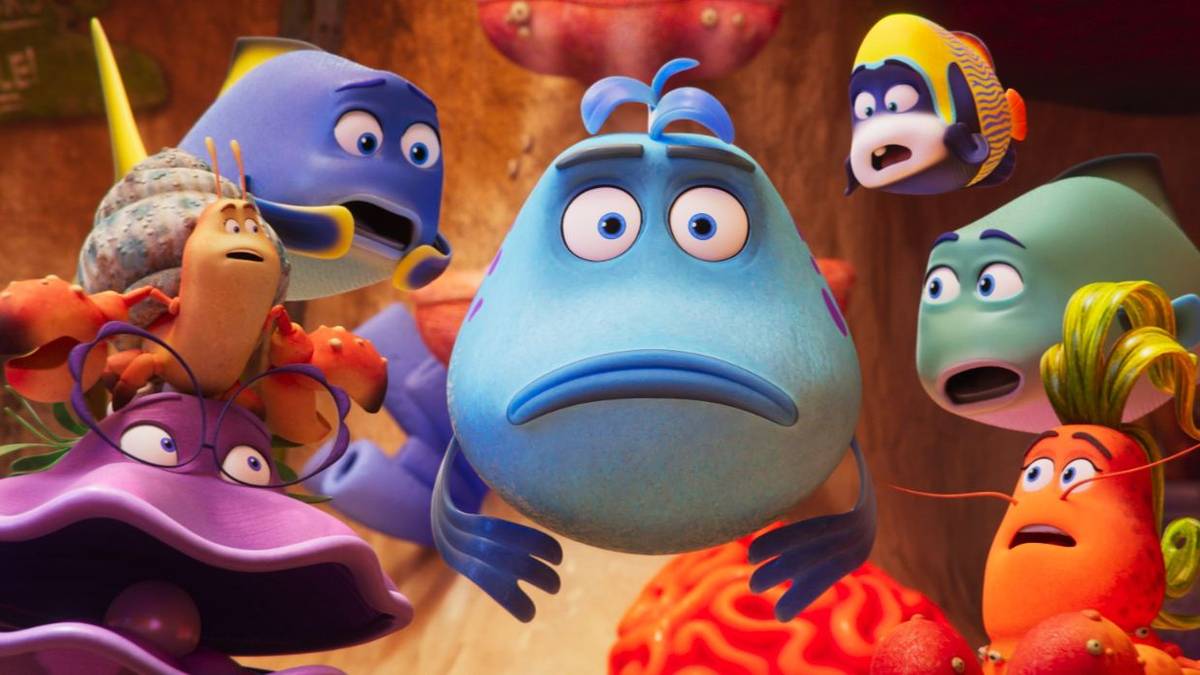
A Grumpy Nick Offerman Keeps This Fish Tale Swimming Along
Animated fish films have been done. Finding Nemo. Shark Tale. Ponyo. So to hear about another doesn't feel like anything new. However, The Pout-Pout Fish, starring Nick Offerman as a grumpy ocean pout named Mr. Fish, is a little different.…
Mar 15, 2026