
Interview: Sky Hoping on âPowwow Peopleâ
Nov 4, 2025
Powwow People
Sky Hopinka is one of those rare filmmakers who seems to possess an instinctual artistic eye. And his latest Powwow People is a “vérité-style documentary grounded in the rhythms, relationships, and lived experience of a contemporary Native gathering” according to its spot-on synopsis. It’s also a beautifully-crafted art film refreshingly not specifically made for the cinephile (i.e., East Coast liberal/Euro) gaze. Indeed, in order to avoid the extractive lens Hopinka, a member of the Ho-Chunk Nation and a descendant of the Pechanga Band of Luiseño people, purposely did not parachute in to capture a powwow “National Geographic” style (as the event’s MC Ruben Littlehead jokes to the camera early on). Instead the MacArthur Fellowship-winning director and his collaborators staged the assembly from scratch themselves. It’s a cinematic project handmade with loving care with and for one’s own community. An experience had from the inside out.
Soon after the doc’s Hot Springs Documentary Film Festival premiere (a month after its TIFF debut and before its IDFA premiere), Filmmaker caught up with the visual artist and filmmaker, who was also one of our “25 New Faces 2018.”
Filmmaker: Since you seem to have gathered together folks from many different tribes and regions throughout North America, I’m very curious to hear how you found all the participants. Was it through some combination of word of mouth and an open call?
Hopinka: It was through word of mouth largely, and through passing out flyers at various powwows; also through the work of Gina Bluebird and her husband Jason Stacona. They’re powwow people in the Northwest, and would travel around and tell people about it in the months leading up to the event.
We also wanted to have it during the weekday so that we wouldn’t be competing with other powwows happening during that time. We were hoping to get people to come as they were traveling from one powwow to another, as the summer is a pretty busy time on the powwow trail.
Filmmaker: Could you talk about the crucial decision to organize a powwow that you could then capture on film – as opposed to just attending a powwow with your camera? Did you instinctively know that this would be the only way to avoid the extractive gaze?
Hopinka: There were a few approaches I was thinking about during the development of the film; one was to go to different powwows around North America and see about filming, but that just didn’t feel like it was the right approach for this project.
Having relationships with a community is important, and I didn’t feel comfortable going to one that I haven’t been to before and asking to film. So being from the Northwest, it made sense above all other options to hold it in Washington or Oregon. After visiting a few powwow grounds we landed at Daybreak Star, which felt especially good as I grew up going to powwows there.
While everything was falling into place it just felt right – as a commentary on the construction of documentary, the agency of the participants to join in the filming of this project, and the added layers of me and my crew becoming a part of the film as well. We knew we wanted it to run like a normal powwow, with four sessions and contests and dance specials, and we didn’t want to do any takes or have people repeat something if we missed a shot. I think that added to the experience I was trying to convey.
Filmmaker: I’m also curious about the pre-production process. How long did that take? What were the logistical challenges in both staging and shooting an event?
Hopinka: It took a few years to develop – raising funds was the big part – as well as finding the location. Gina and Jason were huge in that regard. I’d known from the get-go that I wanted to work with Gina. We had organized a number of powwows together in the late 2000’s, and she had been the coordinator for a one day powwow I organized at the Yale Union in Portland, Oregon in 2019 as part of an exhibition I curated. That event was also a way for me to test out some thoughts and ideas I had for Powwow People.
Unfortunately, the pandemic put the next edition of that powwow on hold indefinitely; and then Yale Union handed over their building to Native Arts and Cultures Foundation, so it never got a chance to happen again. But in the following years our commitment to the film grew. Once we were able to secure funding to put on the powwow itself – and were able to pay people and have a location – things happened pretty quickly.
Filmmaker: Though you never appear onscreen, we’re consistently reminded of your presence through MC Ruben Littlehead’s sly asides to you (and at the end when he directly summons you to the stage to receive an honor). It really reveals the artifice involved in all nonfiction filmmaking. So why did you decide to include these moments?
Hopinka: I really enjoyed those moments because they felt so true; the ways in which Ruben really was behaving as the MC of a powwow, the voice of it, and in a lot of ways the heart of it.
A good MC will guide everyone through the weekend, powwow people and visitors alike. They explain what’s going on and they know everyone. They crack jokes and let you know when it’s time to be serious. They set the tone. Ruben talking to me just felt normal and natural to the work that he does directing the powwow itself.
And it does point to and reveal something of the construction of a film. Having these two events happening concurrently – the direction of a powwow and of a documentary film – again it shows the machinations involved and the people behind them.
Filmmaker: Could you discuss the film’s aesthetic, particularly the kinetic camerawork and your multilayered approach to the sound design? Was this a result of working with a larger crew than you had in the past?
Hopinka: It was a number of things. I knew I wanted to try a bunch of long takes. And I love the way a camera can move through a space and the focus can be a way of directing attention.
Working with DP Shaandiin Tome was great, as she is really an intuitive filmmaker. Over the three days of filming we both would be running camera, trading off on the rigs we had, and just shooting the thing and having fun. One of my favorite shots in the film is of the Grand Entry, a 7-minute long take that Shaandiin shot. It just moves through the space so well, with the rack focus and her ability to know when to hold a shot and when to move on.
It was also important to have a crew that have been to powwows before – know what they’re like and what to expect and to look for. Jacque Clark, the sound recordist, would wander around collecting sounds, and that gave us a good bed to draw from when it came to post. Tim Korn of Dungeon Beach was also huge in making the film sound whole and immersive. I had never worked with a post house before, and working with them was easy; they’re so thoughtful and generous.
In early conversations regarding both the sound and the color, we talked about the feelings of being in this space – hearing all these things and how the camera moves through the space. They were really able to execute it in a way that I know I couldn’t have done on my own.
Filmmaker: This really struck me as a film made both with and for your community. Non-Natives seem to be a secondary audience. So who do you hope the doc will reach, and what impact do you hope it will have?
Hopinka: I really hope the film is for everyone, in the same way powwows are for the dancers and singers and vendors and community, but non-Natives are still welcomed.
I hope that an audience that isn’t familiar with powwows can have a similar experience as when they attend one in real life; where they can feel the rich history, and see the dedication to these events by a people with a deep knowledge and respect for them. While they might walk away knowing a little bit more than when they went in, they’ll leave with an appreciation for all that they don’t know. And I hope that a Native audience can see a bit of themselves in it; and that seeing it makes them feel good, even just a little bit.
Publisher: Source link



Wuthering Heights Review | Flickreel
As far as adaptations go, I’ve never viewed any source material as sacred, including The Bible. While a faithful adaptation is always welcome, I’m open to a filmmaker leaving their signature on a classic story, especially one that’s been told…
Mar 17, 2026
Amy Adams Sinks In Vapid, Misguided Alcoholism Drama By ‘Pieces of a Woman’ Director [Berlin]
For a solid decade, starting in the late 2000s with Disney’s charming fairytale comedy “Enchanted” all the way to Denis Villeneuve’s melancholy sci-fi “Arrival,” it was easy to trust Amy Adams, a six-time Academy Award nominee. Then, somewhere around Ron…
Mar 17, 2026
Mason Gooding & James Van Der Beek’s Bad Night Is Aggressively Dull
Ever since the Scream franchise helped put him on the map, Mason Gooding has been a great talent to watch. The genre-bending slasher Heart Eyes is still his best non-franchise role yet, but he's also branched outside of horror in…
Mar 15, 2026
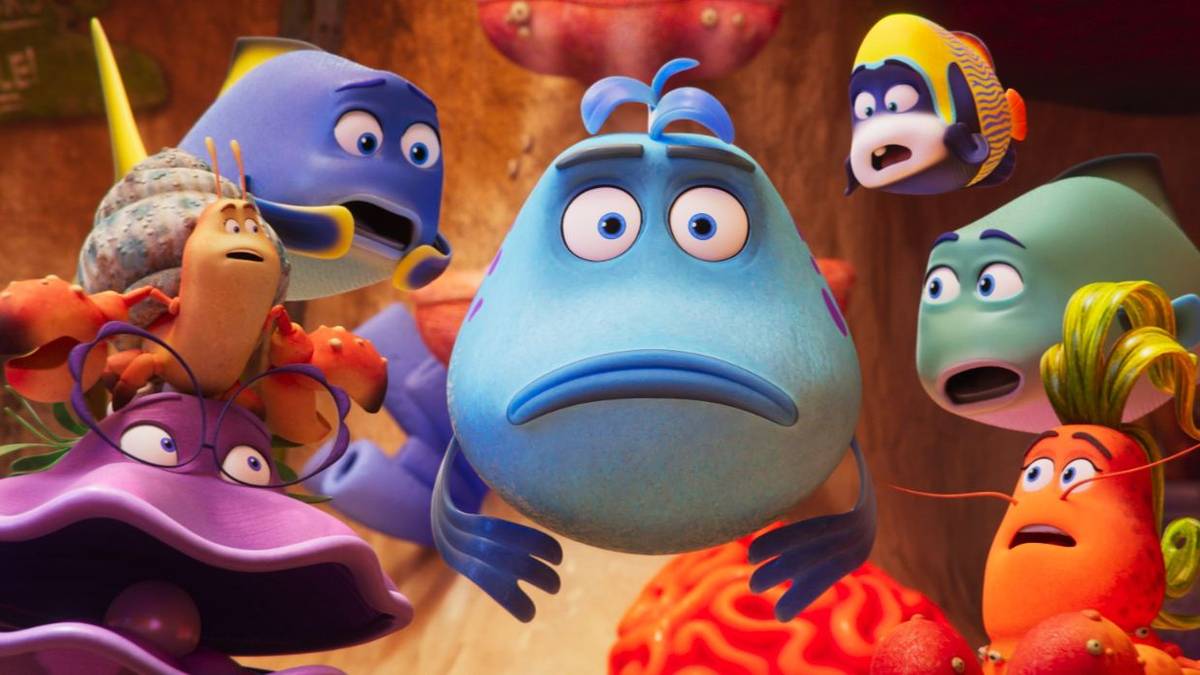
A Grumpy Nick Offerman Keeps This Fish Tale Swimming Along
Animated fish films have been done. Finding Nemo. Shark Tale. Ponyo. So to hear about another doesn't feel like anything new. However, The Pout-Pout Fish, starring Nick Offerman as a grumpy ocean pout named Mr. Fish, is a little different.…
Mar 15, 2026