Is ‘Lilo & Stitch’ About Neurodivergence?
May 26, 2025
Get the ohana together and plan your Memorial Day weekend theater trip now: Lilo and Stitch is finally here. It’s yet another addition to Disney’s seemingly never-ending string of live-action remakes, but if early word is to be trusted, most fans have been pleasantly surprised by this one. As of this writing, the film boasts a 92% approval rating on Rotten Tomatoes from audiences and is projected to open to well over $100 million and top even the newest Mission: Impossible.
The original Lilo and Stitch holds a special place in the hearts of ‘90s and early 2000s kids. As Disney Animation’s only unambiguous box office hit post-Renaissance and pre-Revival, it felt like nothing else the studio had released prior: it was sassy, heartfelt, and laugh-out-loud funny. It also felt surprisingly mature for a Disney movie, as it tackled complex themes and emotions without sugarcoating them, and it proved to have a sizable fan base among older viewers. Yet there’s a unique thematic layer to the film that most have missed, and it arguably contributed to the following it holds to this day.
Lilo & Stitch
Release Date
June 21, 2002
Runtime
85 minutes
Producers
Tom C. Peitzman, Dan Lin, Ryan Halprin
Is Lilo Disney’s Only True Neurodivergent Protagonist?
Buena Vista Pictures Distribution
As a director, Chris Sanders has always displayed a knack for telling stories about outsiders and makeshift families, as seen in How to Train Your Dragon and last year’s The Wild Robot. But Lilo and Stitch was maybe his clearest manifestation of this conceit, as the title characters struggled to relate to their peers in their respective communities, before finally finding a sense of belonging in each other.
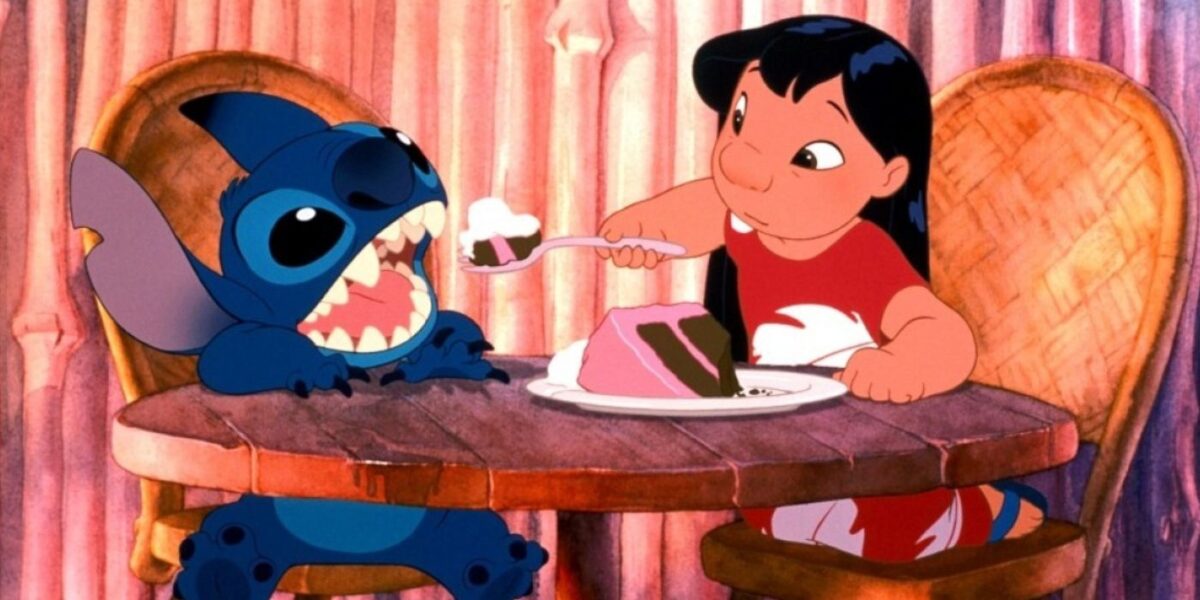
Obviously, stories about outsiders are universal by nature, as everyone at some point in their life doubts where they belong. However, the specificity with which Sanders illustrated his characters made Lilo and Stitch feel particularly relatable to neurodivergent audiences. Consider how Lilo has strange obsessions and fixations; she religiously listens to Elvis Presley’s music and keeps a bedroom collage of the beach tourists she photographs for fun.
Related
In ‘Lilo & Stitch,’ an Adorable Maia Kealoha Saves Disney’s Live-Action Remake
A lonely Hawaiian girl (Maia Kealoha) adopts a blue puppy that’s actually an escaped alien experiment (Chris Sanders).
Additionally, rituals and strict patterns of behavior are a big part of her everyday life, as she takes time every Thursday to bring an offering to Pudge, a fish she believes can control the weather. Couple this with her often hyperemotional demeanor, as evidenced by her reaction when one of her hula classmates insults her, and it is no wonder that many fans have claimed Lilo as an autistic icon.
Of course, this is far from the only reading one can have about the character. Much of Lilo’s sensitivity is rooted in losing her parents at a young age and thus not knowing how to process her emotions, especially when her older sister, now her guardian, is also clearly struggling. But the ways in which Lilo’s community either openly considers her weird or doesn’t know how to engage with her speak to a fairly universal experience of isolation that neurodivergent individuals often experience to varying degrees.
Stitch Explores Neurodiversity Just as Well as Lilo
Buena Vista Pictures Distribution
Yet, as much as Lilo has been seen as a neurodivergent icon, Stitch fits that role just as well. Like his co-lead, everyone sees him as a freak initially, and incapable of being anything more than his programming to “destroy everything he touches”. His creator, Jumba, outright tells him that he has no greater purpose in life, and that he “can never belong”. Even after he disguises himself as a dog to avoid attention, all the other animals are terrified of him, and it’s clear that Stitch himself has as little control over his emotions as Lilo.
Yet even as most of the community judges Stitch immediately at first impression, Lilo senses a kindred spirit and keeps him as a pet, to everyone’s continued bafflement. Under her care, Stitch finally meets someone who treats him with genuine kindness, thus helping him learn to get more in touch with his emotions rather than responding to every unexpected situation with hostility. While she finally has someone she can call a friend, he finally has someone who sees a soul underneath his unconventional exterior. It’s no accident that by the end of the film (and in maybe the franchise’s best moment), he’s much calmer and softer-spoken.
Related
‘Lilo & Stitch’s Record-Breaking Box Office Projections Has Disney Planning Sequels
‘Lilo & Stitch’ could take the biggest Memorial Day opening weekend record from ‘Top Gun: Maverick,’ paving the way for a sequel.
For what it’s worth, neither Chris Sanders nor anyone at Disney has commented on this theory, so we can’t say whether the film explicitly intended to explore neurodiversity. But it’s undeniable that the film is a poignant look at individuals misunderstood by the world, and how connection helps them overcome their isolation. The story of the Ugly Duckling is prominent throughout, as Stitch fits that character archetype perfectly.
Even if the film wasn’t intended as a commentary on neurodivergence, the fact that so many in the community have latched onto it speaks volumes about the specificity with which Sanders captured at least the emotional experience of it. It’s arguably a strength of Lilo and Stitch that it doesn’t state it outright, and it thus holds up much better than other shows or films explicitly about people on the autism spectrum (looking at you, The Big Bang Theory).
Regardless of Sanders’ intent, we should celebrate the fact that the original Lilo and Stitch have spoken so deeply to so many. Lilo and Stitch is now in theaters, while the original film is available to stream on Disney+.
Publisher: Source link


A Flame The Colour of Air – Film Threat
SLAMDANCE FILM FESTIVAL 2026 REVIEW! You will shimmer and shake, like you’re riding the snake while being wowed by the dynamite animated short A Flame The Colour of Air, written and directed by talented Canadian filmmaker Emily Pelstring. Jessica Mensch’s…
Mar 3, 2026
‘9-1-1’ Can’t Decide What It Wants To Focus On in a Lackluster Season 9
Editor's Note: The following contains spoilers for 9-1-1 Season 9, Episode 11.I was hoping that 9-1-1 would take advantage of its month-long hiatus and course-correct after its most recent episode, but while this week is certainly an improvement from last…
Mar 3, 2026
Good Luck, Have Fun, Don’t Die Review
Mercy was a film about AI that AI could’ve written. Good Luck, Have Fun, Don’t Die also tackles AI, although it could only come from the mind of Gore Verbinski. As he did with his Pirates of the Caribbean trilogy…
Mar 1, 2026

Investigative Screenplay Review: Suspenseful but Weak Antagonist
Vadh 2 (2026): When Murder Is Justified — Starring Sanjay Mishra as prison guard Shambhunath Mishra When evil tries to take control, its destruction becomes necessary. With this theme, Bollywood brings you a spiritual sequel to its 2022 crime-thriller “Vadh”.…
Mar 1, 2026