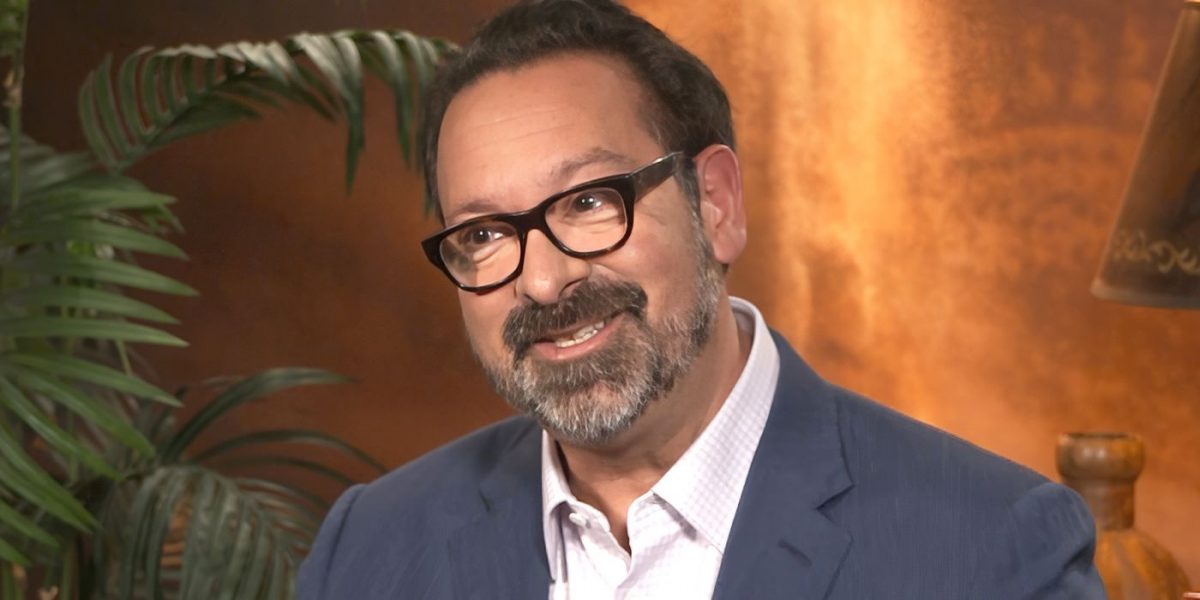
James Mangold Compares Continuing Franchises
Jun 19, 2023
Writer-director James Mangold takes the reins on the final chapter of a franchise that changed cinema forever with Indiana Jones and the Dial of Destiny. Mangold steps into a role previously occupied by Steven Spielberg, and he does so with a comprehensive understanding of who the whip-cracking hero is and what made him a big screen icon to many generations.
As he did in 2017’s Logan, Mangold brings his title character’s hero’s journey to a close in Dial of Destiny. In the new movie, Harrison Ford’s Indy dons the fedora once more when his goddaughter, the crafty Helena Shaw (Phoebe Waller-Bridge), shows up out of the blue and gets him mixed up in yet another crusade to track down a legendary artifact. This one is rumored to locate fissures in time, a power that absolutely cannot fall into the hands of a man like the nefarious Jürgen Voller (Mads Mikkelsen).
COLLIDER VIDEO OF THE DAYSCROLL TO CONTINUE WITH CONTENT
During their interview, Mangold pinpointed a shared quality in his approach to continuing the Indiana Jones series and bringing a new X-Men story to screen via Logan. He also shared the vital piece of advice he received from Spielberg, and emphasized that the heart of Indiana Jones is Ford’s ability to take “pure heroism and turn it into something more human.” For all of that and more, check out Perri’s full interview in the video above or read the conversation in transcript form below.
Image via Disney
PERRI NEMIROFF: You have now jumped into and continued two of the most iconic film franchises of all time. What is something that stayed consistent in your filmmaking approach from Logan to Dial of Destiny, but then also, what is something about an Indiana Jones movie that called for something different?
JAMES MANGOLD: I tried to bring my own humanist sensibility to the movie about who this character is and what they’re struggling with. Whether you’re talking about caped crusader films or superhero films, like with Wolverine or the X-Men, or you’re talking about an Indiana Jones franchise, one thing is true; this is a hero, an iconic hero, each of whom has kind of their own unique superpowers. But what made me make movies about both these characters and attracted me to both of them is they’ve also got super liabilities. They’ve got their own flaws. They’ve got their own regrets.
Certainly a similarity between the two films, for me, was finding someone at a point where the shtick they’ve been doing isn’t working anymore – the world has changed. I mean, I think that’s even a line in Logan, but it would apply to both movies that you’re finding Indiana Jones in his seventies in the time of modernism, rock and roll, moon landings, triangulation, Red Scare, nuclear fears, the Vietnam War — that’s a different world than the clarity and simplicity of the ‘30s, of a free world united fighting Nazis. It’s a very different environment. And similarly, finding Hugh [Jackman’s] character of Logan in a time of diminishing returns when his power isn’t as great as it was, that, to me, brings vulnerability to the character, it brings a journey to the character.
As far back, if you want to be an archaeologist about it, as Aristotle, there was this term “peripeteia,” the turning of the wheel. It’s one of the things that people kind of have a hard time with when they get into dialogues online about movies because a movie isn’t a single idea, it’s a peripeteia, it’s a turning of the wheel. It’s something that starts one place and ends another, so which point of the movie are you talking about? And any good story starts someplace where the character has to travel or grow. For me, too often for my taste, many superhero films start as gods and end as gods. So really, all that’s happening is a series of fights and tactical moves between one set of gods and another, and I don’t feel the characters changing. My only problem is, it’s not a knock against other movies, it’s just I can’t make movies like that. I wouldn’t know how to. So for me, I need them to start one place and get another. That was really important to me in both films.
What’s different is that Logan truly was a kind of tragic adventure, but also, in my own way of looking at it, a kind of beautiful ending for the character of The Wolverine who had never really experienced peace in his life, and in his final moments found love and a kind of grace, even if it was only the last 30 seconds of his life that he found that and that he knew what that tasted and felt like. To me, [it] was really moving. In Indiana Jones’ case, I wasn’t, first of all, ending the character, but beyond that, there’s a tonal difference between these kinds of movies. Indiana Jones is an entertainment and it’s an adventure, and it’s got to have joy and humor and crazy characters. And even Indy himself, very different than the grimness that Logan represents, is a series of contradictions. He can be fussy, he can be demanding, he can be cowardly as well as brave, his punches can have no effect and never land. So there’s a wonderful set of contradictions to the character that Harrison and Steven [Spielberg] and George [Lucas] and Larry Kasdan all developed, and that I wanted to continue, but I had to find it in a new age, in his 70s.
Image Via Fox
That’s such a good answer to that question. Because I really like your approach to doing that, is there another iconic character out there that you see that same storytelling opportunity in that you might want to explore in the future?
MANGOLD: Any movie I do will have to meet that basic idea, just that the character goes from one place to another.
As they all should.
I have to talk about your collaboration with Harrison. You’ve worked with some of the best of the best in this industry. What is something unique to him that he needs from you as an actor’s director, but then also, what is something unique that he gave back to you as a collaborator?
MANGOLD: Well, Harrison loves a dialogue with his director. But, you know, it’s interesting, most of the great actors I’ve worked with, really superlative actors, love to have a dialogue with the director. I mean, a long time ago, my second movie I made with Robert De Niro and he said to me, “I need a director. Talk to me.” He goes, “I don’t work with young directors much because they just don’t say much.” He goes, “I need this dialogue,” and we became friends in the weeks before we made the movie just so I understood, and I think he wanted me to be able to kind of communicate with him. I found that true whether it’s Russell Crowe or Christian Bale or Harrison Ford or Angelina Jolie or Winona Ryder, you could go on and on.
The reality for me is that the give and take with the director – actually, I’m the only audience, really, they have. So in a sense, that push and pull a singer-songwriter or a live performer might have with an audience, I’m kind of responsible for bringing whatever that response is, not just intellectual, but also energy, you know? And I feel that. Harrison, in particular, one of the unique aspects of him that I think is really interesting is that he’s always looking to undermine the tropes of a scene. He’s always looking at how he can play against the text or play against the grain a little bit. It’s where all these great moments happen with Indiana Jones that you can’t quite identify exactly what’s going on, but it’s him.
You know, in our movie, there’s this moment where he punches Mads Mikkelsen in the very beginning, first reel of the picture. In the script, it’s just, “He opens the door, Mads is there, he clocks him.” But Harrison goes, “What if I tried something like this?” And he takes off his hat, puts it in front of Mad’s face, and then punches him through the hat. There’s no rational reason to do that. There’s no audience watching to Indy’s actual awareness, although there is, of course. He’s trying to survive on a train. There’s no need to put a felt hat between him and the punch, but it looks great, and it feels absurd and feels odd, but also feels like Indy. I can’t explain it, but he’s always looking for these moments where he can undermine or manipulate for our enjoyment, the kind of pure heroism and turn it into something more human.
Image via Lucasfilm
That’s so true! Between Indy, Han Solo, and even now in Shrinking, you see little performance flares like that that make everything purely him.
MANGOLD: “I love you.” “I know.” I mean, these are him always trying to undermine the tropes. There’s not a day I remember seeing him where he’s not flipping through the sides of the day and puzzling on how he can just push and pull on it a little bit.
I always love asking filmmakers about the experience of taking and applying notes versus not and trusting their gut. In this particular situation, you not only have a whole fanbase, but you’re also working with an expert on set in Harrison, you were talking to Steven, and you have studio executives looking out for the franchise. Can you give me an example of a note you got from someone somewhere that you applied and made the movie better, but then also a time when you got a note, said to yourself, “No, my instincts are on point,” and you stuck with your gut?
MANGOLD: The second thing I can’t touch because that would be just naming a note I got from someone and saying I won’t do it.
Fair enough!
MANGOLD: But it happens. I’ve also got all these wonderful people around me, and they’re not always saying the same thing, so sometimes you have a note and the exact opposite note on your right and left, and you’re kind of left to navigate your way. But one of the great notes I think Steven offered early on to me as a very simple tidbit was just this idea that an Indiana Jones movie in his mind, he realized somewhere along the line making them, is actually a movie trailer that’s two hours long, that nothing can sit very long, that any kind of concepts of pace that you might have about a different movie have to be kind of exponentially turned up to 11 on an Indiana Jones movie.
Indiana Jones and the Dial of Destiny opens in theaters on June 30th. Check out Perri’s interview with director Harrison Ford and Phoebe Waller-Bridge below!
Publisher: Source link



New ‘Wheel of Time’ Animated and Video Game Adaptations Are in the Works
Amazon might be finished with The Wheel of Time, but we haven't seen the end of the story when it comes to adaptations of Robert Jordan's bestselling high fantasy saga. Fans were left blindsided when Amazon abruptly pulled the plug…
Mar 22, 2026
‘Off Campus’ Teaser and Release Date Revealed by Prime Video
No one expected a love story between rival hockey players to become one of the most talked-about TV shows of 2025, but there's a lot more where Heated Rivalry came from, as a new teaser for Prime Video's foray into…
Mar 21, 2026
Sarah Michelle Gellar Urges ‘Buffy’ Fans to Avoid Reading Leaked Reboot Scripts
Buffy the Vampire Slayer fans have had a rough few days after Hulu officially pulled the plug on a revival of the series, which would have brought star Sarah Michelle Gellar back as the titular heroine. Described as a continuation…
Mar 20, 2026
Born Again’ Stars Explain Why Bullseye Is So Dangerous in Season 2 [Exclusive]
Along with Charlie Cox's Matt Murdock and Vincent D'Ofnorio's Wilson Fisk, Daredevil: Born Again Season 1 brought back one of The Man Without Fear's most notorious villains: Wilson Bethel's Benjamin Poindexter, better known as Bullseye. Not only was he back…
Mar 19, 2026