Jefferson’s Timely Directorial Debut Is Confident & Provocative
Sep 12, 2023
Summary
Cord Jefferson’s directorial debut, “American Fiction,” is a satirical take on the publishing industry’s habit of pigeonholing Black writers, with clever jokes and important commentary. The film follows protagonist Thelonious Ellison, an English literature professor and author whose work isn’t considered “Black enough” by publishers, leading him to question the stereotypical narratives expected of Black writers. “American Fiction” tackles the issue of pandering art and the white guilt that supports it, while also exploring themes of family, class, economics, and judgment within the Black community, offering a nuanced and thought-provoking look at these issues.
Cord Jefferson, esteemed writer of some of the most popular television series episodes (Watchmen, Succession, and The Good Place), has recently turned his talents to directing. The award-winning writer turned director premiered his feature directorial debut at this year’s Toronto International Film Festival. American Fiction is adapted from Percival Everett’s 2001 novel, Erasure, which sees a dissection of the publishing industry with respect to pigeonholing Black writers into one dimension. In the film adaptation, Jefferson brings this important issue to life through a satirical lens that will leave a lasting impression. The film stars Jeffrey Wright, Tracee Ellis Ross, Sterling K. Brown, Erika Alexander, Leslie Uggams, and a plethora of other renowned actors. But don’t let cameos fool you, American Fiction is packed with important commentary, clever jokes, and a story that’ll have you coming back for me.
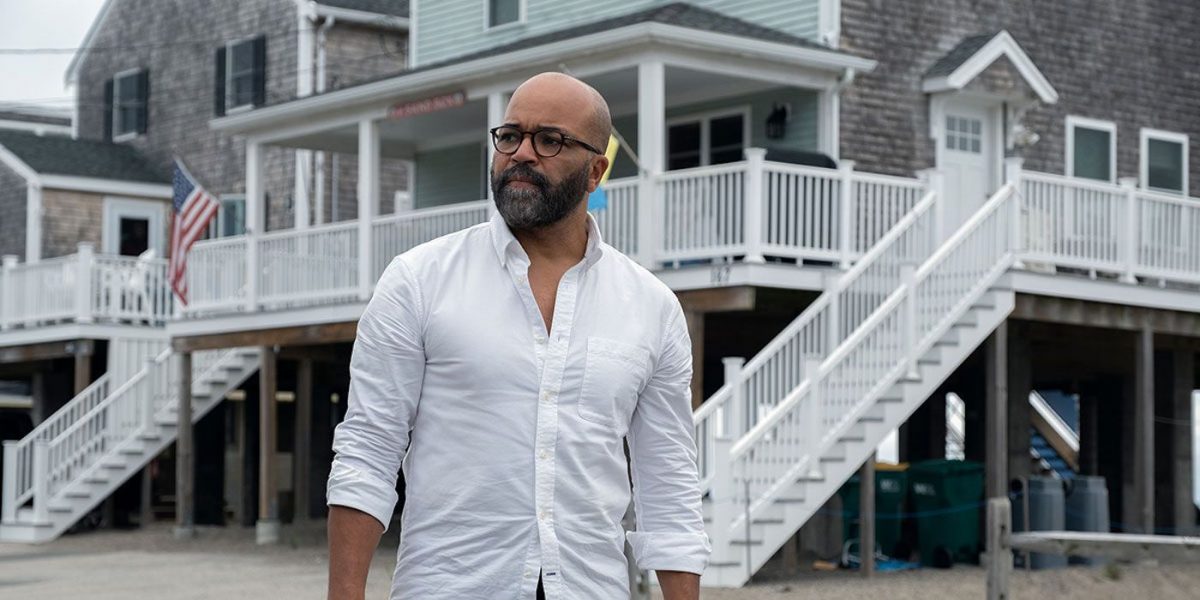
The story follows Thelonious “Monk” Ellison (Jeffrey Wright), an author and professor of English literature. His rise in impatience with his students’ cultural sensitivities is threatening his position at his university. Simultaneously, Monk is having trouble with his writing as publishers fail to understand his perspective; mostly because his work “isn’t Black enough” according to them. After traveling to Boston to participate in a literary festival, he comes across Sintara Golden’s (Issa Rae) latest novel, We’s Lives in Da Ghetto, which is all the rave among publishers and readers alike. For Monk, however, the book is a pandering mess that doesn’t go beyond stereotypical recounts of Black misery. While dealing with his failing career, Monk also reunites with his estranged family members, driving him to a decision that he may not be able to come back from.
Tracee Ellis Ross and Leslie Uggams in American Fiction
Perhaps one of the most provocative and strongest satires in recent memory, American Fiction contains wickedly smart writing, superb performances, and messaging so in-your-face that it could almost be easy to miss. For what feels like an eternity, the publishing industry and Hollywood have struggled with producing Black stories without the need to resort to Black trauma. If you’ve ever been angered by this and felt inclined to shout about this problem from the rooftops, this film is for you. It goes without saying, but this film adaptation could very well offend quite a bit of people, mostly because of its criticism of Black artists who make the pandering art, and the white people who support it to absolve themselves of any guilt. It’s a slippery slope that Jefferson plays with, but he nails it with nuance and confidence.
After Monk leaves the literary conference, he reunites with his family members, some of which he has not seen or spoken to in years. This is when the film helps to ground the blatant messaging to remind people that life isn’t all about work and race relations, which in this day and age, is a nice deviation. The sequences with his family members also reveal a side of Monk that exists heavily throughout the Black community but rarely gets talked about onscreen: Class, economics, and judgment. Of course, this doesn’t exist only within one race, which is why this messaging will reach far and wide. Yet, it’s worth noting that people often pass judgments on others in their own community due to the shade of their skin, the amount of money in their bank account, or even the way they speak. And the idea of being lesser than or even “one of the good ones” is a form of respectability politics that needs to be done away with.
Erika Alexander and Jeffrey Wright in American Fiction
Another element that elevates Jefferson’s directorial debut comes with a message that will make a great deal of people uncomfortable. All the best satires do. In American Fiction specifically, Monk begins to give in to pandering as a way of throwing it back in the faces of people who partake in it. Unfortunately, this method backfires for him, and the publishing companies soak it up. In this scenario, the film elegantly calls out people who center themselves within problems that do not apply to them — such as those who tell others what they should be offended by. It is so brilliant how the script pokes fun at these scenarios with hilarious dialogue and remarkable scenes. It’s the kind of sequencing that will require everyone to look within and hold a mirror up to themselves and hesitate the next time they decide to point a finger.
A remarkably entertaining satire with brilliant commentary on stereotypes and pandering in storytelling, American Fiction should be watched by any and everyone. In our society’s race to find the most authentic and diverse storytelling in media, it’s always worth taking a step back to reflect on what we tell ourselves about race, progress, and community. We’ve seen the world take part in, and even reject, concepts related to diversity, equity, and inclusion time and time again. But thanks to Everett and Jefferson’s bold storytelling in American Fiction, it’s more important, now more than ever, to recognize and accept the actual importance of it and put aside gimmicks and checked boxes — for everyone’s sanity.
American Fiction premiered at the 2023 Toronto International Film Festival. The film is 117 minutes long and will release theatrically on November 3.
Publisher: Source link




Apple TV+’s Crime Thriller ‘Your Friends & Neighbors’ Season 2 Is Out Now and Trending on Streaming
Apple TV+'s hit crime thriller just dropped its second season, and it's already sneaking up the streaming charts. Apple might best be known for its major sci-fi shows like Silo, Severance, Pluribus, and Monarch: Legacy of Monsters, as well as…
Apr 6, 2026
‘Bob’s Burgers’ Star Eugene Mirman Gives Health Update After Fiery Car Crash
The Simpsons has rightfully earned its legacy as the first family in animation, but in the 15 years since Bob's Burgers debuted, the series' Belcher family has given Homer, Marge, Bart, Lisa, and Maggie a run for their money. The…
Apr 5, 2026
‘Peaky Blinders’ Sequel Series First Look Image Reveals Jamie Bell as Duke Shelby
A new era of Peaky Blinders begins. Following the hugely successful release of the final chapter in the Tommy Shelby saga in Peaky Blinders: The Immortal Man, Netflixhas now revealed our first look at the upcoming sequel series, confirming that…
Apr 4, 2026
Apple TV’s ‘Imperfect Women’ Is Silently Taking Over Streaming
Apple TV's newest series is quietly taking over streaming following its debut last month, as the psychological thriller has risen to become the second most popular show on the streaming platform. Apple has always been home to great thrillers like…
Apr 3, 2026