John August on “Scriptnotes” (the Book)
Dec 11, 2025
After Syd Field’s Screenplay was published in 1979, an entire cottage industry sprung up in Hollywood. Screenwriting manuals and classes, overnight gurus and other (often predatory) enterprises promised impressionable aspirants a breakthrough if they just practiced a particular architecture of rules to write their dream spec feature. The next migration happened to the blogosphere in the Aughts, and in the teens, a plethora of screenwriting podcasts blossomed.
Few voices have proven trustworthy, though. Cutting through the clutter in 2011, John August (Big Fish, Corpse Bride) and Craig Mazin’s (Chernobyl, The Last of Us) “Scriptnotes”’s podcast has developed a formidable following over 700+ weekly episodes; there’s even a dedicated sub-Reddit ranking and debating its best content. Hard as it is to imagine a book that radically condenses 14 years of spirited discussion on all imaginable aspects of the craft and industry into a highly accessible, easy to deep-dive manual, it’s here, co-written by August and Mazin with the help of an assiduous team who parsed through voluminous transcripts. True to a smart script, the book’s plentiful white space makes it easy on the perusing eye, with 21 nugget-filled chapters covering protagonists and heroes (and their distinction); how plot holes emerge when you disturb the sacrosanct ratio among causality, correlation, coincidence and convenience; and nitty-gritty stuff like considering how each character would tell a joke and succinct yet stern advice for those who give notes. Each chapter has a sub-section called “First Person,” featuring top tips from episode guests, from Christopher Nolan talking about his penchant to overwrite to Greta Gerwig pondering treating all Little Women adaptations as “urtext.” The book’s longest chapter, “How to Write a Movie,” is the only one entirely written by Mazin, and it’s a treat to follow his breakdown of Finding Nemo. You certainly don’t have to be a listener of the podcast to enjoy the book—all writers, particularly emerging ones, anywhere in the world will be able to salvage treasure from this trove.
I had the pleasure of nerding out with John August in a very craft-focused conversation (Mazin was sadly not available). Several questions emerged from my own decade-long experience as a professional reader and non-writing development consultant for labs such as Sundance and Fox, and I’m thrilled I got to ask August about the ending of Big Fish, which has stayed with me for over twenty years.
Scriptnotes is available to order via Crown Publishing Penguin Random House.
Filmmaker: There is a distinction I like in the chapter on “Relationships” where Craig and you talk about a “character moment” and a “story moment,” and how it’s actually it’s a false dichotomy. As a reader for industry labs and fellowships, I sometimes find a category called “characterization” on the coverage form in addition to “characters” and “relationships.” There are chapters in Scriptnotes on the latter two, but do you think this thing called “characterization” is a useful writing or analytic tool?
August: Like you, I was a reader. That’s how I made my start. I do remember filling out those coverage topsheets. You understand the intention behind those fields, but they’re really hard to [put a value on]. In the case of characterization, I suppose you could distinguish between the idea of characters and the actual implementation on the page, which would be the characterization, but that feels like a really subtle and esoteric distinction that I’m not sure is especially helpful. Looking at the book, we really wanted to go back to conversations about, practically, what does figuring out who are the characters that can drive this feel like for a writer working on a story? How do we, as readers, get to experience these characters, scene by scene, moment by moment? What is the relationship between these characters, which is crucial for any kind of storytelling? One of the things we were trying to push back against is that the existing corpus of books about screenwriting tend to focus so much on terms and definitions and how you precisely label things that it’s sometimes not effective for what a writer actually wants to do in their daily work.
Filmmaker: There was a huge poster in the Sundance office where I once interned about the importance of stories being embedded in a certain place. Often, Sundance films feel like they have a strong sense of place. But Big Fish and Edward Scissorhands, both studio fantasy films, have a strong sense of place even though one occurs across multiple settings and the other is in a single town. In the book, I found that the distinctions you make among location (and how to technically write it in the script), setting and world building, to be useful. Do you feel there is something else, perhaps more intangible, that we could describe as “place?”
August: A term we come back to endlessly on the podcast—to the point it feels like cliché, but it’s so important—is “specificity.” Specificity is what makes this moment, this character, this story feel unique. How is it not like all of the other stories in this space? What you’re reaching for with place is the sense of how is the world in which the story occurs specific to this one telling of it. [With place] we think of production design, location and all that stuff, but it’s really an emotional narrative concept of the world in which this story is occurring. So often—and I think we get to this in the “World-building” chapter—we think of world-building only in terms of giant, epic stories like The Lord of the Rings or The Hunger Games but, coming down to the level of a Sundance film, that world-building is every bit as crucial: a specific story taking place in a world that is internally consistent [and] constantly interesting, that feels like it’s in conversation with the characters. Location [is] what’s after the “Int.” and the “Ext.”; place is a much deeper concept.
Filmmaker: Do you think early-career writers should go into a script concerned about place, or should they just focus on character and emotion and place will find itself?
August: I think you rarely have characters residing outside of the place that the story is really occurring. We shoot films in places that are not where the story is mentioned to be taking place. But for first-time screenwriters, yes, I think [writing place] is important. My go-to advice for writers who are starting out is to make sure you write something that feels like only you could have written it, and make sure that feels true to your experience. Because you want that script to be fantastic, but you also want people who are meeting you off of that script to [say] “Oh, I get why these things are connected.” A sense of place ties into that. My very first script (that never got produced) was a romantic tragedy set in Boulder, Colorado, which is where I grew up. It was my backyard, and that was very helpful for me as I was taking meetings. Later I wrote and sold the script for Go, which was also very true to my experience of Los Angeles and many of the characters there. [Place] is what you know inherently, but it also helps to share your inner experience with the folks who are reading your script.
Filmmaker: To get at the craft of endings, I thought we could discuss Big Fish, a personal favorite. In your chapter on “Notes on Notes,” you mentioned a note you got from the studio. Instead of Will [the protagonist played by Billy Crudup] telling the story of how his father died to the gathered mourners, the suggestion you received was, “What would happen if Will told that story to Edward rather than about Edward?” Can you talk about how you went from that note to the powerful funeral scene that ends the film?
August: The script for Big Fish was written without the producers on board. I set up the novel at Sony Pictures. They were gracious enough to buy the book for me so I could adapt it. I wrote it and they were like, “Wow, this is a really expensive tiny movie that we will never make.” I said, “Well, what if I got some really great producers on board?” They were like, “Maybe.” So, I went to Dan Jinks and Bruce Cohen who had just won the Oscar for American Beauty. I got to do another draft of the script with them, and they were the ones who gave me that note. It was a lot of work, but I said, “Of course we’re going to try that. It’s going to be great.” It creates stakes and a real crisis for Will, which is what’s so rewarding about it. Taking it out of the funeral scene means that the funeral scene can be about a different thing, closure and the surprise that these stories Will heard are based upon real people. It really cleaned up those two things. It’s a prize for him for having accomplished what he’s set out to do.
Filmmaker: That’s really fascinating! In a way, do you think that the story could have ended when he gave his father the recap of his life on his deathbed and then his father passed away?
August: No. You’re bringing up a good point, which we bring up in the “Endings” chapter. That’s the ending for the character’s journey, but it’s not the ending for the experience of watching the movie. That’s why I did that funeral scene. That’s why you have Leia giving out the awards of the end of Star Wars. The audience has come on this journey; you need to recognize that they too need some time to process these things. So no, you couldn’t have stopped the movie there and have it be a successful experience. You needed to have some closure and beauty.
Filmmaker: You and Craig talk so well in the book about story structure, and how it’s good to think of structure as something that just happens. You don’t plan for it too much. In the chapter on structure, you have the “First Person” subsection where Daniels [directing duo Daniel Scheinert and Daniel Kwan] weigh in. I found fascinating what they said about writing Everything Everywhere All At Once: they wondered what if they just had too many stories, too many multiverses. What if the whole movie collapses and the characters and audience don’t care anymore? Once they reached that point, they figured out how to pull it all back together. In that description, it seemed to me they were first trying to impose a structure and then work their way back. Do you see it that way as well? I also found it interesting how they explicitly talked about the effect they wanted on the audience, which I don’t see many writers express overtly.
August: One of the false rules we try to knock down in the book is that a screenplay is strictly what you see, what you hear, and that there’s no sense you’re engaging with the reader in it. Terms like “we hear” and “we see” are completely appropriate in a screenplay because you’re trying to create the experience of watching a movie. Similarly, when it comes to the Daniels and structure, [there is] an awareness that there’s a conversation happening between the movie and viewer, and you have to be mindful of the social contract you set with the viewer at the start of the movie. The viewer is inherently going to come in with a certain set of expectations; they’re going to try to apply some logic, they’re going to figure out where stuff is going. It is incredibly helpful for you to understand what that is. The classic film three-act structure comes out of this natural pattern of what we’re used to with these movies. So, if you’re going to try to violate that, you need to be aware of what the audience is anticipating at the start, then figure out how you’re going to manipulate it—or, in the case of Everything Everywhere All At Once, overwhelm it and then come back to a place where you can pick up those pieces and continue with the story. I think one of the reasons why it was so successful as a film is that it treated its audience like smart adults with a sense of fun and wonder, and wasn’t scared to do big, bold things.
Filmmaker: I had a personal viewing experience that leads to a question about the context in which a film or TV show is viewed. Yes, stories are universal, but the context in which they are viewed is different. For example, I am a big fan of Veep. I thought its first five seasons made for really cutting satire. Then in 2017, when the new season dropped, I felt the show had lost all its teeth. The performances and writing were still great, but the show wasn’t working for me. I wondered if this is the effect of witnessing the craziness of the 2016 presidential election. From a writer’s standpoint, does one care about any of this, or anticipate the context of viewing?
August: I think it’s important to recognize that any story we’re telling, for the big or small screen, is going to be seen in a context. Veep after the 2016 election feels different because the context was different. I don’t know whether they calculated that in their estimation. A lot of times things are done a year before and [then] the context feels weird. I don’t remember if this made it into the book, but Damon Lindelof came on the [podcast] and we were talking about how Lost got delayed by the writers’ strike. They had, like, six episodes, then they were off for a long time and came back. Those six episodes before the strike, people were really down on them because they felt like the story was spinning its wheels. But folks who have seen the whole show independently say, “No, that’s not that’s not true at all, it’s actually completely normal.” It was just the context of that break in time and how that plot line got pushed off by itself makes things feel different.
As a writer, I’m always aware of the context of where things are at the moment I’m writing and of where I think they’re going to be when things are coming out. You’re aware of what expectations your audience is going to have of this particular project based on what was successful the year before. We’re always aware of it, we’re hopeful that we are still trying to tell a story that will resonate in its moment but also for years to come, and that’s a crapshoot. A movie like M3gan was a great cultural moment, but it was kind of a fluke. You could very easily imagine that movie not clicking in the same way had it come out a month earlier or later. It just was the right movie for the right time.
Filmmaker: One distinction that I liked in the chapter Craig wrote (“How to Write a Movie”) is between the drama of comedy and the drama of drama, and how they’re both equally important. From my standpoint, when I read various screenwriting manuals, or when we talk about the Hero’s Journey in which the hero is thrown one obstacle after another, that generally feels like a dramatic story or imperative. Obviously comedy has dramatic elements. Have you found over the years though that comedy writers have a harder time than drama writers adapting from books on screenwriting that talk about the rules of screenwriting in this manner?
August: All storytelling is going to have some inherent similarities, which is basically, you want the story to matter to the characters, to the audience. So “stakes,” which unfortunately is a word that has been elevated to be like the end of the world, [still implies] emotional stakes for the character, [and] are really, really important. That’s true for drama and comedy. Where I sometimes see comedy writers struggling a bit is that a comedy also has to be a funny moment by moment. Many writers are just really funny, and they can find funny moments and ways for scenes to be really funny, but those scenes being really funny aren’t necessarily going to lead to a story itself being funny. Finding that balance between what is funny at this moment and what is funny that is supporting the overall premise is really crucial. Listen, I’m always going to fight for comedy because we’re in this weird moment in 2025 where we don’t make comedies but everything is funny. We have so much comedy in all of our other movies, but we’re somehow unaware that a comedy can be enough just by itself.
Filmmaker: Absolutely! Do you think though that a comedy script would also have an “all is lost” moment [from the Hero’s Journey taught to screenwriters], or is that more appropriate for a drama script?
August: I can imagine comedies that have an “all is lost” moment. Off the top of my head, going back to 9 to 5, where classically towards the end of the second half it looks like all their plans and the utopian community they built is going to come crashing down. I think that an “all is lost” moment still holds true for comedy. We also keep in mind that Craig and I both came out of features, so we do have a bit of a features bias a lot of times, but looking at how comedy works in television and series, the dynamics are different, and the sense of “all is lost” is just not the right way to be thinking about episodic storytelling. It’s very much, what are the flows and in-episode stakes that make it feel believable?
Filmmaker: Ensemble films like Little Miss Sunshine don’t have a single protagonist; in fact, each character in that film had a separate goal. Would someone wanting to write an ensemble film be able to make use of this book in the same way as a writer of a single protagonist film, or are there other things they need to think about?
August: I think 90% of the book would apply to a writer trying to work on ensemble film because we’re talking about characters with wants and relationships. Whether you have a single protagonist driven story or an ensemble, each of those characters has specific things they want and they’re going to need to use other characters to do those things. The film that put me on the map was Go, which is an ensemble comedy, which does not have a single protagonist but has a clear unifying idea behind it, which is that there are moments in which the only way out is to keep going faster. I hope that in this book, while we do talk about the classic Hero’s Journey, we’re not stopping there. It’s an important thing to understand, but it’s not the only way that storytelling happens on a screen.
Filmmaker: David Koepp, which the book features a sub-section with, mentioned in an interview that recently he has been writing treatments for his films that are just 15-20 pages of prose which “comes tumbling out.” It’s helpful that in the book you say there’s no right way to pre-write—you could do index cards, outlines or other things. What is your take on writing something in prose before making it a screenplay?
August: Whatever works for you, works for you, and you should continue to do it. If it’s not working for you, you should do other things. So, David Koepp writing in prose as a way in, to me, feels like a lower-stakes way of exploring some things he wants to explore, which is basically probably trying to get a sense of what the story feels like independent of individual scenes, characters and dialogue, which are all the things he’s used to doing as a screenwriter. Which is great, to experiment and play around. Personally, most of those things I’ve written have been scene by scene. I write out of order and assemble them all, I discover it as I’m creating it. Recently, I’ve had projects where I’ve had to share detailed outlines ahead of time and it’s not a natural format for me, but once I get over my stubbornness, it certainly is great to be able to know that the story is figured out. So, now my focus is just, how do I make each of these scenes the best possible version of that scene? There’s something lovely about that.
Filmmaker: Over the years of you and Craig doing this podcast and now writing this book, are there one or two aspects of the craft of writing where you both continuously differ, and how have you spoken about that?
August: We have different processes, which is what’s so good about having a conversation rather than a monologue. We used to both have blogs, and those are monologues. It feels so authoritarian [to say], “This is how we do it.” The fact that we don’t agree on some things is really helpful. I am happy to skip around and write different scenes in the script. I’ll write in any order. If I know what it feels like, I’ll do it and just get stuff done. Craig is much more, “Start at page one, work forward”; he starts the next day overlapping where he was and goes forward, and I get why that works for him. There are many other approaches. A lot of writers will just get stuff down as quickly as they possibly can. They’ll do the vomit draft and go and refine that. That’s not the way of working for neither of us, but completely valid for the folks who do that. So, we want to make sure that we are respecting that everyone’s process is going to be different, but ultimately [you make sure that] whatever you are delivering is up to the quality that you really want and you’re not rushing for the sake of rushing or over-perfecting so early in the process that you calcify.
Publisher: Source link


The Moment Review | Flickreel
Brat Summer was a cultural phenomenon that I didn’t understand at all. I knew that it was connected to an album that Charli XCX had released. Whenever I asked what Brat is, though, nobody could seem to give a straight…
Mar 9, 2026
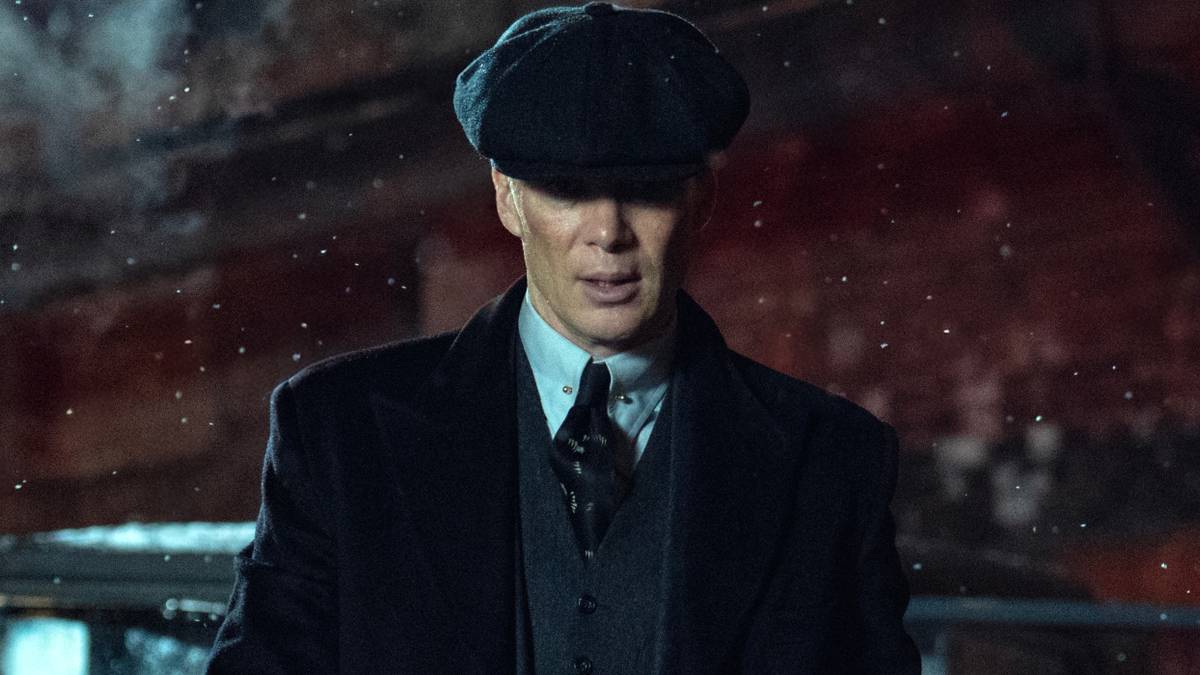
Cillian Murphy’s Netflix Crime Hit Delivers a Brutal, Bleak Finale
It’s been four years since we last saw Cillian Murphy play Tommy Shelby, but seven have passed in the world of Peaky Blinders, with The Immortal Man taking place in 1940, in the middle of World War II. Tommy’s gone…
Mar 9, 2026
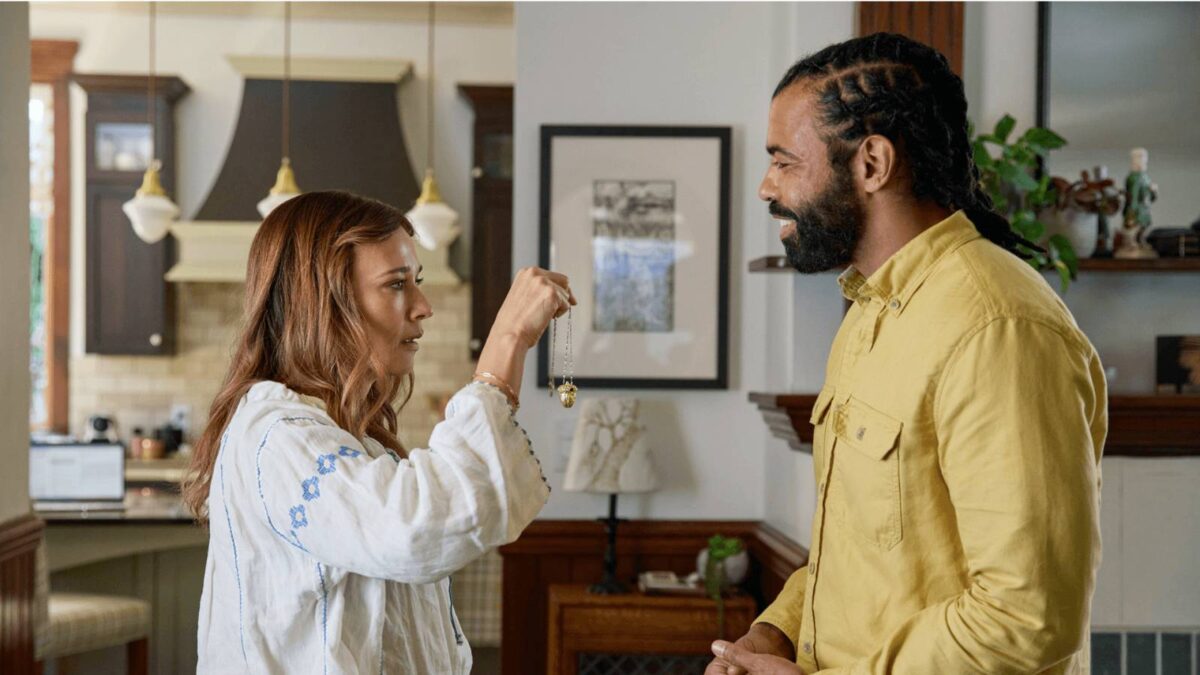
An “Urgency of Now” Message That Fades With the Blink of an Eye
Far more films wrestle with existentialism and impermanence than we give them credit for. They’re simply disguised as spectacle in the form of big-budget sci-fi thrillers à la Avatar, action blockbusters like Mad Max: Fury Road. On some occasions, they…
Mar 7, 2026
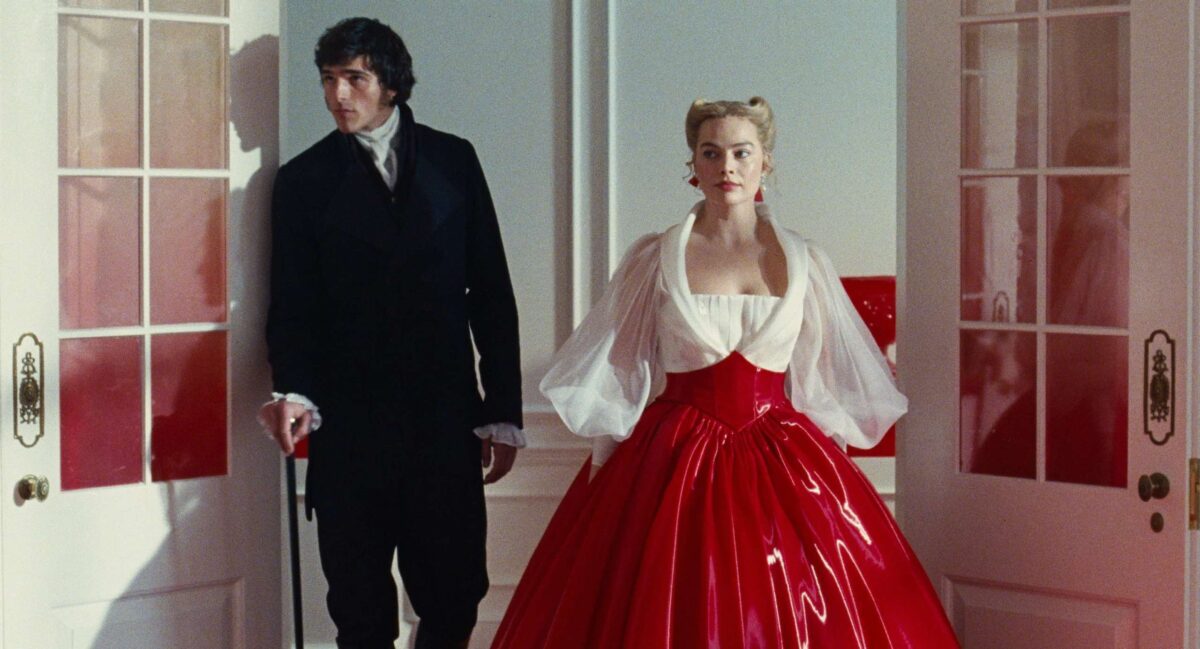
Wuthering Heights Review: A Lurid, Overwrought Romance
Acting Cinematography/Visual Effects Plot/Screenplay Setting/Theme Watchability Rewatchability Summary: In striving to be provocative, this Wuthering Heights loses the haunting intimacy that made Brontë’s novel endure. The wind still howls across the moors, but the heartbreak it carries feels strangely distant.…
Mar 7, 2026