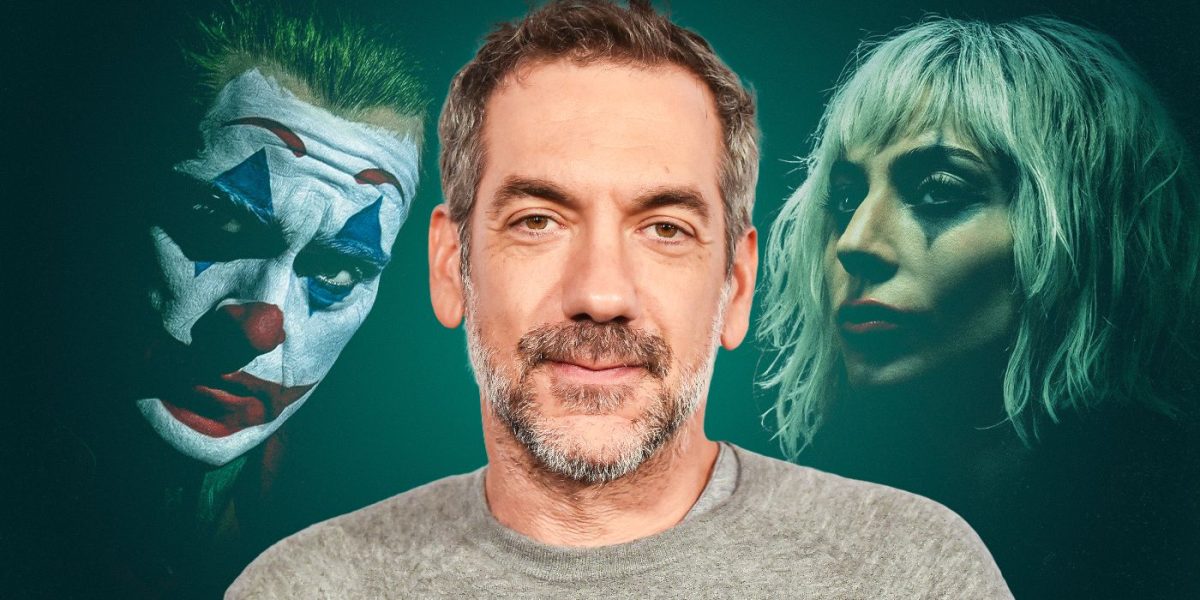
‘Joker 2’ Director Todd Phillips Makes Joaquin Phoenix’s Dream a Reality
Sep 6, 2024
The Big Picture
Collider’s Steve Weintraub attended a group interview with Todd Phillips and co-writer Scott Silver ahead of
Joker: Folie à Deux
‘s world premiere.
Phillips and Silver discuss when Joaquin Phoenix initiated the sequel conversation, why the musical aspect, and how they approached Lady Gaga.
The duo also discuss how much influence James Gunn had on
Joker 2
, how much Harvey Dent we’ll see, the future of Arthur Fleck, and more.
Even when Todd Phillip’s Joker earned 11 Academy Award nominations and became the highest-grossing R-rated blockbuster, it wasn’t immediately assumed we’d see Joaquin Phoenix reprise his role as Arthur Fleck. Though most comic book movies are guaranteed franchises, this more grounded Gotham gave the impression it might stand alone, but rumors were already swirling in 2019, implying Fleck wasn’t finished. Suspicions were officially confirmed, as well as the title, Joker: Folie à Deux, by Phillips three years after the release, launching a short waiting game for more details.
As it turns out, Phillips and Phoenix were conspiring pretty early on about a sequel. “We thought there was more to tell in Arthur’s journey,” Phillips says, recalling the actor’s reluctance to give up the character on the final day of production. We learned more about what to expect from this continuation as Academy Award-winner and 13-time Grammy Award-winner Lady Gaga was announced to play the part of Harley Quinn in what soon began circulating as a full-blown musical. Joker 2 is not a musical per se, but it does have a heavy “musical aspect” inspired by none other than Phoenix himself, who originally pitched an idea to take Fleck to Broadway. Though a “musical” ignited a divisive reaction at first, Phillips says, “I didn’t think it was as big a departure as I believe the internet felt… The music was a really driving factor in the first film. I mean, the guy dances in the first film three or four times.”
Recently, Collider’s Steve Weintraub had the opportunity to catch an early screening ahead of the film’s world premiere at the Venice Film Festival, as well as sit down with Phillips and co-writer Scott Silver for a round table Q&A to discuss the genesis of the sequel. For an actor who’s made his distaste for sequels known, Phillips explains why and when Phoenix knew he wasn’t done with Arthur’s story, as well as why they went this direction with it. They also talk about how A Star is Born inadvertently led to Lady Gaga joining the feature, how much young Harvey Dent (Harry Lawtey) we can expect to see in their Gotham, the origins of the movie’s musical elements, and whether James Gunn and Peter Safran have their fingerprints on this DC-adjacent film. Check out the full conversation in the transcript below.
‘Joker 2’ Was in Talks on the Set of the First Film
Image via Warner Bros
SCOTT SILVER: I can interview you. Why did we decide to make this movie?
TODD PHILLIPS: I’ll tell you it was very motivated by Joaquin, as crazy as that sounds. You all have probably interviewed and know Joaquin and know that he’s not a sequel guy necessarily. Normally, when a movie is done, any movie from The Hangover to Old School to any movie I’ve ever done, the last two days, you’re just kind of happy it’s over. It was a really strange thing on the first Joker — I don’t know if you ever looked at my Instagram — but I actually remember I posted a picture from the last day of the first Joker many years ago, and Joaquin was hugging me with tears in his eyes, and that’s not normal for the end of a movie. That’s not because he wasn’t going to see me again; that was really because we kind of fell in love with Arthur, and we thought there was more to tell in Arthur’s journey. Joaquin jokingly was like, “We could have shot for three more months on the first movie,” and I felt the same way. Again, normally, I’m like, “Get me the fuck out of here. Get me to the editing room and let’s go figure out what this is.” But on Joker 1, we just loved Arthur, and I know Joaquin did, as well.
I’m sure you’ve read this, too, or heard me say this to you guys before, which is you never want to talk about a sequel, certainly publicly, before the movie comes out because God knows, what if it just doesn’t work? But Joaquin and I really started talking about a sequel probably on day 30 of the 55-day shoot on the first film. Half of it was joking, and half of it wasn’t. We would just kind of do it to make each other laugh and say, “Well, what if we did this? What if we did that?” And then, of course, the movie came out. The movie was sort of embraced by people, and people loved Arthur as much as Joaquin and I loved Arthur, so we were like, “Well, what if?”
SILVER: We read recently that Joaquin had a dream.
PHILLIPS: Then Scott and I started talking about, “Okay, what if we really do this?” During the pandemic, we just started talking about, “Where do we go from here?” And I think you’ll see it. One of the fun things, I think, for audiences is that it answers a lot of questions. A lot of people, in the first one, said to me, “What was real and what wasn’t? He had a lot of fantasies in the first movie.” This movie really finds Arthur and answers everything as far as, well, that movie really happened. All that stuff really happened. He really killed Murray Franklin — Robert De Niro — he really killed those kids on the subway, and here he is, ready to face the music, for lack of a better word, and sort of pay for the crimes that he committed. So, it’s a very logical two years later in the movie world where we find Arthur, and I’m gonna leave it at that.
How Much Harvey Dent Will We See in ‘Joker 2’?
Image via Warner Bros.
In the first movie, Arthur’s empowerment and his confidence come from this movement that basically he unintentionally inspires, and throughout the two trailers, we see a lot of that movement. What is his relationship and how has he evolved having this movement that’s coming out in support of him on trial? It’s a movement that has not stopped.
The second part to that — I’m a big Harvey Dent fan. I was wondering why you worked him into this movie, and will we get to see his dark side?
PHILLIPS: Let me answer that part really quick first. We respect the comics, we get the comics. In Harley’s case, we watched animated series, of course, Margot Robbie is Harley Quinn, but when we run things through this film, Harvey Dent is a perfect example. It’s actually a simpler way of talking about kind of what we did with Harley, which was really just put the real world lens on it. Not that other movies didn’t, but just run it through our Gotham. And so, really, the Harvey Dent you’re meeting here is not a huge part, but if you’re gonna have a trial, why wouldn’t you have the assistant DA prosecuting Arthur Fleck, who happens to be Harvey Dent? But we don’t really reveal his dark side. We see a young Harvey Dent. I think it will all come together for you.
SILVER: [The movement] was the challenge when we were writing — where do we pick him up two years later? Where is he at? Where is that confidence? When we meet him, he’s not at the height, but yet he’s not going to go back to the Arthur that we saw originally.
PHILLIPS: That’s a great point. It’s Arthur who’s lived through the first movie, so he can’t be the same guy, but you’re right. He’s become this unintentional icon in Gotham to a certain subset of people. To other people, he’s this horrible villain, right?
SILVER: But the movie very much takes place in the beginning in Arkham, and in there that is sort of that question, of where is he? What is his standing in that place? What is his meaning to the people around him?
‘A Star is Born’ in ‘Joker: Folie à Deux’
“There’s something about somebody like Lady Gaga that’s on a different level.”
Image via Warner Bros.
What was the process like of recruiting Lady Gaga?
PHILLIPS: I was lucky enough to know her because I was a producer on Bradley [Cooper]’s movie, A Star is Born. So it wasn’t impossible to send her a text and say, “Scott and I have been working on this thing.” I’ll say this, the first movie we wrote for Joaquin Phoenix; we started writing this not knowing who that character would be. But the more we kind of fell into this, quite frankly, musical aspect of the film, the more she kept popping up in my head. I remember one day I said, “What do you think about this?”
SILVER: He said, “This is gonna be crazy, but how about Lady Gaga?” I was like, “Oh my god, it’s perfect. Of course!”
PHILLIPS: Then, she had to make the decision. You’d have to ask her how hard it was for her to make the decision, but for us, once I came to him with it, I was like, “What do you think?” And then we were just all on board. But luckily, I met her and worked with her — that’s Bradley’s movie — but I worked with her a little bit and knew her, at least, and so it wasn’t that out of place. Then Joaquin and I went out to Malibu where she was and we had a meeting with her and we talked to her. It was really kind of amazing.
It’s weird with people like that because I’ve worked with big actors — I worked with Robert Downey Jr., and he’s as big as it gets — but there’s something about somebody like Lady Gaga that’s on a different level than an actor. They come with something totally… I don’t know, I can’t explain it. You do feel it when you’re with them. But the amazing thing about her is she just strips that all away pretty quickly, and suddenly she’s just another actor in the movie. That really was helpful for me, but also for Joaquin.
Image via Warner Bros.
As you noted, when this first movie came out, you didn’t necessarily know how people were going to react to it. Ultimately, people reacted to it in a big way. It became this huge film, one of the highest-grossing R-rated movies. I’m curious about what creative freedom that ultimately lent you in the making of this movie and how you were able to take advantage of the fact that you knew that there was an audience for this, so let’s swing big.
PHILLIPS: That’s a really good point. There are a couple ways to do a sequel. I’ve done sequels before — The Hangover 2 is a sequel to The Hangover; it is basically The Hangover 1 with different punch lines, and that was kind of the spirit of making that movie. I feel like comedy sequels are very often done in that way. Austin Powers 2 is basically Austin Powers 1 with different jokes. For this movie, there was no way Joaquin was gonna do it if it was a line drive like that. There was no way Joaquin is gonna do anything with the number two after it, even if you say “à deux,” unless it was entirely different and risky and sort of swinging for the fences. So, that kind of led the charge. I mean, we weren’t gonna go and just write the expected sequel, the same movie, or even that, “Oh, that guy who’s standing on the cop car is now running a crime syndicate in Gotham.” Not only would I not really necessarily have that interest, but there’s no way Joaquin’s making that movie because he knows that wasn’t really the Arthur Fleck that we all created.
And you’re right, the movie was a huge success, the highest-grossing R-rated for five years. You’re right; with having that kind of success, you have a lot of goodwill at a studio like Warner Bros. You also realize that goodwill is perishable and you gotta use it, and, “Let’s go for it. Let’s swing for the fences and do something different.” It does feel like in today’s day and age, the way the movie business has transformed during the pandemic, you look at something like Barbie — [Greta Gerwig] just went for it. She did something kind of weird, and it worked on a level because it was different. It was not what you expected. So to some extent, I think when you’re dealing in this space, the big movies, you gotta give them a reason to show up, and I think we just aim to do something radically different than the first movie.
SILVER: The same way we weren’t sure how the first movie was gonna do, we don’t know how an audience is gonna react. Sometimes with sequels, it’s like, “We’re okay, the first one did well.” But this one’s like, “What the fuck are we doing?”
PHILLIPS: Well again, Joaquin literally said to me, “I’m not gonna do this unless I’m as scared as I was on the first one.” You’ve all met Joaquin, for the most part, and maybe he doesn’t seem it when you meet him, but he was petrified on the first movie the way you want an actor to be, and so the reason he would not be interested in a sequel is because that feeling goes away and then you’re like, “What are you doing?” We weren’t scared on The Hangover 2 in that way. On this movie, we wanted to be scared. So, we wrote a script that would give him that feeling.
Image via Warner Bros
I remember leaving the first film like I’d been holding my breath the whole time, intense, and on the edge of my seat. With this musicality aspect of the second one, do you think that lessens some of that intensity, or does it really add to it?
PHILLIPS: Here’s what I’ll tell you: For the people who have seen this movie, in general, at the end, they sit and don’t move for about three or five minutes, and then they text or email me and say, “I need a minute to process the movie.” I think it’s unsettling. But I also think, again, not to give it away, it clarifies a lot of things that you might have had questions about in the first movie. I hope it all gets answered. But I don’t think the music lessens tension, if that’s what your question is, at all.
Joaquin Phoenix Originally Pitched ‘Joker’ on Broadway
“I didn’t think it was as big a departure as I believe the internet felt…”
Image via Warner Bros
You were talking about how the idea of the second movie was already being seeded and planted in the first one, but the musical aspect was also in those conversations or jokes that you guys were having, as well. What you can talk about as far as the musical aspect?
PHILLIPS: That was something more Joaquin. Joaquin had come to me and said, “What if we do this thing?” Again, he didn’t want to let Arthur go. He goes, “We should do this on Broadway or something.” He had this vision. And again, 50 to 80% of it was us just fucking around joking, and that’s sort of the creative process, and then I’ll call Scott and go, “What do you think about this?” And we just bounce around ideas. That’s just sort of how everybody works. But I didn’t think it was as big a departure as I believe the internet felt when they heard there’s music involved because, to me, there was music throughout. The music was a really driving factor in the first film.
I mean, the guy dances in the first film three or four times. The score in the first film left an indelible mark on people; [composer, Hildur Guðnadóttir] won the Oscar for a reason. You hear that bathroom dance music, and it brings you to it. So, to us, it wasn’t that big of a leap that we leaned into the music on this film. The first thing I ever said to Joaquin when we started talking about Arthur was that, yes, he’s left-footed, yes, he’s out of step with the world, but there’s a music in him. That’s kind of where this all came from.
There’s such a wonderful improvisational quality to the first film, especially when you guys created the bathroom dance scene. Because of the pressures of making a sequel, especially if there’s more music involved, were you able to still find those moments making this film?
PHILLIPS: There’s no way to make a movie with Joaquin, in my experience — he might be different on other people’s movies — but my experience is he needs to have the freedom to not think anything is set in stone, and that goes even down to the music. Lady Gaga had to kind of relearn how she does music because what Joaquin wanted to do was every take, the way he does every take differently in the first film, he even wanted to do the singing differently. Well, how do you do that? You have to prerecord the music, and you have to da da da. Obviously, they’re gonna sing live — you don’t hire Lady Gaga to not sing live — and Joaquin will do anything, so he wants to sing live, too, but then what do you do with the actual arrangement of the song?
Image via Warner Bros
What we discovered was, well, we’ll just have a pianist live on set in a soundproof booth and let Joaquin or Gaga lead the way. That pianist will find that, and then it’s up to us in editing to kind of backwards engineer the arrangement to fit. So to answer your question, he still had the freedom to improvise or give a different performance between take one and take three because the music followed him, it didn’t lead him. It was really a different way to do it, and it was a headache in editing, but it enabled them both to just do whatever the fuck they wanted.
Was James Gunn Involved in ‘Joker 2’?
The first movie was such a success before the new era of DC Studios. With the new era of DC Studios, I wanted to know if the production process on this one changed at all, and did James [Gunn] or Peter [Safran] have any input at all?
PHILLIPS: With all due respect to them, this is kind of a Warner Bros. movie. That’s them also wanting it to be like, “Okay, Todd did his thing, let Todd continue to do his thing.”
SILVER: We started before they even came aboard.
PHILLIPS: We were greenlit before. So, while they have seen a cut of the movie, it’s not like DC proper, even though it’ll say DC after. Does that make sense?
SILVER: Yeah. No, they had nothing to do with the movie.
Tell us about the last day on this one, to come full circle back around.
PHILLIPS: The last day on this one was very different because we were in New York shooting on the stairs with 8,000 paparazzi people. It was a very frustrating day, so we all wanted to get the hell out of there. But we then had this little get-together downtown at my friend’s bar, and it was actually really beautiful. Joaquin and Gaga and everybody was there, and, of course, the crew. Again, you’ll see the movie, and you’ll go, “Oh, I get it. The story is told.”
Joker: Folie à Deux opens in theaters in the US on October 4.
Publisher: Source link




Eggs – Film Threat
In writer-director-star James Clair’s short drama Eggs, a man struggling to rebuild his life finds his quiet mornings turning into strange conversations with the very eggs he is meant to cook. I mean, they want him to eat them. So…
Mar 11, 2026
Ethan Hawke Elevates A Rugged, Predictable Gold-Run Survivalist Western[Sundance]
As far as one can tell, Murphy (Ethan Hawke), a father, WWI veteran, and avid car mechanic, has never encountered an insurmountable challenge. Living in Eugene, Oregon, in 1933, four years into the Great Depression, Murphy and his young daughter,…
Mar 11, 2026
The Moment Review | Flickreel
Brat Summer was a cultural phenomenon that I didn’t understand at all. I knew that it was connected to an album that Charli XCX had released. Whenever I asked what Brat is, though, nobody could seem to give a straight…
Mar 9, 2026
Cillian Murphy’s Netflix Crime Hit Delivers a Brutal, Bleak Finale
It’s been four years since we last saw Cillian Murphy play Tommy Shelby, but seven have passed in the world of Peaky Blinders, with The Immortal Man taking place in 1940, in the middle of World War II. Tommy’s gone…
Mar 9, 2026