Josef Gatti on PhenomenaFilmmaker Magazine
Mar 6, 2026
Phenomena
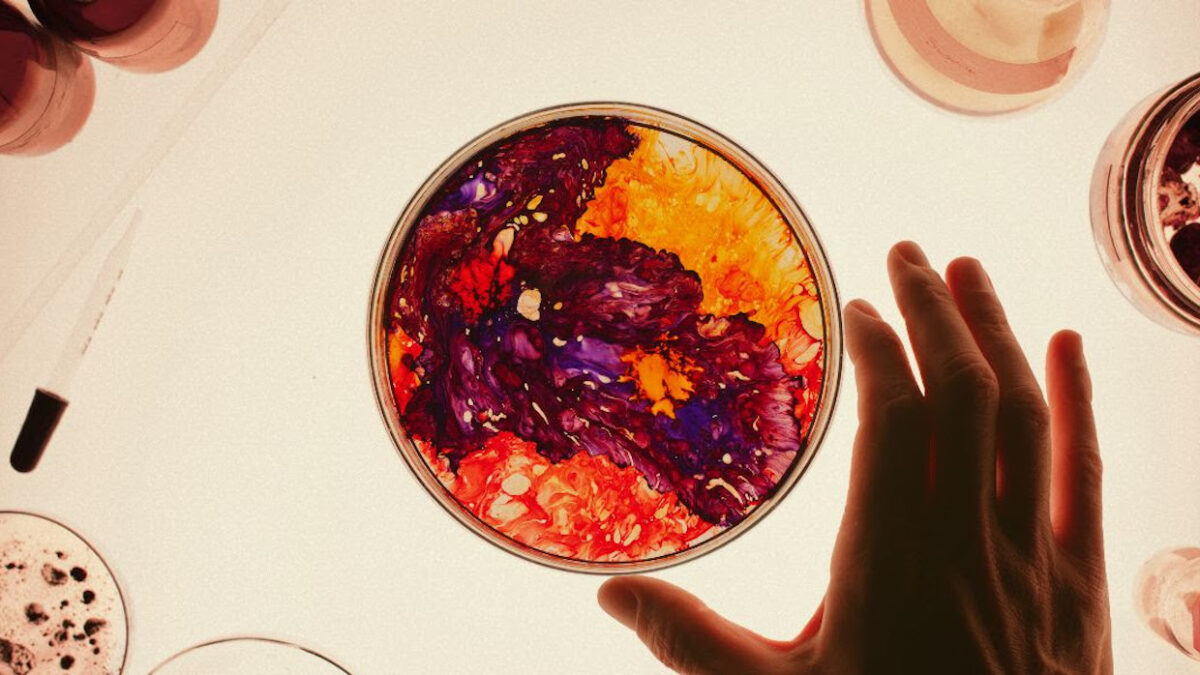
“I found a way to look into the universe,” says non-fiction Australian filmmaker Josef Gatti in his feature debut Phenomena. Paradoxically, it turns out that the wonders of the universe are perceptible right here on Earth—so long as one has a laissez-faire approach to homemade (and often dangerous) science experiments and access to high-tech camera equipment capable of capturing molecular reactions in real-time.
These reactions, subatomic as they may be, possess a staggering beauty. Guided in part by his father, a physics professor, Gatti trains his cinematic eye on the hypnotic (and yes, most would say downright “trippy”) visual effects that can be conjured through common scientific principles.
Ten experiments result in sublime molecular artistry exemplifying the mechanics behind light, matter, energy, waves, gravity, electromagnetism, nuclear energy, entropy, quantum energy, and life itself. Though it’s easy to simply succumb to the satisfying visual stimuli, supplemented by experimental composer Nils Frahm’s massive catalogue and electronic outfit Rival Consoles’s original score—while watching, I couldn’t help but think that Phenomena is like Baby Einstein for stoners (in a good way)—Gatti’s film goes much deeper. In an age of AI slop, geopolitical peril, and increased interpersonal alienation, it is a quasi-radical act to engage with the small scientific marvels that allow us to exist and thrive on this planet in the first place.
I spoke with Gatti over Zoom the week before Phenomena would have its world premiere at the doc-focused True/False Film Fest. Below, he details the short film series that preceded this project, explains why he hesitates to give his old man “too much credit,” and, quite critically, identifies the ideal substance to consume before watching.
Filmmaker: I see that a version of this project manifested as an episodic series in 2021. Tell me about how it transformed from that iteration to this one?
Gatti: Maybe I can take you back even further. Here in Australia, it was around 2019, 2020 that the project was picked up as a web series through the public broadcast [channel] ABC. But it had a life beyond that, as well. It started out as [a series of three or four] short films as far back as 2016. It’s been slow moving for almost the last decade. It’s been growing since then as these little musical, trippy visual shorts. It was also presented as immersive works at museums, exhibitions, and galleries. So it’s taken on many shapes and forms. But ultimately, the vision was always to piece together a long-form feature. Presenting it as one singular work now is such a pleasure.
Filmmaker: Was it a challenge to condense or refine everything into a feature? Or was it easy to stitch together?
Gatti: With this short-film anthology, I’d always had this [feature-length] master plan in mind—or at least pretty soon after I’d figured out how to expand them into a concept. I sort of had the ending figured out even back then. That wasn’t the tricky part. The tricky moment was just condensing it. After 10 years, there are just so many ideas on the cutting room floor with this film. It’s painful. That was the hardest part, honestly—trying to contain it in 90 minutes.
Filmmaker: Is there a segment or idea that ended up on the cutting room floor that feels particularly painful when you look back on it?
Gatti: Yes, and you get a flicker of it in the beginning and end of the film. I don’t know if you remember the flicker of burning electricity. That was the second short film that I did with dad called “Lichtenberg.” It’s stunning. You basically have a short circuit with a dangerous amount of electricity. You’re sort of not supposed to talk about how exactly to do it [laughs].
Filmmaker: How integral was your father in terms of sparking interest in the subject matter and ushering the project along over the past decade?
Gatti: In terms of sparking a passion for it, not so much. [Laughs.] He tried really hard when I was a kid to get me into science—honestly, even science-adjacent disciplines. He really wanted me to [go to college for] computer science or something, but film was the way. It was only a few years later that I discovered that science wasn’t what I thought it was, physics in particular. I found a lot of beauty and depth. I didn’t realize science could be so profound. Once I found my own way to it, I came back to that.
In terms of him being integral [to the project], I could not have kicked off the first few experiments without him, that’s for sure. He was guiding me along the whole journey. Look, I can’t give him too much credit for the genesis of it [laughs]. But honestly, I can’t imagine I ever would have started this without him.
Filmmaker: With this prolonged period of experimentation, what was the process of perfecting them before going in to shoot?
Gatti: Each experiment was like its own mountain to climb. It would be weeks of experimentation before it was time to press record. Each one required so many pieces or ingredients that aren’t available off the shelf. There was a long process of ordering things and just waiting for them to arrive, or trying to source particular chemicals. On average, it was at least two to three weeks before I’d crack the first component of [an experiment] and then from there it would be another few weeks to just try and make it evolve. What I found early on was that it wasn’t enough to just get one thing to happen. In order for each experiment to hold as mini short films, there needed to be an arc within them. There were a lot of abandoned [experiments] that never eventuated a little story.
Filmmaker: I’m also curious to know more about creating the sonic landscape of the film, specifically with Nils Frahm’s compositions and Rival Consoles original score.
Gatti: I’d had a lot of practice editing these shorts to my favorite music, just throwing down my favorite songs and working the images to them. Nils Frahm is such a perfect fit for the work I’m doing, and not just the sonics of it. He’s got this sort of classical-meets-contemporary-synth thing going on. His free-flowing approach to music is structurally kind of vague. He’s got some really long tracks, as well. He’s been doing this a long time. When we approached Nils, we were so lucky to be essentially granted [carte blanche], and I was so familiar with his catalog already. Nils’ music was taken across about 10–15 years worth of his work. It’s very diverse and that was a real strength for us.
Where Rival Consoles comes in is that there were moments throughout the film where it wasn’t driven by the visual trippy nature of the storytelling. The opening and the closing of the film needed their own approach with original music. I think Rival Consoles really helped to make sure that there was a sonic consistency to help hold the whole thing together.
Filmmaker: It’s refreshing, amid this landscape of AI, that you proudly profess that every image in the film is real. Do you feel cynical about the future of filmmaking as it pertains to AI?
Gatti: It’s so funny you ask. I’ve been all-in on this film for so many years now that I’ve only just popped my head up to like see how things have changed in the last few years. I’m so uninterested in using AI in my work. I just don’t even think about it, to be honest. If you want my one-liner, I don’t really like it. I’m so drawn to the real world.
Working in music and the arts is my bread and butter. As a cinematographer, I’m often handing my work over to companies that integrate AI tools, which I’m totally okay with. But in terms of the actual generation of images, I couldn’t be less interested. I was really trying to look at nature and use real cinematography and practical techniques to create the craziest images you could possibly imagine.
Filmmaker: The film is often described as “trippy,” but if you personally had to choose a drug to take while watching, what would it be?
Gatti: Honestly, I just think some good old classic weed is a really nice fit. I was pretty new to that pastime, as we’ll call it. I’d only smoked weed when I started this project. The film is so trippy that I can’t imagine what shrooms would be like.
Filmmaker: Are any projects percolating for you right now?
Gatti: It was so much fun making this film. It’s very rare that you have a dream to do something and it comes true and then it’s better than what you could have imagined. I want to keep pushing what I’ve found further—how the universe works through a trippy, psychedelic musical odyssey. I’ve certainly got a few more ideas up my sleeve already that are bursting to get out.
Publisher: Source link




‘Yellowstone’ Spin-Off ‘Marshals’ Premieres With a Tragic Fate for One Fan-Favorite Character
Editor's note: The below recap contains spoilers for Marshals Episode 1. It's been over a year since Taylor Sheridan concluded his Paramount Network drama Yellowstone, but that doesn't mean that we're quite done with the Dutton family just yet. Off…
Mar 5, 2026
A Sad, Compelling Look At One Father’s Quest For Answers [Sundance]
It’s something anyone dealing with loss, be it unexpected or otherwise, may very well seek. Some want nothing more than the release that is closure, especially when questions outweigh answers as to the circumstances surrounding the event. Some simply want…
Mar 5, 2026
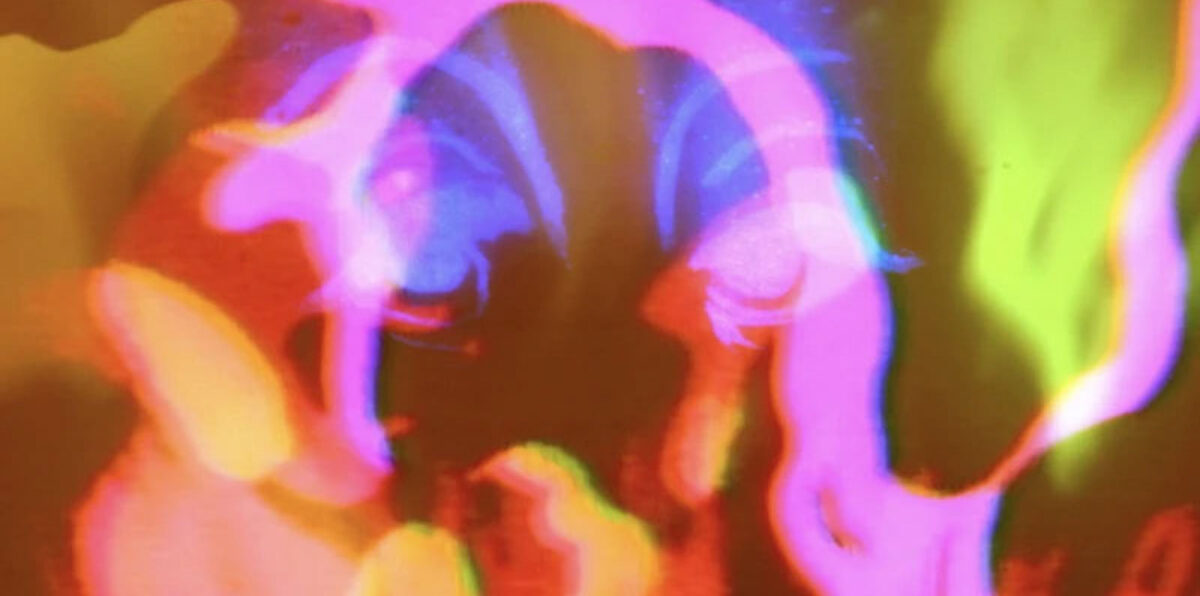
A Flame The Colour of Air – Film Threat
SLAMDANCE FILM FESTIVAL 2026 REVIEW! You will shimmer and shake, like you’re riding the snake while being wowed by the dynamite animated short A Flame The Colour of Air, written and directed by talented Canadian filmmaker Emily Pelstring. Jessica Mensch’s…
Mar 3, 2026
‘9-1-1’ Can’t Decide What It Wants To Focus On in a Lackluster Season 9
Editor's Note: The following contains spoilers for 9-1-1 Season 9, Episode 11.I was hoping that 9-1-1 would take advantage of its month-long hiatus and course-correct after its most recent episode, but while this week is certainly an improvement from last…
Mar 3, 2026