Kornél Mundruczó on the Amy Adams-starring Berlinale Competition Film At the SeaFilmmaker Magazine
Feb 20, 2026
At the Sea
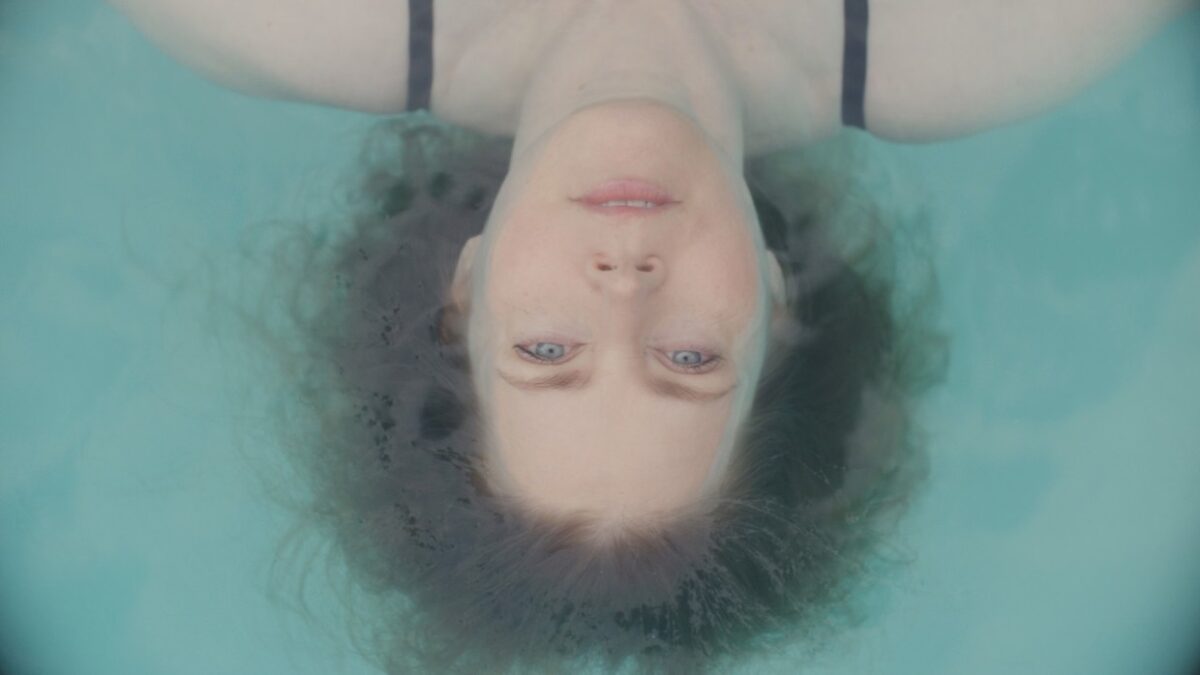
Drumroll: Amy Adams stares at you. It’s intense—not haunting, but certainly not inviting. The camera pulls away, and it’s her character Laura who’s playing the drums. It’s daytime, there’s unremarkable company around. Music, no dance. Soon, she will leave the facility. Soon, she will return to her Cape Cod home, to her devoted yet frustrated husband Martin (Murray Bartlett), to her barely tolerant teenage daughter Josie (Chloe East), to her young son Felix (Redding Munsell) who scurries away from her embrace, to her dance company that made her famous but which she now wants to quit, and to the forbidden alcohol she’s stashed away in hidden places. How will she survive this aftermath of rehab? How will she not be worn down by her passive aggressive business partner George (Rainn Wilson) and her former glorified assistant (Dan Levy)? Is she facing the death of her desire to dance or that of her selfhood?
Culturally exiled Hungarian director Kornél Mundruczó directs a cast of formidable talents with an appealing clarity in At the Sea, his fifth collaboration with writing partner Kata Wéber. The pair craft a comedy-drama that’s choreographed alongside a delicate dance between surrealism, satire, and psychological distress. At The Sea doesn’t readily compare to any of their previous efforts as a writer-director duo, which include the sci-fi thriller Jupiter Moon, the Vanessa Kirby vehicle Pieces of a Woman, and the canine-infested Cannes winner White God. Here, Adams is first among equals, espousing a physicality that blends in with the wind-swept beaches and hillsides of Cape Cod.. Her longing is unmarked and her looks are unspoken. Part of Wéber and Mundruczó’s project is to approach midlife reconciliation from a different angle, one where resolution doesn’t fly high as the kites that speckle the beach town’s skies but rather arrived at as though a clearing, where cohabited movement becomes the antidote to the near fatal follies of addiction.
At the Sea premiered in Competition at the 76th Berlinale, where I spoke to the intellectually charismatic Mundruczó in person. This interview has been edited and condensed for clarity.
Filmmaker: With At the Sea, you and your partner Kata Wéber have worked on five films now, and they all seem to be quite different from each other. How was the process of collaborating on this film different from or similar to previous ones?
Mundruczó: We have kind of the same process for the whole movie in that we have to find the core topic, right? Here, midlife crisis was the core topic. Everybody—women and men—goes through at one point, the transformation when you lose your old self and you have to find your new self. There is no news about that. There was exactly the moment when I also went through some kind of crisis. I moved [out of] my country. I’m in cultural exile. I’m changing a lot. The people I love who are very close to me back in my country changed a lot. This exchange was very hard. The writer, Kata Wéber, lost her parents. So we both recognized that there’s really no movies about this feeling. That was the point when we started to create an addiction movie, but from a completely different perspective. Addiction movies are [about addiction] on the rise or [set] in the rehab when you’re facing your demons. But what’s after? Kata said all the time that this is a movie about life after death. And that’s so true.
Filmmaker: Do you talk a lot about the subject matter together? Does she come up with the characters in the beginning and then present them to you?
Mundruczó: Yes. We talk about it and about the key moments. [For example], it has to happen in heaven. Summertime, beautiful—that’s the background. It has to happen in the family. We felt like we needed an element which is beyond words, like in terms of music or dance, and then she chose dance to be an important element for the whole process. Then [Kata] leaves for 2-3 months to write and comes back with a script. Usually that script is very close to what we are shooting. Here it was pretty much the same, except that at one point we let the actors process and give their thoughts, because at the end it needs to be represented by them and by their personal power. All of the cast had a strong connection to their roles, including Amy Adams, obviously. What a performance!
Filmmaker: Did you write this role with Amy Adams in mind?
Mundruczó: The funny story is we didn’t, but we sent it to her first. I felt she would be tremendously good. And it’s never ever happened in my life that [my first choice] is playing the role. Usually it’s an endless process. She resonated so much with the role and she picked it up.
Filmmaker: We all know Amy’s one of our great actors, but what about her previous work made you think she’d be particularly suited to this role?
Mundruczó: She’s an unbelievable actress. Also during her youth, she had an unbelievable amount of success. She still has the same power. When I saw her in Arrival, I thought, “Oh, that’s a new version of her. Something is born here. What is it?” I admire that performance so deeply and I find it so connected. She was not the same woman who was in American Hustle or even the works before. Something more adult, more lonely, more alienated, more intellectual. She gave that [in At The Sea], from my perspective, a true art piece, because she went against every Hollywood standard. She is vulnerable, raw, non-performative. Everything is hidden, but everything is layered. A very brave performance.
Filmmaker: Amy Adams’ performance reminded me of the incredible interiority she brought to her overwhelmed stay-at-home mom character in Nightbitch. There she interacted with a two-year-old actor. Here she does so well with an older child and a young adult, played respectively by Redding Munsell and Chloe East. How did you and Amy work with these actors?
Mundruczó: It was amazing. Amy felt very close with Chloe and with Redding. With Chloe they found some similarities as both of them are former dancers who transformed into actors. Amy sees Chloe as her younger self, in a way. It was a beautiful process how they found their physical language because these dance sequences are not choreographed in a traditional way. We all felt like it cannot be Broadway, it cannot be “wow.” It needs to be part of the storytelling. All of your major turning points are in the dance sequences. Amy’s character, Laura, found a new channel to be connected to her kids. We all know how easily we can lose connection to our closest ones. In the beginning they fought. The little boy ran off. The daughter turned on the music, didn’t want to talk. It’s the children’s reflection on the mother’s old self and they don’t know her new self.
Filmmaker: You’re bringing up all my questions, which is great! I was just thinking if you string just the dance sequences from the film and played those in a movie theater, for instance, would the conflict between Laura and Josie come through?
Mundruczó: It’s the question, “What do you understand from a poem?” Because I think all of the choreography—Josie’s dance alone, Amy’s dance alone, and the duet at the end—is kind of a poem. It definitely summarizes the whole conflict of the movie. It’s kind of beyond words. Do you get exactly the plot? I don’t think so. But the core is planted into those sequences, that’s for sure. And I love poems.
All of my movies have these moments, above life, beyond life, somewhere where the [non-verbal] ability is coming across. Dance, a flying ball, amazing violins. It goes by gestures, through human nature. Sometimes words are the prison. Many times I feel we cannot communicate with words. Somehow they are a metaphor for countries and society, especially these days when everything is so divided. We don’t find the words. But we can find the gestures to be connected. Sometimes a hug or a handshake means way more than what we are telling. That element is very important in movies, even though, you’re right, my movies are not in the same cinematic language.
Filmmaker: How did you work with the choreographer and how did the choreographer work with Amy and Chloe? I was especially struck by Chloe’s solo dance scene inside that glass outhouse, with Amy watching. I jotted down “absurdist.” I’m no expert, but it felt different from the more modern dance sequences that Amy was doing.
Mundruczó: Our choreographer Meg Stuart is an absolute genius. She’s an American choreographer who has also done a lot of unbelievable work in Europe. I’ve known her work for decades. Her style is that of a storyteller. How can I tell stories through movements, and not do countable [clicks fingers] choreography, which is usually the case, right? So for Amy and Chloe, Meg’s presence was very surprising because she accepted something very different from them. [It was not] the usual, “Give me the beats, give me the numbers, and I do the movements by the numbers.” She was like, “How can you discover yourself? How can I discover your trauma? How can you be free?”
Filmmaker: Is this something that you are asking or Meg Stuart is asking?
Mundruczó: Me, I ask that. Also, as a filmmaker, I don’t want to shoot those scenes perfectly. I shot those scenes with conscious mistakes. I wanted to create the feeling that happened, and I’m running after the reality, almost like in a documentary. The movie is also nicely, softly growing into this beautiful background. But the dance sequences are a bit of a surprise. I decided with the cinematographer that we don’t want to shoot perfect choreography. It would be so weird and bad in this movie, like [it was] fabricated. We wanted [the characters] to understand themselves and each other more through those sequences, all of which are major turning points. The first Josie dance is brutal, violent, so painful, and that’s the wake up call for Laura. That’s the first time when she feels like, “I didn’t see that. How blind I am!” And then she started to get closer. The next conversation is still distant and it’s getting into a little bit of a fight, but that’s better than silence, since they don’t have a single word [exchanged] for the first 40 minutes. So it’s a special structure, not like a conventional drama.
Filmmaker: So when Chloe shot that scene, did she already know what the dance would look like or was she discovering it during the take itself?
Mundruczó: Both. They did rehearse. They kind of collected movements, which is very important, like how she could push herself to the floor, which is unbelievable. Then there are also the moments when she goes to the right, [the one] with the drinking, and the leg. She was able to do the order how she wanted. It was not like, you go down three times and then you do this, and then that. Inside the sequence she had absolute freedom to experience her feelings.
Filmmaker: This film feels very wind-swept—the Cape Cod setting, Amy Adams’ hair, the lovely images of kites, the scene with Laura running while carrying Felix after the jellyfish incident, and all the flashbacks of young Laura seeing dancers on the windy streets. I was curious how much you consciously built this in?
Mundruczó: [It was] absolutely constructed. I felt like we have to have this feeling of inner storm. It was very important to me to have this kind of thirsty night, when there’s a big wind outside and Laura goes to find the good old spot where she hides her alcohol. [Traumatic memories are] always restless. There is no single moment of peace. We [call] it “trauma fragments.” You never plainly see her past. This little girl has never seen her crashed car, right? After her accident, [adult] Laura feels like a little girl, reflecting on different elements, like in a Max Ernst painting. Every single element is real, but it’s just how you put that together. In my [previous] movie, Evolution, inside a Holocaust gas chamber, there’s real hair coming out from the wall. These are traumatic moments. For this film, wind was a very important element. It naturally blows [on location] but sometimes we controlled it with wind machines.
Filmmaker: I was curious about this incredible cast that you have surrounded Amy with. The party scene felt like a bit of satire about rich people, maybe because you have actors like Dan Levy, Murray Bartlett, and Jenny Slate, who are giving comedy, whereas Amy’s arc is very dramatic. Can you talk about that mix?
Mundruczó: How can I say this nicely? When you have a drama, and you have a lead character, the same quality of actors don’t want to be in the movie because they are not the lead. So usually you find lesser actors, and somehow the background is so weak. I wanted to get the same strong personalities. Murray Bartlett, he’s ready for everything. Dan Levy is like a Charlie Chaplin of our times. I completely believe he runs a theatre company [in the film]. I felt it was very important to get people in the same league, even from a distance.
As for caricature, we wanted to avoid it as much as possible, but I don’t want it to be heavy, either. I really wanted to create this Chekhovian world, where everybody is kind of very sad and very funny at the same time. That’s why I chose this unbelievable ensemble.
Filmmaker: Would you agree or disagree that some parts of the story, like the party scene, play like satire?
Mundruczó: Yes, and [it gives] a social commentary on this privileged society. I wanted to tell the story from this perspective. Usually, I’m very socially sensitive and [feel a] responsibility for doing movies about different social classes. Here, I felt this is an environment you discover with empathy and fun. From a distance it looks a little bit like a satire.
Publisher: Source link



Try Not to Cry During HBO’s Most Emotional Goodbye Yet
Editor's note: The below recap contains spoilers for The Pitt Season 2 Episode 6. A third of The Pitt Season 2 is already over. In that time, audiences have watched Dr. Michael "Robby" Robinavitch (Noah Wyle) struggle through his last…
Feb 19, 2026
Ryan Murphy’s JFK Jr. Drama Hits Hardest in the Scenes That Never Made Headlines
When The Crown premiered its final season, it felt like the end of an era. The Netflix series created by Peter Morgan dove deep into the British monarchy through the lens of Queen Elizabeth II and her immediate family, while…
Feb 19, 2026

28 Years Later: The Bone Temple Review
28 Years Later wasn’t the legacy sequel that people expected. That’s not to say the film was bad by any means. If anything, it was more admirable than 28 Weeks Later, which played like a conventional follow-up. While still cut…
Feb 17, 2026
Suffocating Dread and Some Frustration
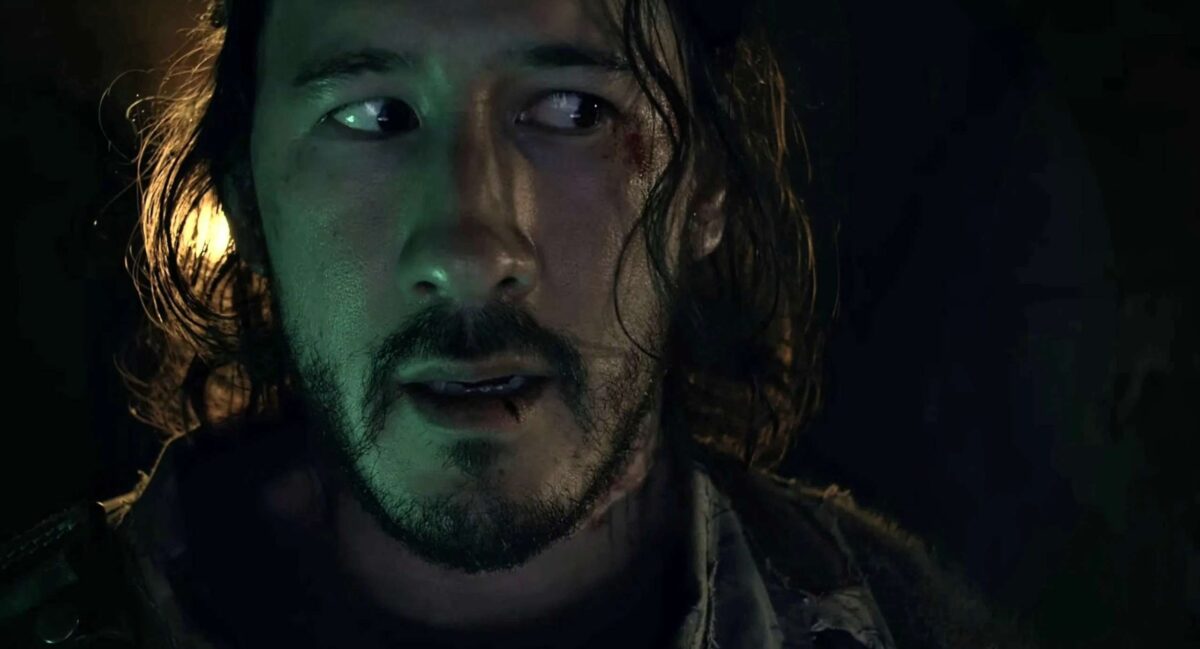
We’re officially in the era of the YouTuber movie, and honestly, I’m not complaining. The best examples of which being Danny and Michael Philippou‘s Talk to Me and Bring Her Back, while last year saw the release of the impressively creepy Shelby Oaks, helmed…
Feb 17, 2026