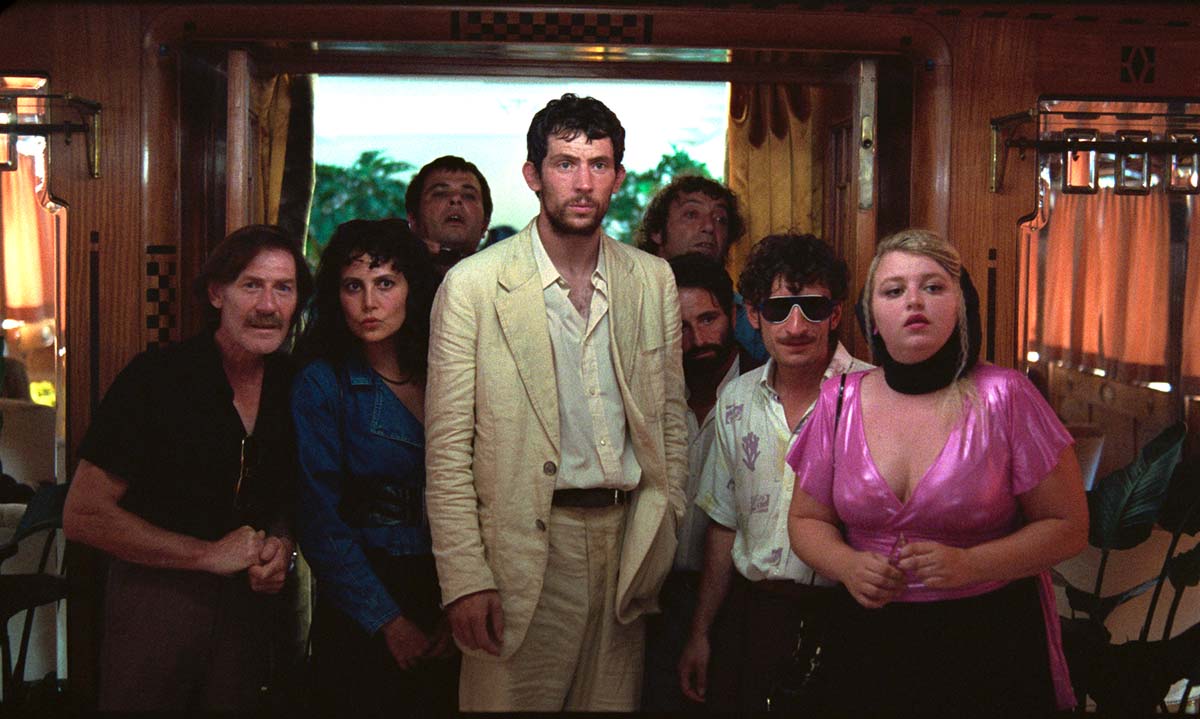
‘La Chimera’ Is Another Enchanting Modern Myth From Alice Rohrwacher [Cannes]
May 28, 2023
Alice Rohrwacher’s “La Chimera” flits between languages (English, Italian, French, German) as fluidly as it does mediums (35mm, Super16mm, and 16mm cinematography) and styles (jerkily sped up Chaplin-esque scenes, clinical CCTV footage, audacious 180-degree camera flips). Rohrwacher uses this mosaic of disparate approaches to hone in on other kinds of incongruous and unpredictable interplay: modern Italy and its ancient past, heartbreak and new love, and the real world and its spiritual mirror realm.
READ MORE: 2023 Cannes Film Festival: 21 Must-See Movies To Watch
Appropriately for such themes, “La Chimera” is set in the world of the tombaroli (Etruscan tomb raiders) in 1980s Tuscany. This is a place where ancient history is never far beneath one’s feet, as cinematographer Hélène Louvart makes clear in a stunning shot of fresh Earth split asunder to reveal luminous Etruscan tiling lurking just a few inches underground. Josh O’Connor’s taciturn Arthur lives in a similarly touching distance to the past: he walks the Earth as a ghost, still mourning a lost love — Benjamina, daughter of local singing teacher Flora (a regrettably underused Isabella Rossellini).
Like the title character of Rohrwacher’s last Cannes premiere (the Best Screenplay-winning “Happy as Lazzaro”), Arthur has a preternatural ability: he alone can divine the location of hidden Etruscan tombs, where bodies were buried alongside precious “grave goods” that could earn the tombaroli a fortune on the antiquities black market. But, unlike his ragtag band of accomplices, Arthur isn’t interested in money — instead, he’s on an enigmatic Orpheus-and-Eurydice-style quest to find a “door to the afterlife.” It’s a somewhat abstract goal to chase, but O’Connor, an actor in constant professional evolution, plays Arthur with just the right blend of grit and transcendence to sell us on the idea that he’s the protagonist of a modern myth.
Arthur’s search is complicated by his meeting with one of the singing students Flora lightly exploits, the not insignificantly named Italia (an instantly endearing Carol Duarte). Italia is another of Rohrwacher’s holy innocents, a precious beacon of otherworldly goodness who has somehow remained unspoiled by the cruel, cold world around her. For Arthur (who communicates with her in Italian, both oral and signed), she’s a miraculous flame in the dark, a reminder of what living really looks like.
Her buoyant spirit doesn’t just reignite a stamped-out flame within him, however — it also disturbs his conscience. Flora argues that the Etruscans’ precious artifacts aren’t made for human eyes; instead, they belong to the souls they’re interred with. The tombaroli — who believe that the relics they pilfer are gifts left behind purely for them to inherit and profit from — laugh off Italia’s philosophy, but it takes root in Arthur, a former archaeology student who has presumably never considered that what’s underground might just belong there.
“La Chimera” thinks so, too: when the tombaroli crack open a rare sealed tomb, for example, the influx of 20th-century air into the space seems to cause the frescoes on its walls to lose a little of their brilliant color as if they’ve been sapped of life. What’s more, in a haunting manifestation of the film’s foundational idea — that history is public, and therefore its fruits either belong to everyone or no one — Arthur soon becomes plagued by dreams in which local people question him about the artifacts he’s looted, talking about them as if they were their own personal heirlooms.
Rohrwacher uses magical realist touches like these to deliver another of her stirring commentaries on the spiritually corruptive potential of greed. The enchantment works better in some places than in others, though. For example, frequent shots of pigeons and geese allude to the Etruscans’ reverence for birds as oracles of destiny, but without much in-film explanation of their beliefs, these references feel somewhat aloof and academic.
However, Rohrwacher’s spell holds. Once again, she proves a master at tapping into and expanding the most uncorrupted part within us, our inner Italias. “La Chimera” has such beguiling, reorienting power that it inverts our initial reactions to the tombaroli’s work — so that, by the end of the film, we recoil from the defiling of a statue so viscerally that it’s as if it were made of flesh, not stone. As with her other works, “La Chimera” is a gift of a film, a philosophically stimulating piece of cinema that has the rare capacity to genuinely transform the way we look at the world. [A-]
Follow along with all our coverage from the 2023 Cannes Film Festival.
Publisher: Source link







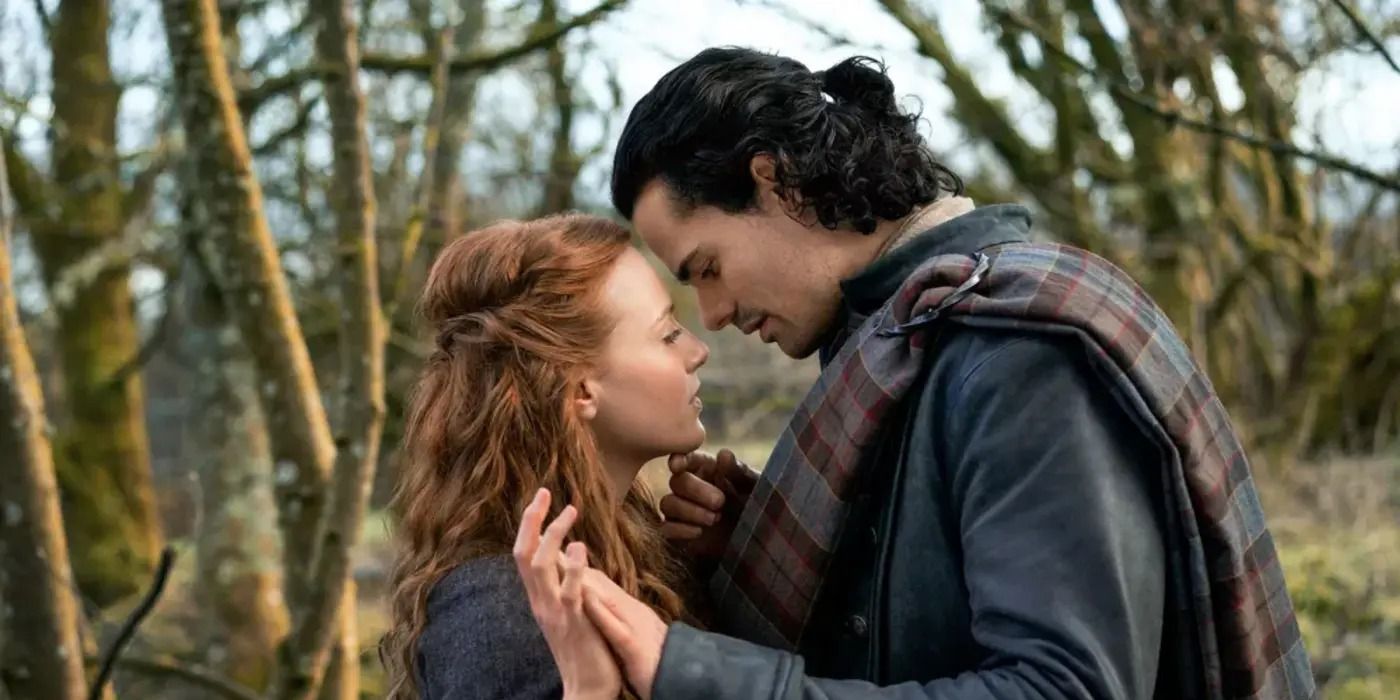
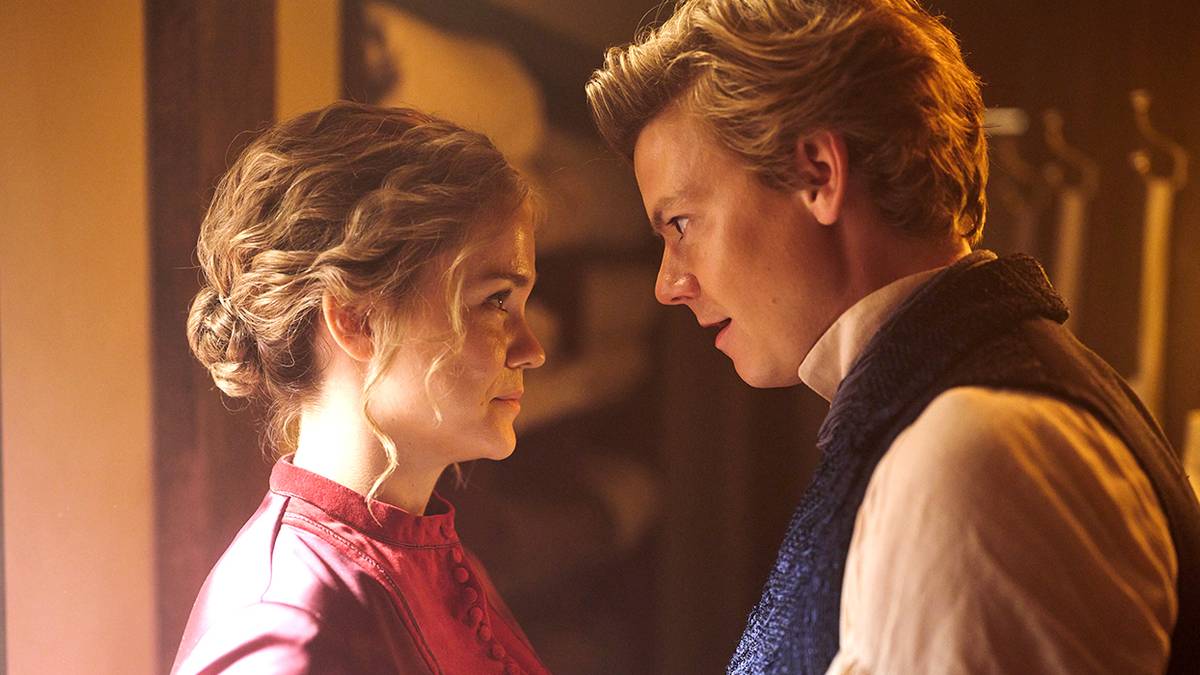
Over 2 Years Later, Hulu’s Historical Romance Feels Like a Completely New Show
In 2023, Hulu quietly released The Artful Dodger over the holiday season. The series presented itself as an inventive twist on Charles Dickens’ Victorian masterpiece, Oliver Twist. But rather than focusing on Dickens’ titular orphan, the series took the eponymous…
Feb 7, 2026

Mickey Haller Faces the Ultimate Test in His Own Murder Trial
There’s an old legal adage that says, “A man who represents himself has a fool for a client,” but not every man is Mickey Haller (Manuel Garcia-Rulfo). If you’ve watched the previous three seasons of the Netflix series The Lincoln…
Feb 7, 2026
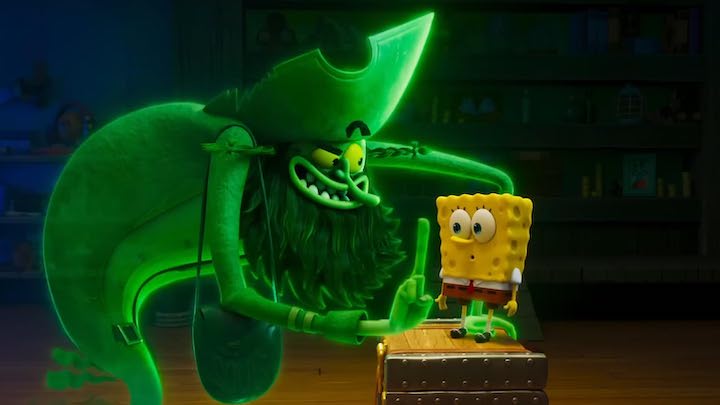
The SpongeBob Movie: Search for SquarePants Review
It raised more than a few eyebrows when The SpongeBob Movie: Search for SquarePants was selected as a closing night film at AFI Fest. It made more sense within the screening’s first few minutes. Not because of the film itself, but the…
Feb 5, 2026
28 Years Later: The Bone Temple Review: An Evolving Chaos
Although Danny Boyle started this franchise, director Nia DaCosta steps up to the plate to helm 28 Years Later: The Bone Temple, and the results are glorious. This is a bold, unsettling, and unexpectedly thoughtful continuation of one of modern…
Feb 5, 2026