Love Is Trauma In Julia Ducournau’s Viscerally Affecting, Heartbreaking Palme D’Or Contender [Cannes]
May 22, 2025
Much of the torment of being a teenager is to do with seeing adults worry about their loved ones. Perhaps this is the fundamental way in which trauma is passed down the generations: seeing fear in the eyes of a parent instills fear in you. “Alpha,” the third feature from French filmmaker Julia Ducournau, only makes this connection between mother and child explicit in its final, gut-wrenching moments, with a stunning moment of narrative sleight of hand that lets all of the film’s moving pieces suddenly fall into place. But the current of emotion that unites family members is felt long before that. It is the true subject of a film that freely uses elements of the coming-of-age story, the melodrama, body horror, and fantasy to forge its peculiar throughline — carrying the viewer on a wave of pure feeling and visceral sensation, rather than mere plot.
READ MORE: Cannes 2025 Most Anticipated Films: ‘Sentimental Value,’ ‘Eddington,’ ‘Die My Love’
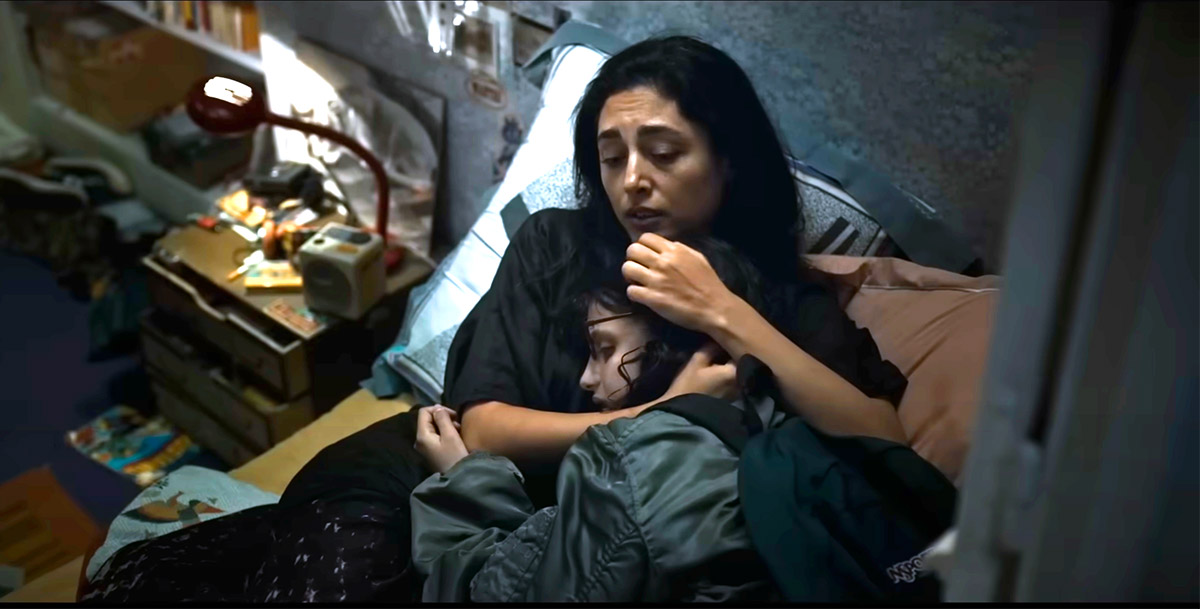
At the bruised heart of the film is the titular Alpha (excellent newcomer Mélissa Boros), a 13-year-old girl facing the emotional and physical upheaval of adolescence with a mix of terror and rage-fuelled defiance. DOP Ruben Impens crafts a morbid visual style of desaturated colors to capture her general state of teenage disaffection — but Ducournau and production designer Emmanuelle Duplay push this expressionistic quality even further. Alpha’s reality is typical of kids her age, but in some ways it appears to be in ruin: her school is falling apart, the swimming pool, classrooms, gymnasium and toilets in states of advanced disrepair. This, however, is never acknowledged by any of the characters, and it takes a while to even notice it, adding to the sense of alarm pervasive to Alpha’s life. An early sequence inside her bedroom suggests that her home is similarly unwelcoming. When later shots reveal it to be a bourgeois flat, with high ceilings, tasteful decoration, and a doctor’s office for her mother (Golshifteh Farahani), a poignant reality dawns: though it’s possible “Alpha” is set in a dystopian reality, this atmosphere of decay is at least partly reflective of Alpha’s state of mind.
It’s an uncanny aesthetic that brings the viewer closer to its characters — a very different strategy from the confrontational style of Ducournau’s “Titane” (2021). The director’s new film also differs from her Palme d’Or-winner for the way it eases the viewer into its exploration of family dynamics: where the surreal, blood-soaked, violent familial relationships stunned the audience into submission in “Titane”, the all-too-recognizable and relatable bond between Alpha and her mother ground this new film into an immediately graspable emotional reality. Part of a Berber family, their experience is typical of French second and third generation migrants, in both positive and negative ways. In one scene, Alpha’s mother rages against the superstitious beliefs of Alpha’s grandmother; in another, the young girl nods and smiles when said grandmother starts talking Berber to her — she does not speak the language.
“Alpha”, then, is a mature work of aching vulnerability — a shocking development in the career of a director whose two previous features this writer perceives as those of a person on the defensive, bitterly cruel in “Raw” (2016), keen to shock and impress in “Titane”. It is striking that, of all the disparate elements that make up “Alpha,” the one most in keeping with Ducournau’s earlier work is the least interesting. When the young girl’s mother finds out that her daughter got herself tattooed at a party, she panics: her baby might be infected with a deadly blood-borne disease that turns people into statues of marble. The decision to address the AIDS pandemic through allegory adds little to the film, besides impressive visual effects; a clue as to why Ducournau would do this might be in the very first line of the movie, when a 5-year-old Alpha is seen joining with a marker the needle scars across the arm of her uncle Amin (Tahar Rahim), a drug addict: “it’s more beautiful this way.”
The third pillar of the film’s triangular family dynamic, Amin reenters Alpha’s life just as she is dealing with the downfall of her unwanted tattoo: while she waits for test results, her oozing scar makes her a social pariah at school. At first, Amin’s arrival seems for Alpha yet another confrontation with fear, in an adolescence that Ducournau portrays as full of them: Alpha is anxious of disappointing her mother, she is paralyzed with dread when she attempts to escape through the scaffolding in her bedroom, she is nervous about getting a needle in her arm for her blood test. In each instance, however, she at least attempts to dominate her apprehension, and Ducournau shoots these sequences for maximum adrenaline. Loud score and sound effects, dynamic close-ups, and Boros’ own embodied performance recreate the sensation of terror and full-body assault that often accompanies such terrifying experiences at that age. But it is Amin who will most inform Alpha’s relationship with adversity, and with life at large — though not in the glib way most addiction dramas do.
Editor Jean-Christophe Bouzy’s elaborate way of piecing the film together hints from the start at a much more poignant undertow, and a much bigger project. Although the stories of Alpha’s tattoo and of Amin’s addiction both unfold in a straightforward manner for the most part, they are regularly interrupted by flashbacks to the early 1990s (signalled by a yellow tint to the image, different fashion, and non-dilapidated buildings). Working as a nurse at a hospital, Alpha’s mother was already trying to help her brother, even as she was taking care of a 5-year-old Alpha on her own. Fluidly moving between the two timelines, as though to blur the distinction between them, emphasizing uncanny echoes and repetitions across the years — the film cuts to emotion. So much so that the feelings of one protagonist blend with those of another.
Support independent movie journalism to keep it alive. Sign up for The Playlist Newsletter. All the content you want and, oh, right, it’s free.
On a simple level, this occurs through the bond that forms between Amin and his niece. He is addicted, and she is potentially sick; they find common ground in their suffering. But the effect he has on her goes much deeper than that. By turns incredibly charming (as Rahim often is in his roles) and scarily selfish, beautifully carefree or overcome with tremors from heroin withdrawal, Amin is someone Alpha comes to deeply care about for better and for worse — and that is why his struggle becomes a mirror to her own. Ducournau does not establish a crass, forced equivalence between the experiences of addiction and adolescence; rather, she understands that the suffering of a loved one is intimately intertwined with one’s own. Likewise, Alpha’s and Amin’s suffering profoundly marks her mother, and vice versa. Through its complex structure, formed of different timelines and split realities, uncanny dreams and blurred memories, “Alpha” viscerally teases out the binds of love and trauma. [A]
Follow along for all our coverage of the 2025 Cannes Film Festival, including previews, reviews, interviews, and more.
Publisher: Source link



A Flame The Colour of Air – Film Threat
SLAMDANCE FILM FESTIVAL 2026 REVIEW! You will shimmer and shake, like you’re riding the snake while being wowed by the dynamite animated short A Flame The Colour of Air, written and directed by talented Canadian filmmaker Emily Pelstring. Jessica Mensch’s…
Mar 3, 2026
‘9-1-1’ Can’t Decide What It Wants To Focus On in a Lackluster Season 9
Editor's Note: The following contains spoilers for 9-1-1 Season 9, Episode 11.I was hoping that 9-1-1 would take advantage of its month-long hiatus and course-correct after its most recent episode, but while this week is certainly an improvement from last…
Mar 3, 2026
Good Luck, Have Fun, Don’t Die Review
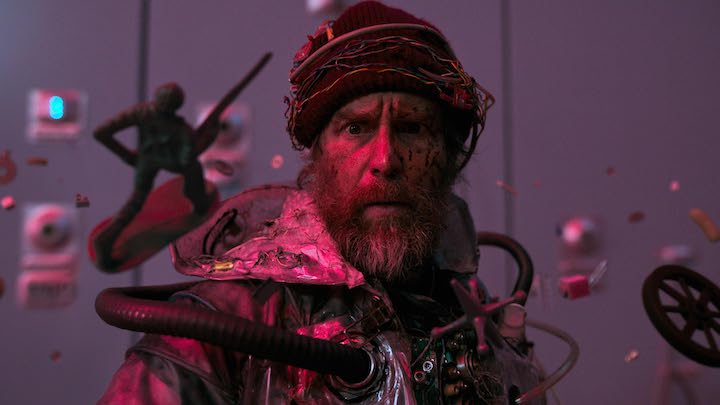
Mercy was a film about AI that AI could’ve written. Good Luck, Have Fun, Don’t Die also tackles AI, although it could only come from the mind of Gore Verbinski. As he did with his Pirates of the Caribbean trilogy…
Mar 1, 2026
Investigative Screenplay Review: Suspenseful but Weak Antagonist
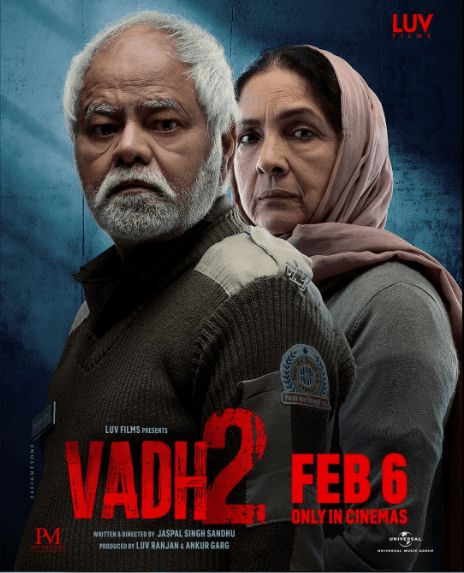
Vadh 2 (2026): When Murder Is Justified — Starring Sanjay Mishra as prison guard Shambhunath Mishra When evil tries to take control, its destruction becomes necessary. With this theme, Bollywood brings you a spiritual sequel to its 2022 crime-thriller “Vadh”.…
Mar 1, 2026