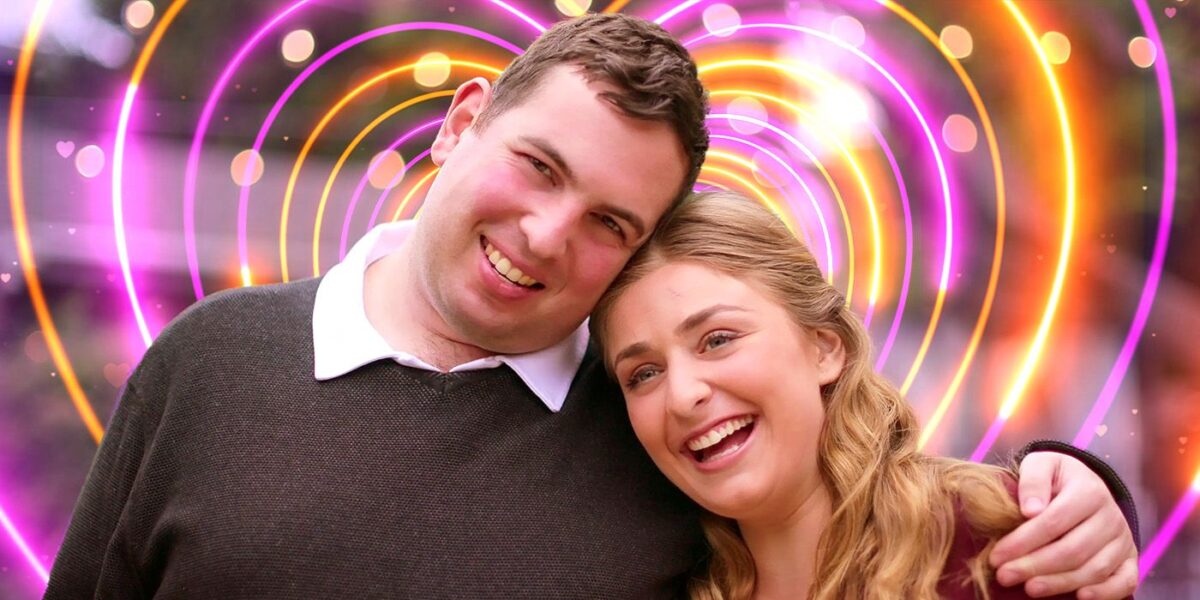
‘Love On the Spectrum’ Creators Discuss What To Expect From Season 3
Apr 14, 2025
Everyone deserves to experience love, no matter who they are. At the heart of Love on the Spectrum, the smash-hit award-winning Netflix reality series, is sharing the stories of individuals who are on the autism spectrum. Through the lens of feel-good stories, Love on the Spectrum has reminded us that there will always be something there to help us smile.
Inspired by the Australian series of the same name, Karina Holden and Cian O’Clery brought the idea to the United States, where it’s now celebrating its triumphant third season. Now in its third season, Love on the Spectrum is giving fans a peek into the evolving romances of returning favorites while introducing a series of fresh faces, all with the same goal: finding their one and only. As Cian O’Clery shared, “This feels like a show that is about uniting people and celebrating difference, rather than the opposite.”
The Creators Share the Origin of ‘Love On the Spectrum’
Image via Netflix
COLLIDER: First off, congratulations on Season 3. How are you feeling about the new season?
CIAN O’CLERY: Good. We’re feeling good about it. I think you know, from the first people that are starting to see it, the reactions seem quite positive. So it’s good. It’s always a little scary, but happy for it to be coming out into the world on a wonderful day for us to premiere. Autism Awareness Day. Really happy that the stars aligned. It’s just a great day for us to be able to premiere the show.
KARINA HOLDEN: I’m excited to watch the audience get hooked in because I think that the show absolutely builds and delivers and has some incredibly beautiful payoffs. So I think it’s going to be an audience winner, for sure.
COLLIDER: I’m going to start with a loaded question. Why do we need Love On the Spectrum now?
CIAN: Can we answer that without talking about the state of the world? If I was saying as an audience member and I was answering that question, I guess I would say, yeah, it’s a show featuring people who are kind, who are nice to each other, who are positive, who are sometimes overcoming adversity to triumphant in the face of a world of dating that they might not have been confident enough to step into previously. I think it’s a positive, heartwarming series in a world that’s feeling quite…
KARINA: Dystopian.
CIAN: Dark and scary. And divided. This feels like a show that is about uniting people and celebrating difference, rather than the opposite. What do you think Karina?
KARINA: Yeah. It had always been the kind of mission statement of the show is fostering that empathy and understanding that had always been part of it. But it does feel profound. There’s a lot obviously going on in the world and when you spend time with people who are overwhelmingly positive and kind to each other, like Cian said, there’s almost an ability to reset your own feelings about the world and maybe bring a bit more hope into it, that it all is not lost.
COLLIDER: Tell me about how Love On the Spectrum came to be. Where did it start?
CIAN: So we were making a series at Northern Pictures that was featuring people with disabilities looking for work, looking for employment. And so I was directing that, Karina was VP, and had a factual at Northern Pictures. And through that process, just met many, many, many young adults who were not only looking for employment, but also looking for love. Looking to step into the world of dating. We met a lot of people who were, I guess, struggling to find connections or to find a way into that world. Of course, not everybody on the spectrum needs or wants support in that space, but some people do, and a lot of people did who we were talking to. And so it just felt like an area that could really have a light shine on it and be explored a little bit. I talked to Karina about the idea, and she loved it, and we developed it together and made it for the Australian Public Broadcaster. Back then, in Australia, there was a lot of support for people to find work, people with disabilities in the employment space. There’s a lot of organizations, and there was a lot of funded government support, but there wasn’t any support when it came to kind of dating relationships. So it felt like there was also this kind of area lacking in what people wanted and were hoping for in terms of support. So that was kind of the genesis of it all. And then, you know, it kind of grew from there.
KARINA: And I think it was also the idea that there was a lot of myths to bust about autism, but to do it in a way that was just so accessible for the broad audience. You know, it wasn’t a documentary that was going to give you information. It was actually going on journeys with people who, traditionally, there was a sense that people who met may have some social awkward issues and communication blocks, and these types of things that we see with autism. That therefore they didn’t want love, that they weren’t looking for relationships, they didn’t want connection. And that was completely the opposite of what the show has demonstrated. So that people can see that need for love and belonging being just as much a driver for people who are autistic as anybody else. It might just be a bit of a struggle. And I do think that idea, watching people who are so passionate about being on this journey, and it hasn’t come easy, is an inspiration for every single one of us to sort of be true about what we want and how we communicate about love.
‘Love On the Spectrum’ Has a Special Casting Process
COLLIDER: From the moment you pitched Love On the Spectrum to where it is now, did you expect it to have this kind of impact it has today?
CIAN: I mean, no, is the short answer. We made it for a very small, well, I mean, it’s a public broadcaster in Australia. It’s kind of like our version of the BBC. So, you know, it did find an audience in Australia, and it did make an impact within communities there, and a bit more broadly across society. I think people who watched it started to understand a bit more about autism. I think back then, when we first made the series, it was still quite an area that not a lot of people understood. But then, I mean, for it to now be so popular and doing so well on a global service is unexpected, but also, it’s a really positive thing for us. We’re really proud of the show, but we also take that responsibility to heart. What the show is representing is quite important for the community. And I think take a lot of comfort in the fact that people are telling their own stories, and that we’re really kind of allowing people to tell us who they are and what makes them tick. as well as the way we film the show, as well as the way we kind of put it all together. The participants, for us, are the most important critics, and they’re the ones we want to be happy with their representation.
KARINA: All of that is true, and I think it’s also the benefit of the ensemble cast is that no one autistic person is the same as the other, and being able to represent that broad diversity that you may not have got in scripted series where you were just following a single autistic character. We meet people who have different needs, who have different desires, who have different abilities, and so I think it’s broadening our understanding in such a rich way that has made people who have had a diagnosis of autism or ADHD, or anything else on the neurodiversity spectrum, sort of feel like they’re being seen and maybe understood more broadly in society.
COLLIDER: What is your casting process like? How do you find the participants and the stories you want to share?
CIAN: We just put out the call as far and wide as we can, within communities, within groups, everywhere you can imagine. We just spread the word that we are looking for people who want to be a part of the series, and people write into us. So it’s, I guess, unusual in terms of, compared to other dating shows out there. It’s a very different casting process. But at the end of the day, people write in express interest in being a part of it. We have Zoom calls with pretty much everybody who writes in. We have a quick Zoom call, at least, and get to know them a little bit. And then from there, we slowly get to a point where we’re filming with some of our main cast. But it’s also quite a robust casting process in terms of, as we start to get to know people more and get closer to inviting them to be a part of it, we’re really getting to know them quite well. And I’ll make sure I go and visit everyone before we actually officially say hey, but let’s maybe move forward. I’ll actually go and see them in their homes, and make sure everyone understands what being a part of this series involves.
KARINA: Yeah, I think it was also a very conscious decision to sort of make it a producer-led casting as well, because we weren’t looking for people who wanted to be famous. We were looking for interesting people who had something to say. And that continuity that has been delivered across from casting all the way through to producing and into post is that it’s a small team. And once they get to know the family, they stay in the family. It’s not like they’re handed between a whole bunch of different producers. There’s a real kind of duty of care, sort of element that comes about a small team and having continuity from the beginning to the end of the process of making the show.
CIAN: That’s the thing that’s very different about us our casting is we cast that as a team, as an editorial producing team. So we don’t have a casting team that’s separate to the producing team. So somebody writing in for the very first time might actually, very likely, will end up talking their very first time to someone who ends up, when we actually film with them, being the person there in the home. So there’s that follow-through from the very beginning. It just adds that extra layer of honesty and truthfulness and that our team all being on the same, leading towards the same.
KARINA: Trust.
CIAN: Yeah, and then the trust that comes as part of that, it’s really important to us, and it’s worked really well for us. I know it’s very different to how other shows do it, but we think it works okay so far.
The Creators Talk About Their Participants Newfound Fame
Image via Netflix
COLLIDER: We’ve been able to watch some of the participants since season one, which means you’ve been with them since the beginning. What is it like watching them grow and seeing their stories blossom in the way they have?
CIAN: I just had my 50th birthday drinks on Sunday, and Abbey [Romeo] and David [Isaacman] were there, and Dani [Bowman] was there. It’s been great. I mean, remembering the very first time that we kind of had Abbey as a main participant, and we were trying to work out who might be a good match for Abbey. And we found David, and had very similar interests, and here we are. In this later season coming up, they celebrate their three-year anniversary together. It’s amazing to follow that and to be a part of it. We never started the show thinking like, “How many matches can we make?” It was never about, I guess sometimes people judge dating shows as to how many matches have stayed together, or how many people it was. It was never about that. It was because so many people were dating for the very first time on the show. A lot of it was just about getting out there, getting practice. But having said that, we’ve had some really amazing successes. And without any spoilers, Season 3 is highly successful when it comes to the love department.
KARINA: There’s a payoff.
CIAN: There’s a lot of love, which is amazing. And again, people who we’ve started following in previous seasons, who are really getting to that point now where they’re finding someone special. It’s been great. And not just finding love, but also finding friendships, finding close friendships. You know, James [Jones] is still really close friends with Emma [Hodgson] and Maggie, who he dated in both Seasons 1 and 2. You’ll see in Season 3, they come along for his birthday party. And they are literally in his group of friends now. And it’s great. It’s just opened up worlds for the cast that may not have been there without the series, and it’s a really positive thing. Everyone’s really happy that they’ve been involved, and that makes us happy.
COLLIDER: What is it like seeing them understand that they have kind of become famous? How are they handling their fame?
CIAN: They’re all really enjoying the affirmation that people like them and love them, and it’s not fame based on notoriety or fame based on being a villain or fame based on being mean or a prankster. People love them because they’re genuinely lovely, interesting, genuine people. People are really enjoying that people appreciate them for who they are. I mean, James says being part of this series is he greatest thing that’s ever happened to him. And that’s lovely.
KARINA: I think that just watching that confidence that they have gained from the validation of being part of the show, and that their fandom is so supportive of them because of who they are and what they represent. They’re not going out and trying to be famous for the wrong reasons. I think that they’re examples of what kindness looks like, the embodiment of goodness in a way. And truthfulness. So I think that people really support them online. When you become somebody who’s in the public eye, it can become quite fraught with possible problems. But I think that because they are represented with such kindness, I think that that’s what they get validated for as well in the end.
COLLIDER: Why is exploring diversity, not only of the autism spectrum, but in the diversity of sexuality, important as Love On the Spectrum grows?
CIAN: I think it’s just important to explore as much diversity as you can. Because it’s society.
KARINA: It’s our world.
CIAN: Who we are. And we don’t necessarily kind of when we’re casting, we don’t necessarily say, “Okay, we need this. We need that.” We have our casting process, and it’s very organic, and it’s very much about the people who come to us that we work out who we’re going to invite to be a part of it in the end. We were really fortunate that someone as wonderful and lovely as Peri [Kim] came to us this season. Yes, she’s LGBTQ, but we didn’t cast her because of that. We cast her because she’s just a wonderful human being, and fun to watch, and spend time with, and passionate about her interests. So it’s always important to explore that. But again, we hope that that comes organically and naturally, and that it’s not something we have to kind of prescribe. It just happens.
Related
The 10 Best Reality Dating Shows of All Time, Ranked
Is it a match?
‘Love On the Spectrum’ Is Family Focused
COLLIDER: I think one of the most beautiful elements about the show is seeing the family aspect. The parents, the siblings. They know how important this is for their loved ones. What is it like getting to be a part of their family and working alongside them?
CIAN: The families have been amazing. It sounds like saying the same thing over and over, but the families, the participants themselves, everyone’s just been so positive, so invested in the process, in the filming process. Always honest, always truthful, always real, never shying away from difficult conversations or difficult topics because they’re being filmed. Not trying to censor themselves. They’ve just been real. And it’s quite amazing, really, how truthful and honest everyone’s been just from the get-go. We try to instill that kind of feeling when we’re filming. We have a really tiny crew. There’s very few of us. We try to make it feel as little like “we’re filming” as possible. And I think that helps, but also just again, the trust thing, and people understanding who we are and where we’re coming from, and knowing that we’re not out to try and expose anyone or villainize them in any way. The families have been so positive, and I’m really thankful for the opportunity, often, for their loved ones to go on this journey and for them to come on the journey with them.
KARINA: Being the mother of a son with autism, I think that you spend a lot of time looking at the way that families are modeled on television, and the expectation society has of what that should look like. And you have a lot of fear around your child not having success in life and the challenges they’re going to face. And so I absolutely empathize with members of family and loved ones who just want the best. They have a lot to say because they’ve potentially been dealing with a lot of their own personal struggles or darkness, or what concerns, worries. For them, there’s also a validation in the series, and watching the confidence and blossoming of their child, reaching adolescence and adulthood, and growing into their own, and suddenly seeing that independence and everything. I think it’s a very powerful part of Love On the Spectrum. Love being the expression of familial love and friendship love, as well as romantic love. It’s got a lot of meta layers as well.
COLLIDER: Jennifer Cook helps us as viewers navigate the series and learn things about the autism spectrum we may not know. How important is it to have her be part of the storytelling?
KARINA: Jennifer has formed such a strong bond with many of the cast members. This season we see her with Madison [Marilla], who requested to meet and work with her. We always leave it to the participants to decide if it’s something they think would be useful for them personally, and we’ve seen many of them take up that opportunity and really grow in confidence from the sessions they’ve done with Jennifer. As an autistic woman, who is married with children, she has a perspective the participants appreciate.
CIAN: Jennifer Cook’s involvement in the series has been, and continues to be, really important. It’s great to be able to have an expert in the field (who is herself autistic) work with some of our cast members who are wanting support. We are really happy that Jennifer has recently been named Chair of the Council of Autistic Advisors for the Autism Society of America and is also now on their Board of Directors.
Cian and Karina Tease ‘Love On the Spectrum’ Season 3
COLLIDER: What have you learned about yourselves through this series?
KARINA: Watching the cast this season has encouraged me to embrace joy in friendship and love. There’s such warmth and positivity that comes through in their quest for genuine connection and a rare present-moment sincerity. The honesty and kindness expressed in the season light me up and make me want to be a better person, a better partner, a better mother, and a better friend.
CIAN: Making this series for multiple seasons now has been such a positive experience, working with our lovely, open, honest cast, and their families. It makes me strive to be more open and honest with people in my life. Also – I’ve learned that I’m a little too obsessed with people’s pets, but I just can’t resist filming them.
COLLIDER: Season 3 has a lovely mix of returning favorites and new faces. What can you tease about this upcoming season?
KARINA: Love!! We will see lots of it! So many of the cast have real breakthroughs in this season, and there are so many heartwarming moments. And by the end of the season, there will be both happy and sad tears.
CIAN: This new season sees some strong romantic connections being made, not only for returning cast who have (previously) not found the love they seek, but for our new cast who dive head first into dating and find themselves catching sparks! A lot of our cast end this season on a high, but there is also heartbreak for two of our most beloved participants.
COLLIDER: Abbey and David. Will we get a Love on the Spectrum wedding one day?
KARINA: Abbey and David are going so strong, since that very first date in 2021. They will take their time to do what is right for the two of them.
CIAN: We will see where their relationship goes. Who knows what could come of their amazing connection! From the first time they met, we knew there was something special between them, and seeing their relationship grow has been lovely. Tune in for a beautiful celebration of their relationship in this new season.
COLLIDER: What’s next? What other stories will you tell?
CIAN: We hope the audience loves this season and wants to see more of Love on the Spectrum. It’s a show we absolutely adore making, and we feel so privileged to be able to share it with the world.
Publisher: Source link


Mason Gooding & James Van Der Beek’s Bad Night Is Aggressively Dull
Ever since the Scream franchise helped put him on the map, Mason Gooding has been a great talent to watch. The genre-bending slasher Heart Eyes is still his best non-franchise role yet, but he's also branched outside of horror in…
Mar 15, 2026
A Grumpy Nick Offerman Keeps This Fish Tale Swimming Along
Animated fish films have been done. Finding Nemo. Shark Tale. Ponyo. So to hear about another doesn't feel like anything new. However, The Pout-Pout Fish, starring Nick Offerman as a grumpy ocean pout named Mr. Fish, is a little different.…
Mar 15, 2026
‘The Rookie’s Best Season 8 Episode Goes Completely Different With Full Zombie Horror
Editor's Note: The following contains spoilers for The Rookie Season 8, Episode 10.It's crucial for procedurals to come up with a winning formula that entices viewers to tune in every week. But it's just as important for these types of…
Mar 13, 2026
Sidney Prescott Leads a Brutal Throwback
Walking into Scream 7, I wasn’t sure if this entry would be a new reinvention. I know I wanted tension. I know I wanted that uneasy calm before the snap. And most of all, I wanted to see why Sidney…
Mar 13, 2026