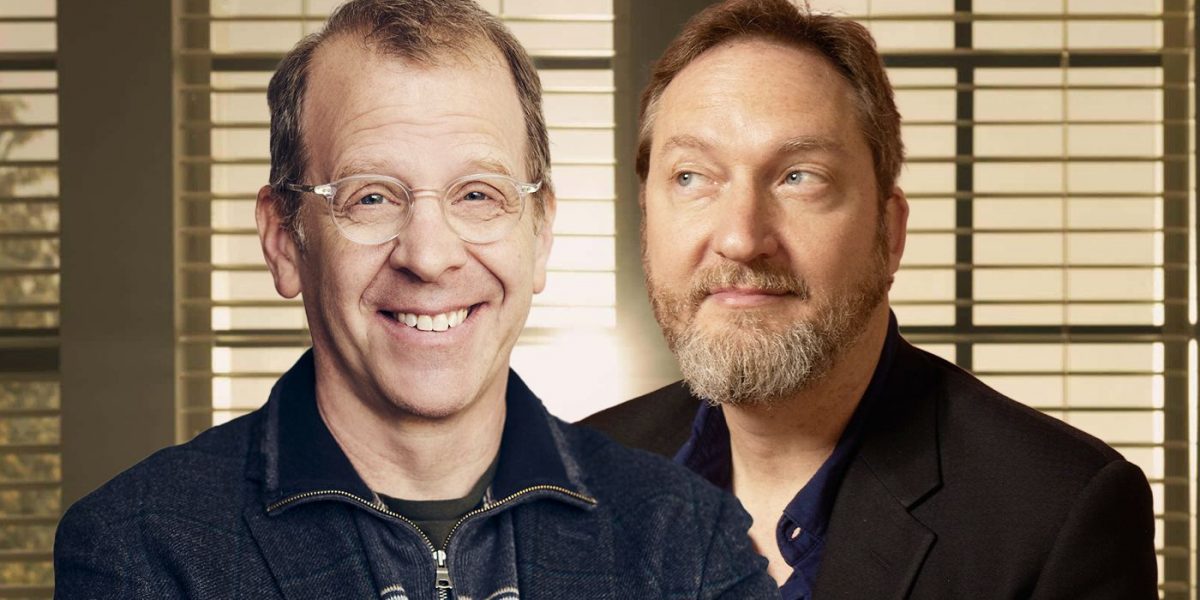
‘Lucky Hank’ Showrunners Talk Season 1 Finale & Bob Odenkirk’s Performance
May 8, 2023
Editor’s note: The below contains spoilers for Season 1 of Lucky Hank.After eight episodes filled with lighthearted humor, enough pathos to make you tear up, and stunning performances from an ensemble cast led by Bob Odenkirk, the dark comedy, Lucky Hank, adapted from Richard Russo’s book Straight Man has officially wrapped up its critically acclaimed first season on AMC. But from the looks of the season finale creating some boiling tensions Sunday night, there is a lot more to come when the Aaron Zelman and Paul Lieberstein-created series makes its sophomore return. In an exclusive interview for Collider with the showrunners about the season finale, the pair break down Hank’s decision following his father’s admission about walking out on him and what our favorite English department chairperson is really experiencing upon that move to New York with Lily, played most effectively by Mireille Enos.
COLLIDER VIDEO OF THE DAYSCROLL TO CONTINUE WITH CONTENT
In the season finale titled, “The Chopping Block,” Hank is supposed to finalize his list of professors to cut from the English department, but manages with the help of Tony (Diedrich Bader) to get Railton College’s president Dickie Pope (Kyle MacLachlan) off his back after he receives information that compromises his integrity. As it becomes apparent, Dickie violated his fiduciary duty to the college by cutting 25% of the faculty, falsely claiming it would benefit the school, all in an effort to pad his resume and gain favor for a position at MIT. Elsewhere in the episode, Hank confronts Meg (Sara Amini) about her cheating with his daughter Julie’s (Olivia Scott Welch) husband Russell (Daniel Doheny). Though there is an unspoken dialogue between the two who have evidently hurt each other, the faculty is saved, which could mean a bigger opportunity for Meg to get tenure as previously desired.
However, one of the biggest turning points is when Hank hears from Julie that his marriage with Lily is indeed fractured as “mom’s in New York with her hot ex-boyfriend,” and that the two are seemingly “separated.” With that information stewing in his head, Hank has lunch with his parents, including his very distant father who is now suffering from dementia, and learns how Hank Sr. (Tom Dower) made up facts in essays to be invited to panels. For 45 years, Hank was dying to know what was so important for his father to leave their family, and it came down to conferences. Finally free of the pain he felt commiserating over how his dad walked out on him and his mother, Hank believes him to be a “loser” and decides to resign from Railton College, and visits Lily in New York, making it known that they can start afresh. However, as the showrunners, Lieberstein and Zelman, share with Collider in an exclusive Q&A, there is a lot more brewing behind Lily’s expression in those final seconds of the season finale, with plenty to explore in Season 2. Additionally, the creative pair talk about the challenge of adapting the Russo book for the small screen, what it was like working with Odenkirk, and lots more.
Image via AMC/Sergei Bachlakov
COLLIDER: I’ve loved this show since it premiered at SXSW; it’s beautifully written, performed, and produced, and I’m really looking forward to Season 2. In the season finale, Hank finally hands Dickie Pope his ass, for lack of a better word. Where do you think that leaves Hank and his faculty now that he’s saved them? Because in those final moments, we see Dean Rose ignoring his resignation, and I’m sure a lot of them just want Hank out by now, like Paul.
PAUL LIEBERSTEIN: Yeah, I think very little will have changed permanently. I think that group doesn’t say thank you.
They really don’t and it’s so interesting to see that because Hank has this realization that, “Okay, I want to go live a different life now,” and then Dean Rose doesn’t let him. Is there a motive there, or is there something that you think maybe we’ll see transpire in Season 2 with the fact that he wants him there? Because after Dickie, I feel like there’s just a lot more room for him to grow.
AARON ZELMAN: There’s a question of whether Dean Rose [Oscar Nuñez] sees this as him getting his own– I mean, a lot of our characters have their own agendas [laughs], so there’s probably some angle for him. But he’s also Hank’s friend, and maybe he knows Hank better than Hank knows himself. So, that’s a question we wanna let hang in the air.
In the final scene of the Season 1 finale, we do see Hank in New York with Lily, and he is in a much better place it seems like. But in those last couple of moments, we see Mireille’s expression, and it says so much. I’m wondering what is going through her mind because I feel like it puts a lot of things in perspective about their marriage and the way she was expressing that feeling when he came by.
LIEBERSTEIN: Yeah, she was thrilled to see him come by, legitimately. Then, as he was in the bathroom, the reality of his presence kind of set in, and here they are in this single-room apartment in New York, on the verge of a very big life change that they hadn’t really discussed. And that could more likely go sour than go sweet. So, she’s just thinking about it, I think.
ZELMAN: I was just gonna add that you know, she’s been on kind of a journey of self-discovery, or self-actualization, whatever word you wanna use. But it’s been kind of, in some ways, a private journey, and then what happens when that private journey suddenly is not just you? There’s somebody else there — that’s what’s, I think, kind of slowly dawning on her at the end.
Image via AMC/Sergei Bachlakov
With that in mind, I feel like Hank’s joy is quite temporary, and I can’t tell if he’s on a high because he’s feeling mightier than his dad now following that response he got about leaving his family and he’s like, “Oh, well, I’ve been luckier than him” and it puts things into perspective following this feeling he’s had since the retirement news. Do you have any thoughts about that?
LIEBERSTEIN: So this season was kind of kicked off – Hank’s was kicked off into crisis with his father’s retirement. So it wasn’t this kind of permanent state he was in before that, although, of course, these things happen and so he successfully got himself out of this crisis, and he’s allowed to feel good about that. But I don’t think he’s in the crisis of his father retiring anymore. Did he fully deal with all this stuff? No, not at all, but we let him take a win for getting out of a pretty tough spot.
There’s a very dark scene that transpires between young Hank and Hank Sr. when he’s about to kill himself. What went into the construction of that scene? Because the show is a comedy until it isn’t, and then there’s this underlying pain that digs deep into Hank. How did you manage to find a balance between that tone and humor? I know both of you have very different backgrounds from TV, so I feel like it adds a nice balance.
ZELMAN: Well, there you go. It does reflect a little bit of our background, but look, we were both very much on the same page about getting to this pretty dark moment that explains a lot, really. We felt that his anger toward his father is pretty huge, and you need something big to justify that, to make it feel real psychologically. I’ll just also add that that was part of the novel, that moment, and we wanted to honor the novel and all of its complexity, and its complexity in dealing with the character of Hank.
LIEBERSTEIN: We found this was balanced by trial and error. You get to think of these as an eight-hour movie, so it builds from a more comic start to a tougher place for him to deal with just like a lot of like comedy movies do, you know? And I feel like it comes around again to a lighter place. Yeah, he needed to go through something real, or else it’s like, “Oh, come on, man, get over your dad.”
That makes a lot of sense, and it has me thinking about Julie, Hank and Lily’s daughter. She’s had some issues with Russell, and it’s interesting because we learned finally that Meg cheated with him just to kind of hurt Hank – I think that was what we were going for, what we were understanding. Where does that leave Meg and Hank’s relationship now at the end of Season 1 going into Season 2? Because it seems like there’s a lot more between them that we should be seeing, right?
ZELMAN: That’s interesting. We definitely think that’s a really interesting relationship, and I think that idea that you said, that she maybe did it to hurt him, I don’t see that, personally, as something she did consciously necessarily. And, I don’t think that he was trying to hurt her, even though he did. So, it’s a really interesting dynamic there, right? They both made pretty huge mistakes out of complicated feelings for each other, which I wouldn’t call quite romantic, but definitely complicated.
Image via AMC/Sergei Bachlakov
Very much so. Bob and Sara give such amazing, nuanced performances, just the way their expressions are, and those very complementary gazes. It’s great. But I do want to talk about Bob because he has been so great, and he came right off of Better Call Saul into this one. How did you guys know he would be the perfect Hank Devereaux Jr., and how fun was it working with him?
LIEBERSTEIN: He was so perfect for this role that everybody thought we wrote it for him. We had the script before he came on, but it was just like everything he’s been doing his whole career, comedy and drama, led up to this character. And the voice was his. You know, once we asked him why he was attracted to this, why he wanted to do it, and he felt like Hank is how he sees the world. So, I don’t know, we couldn’t have gotten a better Hank.
ZELMAN: Yeah, in terms of working with him, I mean, once character or actor met part, then, of course, you can write to them. And it’s just so fun and exciting to be able to – you know, now you’ve got Bob’s face in your mind while you’re writing, and so the guy can do anything. It just becomes even more fun, and gives you more ideas when you think about what he would do with a line or an action, so that was terrific.
I love Mireille, she brings such a joy and vibrancy to every scene. I thought it was fascinating what she brought to Lily because I also get a sense that her character is nothing like Hank’s, and their marriage had some cracks from long ago in it, and it’s a bit broken, and they’ve just kind of been repairing it here and there. Like, even in the way Hank forgot about Catherine Keener — I don’t think that was one of those cameos you guys just decided to put in. I feel like there was an intent there. Do you think the fact that he forgot about Catherine, that whole thing with him and Lily, is maybe indicative of his denial that their marriage has flaws?
LIEBERSTEIN: Yeah, I think it’s really kind of indicative of the narcissism that he was inevitably feeling because of what he was going through, and how that made Lily feel so distant from him at times, and how he was just so unaware of what she was going through, and also kind of unaware of how he was affecting her. I think what’s ultimately a very solid marriage, and it had a sound foundation, was just very tested by this crisis.
ZELMAN: Yeah, it’s interesting that you said you thought the marriage was broken a long time ago. The way I see it is, you know, marriage is complicated – I feel like I’m using that word a lot. After decades of it, I think you go in and out, and there are periods where maybe it was very unbroken for a long time, and then certain fractures started, and then they were aware that they were there. It’s really open to interpretation, personally, for me, about how you see them. But it isn’t necessarily something that was broken from the beginning.
Image via AMC/Sergei Bachlakov
How did you guys know exactly what to adapt from the book and still tell this very relatable story? I read it so long ago, it’s been a while, but I remember there was so much more to tell. But how do you guys figure out what to put in and what to keep out for TV?
ZELMAN: Trial and error.
LIEBERSTEIN: Yeah, there’s stuff we wanted to get at, there’s stuff we wanted to do, and we would just use it as a collection of building blocks. When this block fit into the castle that we were building for that episode, we used it.
I remember there was also a relationship between Rachel in the books, how Hank liked his secretary. Are we going to see any of that sort of stuff from the book in Season 2?
ZELMAN: Absolutely. [Ellen MacNevin]’s a wonderful actress, and we love her, and we’d like to give her more. And yeah, I mean, that’s one of the great things about this book. You say, “How do you know if a book is adaptable?” And one of the things that was clear to us from this book was there’s a lot of characters, and a whole world here, and it just felt like, “Oh, there are a lot of places to go.” This is a show, and this isn’t a limited series. This is something that could go on.
That’s what I love about it, too. Working with author Richard Russo on this, I know that he’s an executive producer, but how was the collaboration? While being mindful of the source material, was there something that he really wanted in there, but you knew it wouldn’t work for TV? Any challenges and those types of discussions?
LIEBERSTEIN: I wish we had talked to Richard more, but the truth is, we had one conversation with him years ago while we were writing the pilot [in 2015], and that was it. So he wasn’t really involved. He was very busy working on his next novel.
ZELMAN: But he was also very willing and very kind to kind of hand it over to us, and trust us to honor it. We got a really nice email from him, actually fairly recently, and it seemed that he was happy with what we did. So he was very generous with just sort of saying like, “I wrote the novel and this is your thing, and you do what you see fit.”
Lucky Hank is now streaming on AMC+.
Publisher: Source link



New ‘Wheel of Time’ Animated and Video Game Adaptations Are in the Works
Amazon might be finished with The Wheel of Time, but we haven't seen the end of the story when it comes to adaptations of Robert Jordan's bestselling high fantasy saga. Fans were left blindsided when Amazon abruptly pulled the plug…
Mar 22, 2026
‘Off Campus’ Teaser and Release Date Revealed by Prime Video
No one expected a love story between rival hockey players to become one of the most talked-about TV shows of 2025, but there's a lot more where Heated Rivalry came from, as a new teaser for Prime Video's foray into…
Mar 21, 2026

Sarah Michelle Gellar Urges ‘Buffy’ Fans to Avoid Reading Leaked Reboot Scripts
Buffy the Vampire Slayer fans have had a rough few days after Hulu officially pulled the plug on a revival of the series, which would have brought star Sarah Michelle Gellar back as the titular heroine. Described as a continuation…
Mar 20, 2026
Born Again’ Stars Explain Why Bullseye Is So Dangerous in Season 2 [Exclusive]
Along with Charlie Cox's Matt Murdock and Vincent D'Ofnorio's Wilson Fisk, Daredevil: Born Again Season 1 brought back one of The Man Without Fear's most notorious villains: Wilson Bethel's Benjamin Poindexter, better known as Bullseye. Not only was he back…
Mar 19, 2026