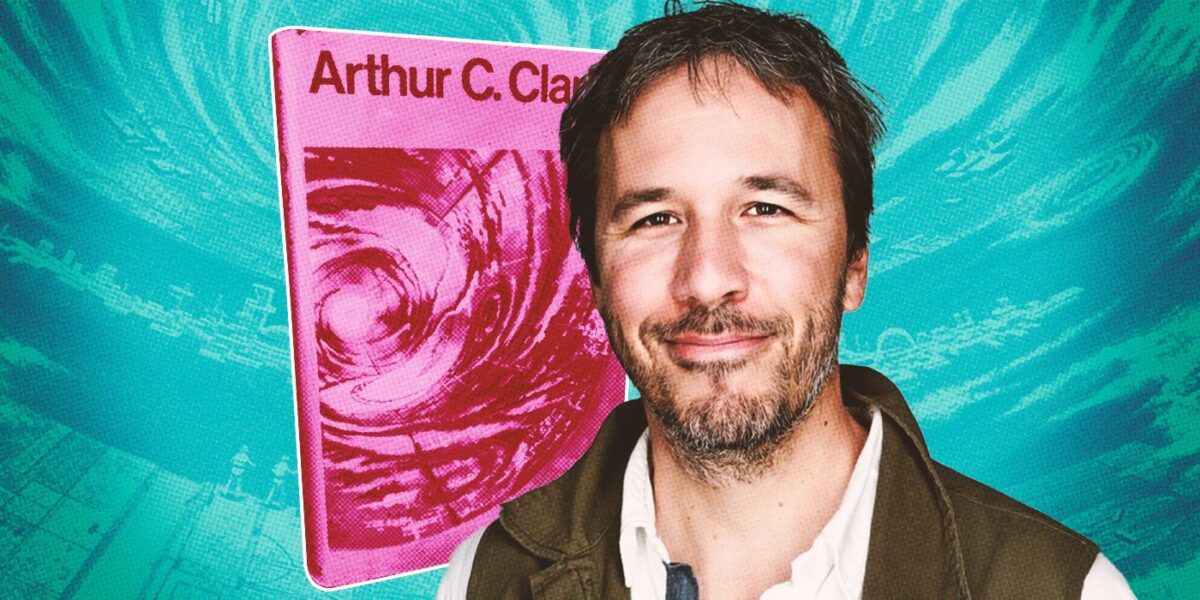
Messiah’ Movies Is a Sci-Fi Epic That David Fincher Tried To Make With Morgan Freeman
Mar 14, 2025
The devil works hard, but Denis Villeneuve works harder. Evidently not content with having already directed four of the best science fiction movies of the 21st century, the Dune: Part Two director is gearing up to helm an adaptation of Arthur C. Clarke’s novel Rendezvous With Rama. First announced in 2021, the project has excited sci-fi fans and cinephiles alike and, if all goes well, will potentially begin filming after Dune: Messiah — which will star Timothée Chalamet, Zendaya, and Anya Taylor-Joy.
The sci-fi novel by the author of 2001: A Space Odyssey centers on humanity’s first encounter with a colossal alien spacecraft, and the upcoming project will mark Villeneuve’s fifth foray into the sci-fi genre. However, it definitely won’t be easy.
Between the novel’s massive set pieces, cerebral themes, and its reputation among sci-fi fans, Rendezvous with Rama is an enormous undertaking. There’s a reason this adaptation has been in development hell for roughly 20 years — David Fincher was even attached to direct the film in 2003 before leaving the project years later — and it’s not a lack of interest in the source material. With films like Arrival, Blade Runner 2049, and Dune under his belt, it seems like Villeneuve is uniquely equipped to tackle the enormity of this project, but the million-dollar question remains: How will Villeneuve adapt a contemplative science fiction novel for a Hollywood blockbuster audience?
What Is ‘Rendezvous With Rama’ About?
Clarke’s Rendezvous with Rama is widely considered one of the greatest science fiction novels of all time, snagging both a Hugo and Nebula award following its release in 1973, and its influence has shown up in countless contemporary works of science fiction, from Christopher Nolan’s Interstellar to the Halo video games. Rendezvous with Rama is set in the early 22nd century, when Earth’s newly established Spaceguard detects a massive interstellar object — later named Rama — entering their solar system. A space exploration crew, helmed by Commander Bill Norton, is sent to investigate aboard the spaceship Endeavour and quickly discover that inside Rama is a vast, hollow world filled with cities, canals, and a mysterious Cylindrical Sea. Throughout their investigation, the crew observes the environment shifting and activating, suggesting that the ship is preparing for something, but Rama continues its journey out of the solar system before the crew can uncover all its secrets, and many of the novel’s mysteries remain purposely unsolved.
Unlike its immediate predecessor, Clarke’s 1968 novel 2001: A Space Odyssey, Rendezvous is not your typical blockbuster sci-fi source material. With a few exceptions, much of the novel’s tension comes from the mystery of Rama itself, and features no traditional villains or direct threats aboard the starship. Owing to Arthur C. Clarke’s dedication to hard science fiction, there are no high-stakes battles, or dramatic chases, but there is a lot of scientific observation and exploration, making it closer to The Martian than Dune.
Related
This Huge ‘Dune’ Star Begged Denis Villeneuve by Email To Join the Franchise
Pretty please?
In Rendezvous with Rama, Clarke directly challenges the idea that extraterrestrial encounters would center around first contact — or conflict — with humanity, and uses the novel’s ending to suggest that, in the grand scheme of things, Earth is just an observer, and likely of very little interest to a highly advanced civilization. Rendezvous is stripped of otherworldly science fiction tropes, and its cerebral concepts are not typically the building blocks of an epic blockbuster. Themes aside, the sheer scale of the novel’s material presents a major challenge. Rama itself is gigantic in the novel and has its own unique alien ecosystem and rules of gravity. In the hands of the wrong director, this source material could spell disaster.
Denis Villeneuve’s Strong Sci-Fi Track Record Makes Him Perfect for ‘Rendezvous With Rama’
Rendezvous with Rama is a challenge but, fortunately, challenging and cerebral science fiction on a grand scale is kind of Villeneuve’s whole thing. Much of Villeneuve’s oeuvre has demonstrated a deep reverence for science fiction, balancing the action and spectacle necessary for a successful Hollywood film with the philosophical and intellectual core of the genre. The director’s work on Arrival has pretty soundly demonstrated his ability to adapt and craft a quiet, intellectual first-contact story that offers both mystery and emotional depth. This is a promising sign given that it will likely align well with Clarke’s philosophical approach to storytelling.
Blade Runner 2049 shows off Villeneuve’s talent for atmospheric storytelling and bringing vast, desolate environments to life, which is perfect for capturing both the scale and details of Rama and its inner world. Villeneuve is also no stranger to adapting a seemingly “unadaptable” and beloved science fiction novel, as the success and critical acclaim of both Dune movies have cemented his talent for translating sci-fi epics to the big screen, all while maintaining meticulous detail and faithfulness to the source material.
Perhaps even more importantly, Villeneuve does not tend to sacrifice character development for spectacle in his films. Rendezvous with Rama features minimal character development, which is quite effective in the novel, but it’s likely Villeneuve will look to expand on the crew of the Endeavor’s personal arcs. Commander Bill Norton primarily functions as a stoic and rational leader, but the finer points of his life — his two wives on Earth and Mars, for example — would make for interesting added emotional stakes and conflict.
Similar to the way he expanded Chani’s (Zendaya) role in Dune: Part Two, Villeneuve could develop Surgeon-Commander Laura Ernst’s character beyond her role as a doctor. Lieutenant Boris Rodrigo adheres to a futuristic version of Christianity and is perfectly set up to be the philosophical skeptic to Commander Norton’s scientific pragmatist, while Jimmy Pak is one of the crew’s more daring members, smuggling a low-gravity “skybike” on board and initiating one of the novel’s most suspenseful sequences. Where Rendezvous utilizes the crew members primarily as tools for exposition rather than as fully developed characters, Villeneuve has the opportunity and ability to give them distinct personalities and motivations.
What Could Fans of ‘Rendezvous With Rama’ Likely Expect From a Denis Villeneuve Adaption?
As when he first took on the Dune films, Villeneuve again has the unenviable task of directing an adaptation that will need to please more than one core audience. Fans of Rendezvous with Rama will expect a certain degree of faithfulness to Clarke’s novel as well as the scientific accuracy Clarke is so well-known for, while Villeneuve’s fanbase will be expecting another visually stunning film paired with a slow-burn narrative from their favorite director. Combine this with the expectations of general audiences — vital to any film’s box office success, which will be a requirement given the budget needed to pull off this project — who typically look for a degree of fast-paced action from a sci-fi film, and you’ve got a mountain of expectations to overcome before filming has even started.
Rendezvous With Rama is unlike many popular science fiction novels, and many aspects of the novel that set it apart from its contemporaries (and make it so beloved) are precisely what make a film adaptation so ambitious. We still have virtually no details about the project — no casting announcements, no idea when they will begin shooting, and no update on the script’s status — though it will likely release sometime between Dune: Messiah and his upcoming Cleopatra epic. While Rendezvous with Rama will, for all intents and purposes, be a difficult book to adapt, Villeneuve’s intentional, immersive, and cerebral approach to filmmaking makes him one of few directors capable of bringing Arthur C. Clarke’s original vision to the big screen.
Dune: Part Three
Release Date
May 7, 2026
Director
Denis Villeneuve
Writers
Jon Spaihts
Producers
John Harrison, Mary Parent, Richard P. Rubinstein, Thomas Tull, Tanya Lapointe
Publisher: Source link






A Flame The Colour of Air – Film Threat
SLAMDANCE FILM FESTIVAL 2026 REVIEW! You will shimmer and shake, like you’re riding the snake while being wowed by the dynamite animated short A Flame The Colour of Air, written and directed by talented Canadian filmmaker Emily Pelstring. Jessica Mensch’s…
Mar 3, 2026

‘9-1-1’ Can’t Decide What It Wants To Focus On in a Lackluster Season 9
Editor's Note: The following contains spoilers for 9-1-1 Season 9, Episode 11.I was hoping that 9-1-1 would take advantage of its month-long hiatus and course-correct after its most recent episode, but while this week is certainly an improvement from last…
Mar 3, 2026
Good Luck, Have Fun, Don’t Die Review
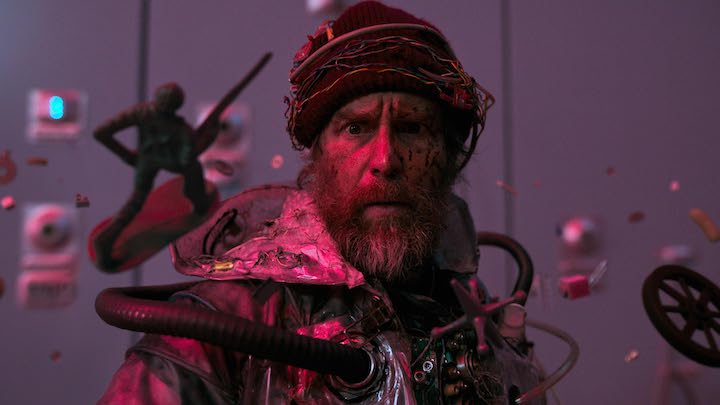
Mercy was a film about AI that AI could’ve written. Good Luck, Have Fun, Don’t Die also tackles AI, although it could only come from the mind of Gore Verbinski. As he did with his Pirates of the Caribbean trilogy…
Mar 1, 2026

Investigative Screenplay Review: Suspenseful but Weak Antagonist
Vadh 2 (2026): When Murder Is Justified — Starring Sanjay Mishra as prison guard Shambhunath Mishra When evil tries to take control, its destruction becomes necessary. With this theme, Bollywood brings you a spiritual sequel to its 2022 crime-thriller “Vadh”.…
Mar 1, 2026