
Monster’s Yuji Sakamoto on Writing One of the Year’s Best Screenplays
Dec 15, 2023
To say Monster made a splash at this year’s Cannes Film Festival back in May would be an understatement. Even prior to its world premiere there, all eyes were already on director Hirokazu Kore-eda and his film. Monster would, after all, mark the Japanese filmmaker’s return to directing in his native language since 2018’s Shoplifters (his two previous films, 2019’s The Truth and 2022’s Broker, were in French and Korean, respectively). Of course, the movie did not disappoint; Kore-eda walked away with the Queer Palm (the highest honor for an LGBTQ+ film at the festival), and screenwriter Yûji Sakamoto nabbed the coveted Best Screenplay Award.
In our interview with Kore-eda at TIFF (Toronto International Film Festival) last September, the filmmaker sang Sakamoto’s praises, proclaiming it was a dream come true to finally work with the screenwriter’s words. In our recent conversation with Sakamoto, we naturally couldn’t help but share Kore-eda’s comments with him. Humbled, Sakamoto replied, “Of course, I’m honored and very happy that he spoke so highly of me. As a TV series scriptwriter, I never thought that a film director would hold me in such high regard, so [I’m] very deeply moved.”
Monster Challenges Us to Resist Our Prejudices
Monster seeks to solve the mystery of why young Minato (Sōya Kurokawa) has suddenly begun acting out in class and at home. The first act of the film follows Minato’s mom, Saori Mugino (Sakura Andō), who suspects that her son’s inexplicable behavior might have something to do with his new teacher, Hori (Eita Nagayama). However, when she pays a visit to Minato’s school principal (Tanaka Yūko), she is met with stiff lips and scripted apologies.
In a Rashomon-like effect, Monster rewinds at the beginning of the second act, this time telling the story from Hori’s perspective, thus offering new pieces to the larger puzzle along the way. Of course, it isn’t until the third act, which centers on Minato and his friendship with Yori Hoshikawa (Hinata Hiiragi), that we get the full scope of the kid’s strange behavior. Monster may start as a gritty thriller, but ultimately unravels into one of the year’s most tender-hearted romances.
Well Go USA Entertainment
Having built a career writing for television — a format that inherently affords hours upon hours of storytelling to develop his characters — Sakamoto recalled in our interview how it was a challenge to craft fully-fledged characters in a shorter amount of time. What’s more, because the film was structured in three chapters, it meant even less time to spend with certain characters. However, because of the inherent mystery of Monster’s story, he took advantage of the characters’ brief on-screen appearances to underscore the overall message he was trying to convey.
“The theme itself is that people can’t understand each other right away,” Sakamoto said. “In two hours, or even 10 hours, one can’t understand or fully portray a character fully, so I wanted to make sure this wasn’t a case where, in an instant, you’ve decided that this person is evil, or this person is good. My main point [was] to show that you can’t differentiate or categorize people that way.”
Related: Best Hirokazu Kore-eda Movies, Ranked
According to Sakamoto, Kore-eda, who typically writes his own movies, worked closely with him during the writing process, which he said “was very helpful” in capturing Monster’s tonal shift. But when it came to the love story between Minato and Yori, Sakamoto had clear ideas for it. “In terms of structure, I thought, when we got to the children’s perspective, it should be a bit more romantic, and small things about daily life should be put in it rather than [it being strictly] a narrative storytelling mode.”
Writing Monster Meant Returning to His Childhood
Interestingly, the relationship between Minato and Yori in Monster was based on a childhood friendship Sakamoto himself had when he was about six or seven years old. Like Yori, Sakamoto’s friend was different from the rest of the class, so he didn’t really interact with him while at school. At least, not positively: “He was kind of an awkward child and didn’t quite fit in, and he was the object of some bullying in school,” Sakamoto said, adding that he also perpetrated some of the bullying in an attempt to fit in with the crowd.
However, after school, the pair were the best of buddies, always playing in a secret fort-like area that only they knew about. (This gave Sakamoto the idea of Minato and Yori turning an abandoned bus into their hideout in the film.) Eventually, Sakamoto’s friend had to change schools, and though he expressed a desire to maintain his friendship with Sakamoto, Sakamoto made new friends in class instead. The way he treated his friend is something the screenwriter regrets deeply. In this way, Monster is like “an apology letter I would want to write to him.”
Related: 13 Japanese Movies That Changed Film History
Putting himself “on the perpetrator’s side,” as he called it, is not a new concept for Sakamoto. Indeed, like Kore-eda, a lot of his work is focused on telling the villain’s perspective, especially if that means looking inward. “The audience searches for who the monster is as they’re watching the film. And then, toward the end, they realize that they’re the monsters. I think it’s that way of how seeing the other and seeing ourselves [that is] reflected in this film.”
Monster is now playing in select theaters.
Publisher: Source link


‘A Tale of Two Cities’ First Look Reveals Kit Harington in MGM+ Series
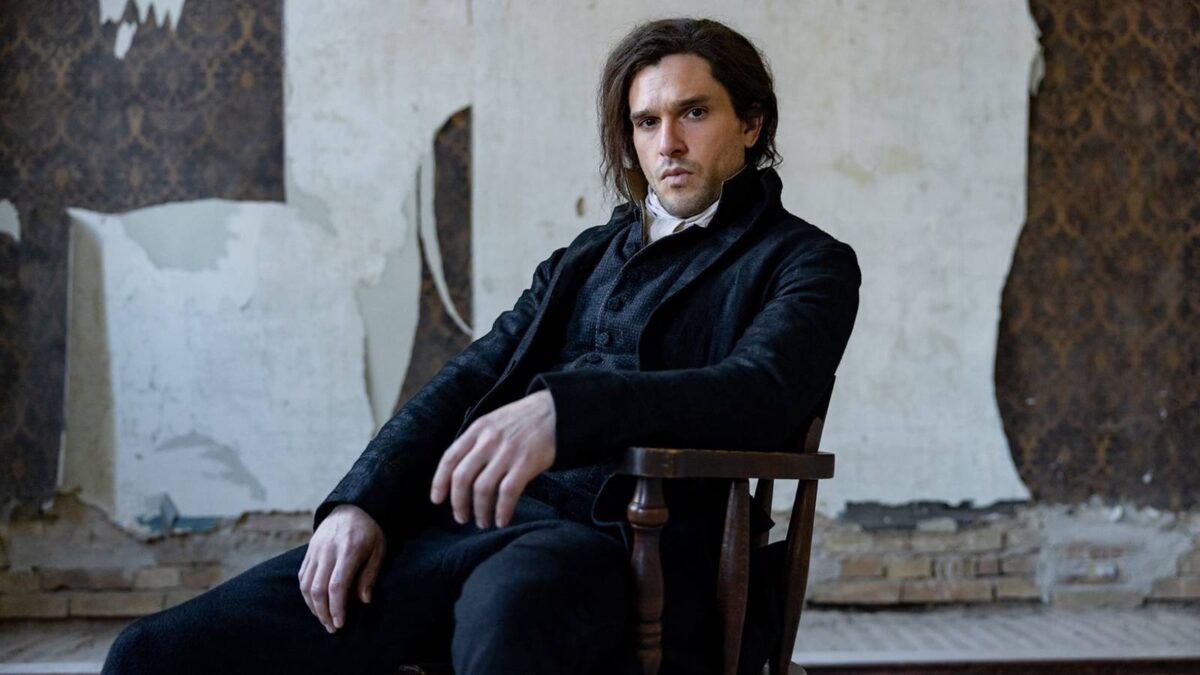
The BBC and MGM+ are teaming up with a new four-part limited series adaptation of Charles Dickens' classic 1859 novel A Tale of Two Cities. Game of Thrones veteran Kit Harington will play Sydney Carton, a cynical English lawyer who…
Mar 26, 2026
HBO ‘Harry Potter’ Series Image Reveals Dominic McLaughlin in Title Role
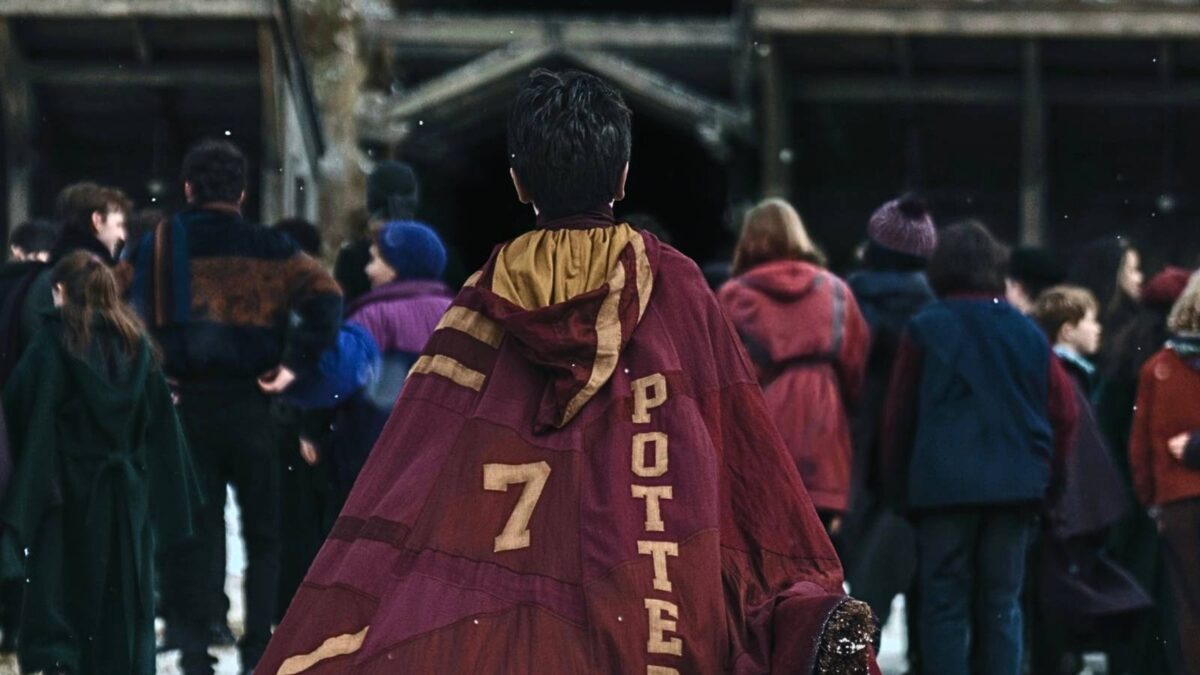
The first official look at HBO's upcoming reboot of Harry Potter has finally arrived, and it is already teasing a magical trailer release. As we inch closer to the show's expected 2027 release, the network has begun to reveal more…
Mar 25, 2026
‘Dutton Ranch’ Trailer Reveals ‘Yellowstone’ Sequel Release Date
Rip Wheeler and Beth Dutton gamble everything on a new life in South Texas in the first trailer for the Yellowstone spin-off, Dutton Ranch. The footage reveals all manner of gun fights, fist fights, explosions, galloping horses, and even mysterious…
Mar 24, 2026
Born Again’ Showrunners Detail How the Media Ties into Season 2
Marvel is fast approaching the release of Daredevil: Born Again Season 2, marking its second live-action Disney+ show of 2026. Bringing back Charlie Cox's Matt Murdock and Vincent D'Onofrio's Wilson Fisk, this season picks up where Season 1 left off,…
Mar 23, 2026