Munch Featured, Reviews Film Threat
Aug 22, 2023
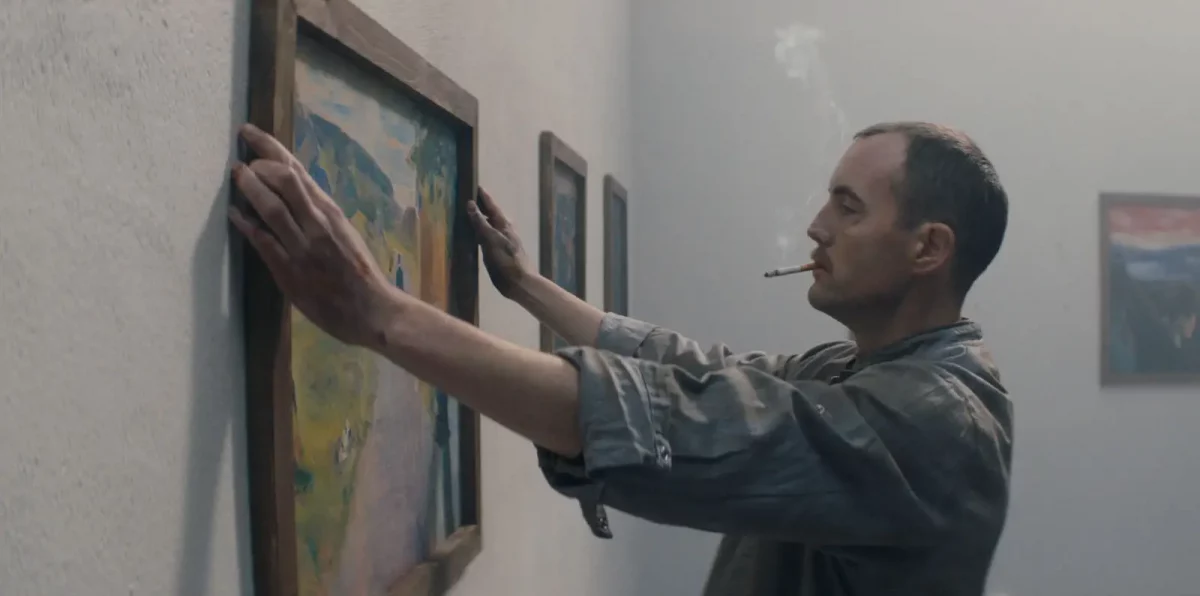
I scream, you scream, we all scream, but only Edvard Munch painted it in director Henrik Martin Dahlsbakken’s fascinating biopic Munch. Based on a story by Dahlsbakken with a screenplay by Fredrik Hoyer, Mattis Herman Nyquist, Gine Cornelia Petersen, and Eivind Saether, the movie jumps between four periods of the famous painter’s life, with each period stylized distinctly from the others.
The 21-year-old Munch (Alfred Ekker Strande) is back in Scandinavia after studying art in Paris. He struggles with his interactions with others and is subject to fits of melancholy. Munch at 29 (Mattis Herman Nyquist) is hanging in Berlin in the 1890s with fellow creative folk like August Strindberg (Lisa Carlehed). He is about to have his first solo gallery show when he is informed that the local arts council has closed it before opening due to the subject matter being too ordinary.
At age 45, Munch (Ola G. Furuseth) is feeling unstable and deeply depressed. He is at a sanitarium being treated by Dr. Daniel Jacobsen (Jesper Christensen). The good doctor believes that what is perceived as mental illness in artists is actually normal when a person reacts to the complexity of their genius mind. The 80-year-old painted (Anne Krigsvoll) is surrounded by thousands of his unsold paintings when the Nazi government comes knocking, as one of Hitler’s ministers is quite fond of Munch’s work and wishes to requisition some. Or maybe all of them if the Nazis feel like it.
“Munch at 29 is hanging in Berlin in the 1890s with fellow creative folk…”
The most confounding element in Munch is Dahlsbakken’s choice to use anachronisms in the Berlin sequence. While the rest of the eras keep to their respective time periods, Berlin is presented as the city in the first decade of the 2000s. Cell phones are used, and raves are at full tilt, with multi-colored wigs being worn. While this does help distinguish it from the other periods, like the sanitarium portions shot in black and white, it is still a very unnerving element to drop into a historical biography.
The impulse behind this choice seems to be autobiographical as if one of the filmmakers was rocking the highly creative Berlin art scene at the beginning of this century. It is a clever way to impart to a modern audience how liberating this city would have been to the painter. This period also contains a hallucinatory sequence where Munch sees the Berlin skyline in the blotchy colors that would be one of the trademarks of his art. It is this sequence that keeps resonating after the movie’s over, with its oddness stuck like gum in your mind.
Another creative choice that is striking but never explained is using actresses to play males. Carlehad’s marvelous turn as Strindberg, complete with an eyeliner mustache, fits right in with the uninhibited vibe of the Berlin period. However, I am lost for the reasoning behind casting Krigsvoll as the 80-year-old Munch. Maybe because I didn’t know it was an actress when I was watching. I attribute not catching it to Krigsvoll’s performance instead of the obvious make-up effects, which are reminiscent of Jupiter Rising. This gender play is another enhancement distinguishing Munch from a more traditional biopic.
This is also hot-buttered cerebral chow for the creatively bent. All aspects of the usually tortured lives of artists are touched upon like social alienation and the intense awareness of emotional depths most avoid. That artists only find relief when they are making their art is made abundantly clear to the audience. Whether the anachronistic tilt-a-whirl will buck the costume crowd that seeks old-world period pieces remains to be seen. In the end, the flashes of weirdness anchor the creative insights from Munch in your memory. If this sounds like something you would enjoy, you can bet you will.
Publisher: Source link





Earth’ Season 2 Casts Peter Dinklage as Series Regular
While screenwriter, television showrunner, and director Noah Hawley is already lining up his next feature film project, that seemingly hasn't stopped developments on the second season of Alien: Earth. The series, which premiered on FX last year, was a project…
Apr 10, 2026
‘Foundation’s Lee Pace Teases Even “Bigger” Story in Season 4
The return of Apple TV’s critically acclaimed, yet somehow still sorely underrated, three-part science fiction epic has just been given the perfect hype, with a returning star not only offering a production update but also calling the next outing “bigger”…
Apr 9, 2026
![‘Star Wars: Maul – Shadow Lord’ Is the Perfect Jumping-on Point for Newcomers [Exclusive]](https://www.filmibee.com/wp-content/uploads/2026/04/Star-Wars-Maul-Shadow-Lord-Is-the-Perfect-Jumping-on-1200x675.jpg)
‘Star Wars: Maul – Shadow Lord’ Is the Perfect Jumping-on Point for Newcomers [Exclusive]
Lucasfilm and Disney are jumping back into the animated Star Wars universe with the release of Star Wars: Maul — Shadow Lord, centered on Sam Witwer's iconic animated Sith villain. Spinning off from Star Wars: The Clone Wars, Shadow Lord…
Apr 8, 2026
Netflix’s ‘Detective Hole’ Is Now a Global Streaming Sensation
Netflix is no stranger to great crime thrillers, and its newest series is no exception. While the streaming service is already home to such modern classics as Mindhunter, Ozark, and The Stranger, its new show can easily be counted among…
Apr 7, 2026