Nine Hours of the Best Star Wars You Will Ever Watch
Apr 21, 2025
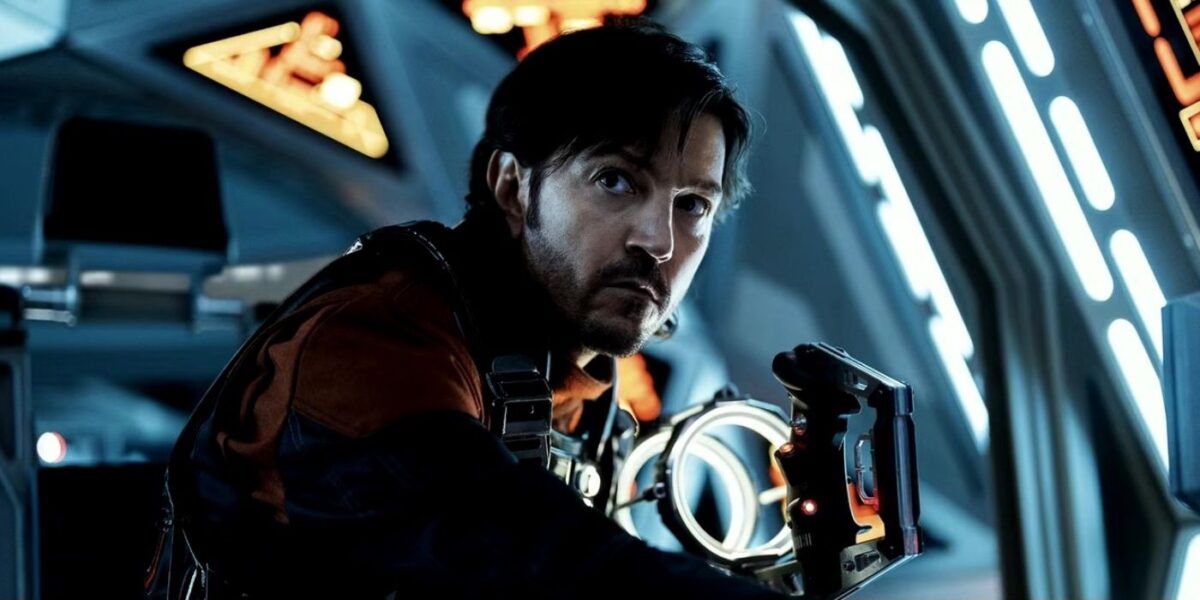
For nearly fifty years, Star Wars fans have spoken — at great length — about how certain characters have “spoken to them.” For many, it was Princess Leia (Carrie Fisher) and Luke Skywalker (Mark Hamill); for others, it was Obi-Wan Kenobi (Ewan McGregor) or Padmé (Natalie Portman). Some have found strength in the stories themselves, like Rey’s (Daisy Ridley) journey of self-discovery in the sequel trilogy or Din Djarin’s (Pedro Pascal) confrontation of his faith in The Mandalorian. For me, Rogue One: A Star Wars Story was a beacon of hope when it debuted. Even within the confines of a single film, Cassian Andor’s (Diego Luna) story made an impact — enough so that in 2018, a prequel series was announced.
Andor Season 1 was lauded by critics and fans alike, a phenomenon that rarely happens within the Star Wars franchise, particularly for stories that have dared to delve into the more pertinent aspects of the universe. Star Wars has always been a political franchise that borrowed from real-world events, though, in recent years, it has strayed away from some of the deeper analysis that George Lucas instilled in his trilogies. Andor benefits greatly from being wedged between Lucas’s exploration of taxation as a tool for ushering in Imperial rule and his anti-authoritarian critique of the Vietnam War. The first season was a riveting journey through the rise of the Rebellion and the impact that colonization and mass incarceration had on shaping Cassian Andor’s worldview. It was “peak television,” and yet — somehow — Tony Gilroy and his brilliant writing team have outdone even themselves with Season 2. If Andor Season 1 set a gold standard for Star Wars storytelling, then Season 2 has achieved an entirely new level of perfection.
When it was first announced that Andor would be condensing the period between the Season 1 finale and the events of Rogue One into twelve episodes, it made some viewers apprehensive. On the one hand, it meant that viewers wouldn’t get another season of the best series Lucasfilm has ever produced; on the other, that is a lot of storytelling to pare down into roughly nine hours. Rest assured that Andor Season 2 has flawlessly handled this four-year span, delivering a true masterclass in storytelling. The pacing is perfectly handled, and the three-episode structure allows each narrative arc to be expertly executed. Gilroy, Beau Willimon, Dan Gilroy, and Tom Bissell seamlessly weave the threads of the finale throughout each episode, carefully foreshadowing events without ever tipping their hand. The end result is, perhaps, the most devastatingly tragic and yet hopeful finale that will ever come out of Star Wars.
‘Andor’ Season 2 Builds on the Best Dynamics From Season 1
Andor Season 1 had a lot to offer viewers, both in terms of story and how the series introduced a new slate of characters to fill in the world around known faces like Cassian Andor, Mon Mothma (Genevieve O’Reilly), and Saw Gerrera (Forest Whitaker). While Luthen Rael (Stellan Skarsgård), Syril Karn (Kyle Soller), Dedra Meero (Denise Gough), Vel Sartha (Faye Marsay), and Cinta Kaz (Varada Sethu) were compelling additions to the story, Bix Caleen (Adria Arjona) was undoubtedly a standout among the newcomers.
Season 2 builds on the excellence of Bix’s undefinable relationship with Cassian by delivering a romance that manages to eclipse even that of Leia and Han (Harrison Ford), both on-screen and on the page, which is an impressive feat for a twenty-four-episode series. But this romance doesn’t come without sacrifice, as it derails any hopes that fans had for reading further into the dynamic Cassian shared with Jyn Erso (Felicity Jones) in Rogue One. Together, Cassian and Bix create some of the most memorable moments within Season 2, and their bond adds new layers to Cassian’s ultimate fate. But Bix’s relationship with Cassian isn’t the only reason she remains a standout in the second season. The trauma she faced at the hands of the Empire is an ever-present part of her storyline that makes for a very harrowing narrative arc.
Season 1 did an excellent job of showcasing the cost that comes with rebelling against the system, and yet Season 2 manages to escalate everything tenfold. The cost is higher than ever before, and the driving, unrelenting pace of the three-episode structure makes each loss much more painful, as there is no real time to grieve. It parallels the increasing in-world stakes that often prevent the characters from really confronting loss. Grieving is a privilege in times of war — even if the galaxy isn’t largely aware of what’s going on behind the scenes.
Diego Luna Gives an Emmy-Winning Performance in ‘Andor’ Season 2
As the series’ titular lead, Diego Luna carries the weight of Andor on his shoulders. He is also in a unique position that no other Star Wars actor has held, given that he’s playing his character’s story in reverse. When we were first introduced to Cassian Andor, he left an impression as a devil-may-care rebel who shot first and asked questions later. He was also a dedicated member of the Rebellion who was willing to do anything if the end justified the means. Andor Season 1 showcased how unwilling he was to be part of anything at the start. It took his mother’s death (Fiona Shaw), Bix’s torture at the hands of the Empire, and the uprising on Ferrix to finally push him into greater involvement. When we reunite with him in Season 2, he still has a ways to go to evolve into the character we first met in Rogue One — and it is a unmitigated delight to witness that evolution across four in-world years.
It’s a shame that the Television Academy rarely acknowledges Star Wars beyond technical nominations, as Luna gives an Emmy-winning performance in each episode, with depth afforded even to the moments with minimal dialogue. He and Arjona share some of the most exceptional scenes of Season 2, and those scenes often hinge on the things that aren’t being said, which carry the most weight.
‘Andor’s Production Design Raises the Bar in Season 2
Image via Disney+
There’s no denying that The Acolyte and Skeleton Crew delivered striking costumes and production design, but Andor Season 1 really set a high bar for excellence. Michael Wilkinson crafted garments that spoke to each character’s story in a way that evolved throughout the season, and that keen eye for interweaving character arcs into the fibers of their clothes is taken to a new level in Season 2. In particular, the evolution of Mon Mothma’s wardrobe speaks volumes to her emotional, mental, and physical transformation throughout the season. Wilkinson is also given a rare opportunity to shape the visual aesthetics of a number of species that we’ve only heard about before. The way he has crafted a clear identity for the people of Chandrilla and Ghorman only adds to the intrigue of the plotlines that play out.
Similarly, Luke Hull’s production design has truly leveled up with Season 2. While viewers have already seen places like the Galactic Senate in the Prequel Trilogy, Andor gives us a far more detailed look at the building and the rooms within it. Hull’s vision for Ghorman is also something truly marvelous, especially on closer inspection, which illuminates his inspirations. Much in the way that Naboo was influenced by the architectural styles of Italy and the Mediterranean, Hull borrows from the visual signifiers of France — in particular, Paris — to craft a very clever visual shorthand for viewers who understand the depth of that influence. While the Prequel Trilogy often gets a lot of flak, those films were some of the most visually stunning and detailed installments in the franchise, and Andor builds upon its visual groundwork. Hull, Wilkinson, and all the production teams involved in crafting Andor Season 2 have delivered a stunning example of what Star Wars can be at its very best.
Related
New April TV Releases — ‘The Last of Us,’ ‘The Handmaid’s Tale,’ ‘Andor,’ and More
“If I Ever Were To Lose You, I’d Surely Lose Myself.”
‘Andor’ Has Never Been More Relevant
Image via Lucasfilm
What sets Andor apart from other Star Wars series is that the real terror lies within the horrors of bureaucracy and the structures established and kept in place by political and militaristic figures, like Orson Krennic (Ben Mendelsohn). These elements transcend the realms of fiction, forcing viewers to confront reality, should they be willing to see what’s right in front of them. It’s this element that makes Andor truly special, because it’s not just a series made to entertain, it’s a series designed to make people think, harkening back to the age of Lucas.
Gilroy has maintained that he wanted Andor to feel “timeless,” and yet he has managed to deliver a season of television that has never been more timely. Season 2 deals with hard-hitting topics like propaganda being used to manipulate apathy towards genocide, as well as the mass deportation and incarceration of undocumented, itinerant workers. While topical, the relevancy speaks to the nature of authoritarian regimes playing by the same playbooks throughout history.
Andor Season 1 set high expectations for where the series’ final installment could go, and somehow, Season 2 exceeds those expectations at every turn. The only flaw in the entire series is the fact that it’s over now. A decade after his creation, Cassian Andor’s story has finally come to an end. Luckily, it is an end worthy of one of the most impactful characters Star Wars has ever created, with this grand finale a triumph for both Gilroy and Luna.
Andor Season 2 debuts on Disney+ on April 22 with a three-episode drop.
Andor
If Andor Season 1 set a gold standard for Star Wars storytelling, then Season 2 has achieved an entirely new level of perfection.
Release Date
2022 – 2025-00-00
Network
Disney+
Showrunner
Tony Gilroy
Pros & Cons
Tony Gilroy and the writing team deliver the gold standard of Star Wars storytelling.
Diego Luna gives an Emmy-winning performance in every episode of the season.
Adria Arjona is a standout performer, as Bix plays an even more vital role in Season 2.
Michael Wilkinson’s costume designs and Luke Hull’s production design take Andor to a new level.
Andor’s ensemble cast is incredible, nuanced, and memorable.
Publisher: Source link


New ‘Wheel of Time’ Animated and Video Game Adaptations Are in the Works
Amazon might be finished with The Wheel of Time, but we haven't seen the end of the story when it comes to adaptations of Robert Jordan's bestselling high fantasy saga. Fans were left blindsided when Amazon abruptly pulled the plug…
Mar 22, 2026
‘Off Campus’ Teaser and Release Date Revealed by Prime Video
No one expected a love story between rival hockey players to become one of the most talked-about TV shows of 2025, but there's a lot more where Heated Rivalry came from, as a new teaser for Prime Video's foray into…
Mar 21, 2026
Sarah Michelle Gellar Urges ‘Buffy’ Fans to Avoid Reading Leaked Reboot Scripts
Buffy the Vampire Slayer fans have had a rough few days after Hulu officially pulled the plug on a revival of the series, which would have brought star Sarah Michelle Gellar back as the titular heroine. Described as a continuation…
Mar 20, 2026
Born Again’ Stars Explain Why Bullseye Is So Dangerous in Season 2 [Exclusive]
Along with Charlie Cox's Matt Murdock and Vincent D'Ofnorio's Wilson Fisk, Daredevil: Born Again Season 1 brought back one of The Man Without Fear's most notorious villains: Wilson Bethel's Benjamin Poindexter, better known as Bullseye. Not only was he back…
Mar 19, 2026