Old School Kung Fu Fest 2023: ‘The Ghost Hill’
Apr 28, 2023
10th Old School Kung Fu Fest: Sword Fighting Heroes Edition- Day 2: “The Ghost Hill”
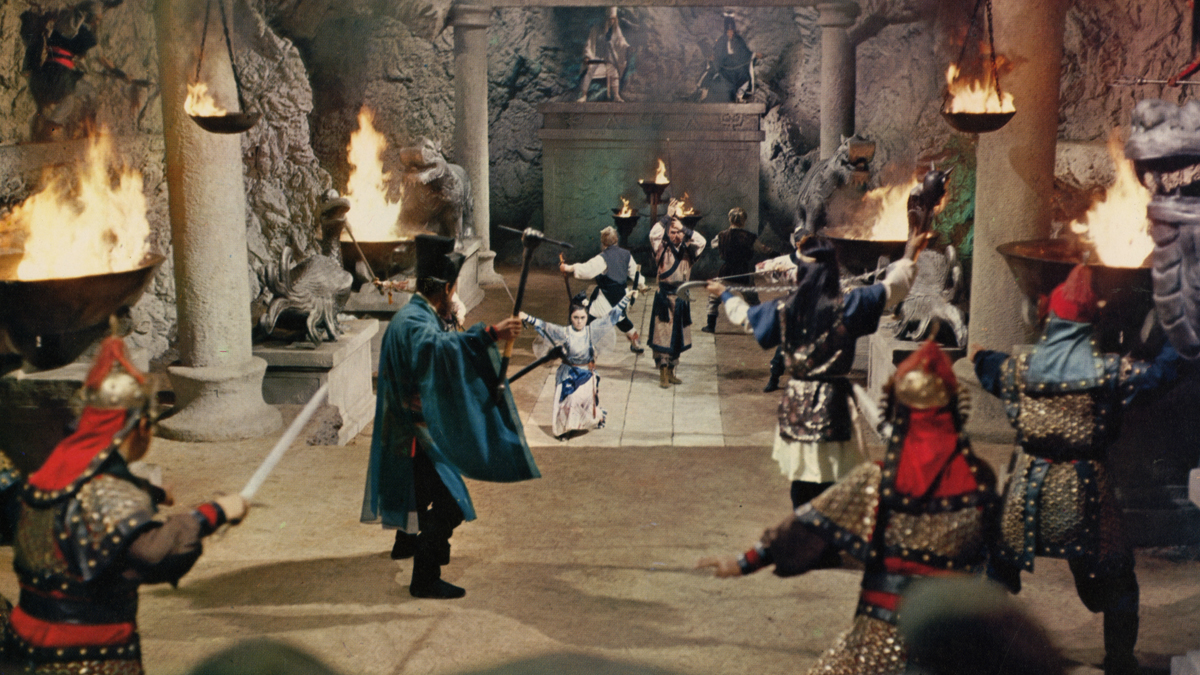
Taiwanese filmmaker Ting Shan-hsi crafted many wuxia pictures in the 1970s. “The Ghost Hill” (1971) was the filmmaker’s fist foray into the extreme fantastical. This is a film that goes over the top, yet (for fans of the wild wuxia Kung Fu) it is still good fun.
“The Ghost Hill” is the final installment in “The Swordsman of All Swordsmen” trilogy and holds a fun story with some wild characters.
Flying Swallow (Polly Shang-kuan) and Tsai ying-jie (Tien Peng) return and are reunited with Black Dragon (played this time by David Wei Tang).
The film finds the three warriors traveling into Hell itself to avenge Flying Swallow’s father.
This will be their most dangerous mission yet as they come up against the Ruler of Hell (Sit Hon) and his army of devilish warriors, whose names are some of the most creative in Martial Arts cinema.
Our heroes do battle with the likes of the Left & Right Judges, the Ox Head Demon, the Black & White Wuchangs, the Murdering Wonder Child, and Soul Hunter Yaksha. Just writing these names makes me smile.
While some of the fighting choreography isn’t as lightning fast as other wuxia films, director Ting Shan-hsi fills his wild tale with an infectious energy that makes every battle great fun to watch. It is the imagination held within the screenplay that fuels the vitality of filmmaking.
Chen Shih-Wei was the fight choreographer in this film. The battles are entertaining and bloody, if not occasionally sloppy. An unnecessary use of undercranking hurts a few moments, but in the scheme of it all, the fight sequences are all good fun.
“The Ghost Hill” is a feast for the eyes, with eye popping colors and masterfully designed sets. The production design leans into fantasy, creating worlds where exotic weaponry and bright colors blend into a tapestry of blood and fire and snow and steel.
Nien-Lung Tsao’s art direction is on full display in the film’s final act where our heroes fight their way through the 10 Gates of Hell’s Castle. Each gate is an absolute visual wonder. Rooms of fire, ice, poison flowers, and more give these brave warriors the tests of their lives.
It is in the final room called the Thousand Poison Hell, where our heroes finally battle the Ruler. This is certainly the best scene in the film. The colorful sets find an imaginative symmetry with extreme action.
Setting the film’s visual style from the first shot, cinematographer Tsan-Ting Lin makes heavy use of Sergio Leone-styled Spaghetti Western compositions. Each duel or battle begins with the askew angles and precise framing used in Leone’s westerns. Whatever one thinks of the film, its visual splendor cannot be denied.
As the film ends, the moving final moment culminates with the screenplay’s best line, “To rid the world of evil, the heart matters more than the sword.”
“The Ghost Hill” has something for everyone. While more excessive in the fantasy, Ting Shan-hsi knows a good story. The director assures the well-known characters a fitting sendoff while pleasing wuxia fans with another spectacle of adventure.
The Ghost Hill
Written and Directed by Ting Shan-hsi
Starring Polly Shang-kuan, Tien Peng, David Wei Tang, Sit Hon
NR, 71 Minutes, International Film Production
Related
Publisher: Source link



A Flame The Colour of Air – Film Threat
SLAMDANCE FILM FESTIVAL 2026 REVIEW! You will shimmer and shake, like you’re riding the snake while being wowed by the dynamite animated short A Flame The Colour of Air, written and directed by talented Canadian filmmaker Emily Pelstring. Jessica Mensch’s…
Mar 3, 2026

‘9-1-1’ Can’t Decide What It Wants To Focus On in a Lackluster Season 9
Editor's Note: The following contains spoilers for 9-1-1 Season 9, Episode 11.I was hoping that 9-1-1 would take advantage of its month-long hiatus and course-correct after its most recent episode, but while this week is certainly an improvement from last…
Mar 3, 2026
Good Luck, Have Fun, Don’t Die Review
Mercy was a film about AI that AI could’ve written. Good Luck, Have Fun, Don’t Die also tackles AI, although it could only come from the mind of Gore Verbinski. As he did with his Pirates of the Caribbean trilogy…
Mar 1, 2026
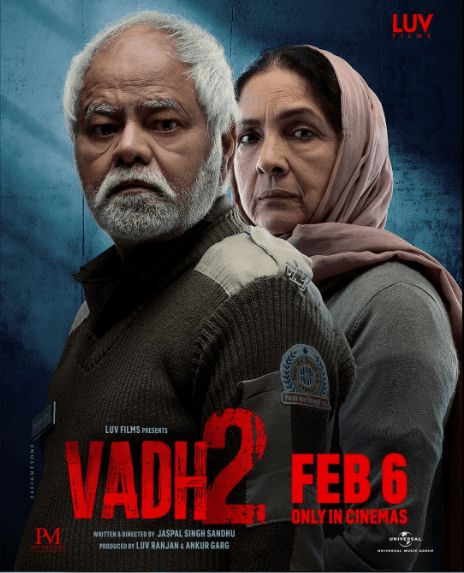
Investigative Screenplay Review: Suspenseful but Weak Antagonist
Vadh 2 (2026): When Murder Is Justified — Starring Sanjay Mishra as prison guard Shambhunath Mishra When evil tries to take control, its destruction becomes necessary. With this theme, Bollywood brings you a spiritual sequel to its 2022 crime-thriller “Vadh”.…
Mar 1, 2026