Robert Pattinson & Ensemble Shine In Bong Joon-Ho Sci-Fi Late-Stage Capitalism Riff [Berlin]
Feb 16, 2025
Korean cinema has skyrocketed to international acclaim with the advent of writer-director Bong Joon Ho. While a humanist at heart, all his films confront class conflict and its haunting effects on humans. His last Palme d’Or winning film, “Parasite,” focuses on the class warfare between a poor family who slowly entangles themselves with a wealthy family. It’s now been six years since the film’s release, and Bong does not fail to disappoint with his latest movie “Mickey 17,” an adaptation of American author Edward Ashton’s novel “Mickey 7.”
Read More: The 100 Most Anticipated Films Of 2025
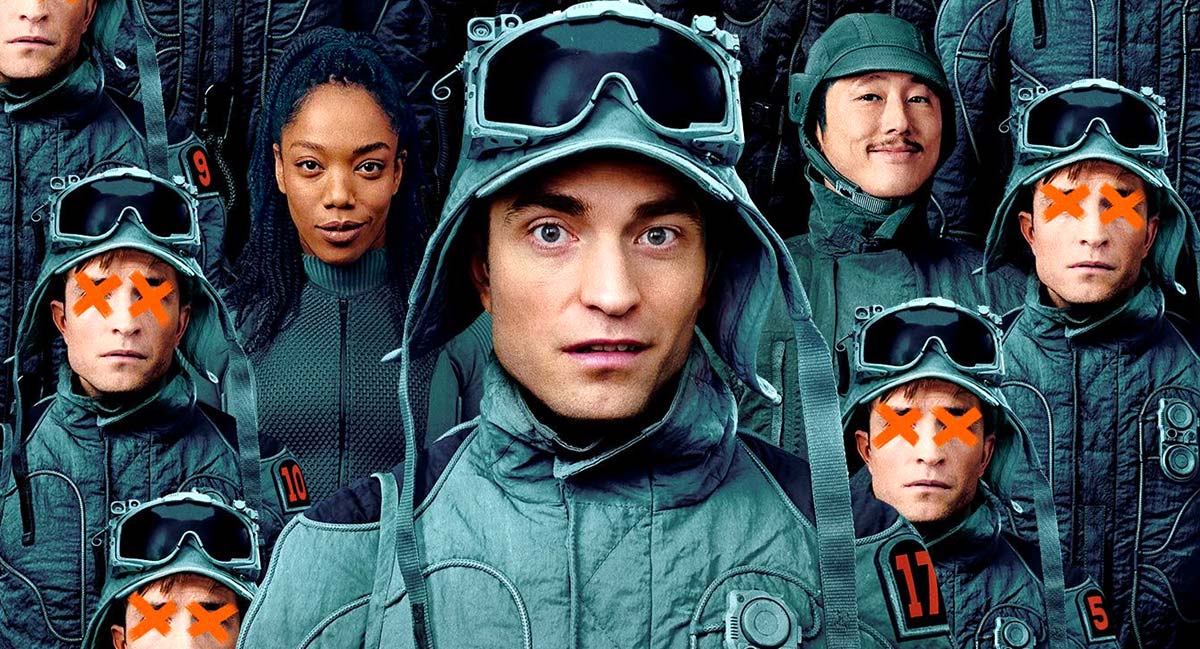
The film opens in glacial white snow covering the eponymous hero’s face, played with a comical flare by Robert Pattison. Mickey dusts off the snow from his goggles before dying a horrific death with the recognizable blood and gore we have come to know and love from Bong’s oeuvre of films. This is the beginning of one of many twists and turns the film implements through a voice-over narration that dominates the film’s first half, guiding the viewer through the lore of the titular character.
Mickey considered fleeing planet Earth when he and his friend Timo (Steven Yeun) loaned money to start a macaron trade – a business he believed was becoming more popular than hamburgers at the time. When the duo cannot repay the loan shark, they resort to traveling to outer space in a government spacecraft. The loud and autocratic leader Kenneth Marshall (Mark Ruffalo) helms the spaceship to colonize the planet of Niflheim, crawling with gargantuan but deceptively harmless “creepers.” Kenneth’s wife and maître d’ of the ship, Ylfa (Toni Collette), is a garish character obsessed with blending, grinding and concocting sauce from all manner of origins, including the organs of creepers.
The film’s minimalist settings draw parallels between one of Bong’s earlier English-language films, “Snowpiercer”—about a train divided between the elite and the poor who are attempting to survive an ecocide on Earth. However, the increasingly more lavish budget courtesy of his partnership with Warner Bros. has afforded for immaculate production design from Fiona Crombie and costumes from Catherine George—whose pop-art inspired color palette allows the characters to breathe humor into every scene.
Support independent movie journalism to keep it alive. Sign up for The Playlist Newsletter. All the content you want and, oh, right, it’s free.
To survive, Mickey takes it one step further and opts to become what the crew refers to as expendable. This means Mickey’s memories and DNA can be transposed and reused once he has died, committing menial tasks for the crew like checking if Niflheim contains an ebola-like virus. If late-stage capitalism seeks to atomize citizens further, Mickey is living proof that its mission has been devastatingly successful. Not only does he hold no autonomy within the grand scheme of the rocket’s hierarchy, but nobody particularly cares whether he lives or dies. In one startling scene, Bong splices death after death, followed by Mickey’s imminent and perpetual revivals in a human-sized scanner. Towards the end of the montage, the crew members aren’t even startled when he returns, instead playing video games on their tablets, illustrating their desensitization.
As the title implies, we meet Mickey in his 17th rendition, but the film spirals out of control when Mickey 17 performs a mission in the snow, and the crew members believe he has died an unfortunate death at the hands of one of the creepers. When, in actual fact, the creepers rescue and retrieve Mickey 17, he returns to find a multiple—aptly called Mickey 18. Suddenly, Mickey’s mortality is apparent because he knows he will die should the crew members discover the mistake they have made. The film proceeds to juggle the ménage à trois between both Mickey’s and their love interest in Nasha (Naomi Ackie), providing a scene that distinctly alludes to Luca Guadagnino’s raunchy love triangle hit of 2024 “Challengers.” As well as navigating their romance, the grasp of Kenneth continues to grow as he considers the creepers vile and dangerous. Against the evidence he is afforded, he continues to try to destroy them.
The fingerprints of genre films like 1940s noir, particularly those of Hollywood directors like Alfred Hitchcock, can be gleaned throughout the film. The defining influence of Hitchcock is embellished through the film’s non-linear narratives, deep focus and existential-induced plotlines. Bong’s homage to the noir is particularly prevalent through the film’s narration-dominated first half. It almost felt like the beginning of the end that sparks Billy Wilder’s “Double Indemnity” when we witness the protagonist Walter Neff recount the entirety of the film—which we then watch backward à la “Sunset Boulevard.” No doubt Bong takes cues from this golden era and earlier, including the whimsical acrobatics of silent-era actors like Buster Keaton, whose baroque antics in films like “The General” (where he crashes a full-scale train) can be seen in Pattinson’s comical performance.
Given the times we are living in, it is difficult not to interpret characters and components of the film as stand-ins for events occurring globally, like the growing rise of authoritarianism. Kenneth’s desire to seek destruction upon the most harmless beings sounds like the vitriolic xenophobia that is increasingly more popular globally. The underlying humanism and design of these CGI-rendered critters also suggest an infinity for the films of Hayao Miyazaki. The Japanese animator attempted to represent a world where humans and nature could coexist and Bong shares a similar sentiment here.
The greatest threat to humanity is the atomization of our existence under late-stage capitalism. People want us to be individualized so we cannot unionize or bring about the necessary changes for a stronger future. Mickey sacrifices his life to be an expendable but no longer has any autonomy. Bong succinctly riffs on old Hollywood to maintain his legacy of class-conscious films that challenge the status quo appealingly and refreshingly. [B+]
Follow along for all our coverage of the 2025 Berlin Film Festival.
Publisher: Source link





Born Again’ Showrunners Detail How the Media Ties into Season 2
Marvel is fast approaching the release of Daredevil: Born Again Season 2, marking its second live-action Disney+ show of 2026. Bringing back Charlie Cox's Matt Murdock and Vincent D'Onofrio's Wilson Fisk, this season picks up where Season 1 left off,…
Mar 23, 2026
New ‘Wheel of Time’ Animated and Video Game Adaptations Are in the Works
Amazon might be finished with The Wheel of Time, but we haven't seen the end of the story when it comes to adaptations of Robert Jordan's bestselling high fantasy saga. Fans were left blindsided when Amazon abruptly pulled the plug…
Mar 22, 2026
‘Off Campus’ Teaser and Release Date Revealed by Prime Video
No one expected a love story between rival hockey players to become one of the most talked-about TV shows of 2025, but there's a lot more where Heated Rivalry came from, as a new teaser for Prime Video's foray into…
Mar 21, 2026

Sarah Michelle Gellar Urges ‘Buffy’ Fans to Avoid Reading Leaked Reboot Scripts
Buffy the Vampire Slayer fans have had a rough few days after Hulu officially pulled the plug on a revival of the series, which would have brought star Sarah Michelle Gellar back as the titular heroine. Described as a continuation…
Mar 20, 2026