
Robinson Devor on Doc âSuburban Furyâ
Dec 9, 2025
Suburban Fury
Robinson Devor’s Suburban Fury, made in collaboration with writer Charles Mudede (who also co-wrote Devor’s 2005 acclaimed narrative feature Police Beat and 2007’s provocatively disturbing Zoo), is as counterintuitively intense as its title might imply. The unconventionally riveting doc takes us on a wild and winding (car) ride back in time, via the backseat reminisces of its enigmatic star Sara Jane Moore, who in September 1975 tried to shoot President Gerald Ford outside San Francisco’s St. Francis Hotel. Eschewing recreations for cinematically staged interviews with the infamous nonagenarian (who passed away in September at age 95), along with evocative archival footage from the era, the film attempts to solve the riddle of how and why a social-climbing housewife became an FBI informant, radical leftist and eventual would-be assassin. And even more thrillingly, leaves us with more questions than answers as the stranger-than-fiction journey ultimately becomes the destination itself.
A few days prior to the December 5th theatrical release of Suburban Fury, Filmmaker caught up with the Seattle-based director, whose Zoo made our 2009 list of “Top 25 Indie Films of The Decade.”
Filmmaker: You met Sara Jane Moore after asking the author Geri Spieler (Taking Aim at the President: The Remarkable Story of the Woman Who Shot at Gerald Ford) for her contact info, which makes me curious to hear how you cold approached Sara Jane and ultimately convinced her to participate in the film. Was she always onboard?
Devor: We had recently made the documentary Zoo, which was very sympathetic to people who were excoriated in the press. We gave them a voice. This was discussed with Sara Jane, and I think it appealed to her.
Also, she was just coming off a press tour (Moore was paroled in December 2007) that attempted to encapsulate her experiences in two to three minute clips. I think she was hungry for a deeper dive. We were comfortable having her tell her story without other talking heads, as this seemed a little formulaic anyway, and she was happy to take centerstage. It was never seen as a deficit.
Filmmaker: How did you come up with the doc’s unusual structure? Relying on the archival footage (along with the cinematically staged interviews) rather than standard recreations is a really inspired decision.
Devor: One of my partners and co-writers, Charles Mudede, urged me to not do recreations. The fact that great effort was put into staging the interviews seemed to create enough cinematic power and move scenes forward without them.
There was discussion at one point to have a famous actress play Sara Jane, but such things were incredibly complicated. One of the other co-writers, Bob Fink, suggested the chapter format, reflecting that there were many fragmented aspects to Sara Jane’s testimony. And many holes. We decided that chapters could contain independent thoughts and disparate stories in a free, yet compartmentalized style; it also seemed to mirror paperback books from the 70’s, like a Vonnegut novel perhaps.
I was also interested in blackouts and the flashing of light and imagery as it suggested, to me at least, the conditioning that Sara Jane and Patty Hearst had endured with the SLA and the FBI. I would also say that our supervising editor Adam Sekuler correctly encouraged a formal alternation of energy – between Sara Jane, who can be strident and entertaining, and the archival, which could be moody and dissociative.
Filmmaker: Could you talk a bit about the film’s style and influences? I know Coppola’s neo-noir thriller The Conversation was clearly a touchstone, but I was surprised to learn that a film like Kazuo Hara’s The Emperor’s Naked Army Marches On was as well.
Devor: Hara’s film stars Kenzō Okuzaki – the ultimate radical and activist. He is also a violent revolutionary in that he wants to fistfight the commanders that abandoned, killed and ate his fellow soldiers. The film is about confrontation.
But he is also a compassionate revolutionary in that he spends time praying and comforting the widows of his fellow soldiers. Perhaps I was sensing a different kind of brawl. It is just such an inspiring work about one person battling a lethal system. Of course stylistically there is very little in common between the two films.
Filmmaker: How did you obtain information about the FBI control agent “Bert Worthington,” who you voice in the film? Did your research involve submitting FOIA requests to the government?
Devor: Once we started going through Sara Jane’s interviews we noticed that many, many stories were about Bert. She would often quote what they said to one another in conversations: “I said this, he said that.” We decided to lift these conversations verbatim from Sara Jane’s lips and transcribe them into thoughts from Bert.
In fact, if you listen closely to the first voiceover from Bert, you will hear at the end of the film Sara Jane recounting the same language as that opening VO. Without any other talking heads, we needed Bert to help us tell the story. It was clear Sara Jane was reliant on Bert, trusted Bert, cared about Bert – and was deeply betrayed by Bert. He of course was one of many men who underestimated and used Sara Jane for their own gain.
We did attempt to obtain access to their communications and her reports through a Freedom of Information Act but were unsuccessful. All of her hearing documents are sealed – which of course means that there’s quite a lot of good stuff in there. However, we did find documents that listed FBI control names in the San Francisco area and “Bertram Worthington” was listed (along with dozens of other phony sounding names, all of which had a false, comic regality to them). This convinced us that Bert was in fact a cover identity – which is standard operating procedure for control agents in the FBI.
We also obtained a document, which is in the film at the end, that states that an investigation was initiated internally to get to the truth of Bert and Sara Jane’s relationship, and the manner in which she was recruited by him. Another clear sign that Bert should be a pillar of the narrative. In the end Sara Jane Moore knew nothing about Bert – just as we do now.
Filmmaker: Did Sara Jane ever get the opportunity to see the final film – or even rough cuts – before her death in September? Have you received any feedback from friends, family or others who knew her personally?
Devor: Strangely, no. I had been in touch with her in the early part of 2024, telling her we would be ready to have something to show her soon. Then when we found out in the summer that we’d gotten into the New York Film Festival we sent another message, letting her know that we were ready to show it to her. We even discussed the possibility of her coming to New York. We did not hear anything in return. After that we contacted her again, and still nothing. This year we learned that she had passed on.
Though we did see her once on TV during the election, in a hospital bed in Nashville. We didn’t know that she lived there. She was being interviewed about the Trump assassination attempt.
Publisher: Source link




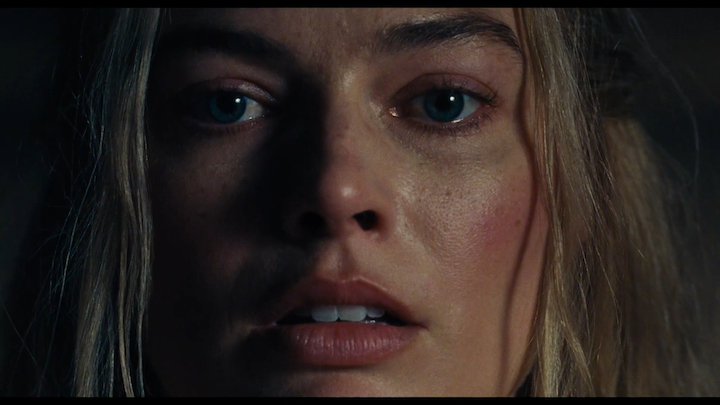
Wuthering Heights Review | Flickreel
As far as adaptations go, I’ve never viewed any source material as sacred, including The Bible. While a faithful adaptation is always welcome, I’m open to a filmmaker leaving their signature on a classic story, especially one that’s been told…
Mar 17, 2026

Amy Adams Sinks In Vapid, Misguided Alcoholism Drama By ‘Pieces of a Woman’ Director [Berlin]
For a solid decade, starting in the late 2000s with Disney’s charming fairytale comedy “Enchanted” all the way to Denis Villeneuve’s melancholy sci-fi “Arrival,” it was easy to trust Amy Adams, a six-time Academy Award nominee. Then, somewhere around Ron…
Mar 17, 2026
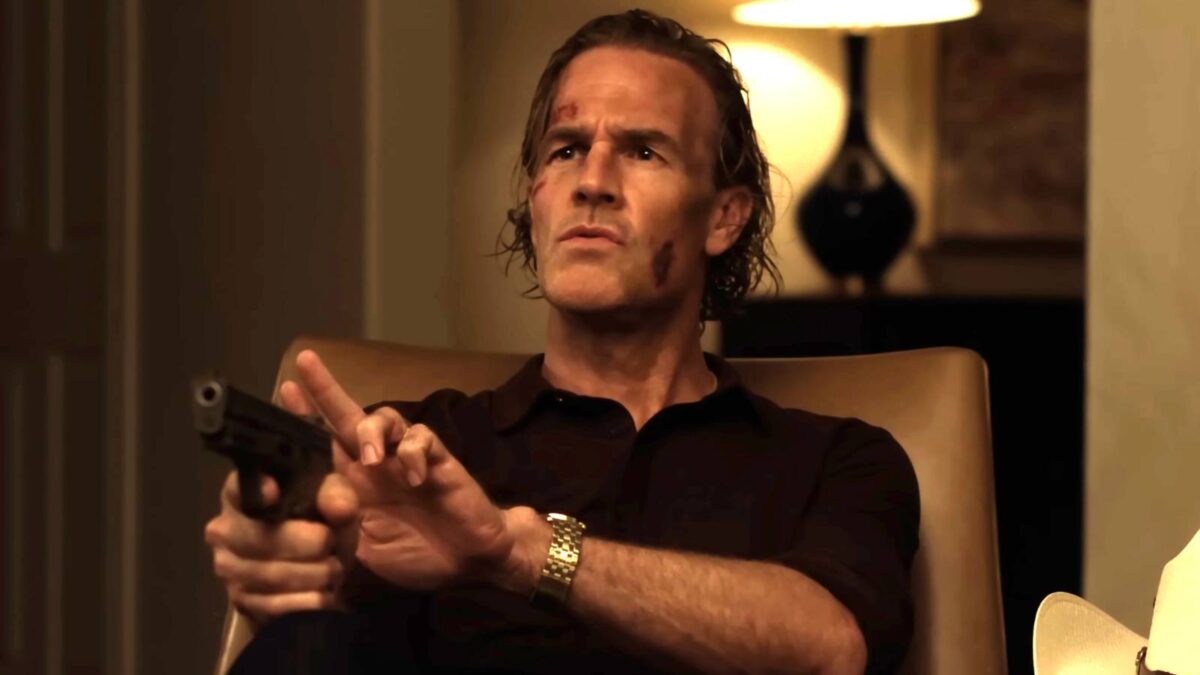
Mason Gooding & James Van Der Beek’s Bad Night Is Aggressively Dull
Ever since the Scream franchise helped put him on the map, Mason Gooding has been a great talent to watch. The genre-bending slasher Heart Eyes is still his best non-franchise role yet, but he's also branched outside of horror in…
Mar 15, 2026
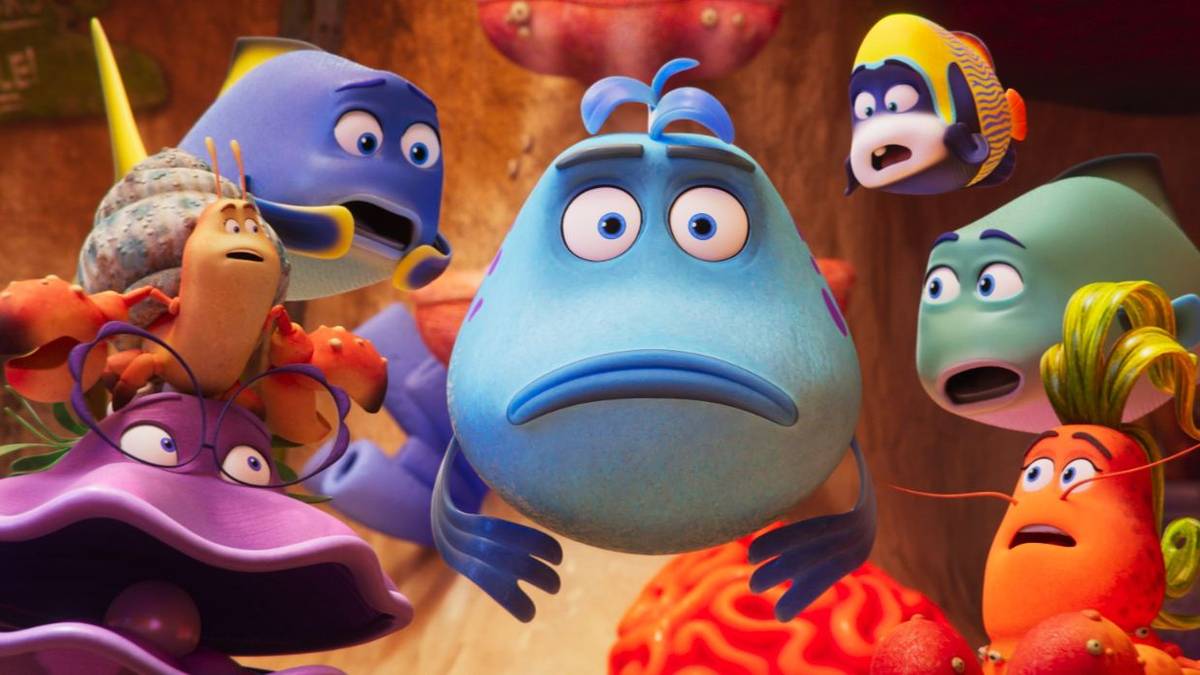
A Grumpy Nick Offerman Keeps This Fish Tale Swimming Along
Animated fish films have been done. Finding Nemo. Shark Tale. Ponyo. So to hear about another doesn't feel like anything new. However, The Pout-Pout Fish, starring Nick Offerman as a grumpy ocean pout named Mr. Fish, is a little different.…
Mar 15, 2026