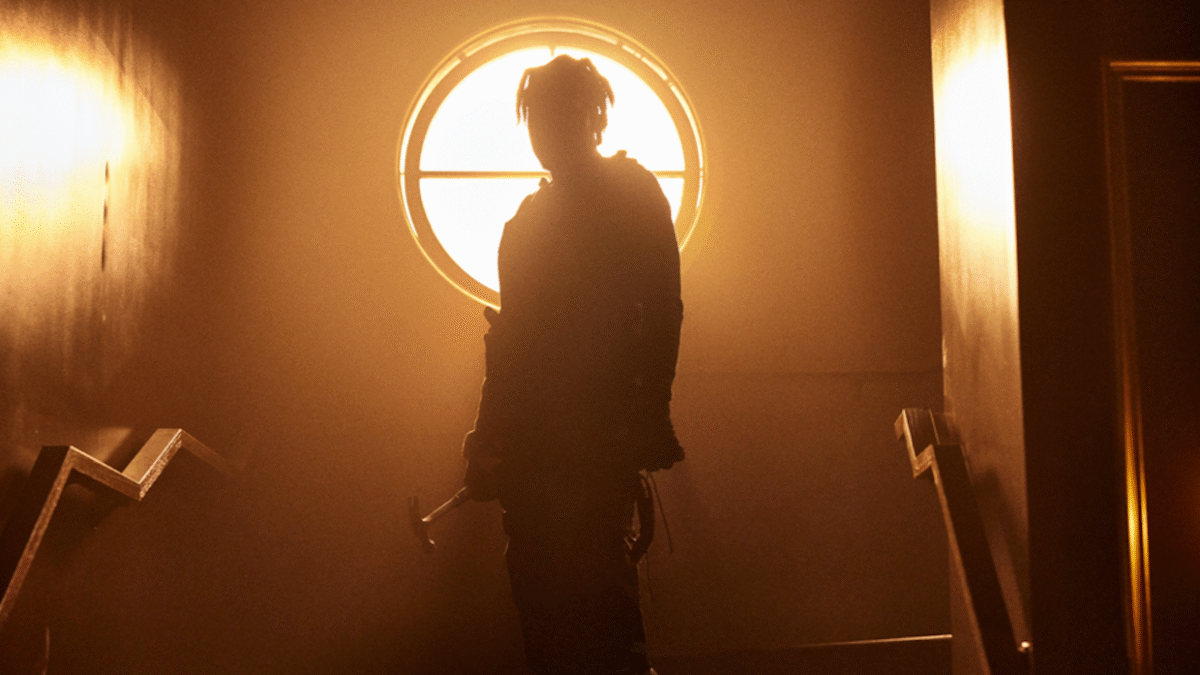
RZA Doles Out One Spoon of ChocolateFilmmaker Magazine
Jun 7, 2026
One Spoon of Chocolate
RZA, born Robert Diggs, is most well-known as The Abbot, or leader, of the Wu-Tang Clan. Beyond his musical pursuits, however, he has been building an eclectic body of work in cinema for going on three decades. RZA’s cinematic beginnings can be traced to Jim Jarmusch’s elegant, and elegiac, urban samurai riff Ghost Dog: The Way of the Samurai (1999), for which he composed the score and played a minor role. He then appeared as himself in a trio of early aughts comedies: Coffee and Cigarettes (2003), which re-teamed him with Jarmusch; Scary Movie 3 (2003) alongside fellow Wu-Tang members Method Man, U-God, and Raekwon; and Be Cool (2005). RZA honed his acting chops with more substantial, and more dramatic, supporting roles in films like Derailed (2005), American Gangster (2007), and Funny People (2009) before getting his chance to direct a feature film with 2012’s The Man with the Iron Fists; he also starred, wrote the screenplay, and composed the score.
Since then, RZA has directed three other feature films: the hip-hop drama Love Beats Rhymes (2017), the New Orleans–set crime drama Cut Throat City (2020), and this year’s offbeat exploitation homage One Spoon of Chocolate, which is the first film since The Man with the Iron Fists to also be written by RZA. On the occasion of One Spoon of Chocolate opening in theaters, I spoke with RZA about his cinematic inspirations, the importance of movie theaters, and, of course, his music. —Justin LaLiberty
Filmmaker: Your music has such a cinematic component to it. When did you decide that you wanted to make movies? Was that something you had planned all along, or did it come to you later on?
RZA: It came to me later on. I tried to make audio movies. I wanted people to put the CD in or put the needle on the vinyl and be took into a world, but the idea of directing a movie wasn’t in me. In fact, the GZA seemed like he was going to be a director. He’s directed some of the videos, “4th Chamber,” things of that nature. Talking to John Woo helped me. Meeting Jim Jarmusch helped me. After meeting Quentin Tarantino, that is when the brain meld happened. That’s when I realized that the wavelength; he’s on is the wavelength I’m on. I’m just doing this.
I just asked him. I was like, “Yo, bro, let me shadow you. Actually, I want to learn how to do this. I think this is one of my callings.” He said it’d be his honor if I could make it to China, because that’s where they were shooting Kill Bill at, in Beijing. Guess who was in Beijing? I packed my bags and went out there, and spent three weeks out there, and learned a lot. Then, of course, they went to Mexico. Guess who was in Mexico? I didn’t go to Japan because that was a short trip. I also had to get back home to my fiancée.
Filmmaker: Prior to directing, you did some soundtrack work, including on Kill Bill, but also Ghost Dog, which is some of my favorite score work ever. What was it like starting that journey there? Did it help familiarize you with the process of moviemaking, or was that just part of your music-making process?
RZA: The composing process educated me on the post-production process. On Ghost Dog, I was a bad composer to hire. I showed up at one in the morning and shit. Everybody’s finished work already, bro. They don’t work like that. It’s nine-to-five, union shit, bro. Jim would be editing, but he was my buddy, so he would wait for me, but everybody else is gone.
At the time, I was just looking at the movie on one TV and making the music. I didn’t have the setup. I didn’t understand what the setup would even be, you understand? It came out great, and it got me to understand a little more. When I got to Kill Bill, the rule was I have to stay in the editing room. My equipment was in the editing room. I had to come there every day. I’m talking about post-production on that movie was, I want to say, 20 weeks at least. Yes, because assembly is 10 weeks. Post-production might have been 30 weeks on that movie, bro. Where am I at? I’m going there. I was there at nine a.m.
Be real with you, they was letting me come at lunch and shit. I’ll stay until midnight, though, because I was nocturnal during those years. I learned the post-production process. I met Sally Menke, one of the greatest editors who edited all those folks’ films. I met Joe D’Augustine, who is now the editor of my film. The editor who edited The Man with the Iron Fists, he edited Cut Throat City, and he edited this film.
I met him in that editing room as one of the assistants back then. That’s the beauty of getting into this world, getting with people, growing with them, learning with them. I really went through a real process of a different type of college. My college was Quentin Tarantino’s house, his movies, and his crew.
Filmmaker: You’ve made these four feature films: The Man with the Iron Fists is a kung fu movie, Love Beats Rhymes is more of a drama, Cut Throat City is a crime movie, and then One Spoon of Chocolate is something very different from all of those. I’m curious about your approach to genre. Are you looking to make a bunch of different movies, or are you just making what feels true to you?
RZA: A little bit of both, Justin. For me, I think that when I did my albums, 36 Chambers, Tical, Only Built 4 Cuban Linx, Liquid Swords, Return to the 36 Chambers, Iron Man, up to Wu-Tang Forever, I think each one of them are different as well. Cuban Linx is a mafia, so I need my mafia movie to happen one day. The Gravediggaz is horror. Of course, this movie gives you a spoonful of it, but I need my horror film. Tical was “All I Need.” That was the song that was pop with the girls.
Love Beats Rhymes was that for me. It was my attempt to just tell a story and have a female protagonist. I do try to keep it different every time. The difference, though, I want to point out to you between my second and third film is that I didn’t write those. As a director, of course, I got to give directors’ notes, and I got to put my shit in it, but it wasn’t my idea from beginning to end. For The Man with the Iron Fists, it was. Of course, Eli Roth did help me. Then on One Spoon of Chocolate, no help, no nothing. Me writing my bars. I feel really good about it.
I think it shows in the end product. I think in the end product, it shows that there was a little bit of unfiltering going on. It was like letting it be, letting it breathe. I’m happy that I was able to do that, able to write it that way, and able to shoot it that way.
Filmmaker: I know the Bobby Digital movie was circulating for a little bit. Was there anything else in the middle of The Man with the Iron Fists to One Spoon of Chocolate that didn’t get realized that you were trying to make?
RZA: Oh, yes. We got one that was called Blood Brothers that was my mafia movie that I got paid a lot of money to write. They paid me to write it. I wrote it, and I was going to direct it. It kept falling out of…they call it funding. At one point, I was at WME, had the movie, and maybe Michael B. Jordan was going to be the guy. Then we went to CAA, and he changed over. Then when I was doing Cut Throat City, I thought I had my buddy Paul, who wrote Cut Throat City, to maybe take my script and clean it up.
Maybe I made a mistake somewhere, and maybe we get Shameik to be the character. That’s still a possibility. It’s a mob film that takes place over three generations, but there’s an illegitimate child involved with it. How does he fit into the family?
Filmmaker: You briefly touched on financing. That’s something I’m very curious about, especially with a film like One Spoon of Chocolate. It feels very homegrown. What was your journey like with trying to get this movie made?
RZA: I talked to my wife. Straight up, bro. She was with it. She had to leverage some assets, talked to our team. We got a great team of people around us who have been around for over 20 years. They protect us and give us good advice. They know that she’s the boss. She was in. When she was in, it was like, “Okay, she’s in. Let’s go.” She helped produce this. She flew down to Atlanta, got her office, and she was running back and forth with the bank and the finance team and all that. She was dealing with that shit, and we got it done.
Filmmaker: How long was this production?
RZA: We shot for 30 days. Our prep time was short, though. We only did, let’s call it a union prep of, about eight weeks. That’s short for me. I’m more of a 12 week guy, but based on the economics, we got lucky, to be honest. The eight weeks worked out for us because we found the stage. I didn’t think of everything. I didn’t know if I was going to go to a lot of locations or build. It made sense to build.
Since I already did my TV show, Wu-Tang: An American Saga, I understood the choices. I’ll just tell you, Justin, every time I do something, I’m taking the best of that knowledge and moving it to the next piece. You’re supposed to do that. That’s what a man has to do. He has to evolve. I understand location versus stage. By knowing that, I was able to only need eight weeks of prep. 30 days of shooting, which is not a lot, but for an independent, it’s a substantial amount. I think for what we captured, it looks like more than the 30 days it took.
Filmmaker: Can you talk about the inspirations for this film? I know it’s set in Ohio, where you lived for a part of your life. It’s a pretty intense movie. Is there anything in here that could be autobiographical?
RZA: Yes, of course. Look, the character name is Unique. Ason Unique. That’s the ODB. His brother’s name is Ramsey. My love for my family is in there. My love for “what if he was able to be a hero” is in there. Then in the reality of things, yes, me and him, we got chased by guys in pickup trucks with bats in Staten Island in the ’80s. That’s Bensonhurst and Bay Ridge in the late ’80s for you. That’s when we’re still learning. New York is still learning. It’s still evolving because now I go to those same neighborhoods and the drinks are on the house and shit.
Also, now some of those same people helped my organization grow. We got guys from Staten Island that work with Wu-Tang. They wasn’t working with Wu-Tang; they’d be working with John Gotti and shit. That’s Staten Island. Then there’s certain things I read. I’ve read some articles about some of these insidious things that take place in the medical world. There’s some jokes that I exaggerated because there is a big business in Ohio in the medical world, but I changed it up a little bit to make it more insidious for our film.
It’s all about, as an artist, being able to play with reality, being able to fictionalize things, being able to be inspired by reality, but use all those elements to give to your characters, so their journey becomes their journey. In the punchline of it, though, I think my character’s journey is that no matter what happens, you got to be prepared. You have to prepare yourself. That was the difference between the hero and the villain: preparation.
Filmmaker: I really admire the way the film’s intensity comes from the violence in it, which isn’t stylized to the point. It’s not shootouts. It’s really blunt physical contact, which makes sense with your affection for kung fu movies. Was that something that grew out of the story, or was that an intentional decision just in terms of how you wanted the visceral nature of the film to be?
RZA: A little bit of both. The intentional part was I love the idea that a gun will not be used. Eventually, it will be used, but I love the idea, “Let’s remove the guns for a moment. Let’s remove the time.” I removed the time, then removed the guns until the audience make a decision on what time it is. The audience can say, “Oh, that happened in the ’80s or the ’70s.” Or, “Wow, that was yesterday.” They can make that decision. The audience also can make a decision about, “Wait, nobody has gotten a gun? Oh, wait a minute.” No, it’s guns all around, motherfucker.
It’s a reason why the villains don’t use guns. They have to protect the product. There’s logic to it. Then in front of it, as a kung fu movie lover, I used to hate the kung fu flicks that had guns in them. It was one in particular film that I love that I forgot to mention to my team. They said, “Name some of the 10 films that inspired you.” There’s a film called Duel. Actually, it was called The Duel, but then one of the American releases was Duel of the Iron Fists, actually, which was David Chiang and Ti Lung. You may know Ti Lung later from A Better Tomorrow with John Woo. David Chiang and Ti Lung, these two big Shaw Brothers heroes at the time, do this movie.
Then the whole movie, all they have is knives. All the gangsters, their knife is their gun. It’s 75 minutes of bloody knife fights. Then at the very fucking end, the police army comes in, and they got guns, and they shoot motherfuckers down. I was like, “Okay, that’s crazy.” I never forgot that. I never forgot Bruce Lee, also in The Chinese Connection, aka Fists of Fury. He’s fighting through the whole movie. You don’t see the guns until the end, when he has to come out and face the fucking military. As a cinephile, those elements found their way into my film.
Filmmaker: You mention the audience: I was fortunate enough to see the film at Tribeca last year. It plays great with an audience. It is getting a theatrical release, which I think is very exciting. Can you talk about what that means to you? I would imagine you really want people to see this in a theater.
RZA: This film was made for theaters. Everything else is ancillary. I actually hope this is not a flaw in current times or a weakness for my art, but I make movies for movie theaters. That’s what I make them for. Where they end up after that, I’m cool with, but I make them to start in movie theaters. That’s why I make them. If I make TV shows, like I did a TV show, and I’m writing another TV show, I make that for TV. There’s a rhythm to that. There’s a reason for that. There’s a meaning for the fucking lens to me for that.
If I’m using anamorphic lenses from the ’50s, and I’m bringing them to my set, and I got three cameras set up, and I got a fucking wide shot of a guy running through a field, or a drone shot of a guy being chased through a junkyard with all these…I got 1,000 cars, I want you to see that on the big screen or you’re not fucking seeing what I’m doing. Then the sound design. We had Greg [Hedgepath]… Oh, man, Greg going to get mad.
I just call him Greg now. Once you get friends with people, you fucking lose their last names. Greg and Bobbi [Banks], who did all the sounds for Straight Outta Compton, 2 Fast 2 Furious, and so many big movies. Queen & Slim. They came. They did one of our other movies. They did Love Beats Rhymes, and so they agreed to come do another movie with me. They put a lot of work into the sound design on this movie, bro, for the movie theater. When they did it, we had a stage. That’s the speakers we tested it on.
I make movies for the movie theaters. Honestly, I got to put hope on this, because who knows? I hope that I’m allowed to continue to do that. I hope that every time I make something for the movie theater, that it goes to a movie theater. Even if Netflix, “Hey, RZA, come make some movies for us.” I’m going to try to stick in my contract that you got to put my movie in the movie theater. I’m a cinema director.
Publisher: Source link


Netflix’s 10/10 Thriller Series Returns After 3 Year Absence With Explosive New Trailer
Over the last five years, Netflix has expanded heavily into non-English content, with international series taking an even bigger focus for the streaming giant. One of the biggest driving forces in that effort is the French thriller series Lupin, led…
Sep 15, 2026
Original ‘Yellowstone’ Dutton Favorite Officially Confirms ‘Marshals’ Return Interest
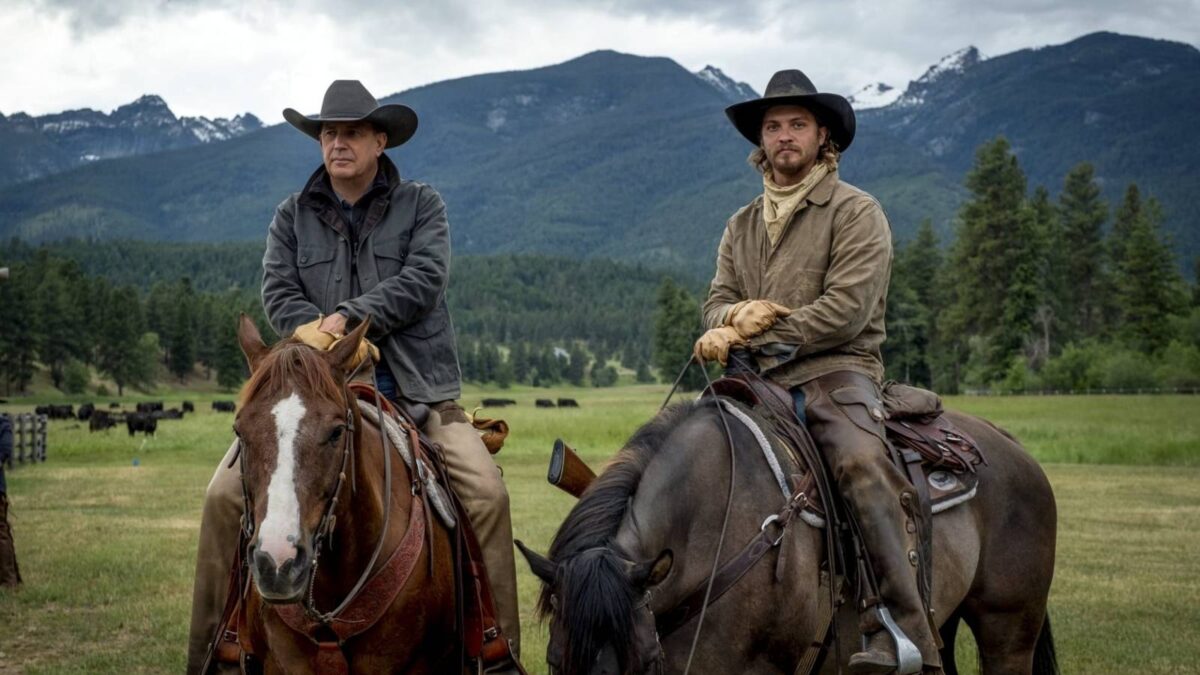
Yellowstone jump-started a generation-spanning story that has so far spawned four spin-offs that are all interconnected by the Dutton bloodline. While creator Taylor Sheridan has since branched outside that saga with Tulsa King, Landman, Mayor of Kingstown, The Madison, and…
Sep 14, 2026
Netflix Officially Cancels Its 2-Part Taylor Sheridan Replacement Western
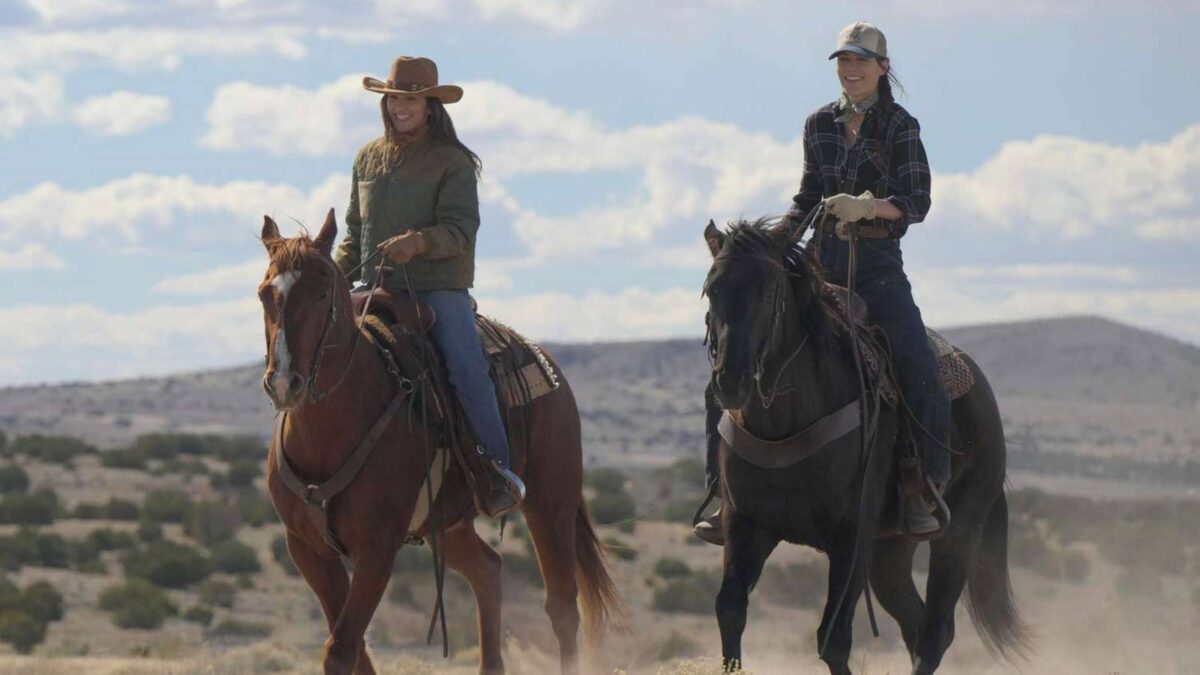
Netflix Published Sep 12, 2026, 10:30 AM EDT Omar is an experienced editor and writer who sees life and storytelling as one and the same — there’s always a story to tell. He’s helped shape features, headlines, and coverage across movies,…
Sep 13, 2026
Jason Momoa’s Epic Historical Action Thriller Officially Getting New Release
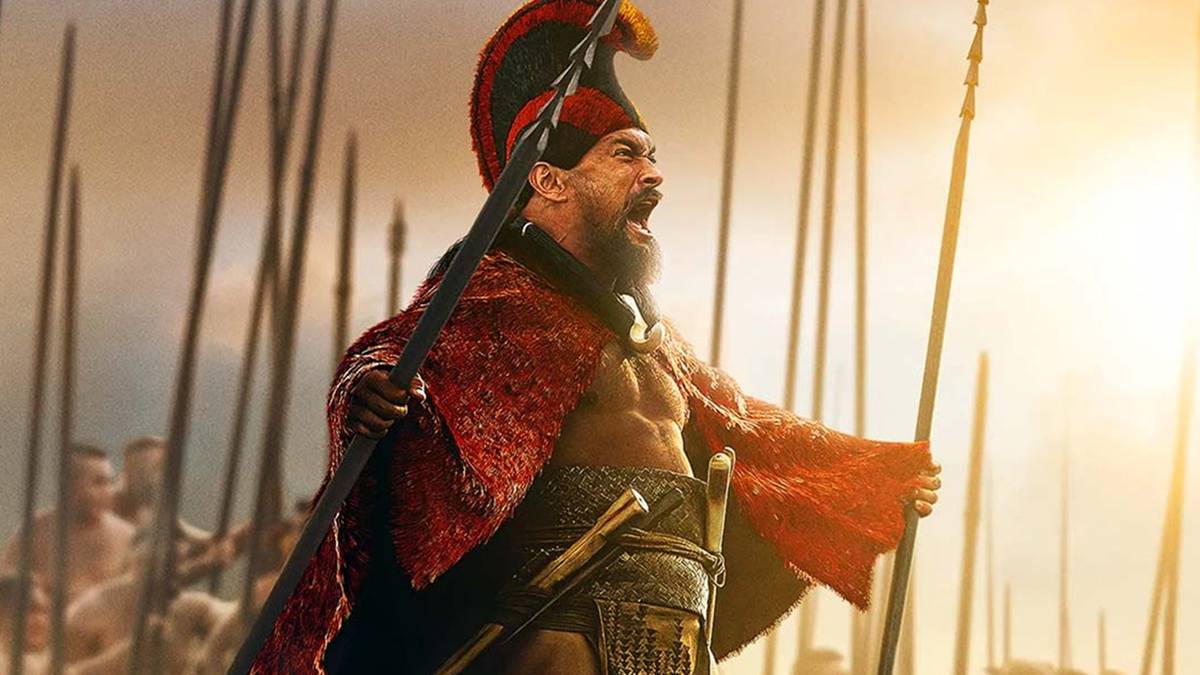
Apple TV has established itself as a rising force in streaming entertainment. From Silo and Dark Matter to Pluribus and Ted Lasso, there is something for everyone, and not only that, but a ton of huge star power at the…
Sep 12, 2026