Shudder’s Irish Folk Horror Doesn’t Break Ground or Terrify, but It Offers Something Far More Important
Apr 18, 2025
Motherhood, generational trauma, family, mental illness — these are all the ideas you can often find at the center of an Irish horror movie. In Irish horror, the fear tends to stick close to home, with folklore integrated to create an analogy for very real, sometimes even mundane, ideas at the movie’s core. The criminally underrated Irish-language movie, You Are Not My Mother by Kate Dolan, executes these concepts with chilling restraint, turning a mother-daughter relationship into the grounds for a hysterical monster movie.
Aislinn Clarke’s Fréwaka, Shudder’s latest release for its “Halfway to Halloween” program, follows the same basic ideas as Dolan’s 2020 film. Its title is the phonetic spelling of “fréamhacha,” the Irish word for “roots.” It’s no coincidence that motherhood and heritage seem to be the perfect thematic palette for female-directed Irish horror movies. Ireland’s past of Magdalene laundries, mother and baby homes, the pressure on women to have as many as children as possible, and the illegal selling of children — all transgressions, crimes, and issues stemming from the Catholic Church — are constantly on the mind when watching these films, and Clarke’s is no different.
‘Fréwaka’s Strength Lies More in Its Themes Than Its Horror
Following a Dublin woman whose estranged mother has just died in rather horrific circumstances, she travels to a small town in rural Ireland to look after an older paranoid woman with whom she has more in common than she could ever imagine. As the movie unfolds, Clarke’s metaphors and marriage of Irish folklore with social realism come to the forefront, opening up some painful but important parallels to many Irish women’s experiences. In terms of theme and idea, it’s both ambitious and thoughtful.
However, when it comes to analyzing Fréwaka as a “horror movie,” I’m not as impressed. Overall, as an Irish woman myself, I was incredibly moved by how Clarke packs in decades—or even centuries—of female-centered pain, in the Irish language, to boot. But looking at the end product as a whole, I found its haunted-house structure overly familiar and its lack of a palpable atmosphere a major flaw. In short, Clarke’s intention outweighs the execution, but that isn’t to say there isn’t so much in here to be in awe of. If anything, it’s a horror movie that I may not have enjoyed every second of watching, but I am still incredibly grateful that it exists.
‘Frewaka’s Atmosphere Doesn’t Live Up to Its Potential
Despite not being a particularly “scary” film, Fréwaka does contain some imagery that is hard to shake. The film opens on a 1973 wedding during which the ill-at-ease bride, Peig, suddenly disappears. Cutting to the current day, a mentally ill woman dances and sings through her dilapidated Dublin apartment, right before she hangs herself. Clarke captures every uncomfortable detail of a life being lost, from the very last jittering body movement to the bladder emptying itself. Clarke holds the camera in the same position, from which we see the weeks pass before someone finds her, her body falling from the ground after so much time has put too much pressure on the rope.
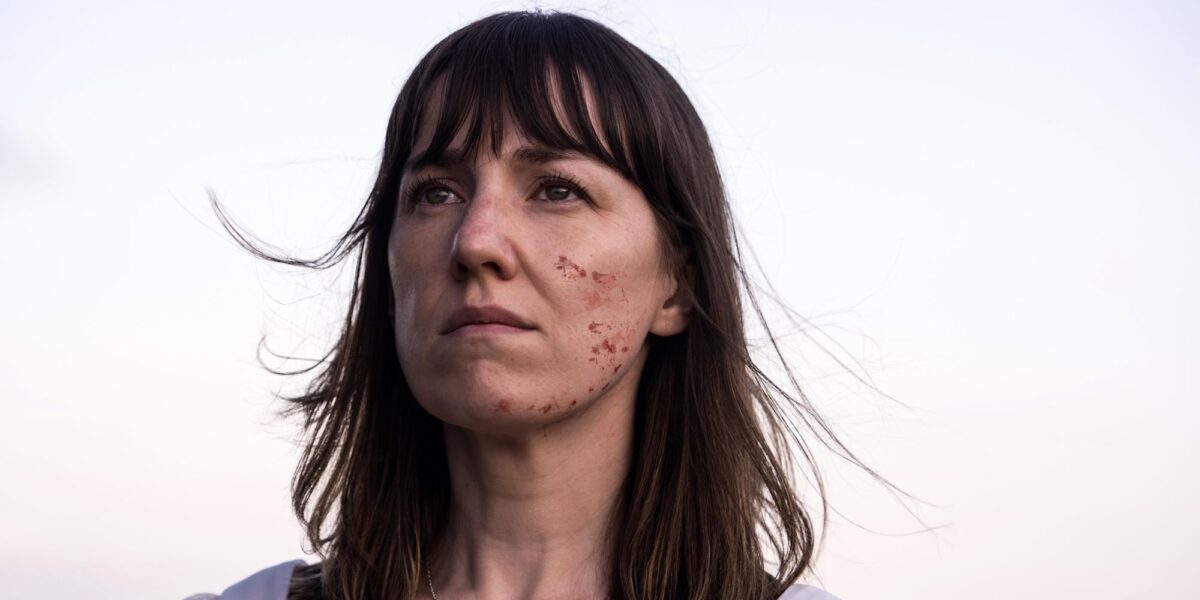
The woman’s daughter, Shubhán “Shoo” (Clare Monnelly), is disengaged from her family tragedy, placing the burden of clearing out the apartment on her more effusive pregnant partner when Shoo gets placement as a home carer. The woman she is looking after is Peig (Bríd Ní Neachtain), the ill-fated bride from the movie’s beginning, now in her 70s. Peig is known as the town joke, a paranoid woman who keeps people out of her house by splashing them with her urine and having exactly seven of a certain item lined up on window sills and doorframes. While Shoo dismisses this as symptoms of OCD, what does get her attention is Peig constantly referring to a presence as “they” when warning Shoo of impending danger: “They’re always listening.”
Related
‘Dead Mail’ Review: Horror’s Most Exciting Directing Duo Deliver a First-Class Crime Screamer for Shudder
The Post Office may lose your mail, but they’ll find your serial killers.
From there, Fréwaka falls into fairly predictable tropes for a slow-burn folk haunted house story. The longer Shoo stays, the looser her grasp on reality is. A foreboding red door to the basement is exactly what it looks like — a portal to otherworldly danger. The paranormal parameters of the film aren’t anything groundbreaking, and none of the horror imagery feels as affecting as the film’s early suicide scene. Slow-burn horror stories like these always tend to lean more on tone and atmosphere than plot, but Fréwaka doesn’t have that sense of bone-chilling dread that usually accompanies these character-focused narratives. Throughout its runtime, several scenes overstay their welcome, with repeated similar shots of a dazed Shoo walking down the halls of the house.
Clarke has plenty of tools at her disposal, including a stunning, large Irish country house with walls that bleed history and character. And while claustrophobia is a great tool to employ for character-focused horror, I wanted more of the house, with its seemingly endless number of rooms and tight hallways constantly leading Shoo to new — and sinister — revelations. Clarke doesn’t skimp on the interiority and introspection of her characters, but she frames the characters so tightly that the inherent terror of their surroundings gets ignored.
Aislinn Clarke Takes on Ireland’s Shameful Past
Image Via Shudder
Fréwaka’s feels most refined when Clarke’s script engages with Ireland’s history and its people’s lineage of pain. Punishment is a central term in one of Shoo and Peig’s conversations, as Shoo bears the scars of her mother burning her when she made a mistake during their prayers. Even though Peig explicitly denies being taken to a mother and baby home the night of her wedding, the elusive “they” Peig keeps referring to is spoken in the Big Brother-esque way of the Catholic Church’s presence in 20th-century Ireland. Here is when the movie’s title becomes more telling than ever. With the misplacement of so many Irish people due to the forced taking of babies from their unmarried mothers, illegal adoptions, and the sealing of these documents by the Church and Government, Clarke sets out to interrogate the darker implications of withholding someone’s lineage from them.
Fréwaka’s strengths lie in Clarke’s thematic execution and the devotion with which she sets out to tell a story of female suffering. The recurring theme of roots and how connections can lie beneath the surface becomes more central as Shoo and Peig become closer. Even though Fréwaka is tightly focused on these two women, Clarke is able to take their character’s history and load it with centuries of cultural context, without it ever feeling too trite or forced. There’s no eye-winking or spelling out of the film’s deeper meaning — apart from a monologue that is a quick oral history of Ireland’s shame, which is certainly helpful to non-Irish viewers.
Following the more straightforward account of the Magdalene Laundries, last year’s Small Things Like These, Clarke crafts an affecting and more personal approach to her country’s history of shame. It may be lost on non-Irish viewers, but Clarke takes care to also pour a great deal of affection for the small things that makes up this county — a quick shot of a young girl in a communion dress counting her money, a fairy tree adorned with candles and ribbons, and Shoo and her partner mocking the glow-in-the-light virgin mary that was a staple of 20th century Irish homes. Even though Clarke is taking the very real experiences of Irish life and turning them into a paranormal nightmare of suffering and trauma, it never plays as a full condemnation of the country itself.
Fréwaka may not achieve everything it sets out to, but it’s still a moving horror story packed with thought and intention — and a much-needed reminder of the lyrical beauty of the Irish language. The two lead performances from Clare Monnelly and Bríd Ní Neachtain are also a major highlight, as it’s their bond and shared trauma that are the metaphorical and literal root of the story. Monnelly is barely off the screen, and her journey from skepticism and emotional isolation to vulnerability and faith makes up for the film’s weaker plot points. You might need to be Irish to fully appreciate what Clarke is doing here, but maybe that’s the whole point.
Fréwaka starts streaming on Shudder on April 18.
Fréwaka
Frewaka is a slow-burn folk horror that may not excel in every aspect, but it does an effective job of using social realism to tell a haunting story.
Release Date
March 20, 2025
Runtime
103 minutes
Director
Aislinn Clarke
Writers
Aislinn Clarke
Pros & Cons
Frewaka’s integration of social commentary into its script is done with subtlety and tact.
The performances from Clare Monnelly and Bríd Ní Neachtain make the story more compelling.
The movie’s use of the Irish-language makes it feel more committed to its ideas.
The movie’s atmosphere lacks a palpable sense of dread or terror.
Clarke’s direction can feel too tight and claustrophobic at times.
Publisher: Source link


New ‘Wheel of Time’ Animated and Video Game Adaptations Are in the Works
Amazon might be finished with The Wheel of Time, but we haven't seen the end of the story when it comes to adaptations of Robert Jordan's bestselling high fantasy saga. Fans were left blindsided when Amazon abruptly pulled the plug…
Mar 22, 2026
‘Off Campus’ Teaser and Release Date Revealed by Prime Video
No one expected a love story between rival hockey players to become one of the most talked-about TV shows of 2025, but there's a lot more where Heated Rivalry came from, as a new teaser for Prime Video's foray into…
Mar 21, 2026
Sarah Michelle Gellar Urges ‘Buffy’ Fans to Avoid Reading Leaked Reboot Scripts
Buffy the Vampire Slayer fans have had a rough few days after Hulu officially pulled the plug on a revival of the series, which would have brought star Sarah Michelle Gellar back as the titular heroine. Described as a continuation…
Mar 20, 2026
Born Again’ Stars Explain Why Bullseye Is So Dangerous in Season 2 [Exclusive]
Along with Charlie Cox's Matt Murdock and Vincent D'Ofnorio's Wilson Fisk, Daredevil: Born Again Season 1 brought back one of The Man Without Fear's most notorious villains: Wilson Bethel's Benjamin Poindexter, better known as Bullseye. Not only was he back…
Mar 19, 2026