Steel Blue World: DP Dan Laustsen on “Frankenstein”
Nov 23, 2025
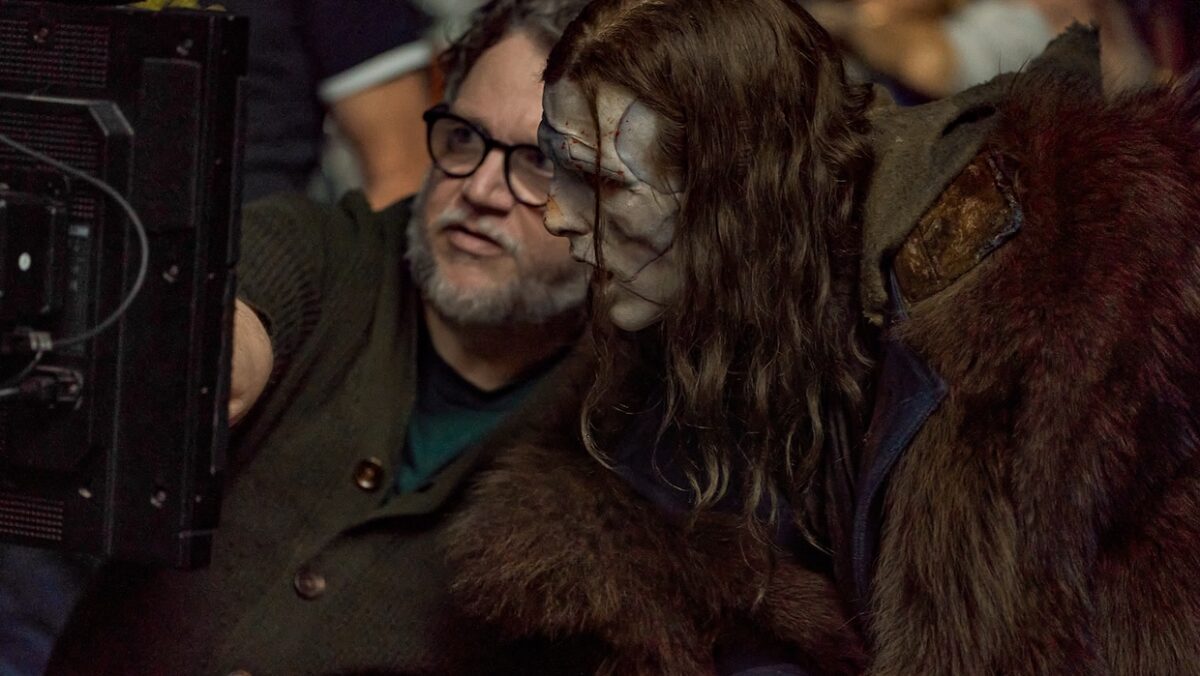
Guillermo del Toro and Jacob Elordi on the set of Frankenstein (Photo by Ken Woroner)
Though Guillermo del Toro’s 1997 American studio debut Mimic was a notoriously unpleasant experience, the silver lining of that giant cockroach creature feature was the filmmaker crossing paths with Danish cinematographer Dan Laustsen. It took 18 years for them to work together again, but they’ve made up for lost time since by teaming on Crimson Peak, The Shape of Water and Nightmare Alley—the latter two brining Laustsen Oscar nominations. Their latest collaboration fulfills del Toro’s lifelong ambition to mount a version of Mary Shelley’s Gothic horror masterpiece Frankenstein, with Oscar Isaac as the titular creator and Jacob Elordi as the creature.
With Frankenstein now streaming on Netflix, Laustsen spoke to Filmmaker about the secret to shooting models and capturing nearly the entire film on a single lens.
Filmmaker: Almost twenty years passed between Mimic and Crimson Peak. Did you keep in touch with Guillermo during that time?
Laustsen: We spoke a little bit. He asked me a couple of times to do something with him after Mimic, but the schedule was always off. I was in Europe, he was in the United States—it just never worked out, then we didn’t talk for a while. Then one day he sent me an email. I was doing a movie in Prague at the time, we had a two-week hiatus and Guillermo was in Toronto. He said, “Come over and meet me.” So, I did, and it was like coming home to your brother. We just clicked again right away.
Filmmaker: Even back on Mimic, Guillermo was already talking about Frankenstein.
Laustsen: Yeah, we talked about the future, and he said Frankenstein was his dream project. Then after Nightmare Alley, he said, “I think we’re going to Frankenstein next.” So, I read [Mary Shelley’s] book and really fell in love with it.
Filmmaker: After the Arctic framing device that opens the film, the story is split into two sections—Victor Frankenstein’s story, then the Creature’s tale. How did you differentiate those points of view visually?
Laustsen: The first time you see the Creature come to life is when he comes up to Frankenstein’s bedroom and that is the first time he sees daylight. So, we lit him very romantically, even though it was a father/son [dynamic], as they stand there in the morning sun. We tried to do that in the beginning when they still have a very good relationship as father and son. When he’s coming down to the lab and he’s shaving him, that’s another very warm sequence where they’re sitting in sunshine. Then, when Frankenstein starts to get more and more evil to the Creature and we’re more in this holding cell, the light is getting more on the cold side and into this Steel Blue world. We didn’t want to do [anything drastic], like “This part is going to be blue, and this part is going to be red.” It’s all still the same story and we wanted to use the same wide-angle shots that we like to do throughout. When you’re working with wide angle [lenses], you’re in there with the actors. You’re not standing far away with a long lens. It feels more like you’re a part of the movie.
Filmmaker: Let’s get into those wide lenses. You shot 90 percent of the film on the Leitz Thalia 24mm. Did you anticipate at the beginning of photography that it would be that much?
Laustsen: I was a little bit surprised. This is the first film we shot [almost entirely] on the Alexa 65 all the way through. On Nightmare Alley we shot Alexa 65 and the LF. We jumped between those two camera bodies and shot everything on the Arri Signature Primes. When we did Frankenstein, I spoke to my Steadicam operator James Frater about whether he could really carry this heavy Alexa 65 and he said, “Of course.” So, we decided to go Alexa 65 all the way through this time. I already knew the 24mm Thalia was a really beautiful lens. There’s no distortion. You can carry a close-up even when you’re starting on a big, wide shot. It’s a very dynamic lens. When we started to shoot, we fell in love with that lens.
Filmmaker: Did using that lens mean you were largely single camera? With the Alexa 65’s field of view and a lens that wide, I imagine it would be hard to get two usable shots.
Laustsen: We were only shooting single camera. We also didn’t shoot one single shot where a camera operator was looking into an eyepiece. We shot everything on the crane, jib arm or Steadicam. The camera is moving a lot. Most of the time we see 280 degrees or something like that. The only thing we’re not seeing in the shot is where the crane is. So, all the light is outside the windows. We don’t have any lights in the set. The windows themselves work like gobos, so people are walking in and out of light, even when it’s single source lights. We’re not using fill light. We may use some smoke or atmosphere to open up the shadows, but we really like single source lighting and deep shadows.
Filmmaker: So, if you come in for a close-up, you’re not augmenting the lighting with units on the ground?
Laustsen: A lot of the time, even when the shot ends up tighter, [the take] is always starting wider [and then we push in]. We’re starting with a full body wide shot or maybe a medium, then moving in for a close-up. So, I’m never bringing lights into the set [for tighter coverage]. Maybe I have a little handheld bounce, but it’s not like we are changing the lighting setups for the close-ups, because they usually aren’t starting as close-ups. Guillermo is always on the headsets with the operator and grips when we are shooting, so the camera is floating a little bit because we don’t know exactly where we are stopping [because Guillermo might adjust it on the fly. That’s the reason you cannot put any lights in the shot because Guillermo will say, “Go a little bit more left” and we can’t have a light sitting there. So, I try to light so it looks great in the master and pretty good in the closeup as well.
Filmmaker: Let’s talk about this framing device in the Arctic. Production built that entire ship in a parking lot in Toronto. Most of the day exteriors are overcast, and you don’t feel any direct sunlight. How did you control the light for an area that size?
Laustsen: For the opening shot where the camera is pushing in on the captain as he’s standing in the foreground and you see the ship in the background, the sun is spraying behind him. That light that’s behind him is actually a 10K that’s standing there [in the shot] that was painted out by visual effects because we wanted to have the sunshine breaking through in that shot. I think that’s the only scene where we have direct sun. The rest of the movie is overcast and that means a lot of negative fill with big overheads flying in to get rid of the sunshine.
Filmmaker: When you get into the night exteriors at the ship, you bring in this blue/green color you and Guillermo seem to love, which is juxtaposed against the warmth of the torches the crew carries.
Laustsen: Yeah, that’s Steel Blue.
Filmmaker: How do you get the specific color you’re after? Is there a certain LED that provides it best or are you still using physical gels on lights?
Laustsen: On Frankenstein we used these lights called Raptors. It’s kind of like a Dino where you can spot and flood the lights. This company LRX makes them. We had tungsten lights with a Steel Blue dichroic filter that you can clip on the light. We have done that on the last couple of movies because if you have your lights 200 or 300 feet high, you cannot just put a gel on those lights, because at that height a little bit of wind just destroys the filters. Then when we are doing closer stuff, we are using LED Creamsource Vortexes and dialing in that Steel Blue, but most of it is tungsten with Steel Blue dichroic filters. That color is funny because it’s very sensitive to exposure. You have to be right on, because if you’re too overexposed it gets this weird green feeling and if you get too dark you’re getting too much blue.
Filmmaker: So, if the tungsten light would be 3200 Kelvin and you have your Steel Blue filter on, what do you put the camera’s color temp at?
Laustsen: 4200. I do that all the time. Then of course we are adding a little bit more color in our dailies, but I’m not using a LUT on set. I’m just using Arri 709, adjusting a little bit of color and crushing the blacks. That’s what I do for my dailies.
Filmmaker: Were the torches that the Artic expedition crew carry difficult to control? They have some pretty big flames.
Laustsen: I loved them. The beauty of using real torches is that when the wind changes, the light is changing too. The exposure is changing, everything is changing. Even though we have a lot of blue backlight on the ship, the torches are our key light for those scenes.
Filmmaker: You said before there was only one unit on the film, so does that mean you shot the model work as well for the exteriors of the tower where Frankenstein builds his lab?
Laustsen: Yeah, we shot all that. We want to do as much as we can for real. We want to avoid CGI when we can, but of course visual effects is helping us all the time and painting things out. I think that miniature was 1/20th [scale]. That was the only thing we didn’t shoot with the Alexa 65. We shot that on a Red with Signature Primes with everything between 72 and 125 frames. You have to shoot at least a T11 to get the depth of field right because if you’re shooting a model at (our normal shooting stop of) T4 the depth of field just looks wrong. So, you need a lot of lights. We had this whole team from the UK that had done a lot of miniature work. When you have the lighting and T-stop right and you’re shooting at high speed, it’s actually pretty straightforward.
Publisher: Source link




Wuthering Heights Review | Flickreel
As far as adaptations go, I’ve never viewed any source material as sacred, including The Bible. While a faithful adaptation is always welcome, I’m open to a filmmaker leaving their signature on a classic story, especially one that’s been told…
Mar 17, 2026
Amy Adams Sinks In Vapid, Misguided Alcoholism Drama By ‘Pieces of a Woman’ Director [Berlin]
For a solid decade, starting in the late 2000s with Disney’s charming fairytale comedy “Enchanted” all the way to Denis Villeneuve’s melancholy sci-fi “Arrival,” it was easy to trust Amy Adams, a six-time Academy Award nominee. Then, somewhere around Ron…
Mar 17, 2026
Mason Gooding & James Van Der Beek’s Bad Night Is Aggressively Dull
Ever since the Scream franchise helped put him on the map, Mason Gooding has been a great talent to watch. The genre-bending slasher Heart Eyes is still his best non-franchise role yet, but he's also branched outside of horror in…
Mar 15, 2026
A Grumpy Nick Offerman Keeps This Fish Tale Swimming Along
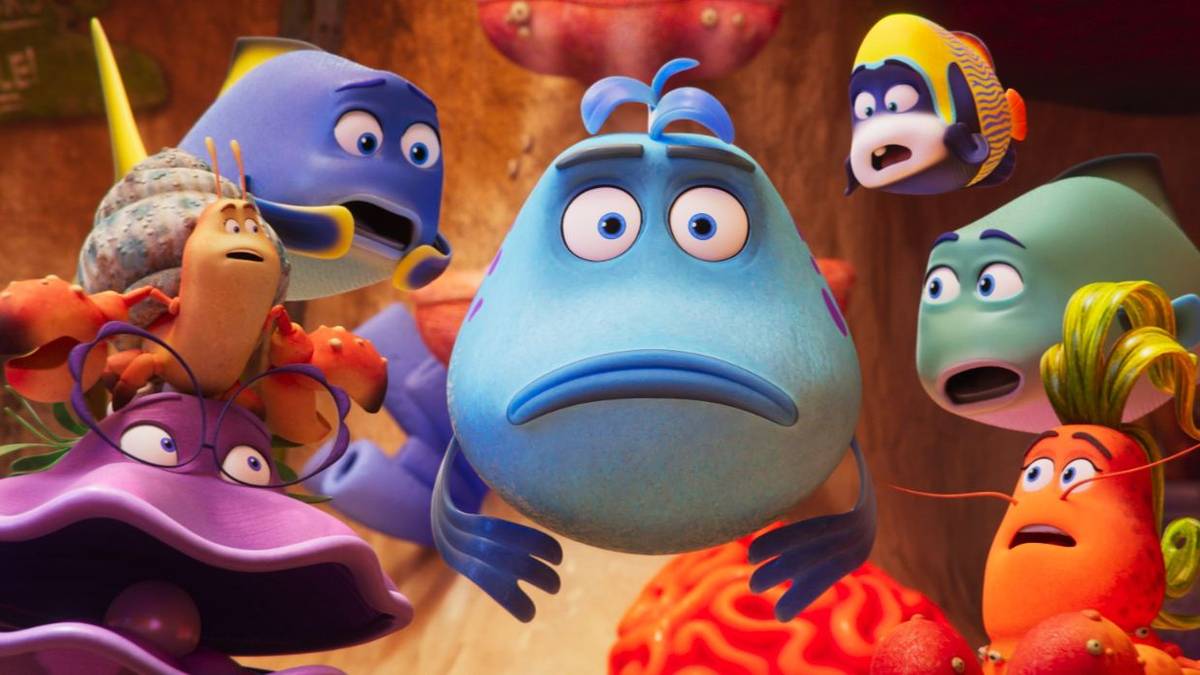
Animated fish films have been done. Finding Nemo. Shark Tale. Ponyo. So to hear about another doesn't feel like anything new. However, The Pout-Pout Fish, starring Nick Offerman as a grumpy ocean pout named Mr. Fish, is a little different.…
Mar 15, 2026