Stephen King Believes the ‘Mr. Mercedes’ Miniseries Is His Most Underrated Adaptation
Apr 7, 2025
Stephen King famously stated that he prefers seeing his stories unfold in TV shows rather than movies. That’s because there’s more room to play on the small screen. The majority of Stephen King books are bulky, so plenty of trimming is required while making a feature film. Reviews by critics also suggest that television is the best place to take the author’s works.
For example, there are over 60 Stephen King movies, yet over 40 of these have rotten scores on Rotten Tomatoes. On the other hand, 80% of Stephen King TV shows are certified fresh. It’s thus accurate to conclude that King adaptations work better when the creators remain faithful to the source material, something that’s easier to achieve on television. Among the highest ranked TV adaptations is Mr. Mercedes. With its 91% score, it’s basically flawless, yet it doesn’t get talked about that much, something that bothers the author.
‘Mr. Mercedes’ Is Stephen King’s First Attempt at Hard-Boiled Detective Fiction
Though he prefers to scare people, Stephen King has explored many other genres throughout his illustrious career. However, Mr. Mercedes was his first attempt at hard-boiled detective fiction. Published on June 3, 2014, it was the first volume in a trilogy, followed by Finders Keepers in 2015 and End of Watch in 2016. The first book was extremely well-received, winning the 2015 Edgar Award for Best Novel from the Mystery Writers of America and Goodreads Choice Awards for 2014 in the “Mystery and Thriller” category.
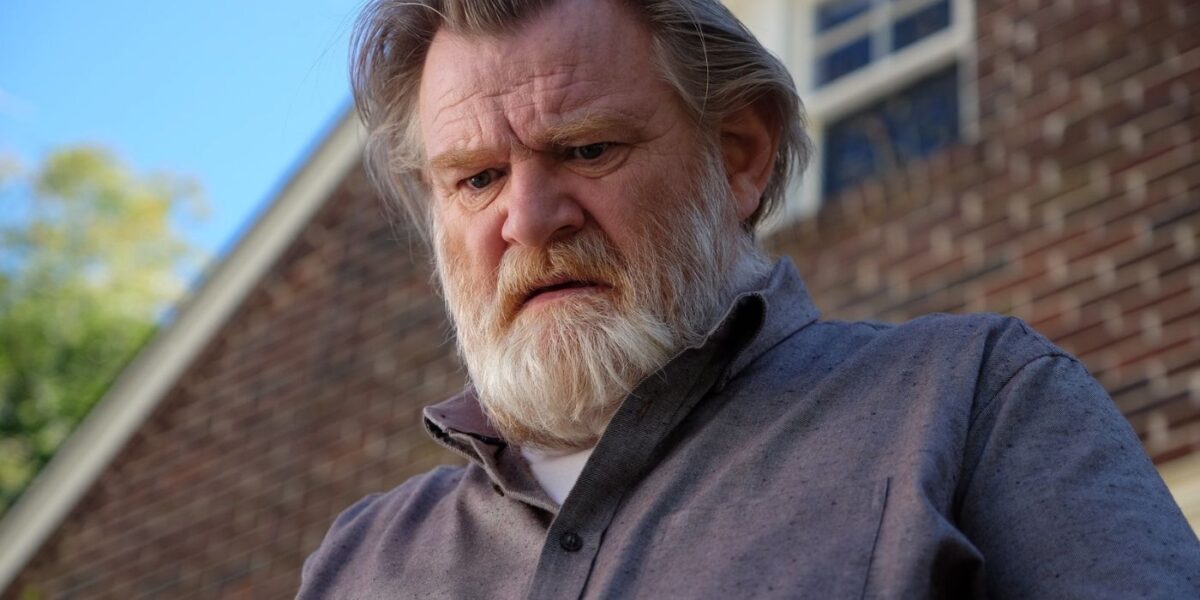
The show was in good hands. It was developed by Jack Bender, who served as a director on Lost, The Sopranos and Game of Thrones, and David E. Kelley, who understands this space quite well, having made hits like Goliath, Big Sky, and Big Little Lies. Brendan Gleeson was selected as the lead actor, starring as Bill Hodges, a retired hard-nosed detective haunted by a mass murderer known as “Mr. Mercedes,” who he failed to capture while he was still on the job.
Related
This 1985 Werewolf Movie Is Stephen King’s Funniest Adaptation
The biggest mystery of Silver Bullet is whether this werewolf movie is intentionally hilarious or simply awful.
The chaos begins when a stolen Mercedes runs through a crowd of potential employees at a job fair, killing 16 people. The event triggers a labyrinthine investigation that digs into the region’s underbelly and its myriad denizens before the culprit is identified. He is Brady Hartsfield, a psychotic but skilled IT worker with a traumatic past. The authorities fail to capture him, but even though he seems to have gotten away with murder, his actions eat him up inside. He resurfaces two years later to taunt Hodges through cryptic messages inspired by those of the Zodiac Killer.
Brady understands that there is no better moment than now, since Hodges might be out of step with the times, and if he tries to be too aggressive, he might anger a police department mired in red tape.
Bill happens to be wallowing in solitude and depression, so instead of making him feel tormented, Brady’s reappearance gives him a new purpose in life. This time, he vows to do whatever he can to capture the killer. He reinvents himself as a slightly dapper investigator rather than the down-at-the-heels lawman he once was, and gathers a motley crew of sidekicks before mounting a daring and provocative hunt for the criminal. His assistants include a tech-savvy teenager, an aggressive neighbor and a young woman with OCD.
Soon, Hodges starts closing in on Brady, and the closer he comes, the more unstable the killer becomes. By this point, the two are shown to have accumulated a mutual hatred they don’t bother to hide. Book fans know who wins. Viewers have to wait.
‘Mr. Mercedes’ Was Put on the Wrong Platform, According to Stephen King
Worlds better than other detective-led shows, and one of the finest meditations on personal versus professional ethics, Mr. Mercedes sure deserves your adulation. It premiered on Audience, a defunct pay television channel that was owned by AT&T, and, according to Stephen King, that’s where the problem began. “We brought a stadium show to a coffee shop,” the author told The New York Times, suggesting that the show would have been a hit if it had been commissioned by a more popular network or streaming service.
King had a point. Audience Network had no audience. It was rumored to have a 26 million average viewer base at the height of its popularity, but that was still low. The channel ended up shutting down only three years after the Stephen King miniseries premiered, proving it was already on the decline when this gem was placed in its library.
Related
This Underrated Stephen King Adaptation Is Semi-Autobiographical
Directed by George A. Romero, ‘The Dark Half’ is one of the best Stephen King adaptations and one that’s based on the author’s real-life experience.
However, Jack Bender feels being on Audience was a blessing since he enjoyed more carte blanche there than he could have gotten elsewhere.
“The Audience network allowed me to make the show I wanted to make, with brilliant people around me. We made a really, really good show, and they were very supportive. Unfortunately, there was no audience. That was enormously frustrating for all of us because I thought the actors at least were going to get plenty of kudos for those incredible performances. It was hidden away.”
Thankfully, after Audience folded in 2020, a deal was struck with NBC’s Peacock streaming service, allowing a migration. “The three seasons are there, and they’re pretty darn good,” King told Entertainment Weekly. “I’m so happy that Peacock is doing this. Now people are going to get a chance to see it.”
Interestingly, Mr. Mercedes still hasn’t become a sleeper hit on Peacock. It remains obscure, something that likely bothers Stephen King, given how much he enjoyed the show. A new season hasn’t been ordered either (it was never explicitly stated that the show had been canceled). But buzz can always start any time in the streaming landscape, so no one should rule out the detective drama completely.
Television Might Be the Perfect Venue for Stephen King Adaptations, But the Return Is Always Smaller
Indeed, television makes work easier for anyone looking to adapt a Stephen King adaptation. But is it really the right medium? Despite the critical acclaim, most Stephen King TV adaptations haven’t been hits. Very few people ever get to watch them. Movies, on the other hand, tend to attract plenty of eyeballs. Per the figure’s of Box Office Mojo the author’s movies have collectively grossed over $3 billion dollars globally. That’s a lot of money for studios and for King, if he has royalty deals in place.
Could it be that King diehards don’t want to sit through hours of storytelling after already reading the books? Or it could it be that they simply want something that will trigger a book-is-better argument, yet the shows don’t allow that because they are too perfect. A condensed movie with a few creative liberties always gives the buffs something to complain about, and since the shows don’t offer that, no major debates ever emerge, debates guaranteed to give a production more publicity.
Related
The Annoying Reason Steven Spielberg and Stephen King Never Collaborated
Stephen King almost made a movie with Steven Spielberg. And the reason why it didn’t happen will make you mad.
There’s hardly a doubt that the Bill Hodges novel trilogy would have fared better if it had found its way onto the big screen. After all, the 2010s were great years for crime thrillers, with movies like Gone Girl and Nightcrawler all wowing audiences and critics. Brendan Gleeson might not be a major box office draw, but King stated that he always had him in mind while writing the book, so he could still have been cast, with bigger names in supporting roles.
Even though Stephen King prefers TV shows, Hollywood needs to lean more towards movie adaptations going forward. That’s the only way we will get another classic like The Shining, Shawshank Redemption, Misery, Carrie or It. It’s highly likely that some of the stories that went to the small screen might have been award contenders and huge money makers had they been reserved for cinema. But the past cannot be changed, so here’s a plea to the industry: do what’s best for business.
Publisher: Source link



A Flame The Colour of Air – Film Threat
SLAMDANCE FILM FESTIVAL 2026 REVIEW! You will shimmer and shake, like you’re riding the snake while being wowed by the dynamite animated short A Flame The Colour of Air, written and directed by talented Canadian filmmaker Emily Pelstring. Jessica Mensch’s…
Mar 3, 2026

‘9-1-1’ Can’t Decide What It Wants To Focus On in a Lackluster Season 9
Editor's Note: The following contains spoilers for 9-1-1 Season 9, Episode 11.I was hoping that 9-1-1 would take advantage of its month-long hiatus and course-correct after its most recent episode, but while this week is certainly an improvement from last…
Mar 3, 2026
Good Luck, Have Fun, Don’t Die Review
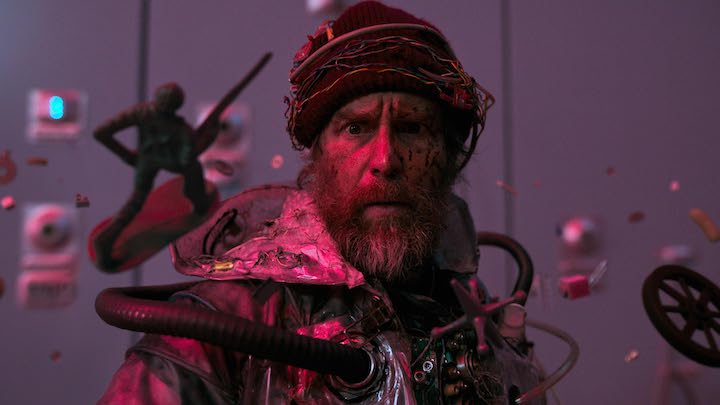
Mercy was a film about AI that AI could’ve written. Good Luck, Have Fun, Don’t Die also tackles AI, although it could only come from the mind of Gore Verbinski. As he did with his Pirates of the Caribbean trilogy…
Mar 1, 2026
Investigative Screenplay Review: Suspenseful but Weak Antagonist
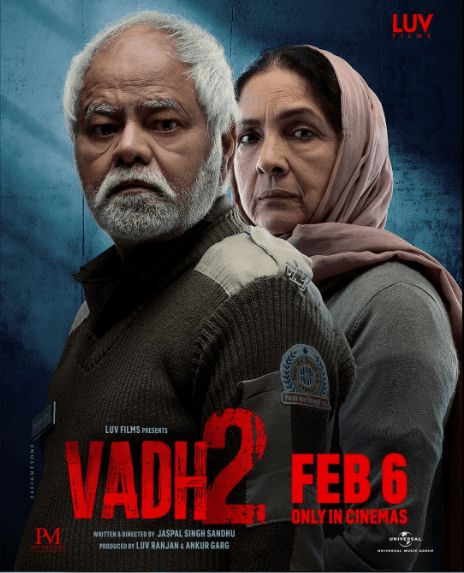
Vadh 2 (2026): When Murder Is Justified — Starring Sanjay Mishra as prison guard Shambhunath Mishra When evil tries to take control, its destruction becomes necessary. With this theme, Bollywood brings you a spiritual sequel to its 2022 crime-thriller “Vadh”.…
Mar 1, 2026