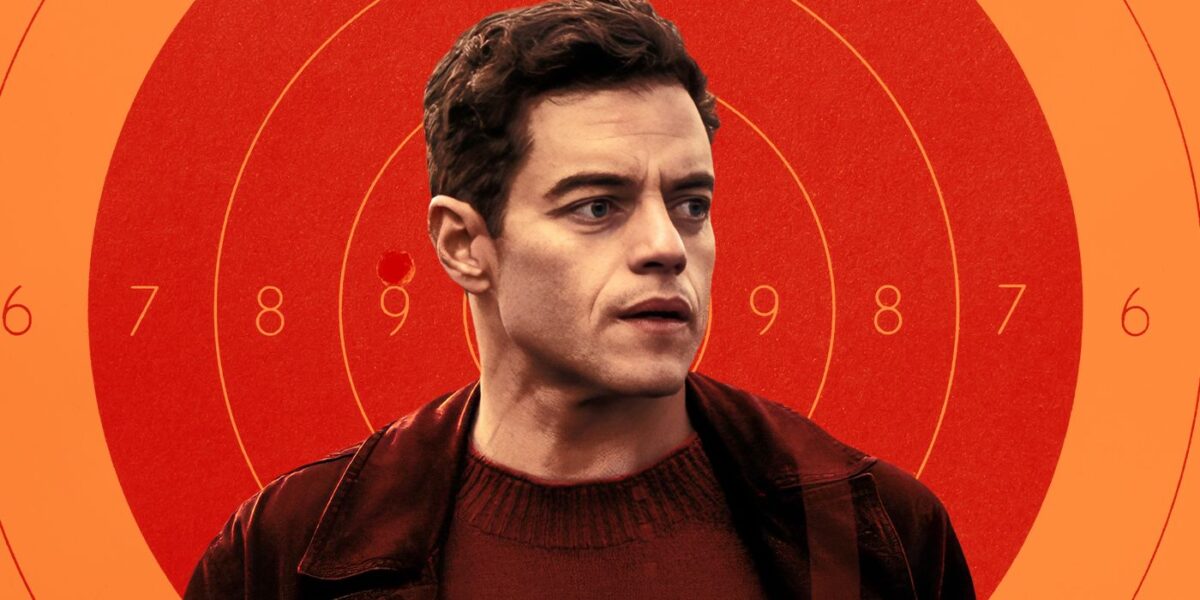
‘The Amateur’ Director Breaks Down Every “Mindf*ck” Kill and That Ending [Exclusive]
Apr 15, 2025
[Editor’s Note: The following contains spoilers for The Amateur]
Summary
Collider’s Steve Weintraub talks spoilers with The Amateur director James Hawes.
Hawes discusses how creative kills in The Amateur were inspired by the book and required meticulous planning.
He also talks about filming different kill sequences in various locations and how the ending was carefully crafted to offer a morally complex conclusion.
With director James Hawes’ spy thriller, The Amateur, in theaters, Collider’s Steve Weintraub had the opportunity to speak with the filmmaker about all things spoilers. And don’t miss the first half of the conversation, where Hawes discusses his work on Lanterns, Slow Horses, Black Mirror, and more.
In the movie, Charlie Heller (Malek), a CIA Cryptographer, loses his wife (Rachel Brosnahan) in a London terrorist attack, and stops at nothing to get justice, even if that means having the CIA hot on his trail. The Amateur co-stars Jon Bernthal (Daredevil: Born Again), Laurence Fishburne (Thunderbolts*), and Julianne Nicholson (Dream Scenario).
Check out the full conversation below for the motivations behind character kills, how they filmed them, the way the original 1981 novel from Robert Littell inspired certain sequences (and perhaps an iconic Mission:Impossible sequence?), who was always going to die, who wasn’t, and that ending.
Crafting the Kills of ‘The Amateur’
“You pull the rug, you have another roll of the dice, and you play the game slightly differently.”
COLLIDER: Can you discuss how you decided on how each person would get killed in the film? Was that all in the script exactly? How much was it being played with in pre-production?
JAMES HAWES: Well, some of it is inspired way back in the novel, in the book. I mean, there is a sequence in the book where an aquarium in a restaurant in Prague is exploded and is part of what leads to the demise of one of the targets. Something you may remember happened in an early Mission: Impossible movie, therefore perhaps having its heritage somewhere else. So some of these things were basically in some version in the script, and then it’s really the director’s job, along with the cinematographer, the designer and the experts, to sync them big.
Obviously, the pool, we had the basic idea. One of the interesting decisions there was how much do we show of the lead-up, of the plotting, and the setup for it? That wasn’t in the script, but I felt that the audience was going to quite enjoy watching Charlie working out the math, dealing with some equipment, and planting equipment. You don’t know quite what he’s going to do. It’s intriguing. You know it’s dangerous. There’s jeopardy attached. Then, seeing how he goes about the pool smash.
Obviously, with the killing of Gretchen, again, some of the inspiration comes from the original book, but one of the writers had found this incredible idea of this stress tank where they put people suffering with chest conditions, or breathing conditions, or asthma, and they exercise them inside this kind of shower cubicle, all perspex and transparent. I thought that was fantastic because it also doubles as a torture device. Lock the door, show the door lock, fill it with something that is poisonous to the person inside. It’s like a Japanese water torture. It’s not waterboarding, it’s “pollen-boarding.” You’re really doing something extreme to your subject here. I liked the thriller-horror edge of it all. You can feel the claustrophobia. Also, it puts the underdog, Charlie Heller, in control, and yet we see his conflict transparently — and I’m deliberately playing with words there — as to what he’s doing for the first time, where he’s looking to risk somebody’s life to get the information he needs.
Of course, the fun with that sequence is that you undercut expectation with the empathy in Charlie. The weakness in him as an assassin is that he then releases his would-be targets because he’s fooled into getting the information. You then have a fistfight, a chase, and just as you think Gretchen is about to escape, you get a classic jump-shock knock-down, and she is plastered across the cobblestones of a Parisian street. I liked all those phrases. We really played with the rhythm, and the pacing, and the setup of each of those, so that each time you think, as an audience, you know what’s going to happen, you pull the rug, you have another roll of the dice, and you play the game slightly differently.
Related
Everyone Underestimates Rami Malek in New ‘The Amateur’ Sneak Peek
The film hits theaters in April.
With some of the kill sequences, how much time did you get to spend on filming each sequence? Were they filmed close together or in different parts of the shoot?
HAWES: They were very different parts of the shoot. The pool location is in London. Gretchen’s kill is in Paris. Then, although scripted as being in bulk in Romania, Ellish is actually killed in southern France. So they were separate, and we really charted and prepped quite carefully. We wanted each one to have a different temperature. With the Gretchen one, you get this sense of conflict in Heller. He’s not sure if this is the right thing to do. He almost apologizes to her as he’s trying to get the information.
By the time you get to Ellish, he’s almost casual about it. “You killed my wife. You may not have pulled the trigger, but you may as well have done so. So, hey. Good luck. You’ve got a chance. I’m letting you jump. If you jump fast enough, you might just survive.” Then you see a casual Charlie walking away from the destination in the background. So, we wanted each killing to be some reflection of the different state of mind he’s in in his quest and in his recovery through the stages of grief.
It’s very effective in the film. I thought you did a great job with that.
‘The Amateur’ Blows Up a Pool 16 Stories Above London
“That was a bit of a mindfuck.”
Image via 20th Century Studios
Which sequence was the bitch to film of the different kills?
HAWES: Of the kills, I guess it has to be the pool because it’s not easy to blow up a pool 16 stories above London, and drop a person from it, and have them survive — because you don’t want to kill your stunt team or your actor. The plotting, the planning, the storyboarding, the animatics that we did ahead of that sequence, and then just the construction of that set. Some of it was done on location. Then we built a life-sized segment of that pool filled with water in a studio, which was the single biggest and most expensive shot of the movie. We have to have a stuntman swimming in it, and at the right point, save them from the drop, and pull them out of the water. We had time to do that twice on the day. The second time worked. But the plotting and planning that goes into that, getting it right, getting it safe, getting it effective, was considerable. So, that was a bit of a mindfuck.
Yeah, I think that most people are going to think so much is CGI and make-believe, and it’s important to talk about how so much stuff is built practically.
HAWES: And that’s really important to me. Obviously, CGI is getting better and better, but it is still the case, without a doubt, that if you can have practical elements within the sequence, I just believe things that much more. It’s still not quite there. I daresay it’s coming, but for now, having those practical elements in there. So, we did a water drop. Some of the stuff you see hitting the paving in the restaurants below, that’s practical. We did that as a tip torrent. We dropped bits of the side of the pool of debris that break, and break paving stones. All of that is there, and I think just really helps the believability of that sequence.
Oh, no, 100%. But I’ve said this again and again to people: If you look at Battlestar Galactica from the ’70s, those shots still look amazing because it’s practical elements on screen and you believe these models are real.
HAWES: Yes, without a doubt. There’s just something concrete about them.
How ‘The Amateur’ Differs From the Bournes or Bonds
“We really didn’t want them to be mustache-twirling, hat-stroking baddies that you meet at the end.”
Image via 20th Century Studios
I was nervous when I was watching the movie that it would come out that it was the CIA that killed Rachel’s character because of what Rami was sent at the beginning of the film. Was that ever something discussed where it was going to be? Because there are so many movies where it ends up being, like, the boss who discovers the guy’s doing something.
HAWES: We did discuss it, and we really liked the idea that the world is much more complicated than that. We liked the moral ambiguity of the fact that, however you judge the CIA bosses in this, they’re doing what they’re doing not for personal gain, not for enrichment, not to take over the world, but because they believe that they’re doing the right thing as American patriots. They’re doing the right thing for world security. They just use different crews, different tools to achieve that. So, we absolutely had those discussions, and it colored how we played with our various bad guys. We really didn’t want them to be mustache-twirling, hat-stroking baddies that you meet at the end. I’m a huge fan of Bourne. I’m a huge fan of Bond. We all have a different tonality for our bad guy, and this felt like it was truer to the kind of movie and the world we were inhabiting.
I’m very happy you made the decision that you did. Was Caitríona Balfe’s character always going to die? Was that always part of the script? Was it ever something else? How did you decide on that sequence where they’re escaping from the house?
HAWES: So there’s lots to tell you here. Her character is in the book with a different name. Played in the original movie — just as a little Easter egg for you here — by Mark Keller, who has a cameo in this movie. Just something worth noting. She always dies in the book, and was always going to die in the script, and in the show. When I picked up the script, the attempted escape, the location, was very different. It was more inspired by the book where her hideaway was actually on a river, and they were in a rowboat to escape the river away from Russian special forces, who had motorized boats.
I just thought: water kills pace. It’s really, really hard to do a denouement like that across water, unless you’ve got everybody in super high-powered boats. And a rowboat, I felt it was all going to end very quickly. I felt it was going to be a bitch to film, and it didn’t have the adrenaline that I wanted in that moment. Because of where we were filming, I thought it felt reasonable to have it as a seaside location at a coastal location, and the idea that it was near Istanbul, instead of in Prague on a river somewhere, freed us to get more scale, and scope, and frankly, danger. The location itself is actually outside of Marseilles in southern France, which we then play as being Turkey outside of Istanbul. We came across this, and I really built the sequence from that location.
The idea that Caitríona’s character knows that the guys are coming for some time, so she’s planned an escape where she run through the properties of neighbors under boat sheds across the beach, to a getaway car which she has planted. Then drive down that road with the special forces chasing them from the sea, shooting through the gaps in the buildings where they can. We really can see that inspired by the idea of making it coastal, then finding that location, and thinking to ourselves, if I was plotting my escape from here, how would that be? So again, if you like, we’re taking the rooted, the real, and trying to make it feel as justifiable as possible. I hope that works. It certainly felt exciting to shoot.
It does. Without a doubt.
How Hawes Chose to End ‘The Amateur’
“We had quite some debates about what would be most satisfying for the audience.”
Image via 20th Century Studios
Were there any characters that almost survived or any characters that almost died?
HAWES: [Laughs] There was a character that had less screen time in the original, which was Henderson. We so loved the relationship of Hendo as Laurence baptized him with Heller, that he came back for a whole additional scene and a half, because it felt like they built up such an unusual relationship that had a journey of its own. There was a discussion about the body at the end, about Michael Stuhlbarg’s character. What is justice as opposed to vengeance? And is this the kind of movie where, given the gun in his hand, Charlie Heller carries out the final killing?
Or does he decide a place for his personal redemption and a way to bring a bigger justice against those people who misbehaved in public office, however you want to describe their crime, and bring down the whole cartel, the cabal within the CIA, and the guy who’s been conducting the whole operation. We had quite some debates about what would be most satisfying for the audience and what would be more surprising, and we really liked the idea and found it more morally complex, more character complex, that he’s got the opportunity. The gun in his hand, the trigger to pull, and he chooses not to. That gave us a destination for his character, for his recovery, and for vengeance to become justice and a bigger win by the end of the movie.
I was going to ask you how you decided ultimately on where the film would end. Where Charlie would be and stuff like that. How did you decide on those final few shots?
HAWES: There’s a specificity that was written into the script before I joined, of the aircraft, and the eccentricity of the man that dreams– as John Bernthal’s character says to him– of the bravest thing you could do is maybe fly a lap around his own field. The Charlie Heller you meet at the beginning would not have been capable of that. He might have treated it like a kit apart and finished building the model, but he wasn’t going to take to the skies. That was something epic and liberating and, I like to think, cinematic. You kind of want to cheer when this small man and his tiny plane has come such a long way that he can smile, pull back the throttle, and burst down the runway and take to the skies. It’s that feeling. It’s how do you deliver that moment to leave in the theaters that you go out buoyed, raised up by what you’ve just seen, and frankly, wanting to take to the skies yourself. It’s that kind of emotion, and that felt like a visual way of delivering that.
The Amateur is in theaters now.
The Amateur
Release Date
April 11, 2025
Director
James Hawes
Writers
Gary Spinelli
Get Tickets
Publisher: Source link



Mason Gooding & James Van Der Beek’s Bad Night Is Aggressively Dull
Ever since the Scream franchise helped put him on the map, Mason Gooding has been a great talent to watch. The genre-bending slasher Heart Eyes is still his best non-franchise role yet, but he's also branched outside of horror in…
Mar 15, 2026
A Grumpy Nick Offerman Keeps This Fish Tale Swimming Along
Animated fish films have been done. Finding Nemo. Shark Tale. Ponyo. So to hear about another doesn't feel like anything new. However, The Pout-Pout Fish, starring Nick Offerman as a grumpy ocean pout named Mr. Fish, is a little different.…
Mar 15, 2026
‘The Rookie’s Best Season 8 Episode Goes Completely Different With Full Zombie Horror
Editor's Note: The following contains spoilers for The Rookie Season 8, Episode 10.It's crucial for procedurals to come up with a winning formula that entices viewers to tune in every week. But it's just as important for these types of…
Mar 13, 2026
Sidney Prescott Leads a Brutal Throwback
Walking into Scream 7, I wasn’t sure if this entry would be a new reinvention. I know I wanted tension. I know I wanted that uneasy calm before the snap. And most of all, I wanted to see why Sidney…
Mar 13, 2026