The Best Alfred in Batman Movies Isn’t Michael Caine — and It’s Not Andy Serkis Either
Apr 13, 2025
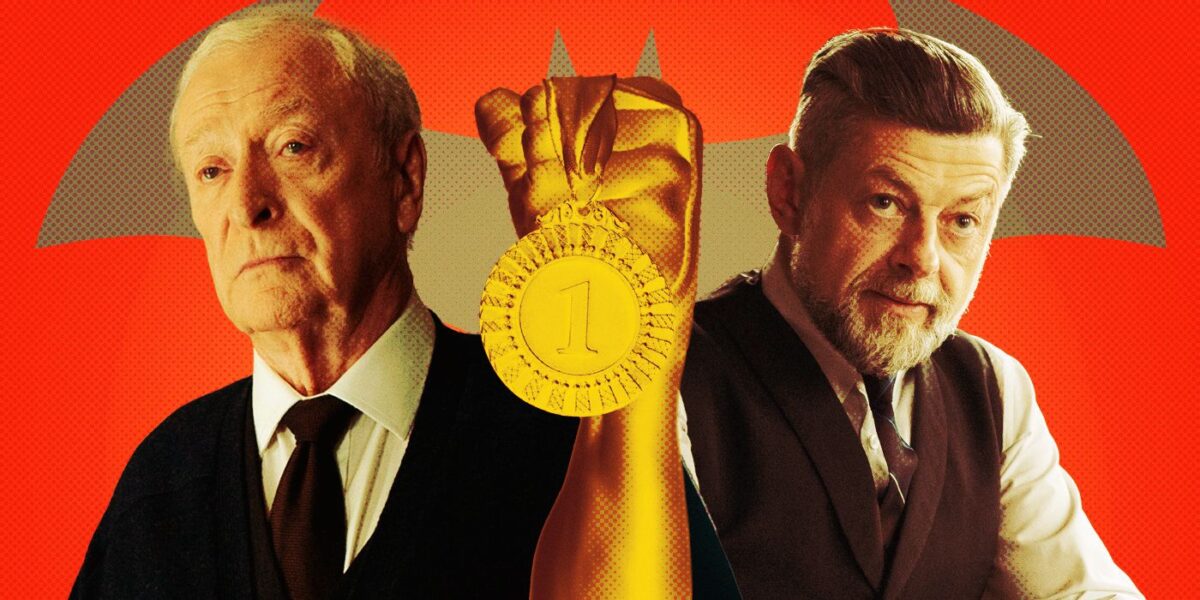
Alfred Pennyworth occupies an incidental but crucial role in the Batman franchise, as Bruce Wayne’s butler, confidante, sometime mentor, and the guy Wayne usually hits up for upgrades to his costume or tech. Michael Caine knocked it out of the park in the role in the Christopher Nolan trilogy, and Andy Serkis does fine work as an Alfred hostile to Batman in the 2022 movie (a sequel is in development). But the best cinematic Alfred of them all is neither of these actors: it’s Michael Gough, who played the role in the four Tim Burton/Joel Schumacher films in the late 1980s and 1990s. Here’s why.
Alfred: A Difficult Role In the 1990s Batman Films
Image via Warner Bros.
Unlike their twenty-first century successors, in the Burton/Schumacher films, the character of Alfred is more often than not treated poorly. There is little to no attempt at characterization, and the butler is instead used as comic relief or to advance the action as the plot requires. In such circumstances, it would be hard for anyone to make anything of the role, but Gough managed it in style. An actor with a considerable pedigree – Gough had a Tony Award and a BAFTA under his belt by the 1970s – his most prominent cinematic outings were arguably alongside Laurence Olivier and Gregory Peck in the 1978 thriller The Boys From Brazil (the novel on which the film was based is shortly to be made into a Netflix series), and opposite Meryl Streep in the critically acclaimed 1985 drama Out Of Africa.
Related
Michael Keaton’s Dark Knight Rips Off His Mask in New ‘Batman Returns’ Funko Pop
This is part of Funko’s 85th anniversary Batman collection.
The role of Alfred Pennyworth, of course, called for a different approach. Gough adapted superbly to the role, imbuing the character with sang-froid, making some seriously contrived plot developments sound organic, and gracing even the corniest lines – think the “Can I persuade you to take a sandwich with you, sir?” exchange opposite Val Kilmer in the Batcave – with gravitas. Moreover, Gough looked the part. Rangy and imposing, he evoked memories of Alan Napier’s phlegmatic portrayal in the 1960s TV show. Gough’s similarly substantial physical presence offered the opportunity for some wry physical comedy – Alfred catching a champagne glass unthinkingly set down by Michael Keaton’s Bruce Wayne before it shatters comes to mind – in an otherwise one-dimensional role.
Michael Gough – The Only Alfred To Work With Three Batmans
But Gough is crucial for another reason. As the only actor to work alongside Michael Keaton, Val Kilmer, and George Clooney, his Alfred provides crucial continuity to a series of films that turned out to be highly varied – and variable – in terms of outlook and tone. Much has been made of the switch from the gothic overtones of the Burton films to the dayglow, toyetic approach under Schumacher, but there is also great variation from film to film. For all its bleakness, Batman Returns is surprisingly willing to dabble in screwball comedy: the third act, which features the Penguin (played excellently by an in-form Danny DeVito) arming a flock of penguins with missiles to destroy Gotham City, is as batty as anything any villain from the 1960s TV series ever attempted. And Batman and Robin, the universally decried 1997 film played largely for laughs, is surprisingly touching in the scenes when Alfred is shown to be suffering a terminal illness.
Throughout all the tonal changes, Gough understood the assignment. Taking a leaf out of Adam West’s book, he realized that the only way to play such broad material was to do it absolutely straight, tongue firmly out of cheek. Used as a fig-leaf for Robin’s (Chris O’Donnell) too-convenient procurement of a costume mirroring Batman’s own in Batman Forever, Gough delivers a sincere line reading free of any sort of ironic nod in the audience’s direction; while his two-handers opposite Clooney in Batman and Robin are among the film’s (admittedly few) highlights. In them, Gough’s work foreshadows that of Michael Caine a decade later, as he gives the sort of advice to Bruce Wayne usually dispensed by a father figure. And yet that is ultimately what Gough is. For all that his character is pulled in one direction and then another – here a cook, there a tailor, and elsewhere an unexpectedly adept computer guy capable of monitoring penguin-detecting radars – he is part of Batman’s surrogate family, and when he beats illness in the final film, the audience are the first to cheer. Other Alfreds may have had more camera time, but none were as endearing, malleable, and convincing as Gough’s.
Publisher: Source link




A Flame The Colour of Air – Film Threat
SLAMDANCE FILM FESTIVAL 2026 REVIEW! You will shimmer and shake, like you’re riding the snake while being wowed by the dynamite animated short A Flame The Colour of Air, written and directed by talented Canadian filmmaker Emily Pelstring. Jessica Mensch’s…
Mar 3, 2026

‘9-1-1’ Can’t Decide What It Wants To Focus On in a Lackluster Season 9
Editor's Note: The following contains spoilers for 9-1-1 Season 9, Episode 11.I was hoping that 9-1-1 would take advantage of its month-long hiatus and course-correct after its most recent episode, but while this week is certainly an improvement from last…
Mar 3, 2026
Good Luck, Have Fun, Don’t Die Review
Mercy was a film about AI that AI could’ve written. Good Luck, Have Fun, Don’t Die also tackles AI, although it could only come from the mind of Gore Verbinski. As he did with his Pirates of the Caribbean trilogy…
Mar 1, 2026
Investigative Screenplay Review: Suspenseful but Weak Antagonist
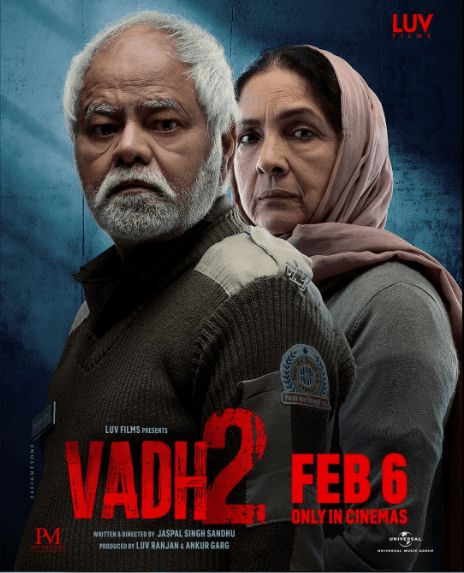
Vadh 2 (2026): When Murder Is Justified — Starring Sanjay Mishra as prison guard Shambhunath Mishra When evil tries to take control, its destruction becomes necessary. With this theme, Bollywood brings you a spiritual sequel to its 2022 crime-thriller “Vadh”.…
Mar 1, 2026