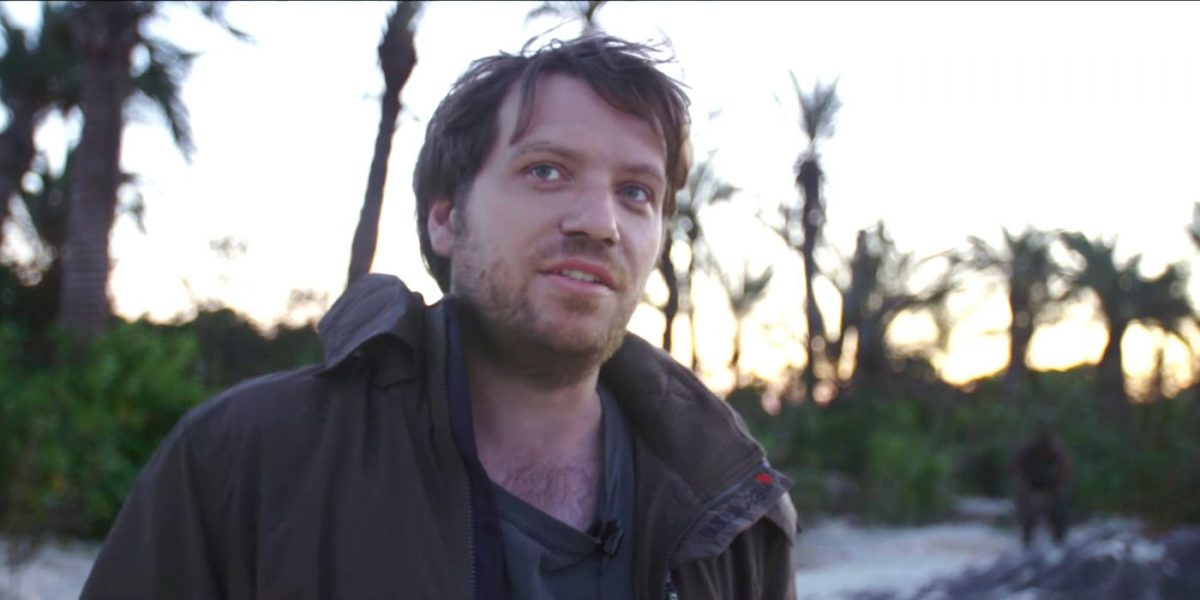
‘The Creator’s Gareth Edwards May Have Solved Hollywood’s Budget Problems
Jul 25, 2023
The Big Picture Director Gareth Edwards praises the film’s very well-received trailer but admits there was concern about the song choice. Edwards details the state of the world in The Creator and how it’s divided based on whether people embrace AI. He also walks us through the film’s unique production process and why that approach to filmmaking could be a more cost-effective way of making big studio features.
One of the most exciting upcoming films in the realm of original-concept science-fiction has got to be Gareth Edwards’ The Creator. Hitting theaters this September, The Creator is set in a world where humanity is at war with highly advanced artificial intelligence. John David Washington leads as an ex-special forces agent tasked with hunting down and killing “The Creator,” the architect behind the advanced AI that’s developed a war-ending weapon, a weapon that also has the power to eradicate humankind.
At San Diego Comic-Con, not only did Edwards appear on the “Directors on Directing” panel hosted by Collider Editor-in-Chief Steve Weintraub, but he also had a one-on-one conversation with Perri Nemiroff during which he addressed the real-world relevance of the AI-centric storyline, filming with two cinematographers, why the title changed from True Love to The Creator, and loads more.
Check out Perri’s full interview in the video above or in transcript form below.
PERRI NEMIROFF: I obviously haven’t seen the movie, but my god, that trailer is incredible. Who cut that trailer? That is a beautifully edited piece.
GARETH EDWARDS: Thank you. Well, I can’t take credit for it. It was Disney, so the whole Disney marketing machine. It was probably an editor, obviously. I don’t know their name. This stuff gets presented to you when it’s close to being ready, and you see a few different posters, you see some of the trailers and as a group decision, we hone in on something, and then you’re allowed to change a couple of shots if it bothers you. They’re very inclusive. I was worried it was the wrong choice. I just got paranoid about it.
What part of it?
EDWARDS: Aerosmith. I love Aerosmith. I love that song, “Dream On.” But I was just kind of paranoid that somehow — because it’s not in the movie. And then I was completely wrong because everyone seemed to have a good reaction. And Steve Tyler owes me a Lamborghini now.
He owes you a Lamborghini?
EDWARDS: With the money they got for that trailer. I’ll take a Ferrari. [Laughs]
Image via 20th Century Fox
I’m a big believer that trailers are also made by artists and that’s one where you can really feel the craftsmanship behind it, and I appreciate it.
EDWARDS: Genuinely, not to get sidetracked, there is a way trailers seem to function that I really am obsessed with, where they can tell stories and get storytelling done so quick, and they don’t get locked into this thing of like, “Wide shot, over your shoulder, over their shoulder, conversation.” It’s all abstract dream-like stuff that just jumps around, and you can follow it. In my mind, I’m like, I just want to do a whole movie like that. But would it get too much? Would it just be overload?
I don’t know. I like the sound of a challenge like that.
EDWARDS: That’s the next challenge from here on out.
We’ll have to circle back. When you make that movie, I’ll be here to do the interview.
EDWARDS: If Steve Tyler has some more songs that he’ll sell that’d be good.
Leaning into The Creator and the evolution of the idea, I love hearing about how things change along the way. What would you say is the biggest difference between draft one of this screenplay and what you wound up with in the finished feature?
EDWARDS: Oh wow, that’s a good question. What’s the biggest difference? Draft one? I’m trying to remember. It might not be the biggest difference; the thing I remember is there’s antagonists in the movie. In my first draft there was Joshua, who’s played by John David, who’s basically on this sort of odyssey across this futuristic war zone with this child and being pursued by one side, and I guess in the next draft he’s pursued by both sides now, which is way better. I don’t know why I didn’t think of that in the first place. That was a note I got.
It definitely sounds like a richer, more well-layered story right there.
Image via 20th Century Studios
What about in terms of how the current conversation about AI impacted the film from draft one to finished film? Did you ever find any of those conversations or warnings about what AI could do to the world influencing how you tackled that material in the film?
EDWARDS: No. Basically the movie was always like, the world is divided in two. Half the world has banned AI. They hate it. It’s wrong. It caused some real big problems. And the other half of the movie’s embraced it, carried on developing it to the point where it’s now human-like. So it’s kind of an east-versus-west situation at the start. And at the very beginning, it was like, “But why would you ban it?” Genuinely every single reaction to the screenplay was, “Why would anyone ban AI? It’s this amazing thing.” And so then I had to kind of invent a scenario where you might reject it, right? And weirdly now, the way things are going, it’s like the default setting is ban it, and it’s a strange reaction that we’ve all had to this technology. It’s like this freaky mirror that, “Hang on. How can this …” There’s no one home but yet it seems so real.
Would you describe the film as a cautionary tale regarding AI or is it more so the film heavily leaning into presenting AI as “the other”?
EDWARDS: It’s presenting AI the other, but it ends up — well, no spoilers, right? I like films that are gray, that are not black and white, and where you sort of experience the full conversation of both sides and it’s up to how you end up feeling about it at the end.
I appreciate that. It means I get an enjoyable experience in the theater, but it weighs heavily on my mind thereafter.
EDWARDS: We found when we did test screenings and stuff where we showed people, everybody needed some time. You kind of want to switch the lights on and go, “Okay, what did you think?” And everybody needed to think about it. It was really interesting because you hope for that in a weird way, but it was quite a predictable response [that] it was a lot, you know what I mean? And we were used to it. We’d seen it so many times, and trying to find the right condensed rhythm of the movie. And I like that idea that it’s something that bounces around afterward, and you’re not sure how you feel about it kind of thing.
And then I imagine it could be something that gets richer and richer with every rewatch, where it leaves the door open for your feelings about it and your interpretation of it to change, which is very exciting.
EDWARDS: It definitely gets richer with every rewatch where you pay like 20 bucks to go see it again in the theater. I recommend at least 10 viewings if you can do it. [Laughs]
Image via 20th Century Studios
To get into a little bit of the world-building here, John David’s character has to go to “New Asia” to locate this AI. Are you able to tease what the rest of the world looks like?
EDWARDS: I try to avoid this big geopolitical lesson at the start of the film, so you only really hear about things you need to know about, New Asia being one of them. It’s left to the audience what some other aspects of the world is going on. But New Asia is basically this region of South East Asia and Japan where because of this war against AI, the borders have dissolved and different people from different countries and AI from different areas have all come together to fight the West who are trying to eradicate AI from the world.
Did you pinpoint a specific year that the movie takes place in?
EDWARDS: I did. I did and I’ve made a mistake because I should have picked 2024, but I picked 2070 because I didn’t want to make the mistake Kubrick made of 2001 not being true. So I was like, I’m gonna pick something way downstream, and now it’s like, “Oh god, it’s probably next year.”
There’s certain things if you said like, “Okay, predict out of all these things — jet packs, going to the moon, whatever — what are the things that you think science fiction is gonna achieve in your lifetime?” I didn’t really have AI as a definite. I thought we might land on Mars again maybe before I died.
But this was eons away, and even the experts said it. They thought it was like 30 years away and it turned out, when they started kind of mimicking the way the human brain works and creating these neuron networks, it’s actually quite straightforward. And this magical thing happens where, unless you’re religious, it’s just a bunch of switches and if you mimic it, guess what happens? It kind of seems like it’s alive. And the big question is, I think the things they have right now are probably not, these large language model stuff like ChatGPT and that, but it’s coming. And all the people working on it are like, you just chuck enough resources at this stuff, make it big enough, give it enough training and everyone’s expectation is that we’ll have something akin to us in a few years or so.
In this world that the movie takes place in, the thing that kicked off the creation of robots in general and this AI that ultimately led to this war that the movie is exploring, are those things that exist in our real world reality now?
EDWARDS: So a nuclear bomb detonated and you know in the same way that, I don’t want to pick a famous make of electric car, but you know how a self-driving car might crash? It’s nothing malicious. It’s just a random accidental thing with the algorithm. A simple error. In military hardware, that could cause horrific consequences. It’s one of those, and all it’s gonna take is one of those moments like where a plane just falls out of the sky or something where everyone goes, “Okay, we can’t do this anymore. This is too risky. We need to figure this out.” And so it’s off the back of that kind of event that AI gets banned. And the idea was, we don’t have time in the movie to get into this, but the idea that things would come with little stickers and logos that say “AI free,” don’t worry. It creates this kind of movement against AI which we sort of see. We shot scenes in Thailand with people with protest signs for and against AI thinking this is kind of absurd, and now I live very near the studios and we drive past and that’s exactly what’s happening.
Image via 20th Century Studios
I wanted to make sure to talk about your production process. I’m fascinated by the idea that you went to a bunch of different countries and then you did a lot of the work in post to really build out this futuristic scenario. A hot topic of conversation right now is over-spending on films. Is that a more cost-effective way to make a movie like this, and is that something that is specific to this story or are those techniques that could benefit other productions in the future?
EDWARDS: I think it’s not unique to this film whatsoever the ways we did stuff. What happens on a movie is at some point you get sat down and they say, “You can’t do this.” “Why not?” “Because we don’t have enough money.” “I thought we had x-hundred million dollars.” And they say, “We do, but we can’t afford to do that,” and you go, “Hang on, explain this. This makes no sense.” And someone will go through line by line and you’ll go, “But why are we spending it on this?” There’s so much, I think, hemorrhaging of money.
Basically what I put it down to, the very simple analogy is if you had a dollar bill, the way filmmaking works is they buy a $5 case to protect that dollar bill because they don’t want to lose the dollar, right? And now they look at it and go, “Oh, hang on, that’s $6. We need to buy a $10 cabinet to put this in to protect our $6 investment. Oh, wait a minute. That’s $16.” And they basically spend more and more and more to protect it and protect it and protect it. If you just say at the very beginning, “You know what? We’re gonna spend one dollar. We’re not gonna protect it. If we lose it, we’ve lost a dollar and we’ll just spend another dollar doing it again.” And that kind of was the philosophy of, let’s spend as little as possible. Let’s go out on a limb. If something fails, doesn’t work, we’ll just do it again. We’ll figure out a way around it.
And we had a mantra with the producer on the film, which is — I think our movie ended up — it’s a lot of money. It’s $80 million. It’s a lot of money. And the mantra was like, “I never want to hear anyone ever say we can’t afford to do that, we only have $80 million.” And so if no one’s allowed to say that, you can kind of do anything. You can do anything. It’s just choosing what you’re not gonna do.
I feel like more folks out there should embrace that mentality more than they do.
Image via 20th Century Studios
I have another behind-the-scenes question because I really wanted to ask about working with two cinematographers on this. Can you walk us through why that became necessary for this project?
EDWARDS: So Grieg [Fraser]’s one of the few people in the world I would trust to give a camera to and say, “You shoot it. Try and get this kind of shot,” and just hand it over. He’s got an amazing eye, amazing everything. The whole world seems to know that now. And so we started building up to this movie and this other movie called Dune 2 was sort of on the horizon …
Never heard of it. [Laughs]
EDWARDS: No, it’s a small indie little sci-fi thing. It’s doing the festivals. He was obviously in a position that he had to do that. And so I was secretly praying that they weren’t gonna clash, and obviously at some point that started to be like, they’re gonna clash. And so it was like, “Grieg, okay, let’s scour the world. Who’s the best newcomer out there?” And after a lot of conversations, Grieg was like, “There’s this guy Oren Soffer and I think you should take a look at his work. He’s kind of a little protege of mine and I’ve been kind of working with him on other stuff. And so I looked at Oren’s work, it was really strong. I chatted with Oren. Really liked him. And so basically there was this transition that happened. And Grieg carried on remotely, but Oren picked up the reins. I’m really excited for people to see the film because one of the main takeaway feelings is, who did that? You know what I mean? I’d like to be Oren’s agent right now because they can go, you know with Steve Tyler, they can go buy a Ferrari for me.
I don’t even like cars. I don’t know why I’m saying this. [Laughs]
My last question for you because I’m always curious about choosing the right title for a movie and I know you changed this one from True Love to The Creator. Can you walk us through determining that True Love had to go, and The Creator was the best way to essentially introduce people to the film?
EDWARDS: You have a working title when you make a film, and the most important day is the first day you’re gonna announce it to the world, stick it on a poster, any of that stuff, and you just gotta decide before then, “Is that the title?” And the whole time I was making this, my feeling was when you watch the movie, people who have seen it go, “I see why you wanted to call it True Love,” right? But ahead of going to see it, if you just go to some random person in the street and go, “Do you want to see a film called True Love?” They’re like, “I’m not really into rom-coms.” You go, “Oh, it’s not that. It’s not that.” And I didn’t want to spend my life having everyone come up to me going, “Oh my god, I just saw True Love or whatever it was and I didn’t realize it was that kind of movie.”
And so Disney, with all their common sense were basically like, “We feel a great title would be The Creator.” And it’s in the movie a lot, and it made a lot of sense and I’m very glad we changed it now. It’s strange when you have a child who’s identified as one name and then suddenly you have to get used to calling it something else. I’m just over that now. Now I find myself accidentally saying The Creator all the time, but for a while it was True Love. But when you see the movie, it’ll make sense. It’s like Blade Runner was Dangerous Days. There’s a lot of working titles for films that when you hear them, you’re like, “Okay, I’m sure that would have worked.”
Catch The Creator in theaters beginning September 29.
Publisher: Source link


Born Again’ Showrunners Detail How the Media Ties into Season 2
Marvel is fast approaching the release of Daredevil: Born Again Season 2, marking its second live-action Disney+ show of 2026. Bringing back Charlie Cox's Matt Murdock and Vincent D'Onofrio's Wilson Fisk, this season picks up where Season 1 left off,…
Mar 23, 2026
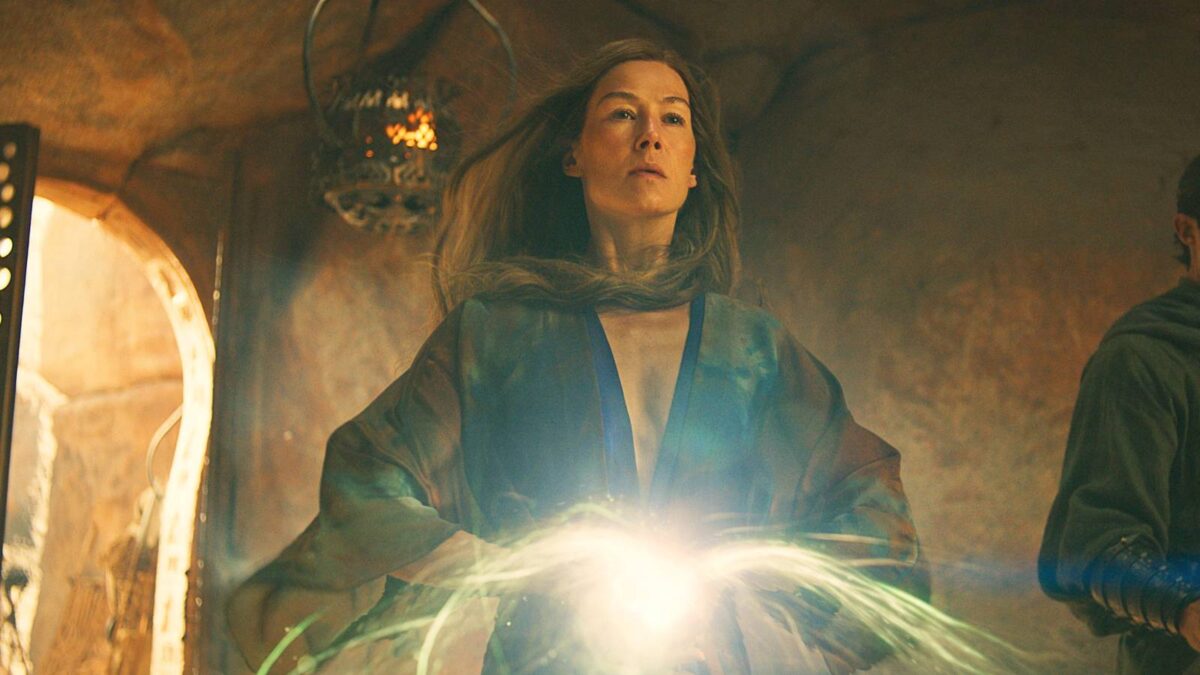
New ‘Wheel of Time’ Animated and Video Game Adaptations Are in the Works
Amazon might be finished with The Wheel of Time, but we haven't seen the end of the story when it comes to adaptations of Robert Jordan's bestselling high fantasy saga. Fans were left blindsided when Amazon abruptly pulled the plug…
Mar 22, 2026
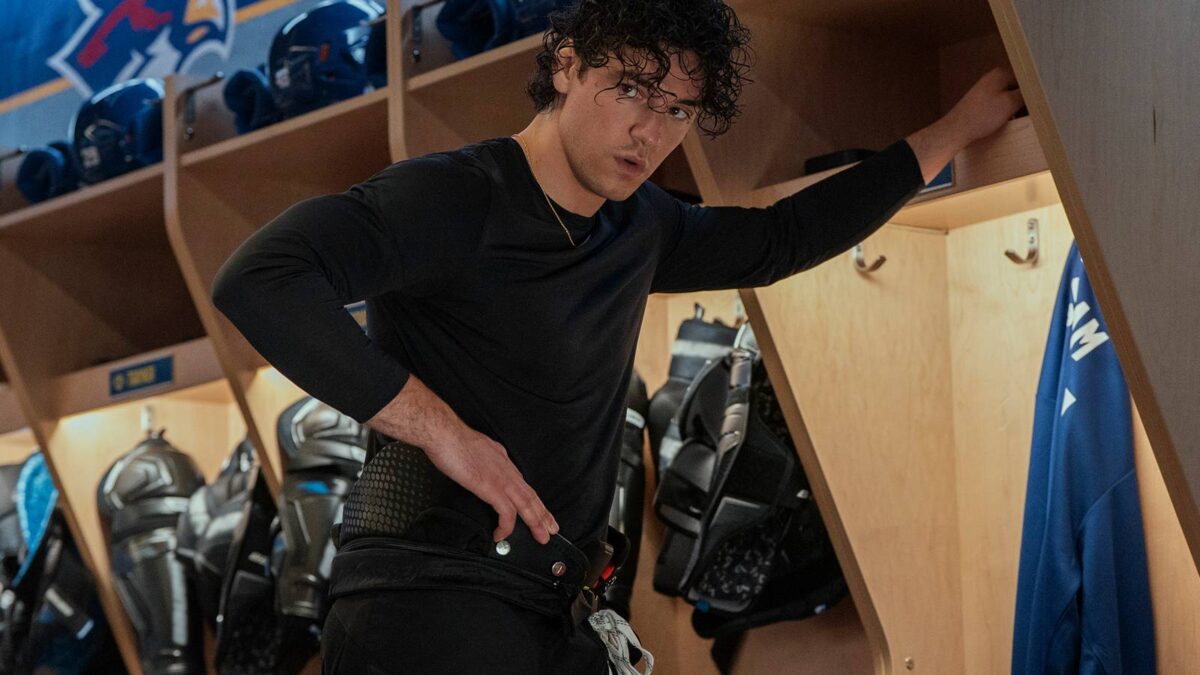
‘Off Campus’ Teaser and Release Date Revealed by Prime Video
No one expected a love story between rival hockey players to become one of the most talked-about TV shows of 2025, but there's a lot more where Heated Rivalry came from, as a new teaser for Prime Video's foray into…
Mar 21, 2026
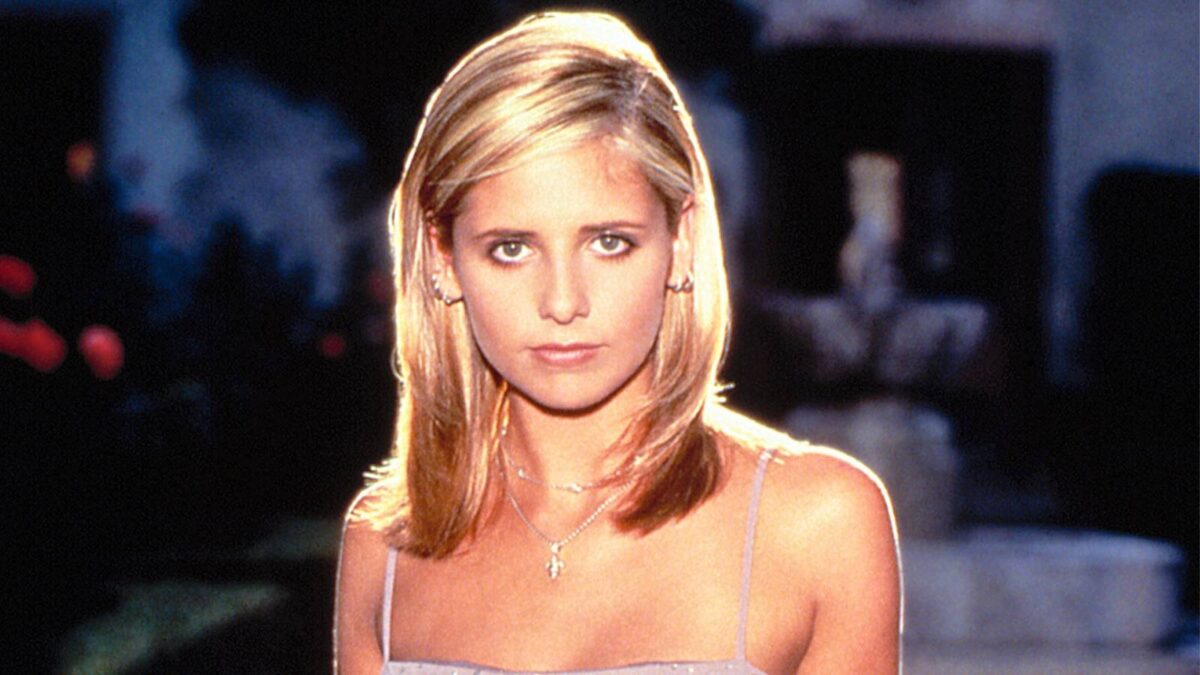
Sarah Michelle Gellar Urges ‘Buffy’ Fans to Avoid Reading Leaked Reboot Scripts
Buffy the Vampire Slayer fans have had a rough few days after Hulu officially pulled the plug on a revival of the series, which would have brought star Sarah Michelle Gellar back as the titular heroine. Described as a continuation…
Mar 20, 2026