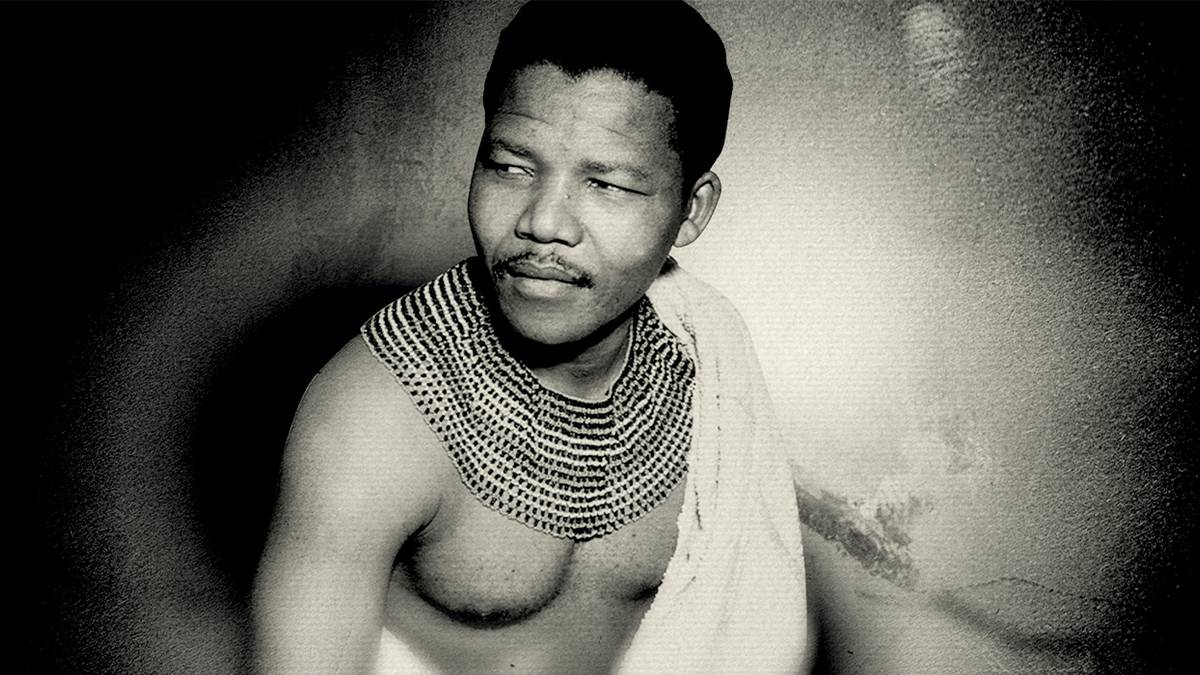
The Groundbreaking Story of Nelson Mandela’s 27 Year Struggle Revealed in New Documentary
Jan 28, 2026
Summary
Collider’s Steve Weintraub talks with Antoine Fuqua for Troublemaker.
In this interview, Fuqua discusses using Nelson Mandela’s own recordings, archives, and other personal testimonies to tell this global leader’s story.
He also talks about the use of animation and A.I., the missing years of Mandela’s life, and comments on his Michael Jackson documentary and a future project with Denzel Washington.
Ahead of this year’s Sundance Film Festival, where director Antoine Fuqua will be premiering his new Nelson Mandela documentary, Troublemaker, Collider’s Steve Weintraub had the opportunity to talk with the filmmaker about why he wanted to tell this “global icon’s” story in this way, and the research it took to revive the 27 “erased” years of Mandela’s celebrated life. In Troublemaker (a title translated from Mandela’s birth name, Rolihlahla, in Xhosa), Fuqua and his crew use archival footage, animation from painter Thabang Lehobye, Mandela’s own words, and other personal testimonies to construct a narrative that recounts the anti-apartheid movement, from Mandela’s childhood in the royal court, all the way to South Africa’s current liberation issues. Troublemaker and Fuqua’s team include footage from their travels in South Africa in the documentary, visiting Robben Island, where Mandela was imprisoned for 18 of his 27 years, Qunu, the rural childhood village and resting place of Mandela, and other significant locations. During this one-on-one, Fuqua discusses the hours of Mandela’s recordings with journalist Robert Stengel that he and his team sorted through, how they chose what to include in the documentary, and how they ultimately reshaped the story Fuqua wanted to tell. He shares stories from his research in South Africa and his collaboration with Mandela’s close friend and fellow prisoner, anti-apartheid activist Mac Maharaj, who Fuqua calls his “guru into Mandela.” Fuqua also talks about the honor of premiering at Sundance, the animation used for the missing years of this leader’s life, and how he’s experimenting with A.I. to fill in those gaps, as well. In addition to Troublemaker, Fuqua also comments on his years-in-the-making Michael Jackson documentary and the epic Netflix war drama he and Denzel Washington are “still circling.”
How Nelson Mandela Changed Antoine Fuqua’s Narrative
“Mandela is a story for every generation.”
A black and white image of Nelson Mandela walking in a suit from Troublemaker: The Story of the Mandela Tapes.Image via Sundance
COLLIDER: No one will have heard of this movie yet, so can you tell people a little bit about what it’s about and why you want to make it? ANTOINE FUQUA: Mandela is a story for every generation, right? His lessons that we learn are something that we can apply to your lives today, globally, not just in the U.S. Also, I think the younger generation should know the past so we don’t repeat ourselves, and that we learn what it means to be a leader, a leader for peace, and what that actually means. You’ve made all sorts of films. Where does this one rank for you on your resume? FUQUA: It’s up there. It’s up there, near the top. It’s like Muhammad Ali, Nelson Mandela, those things are important to me. One of the things that’s really cool about this, and it’s been happening recently with other people, is you were able to weave his actual voice from an interview he did to narrate the story. When did you first learn about these tapes, and what was it actually like for you, as someone who really respects Mandela, to hear these interviews privately by yourself? FUQUA: You know me, Steven. For me, it’s important as a filmmaker to tell the story from the perspective of the subject, as I did with Ali. I needed Mandela’s voice. I wouldn’t want to do it unless it was him telling his own story. So, three years ago, maybe, when I first heard these tapes, it was amazing because it was part of a long walk to freedom. Richard Stengel, who did the interview, did a great job interviewing Mandela, and it was Mandela telling us his journey, the good, bad, and the ugly. It really humanized him for me because Mandela is such an iconic figure in the world; sometimes people forget he was a human being, he was a fallible human being, like we all are, and imperfect, but he found a way to bring peace and bring South Africa together and avoid atrocity that could have happened at that time, during apartheid, through positive communication and peace. So, for me, these tapes are gold to hear someone like Mandela tell his story. How long were all the tapes? Was it like a two-hour interview? FUQUA: Oh my God, no, it wasn’t two hours. This was over a period of time. I can’t remember exactly. I’ll get the information for you, but it was over a long period of time. It was hours. That leads me to my next thing. How did you decide with the team which of the clips that he talks about would be the ones that ended up in the film? Because I’m sure there were so many other things he touched on that could have been in the movie. FUQUA: I focused, really, on the humanity of Mandela. I wanted to learn about Mandela. My journey with Mandela was important. I thought I knew why I was making the movie, Steven. You go in, you’re telling this positive story about this iconic figure that we all think we know, and when I got into it, there was a moment where Mac Maharaj, who is my guru into Mandela, his right hand man who spent time with him in prison, said something to me on one of my trips to Africa while making the movie. We had gone to a place, this particular monument in South Africa, doing research, and we got kicked out of it because we were asking questions about the art on the wall, the sketches, the sculptures, about the history of Africa. They kicked us out, me, Mac, and my crew, and I was upset. Being an American, I’m fired up about it, you know? And Mac Maharaj said to me, “You shouldn’t be upset. We should want to talk to them. You should want to communicate with them and understand their perspective on why they feel that way. Not just how you feel, Antoine, but why do they feel that way, so that maybe you could come to some understanding.” Now, this is a man who was tortured, beaten, and thrown in prison for years with Mandela, who still had this positive feeling. I said to him one day, “What does it mean?” He said, “Well, let me ask you a question. What does it mean to be a human?” And I said all the things I thought were right, and he said, “If you were in the jungle and you were raised with no other humans around you, how would you behave?” I said, “The way the jungle would behave, animals, things of that nature.” And he said, “Exactly. You only know you’re human because of me, and I’m only human because of you. Based on how we treat each other is how you behave.” As human beings, we behave the way other people teach us, the way we react to things. He said, “So that’s what being human is, learning from each other, teaching each other how to behave towards each other.” And I tell you, it hit me like a lightning bolt why Mandela was so important, and men like Mac Maharaj, who was obviously very close to Mandela and learned a lot from Mandela. It was important.
Related
The 44 Best Documentaries on Netflix Right Now (February 2025)
Let’s get real.
“Mandela Was Buried Alive”
Fuqua shares the lessons he learned from Mandela’s unflinching spirit.
A black and white image of Nelson Mandela featured in Troublemaker: The Story of the Mandela Tapes.Image via Sundance
It’s so interesting because Mac comes across the way you’re talking, and I’m amazed that he has that attitude after what he’s gone through. But one of the things that I was surprised to learn while watching Troublemaker is the fact that Nelson Mandela was not one of these people who said it needs to be peaceful. He actually believed, from what I understand, that violence was an option if it meant getting to where we needed to go, and it sounds so different than the way Mac talks. FUQUA: Well, Mandela didn’t become this global leader by avoiding conflict. He actually embraced it and went towards it to fight against injustice. It was his discipline and his unwavering love for humanity to fight against injustice. As you know, any change is not easy, right? Any change is uncomfortable for some people. Sometimes you believe, and Mandela believed, that we were at a crossroads where violence was the only way. Then, when he went to prison, he had to use his mind. He had to find another way. My lesson was that when he came out of prison, he learned that violence was never the way. It was never the way. The only way is communication. The only way is to try to understand each other and try to do it with some kind of love and some kind of peace in your heart. But it’s difficult, right? He spent 27 years locked away, where his life was erased, and he never lost faith in humanity’s ability to come together. To me, that’s a big lesson. I’m amazed at what he was able to accomplish. I’m just amazed at what he did after prison. I don’t know if I could have handled the mental fortitude to make it, and last. FUQUA: When I was in South Africa, I spent several nights there on the island, at the prison, and it’s haunting, and it’s heartbreaking, and it’s ugly. You think about your life, and you’re basically buried alive. Mandela was buried alive. How did he come out of this so positive? How did Mac Maharaj come out of this so positive? In South Africa, Mac introduced us to other people, and there was a white guy who came to see me, who was one of their comrades. He had no arm, no eye, his face was deformed. He looked like he was out of a James Bond movie. This guy was great. He had a Tommy Bahama shirt on, and he came in cracking jokes. He was so funny and so witty, and so matter-of-fact about what happened, about the struggle for justice, that he never talked about justice as just South Africa. He talked about it in a global sense, that it was important for the world, that he would risk everything again to do it. This man lost his arm and his eye, and I think had shrapnel still in his leg. He was blown up in a car bomb. So, meeting those people who still could laugh and joke, I asked one of them, I said to one young lady whose brother was killed in one of the slaughters, “Why are you not negative or angry?” She said, “We can’t live our lives with bitterness. You can’t live your life with ugliness, with revenge in your heart. It will eat you alive.” It was really enlightening for me to be a part of this journey, Steven.
Nelson Mandela’s Story Is Crucial to Future Generations
“You’ve got to go back and understand where you’re going so you can see the future.”
A black and white image of Nelson Mandela in a fighting stance with boxing gloves.Image via Sundance
I love documentaries, and one of the reasons I love documentaries is that a lot of young people, the next generation, hopefully will watch these docs. It’s one thing to read it in a textbook, but seeing the doc can be eye-opening to many people. Can you talk about what it means to be educating a whole other generation about Nelson Mandela? FUQUA: It’s extremely important to introduce this next generation to Nelson Mandela so they can understand who he was as a human being and how we can evolve as human beings, as well, and how we can find other ways to fight for the right reasons. There are things that Mandela lived by that I think we could take and apply to our lives every day. Troublemaker does that. Troublemaker takes you on that journey. The young generation has to know the past so we don’t repeat it. They have to understand where we’ve been in order to help lead the way. One of the things I learned from Nelson Mandela was, how do you lead a herd of sheep? And sometimes you have to lead from behind so you can guide everyone. So, you’ve got to go back and understand where you’re going so you can see the future, you can see ahead of it. You can see where the wolves are coming in. So, those are lessons you can learn from Nelson Mandela, amongst others.
‘Troublemaker’ Captures the Spirit of Robert Redford’s Sundance Film Festival
“It’s all about positivity. It’s all about inspiration.”
Robert Redford on a red carpet.Credit: MediaPunch/INSTARimages
I would imagine you could have premiered this film at the festival of your choice. What was it about Sundance that made you say, “This is where I want to go?” FUQUA: The spirit of Sundance. The spirit of Robert Redford. This is the last one there in Sundance, and he was a collaborator of Nelson Mandela and The Long Walk to Freedom. He was an executive producer on that, and he was close to Mandela. And I think it’s important to honor Mr. Redford as well as Mandela together in this opportunity. It’s a great opportunity to do this. There’s no other place that makes sense for me to premiere it. You touched on it, but this is the last time it’s going to be in Park City. What does that mean to you? I know you’re going to go, and I’ve been going to Sundance for a long time, and it’s pretty crazy that this is the last one in Park City. FUQUA: It means a lot. It’s the spirit, again, of Mr. Redford. To be in Park City with Mandela, Troublemaker, it’s the spirit of it. It’s all about positivity. It’s all about inspiration. Mandela would inspire people. That’s what made him so special. There are people like Mr. Redford, Mandela, or Ali who can inspire you to be a better human being and not make things just about you. Park City, Sundance was about filmmakers. It was about young filmmakers. It was about butting the system, if you will, in order to bring to light these creative people and give them an avenue and a place to go for your films to be seen, for you to be heard. That’s the beauty of Sundance. It’s about the filmmakers. It’s about their voices. I believe that’s what Mr. Redford did it for, and I believe that’s a place where Mandela would feel at home. Are you planning on taking it to other festivals, or what’s your distribution plan after Sundance? Do you have one? FUQUA: No, the plan is to sell it at Sundance. I don’t have any plans on taking it to any other festival at the moment. I looked at the schedule, and all your showings are already sold out. What does that mean for you? FUQUA: Oh, Steven, it’s a blessing that it’s sold out. That means people are interested in seeing. That means Mandela is still a big part of people’s consciousness. He’s still alive, if you will. His spirit is still alive. I think it’s much less about me and is more about Mr. Mandela.
Antoine Fuqua Recreates Robben Island With A.I.
He employs a mixture of artist Thabang Lehobye’s artwork and A.I. to bring to life Mandela’s stories.
Antoine Fuqua poses on the red carpet.Image via Collin Xavier/Abaca Press/INSTARimages
One of the things that I was curious about how you were going to do it is you have a lot of his narration, but I wasn’t sure if you were just going to use photos or footage. I wasn’t sure how you were going to tell the story, and then you ended up using a lot of animation to help tell the story. How did you decide that animation would be your way in? FUQUA: Let me tell you the journey of the film. So when I got into the film, and we started working with the South African team, and we were collecting the footage, that’s when I realized that there was no footage of Robben Island at all, and a few other places in his life didn’t exist. I think maybe one photo, barely, of Nelson Mandela in prison towards the end. I didn’t know how to go about creating something that would be interesting and cinematic. I saw a painter named Thabang [Lehobye], and I loved his work. It was abstract, and it had movement, and it was very cinematic. I met him. I got the team to put together a meeting, and I sat down with him. I just love the guy’s instincts. Not being a filmmaker, but being a painter, he had the same sort of instincts to have movement and have the texture to it, like his paintings. So when I had him do a test run, and I saw one of the images, I fell in love with it. That’s how I came to that, because I had no idea how to tell the story. I went to Robben Island. We went there, and I filmed the place and recorded everything, and then went to his cell, stayed in his cell, filmed everything around Robben Island and other places. But again, all it would have been was footage of me showing you the prison. Now, however, the thing I’m doing that’s not in the movie that you might find interesting is that I’ve been working with some A.I. and literally have brought to life scenes that Mandela is describing in the prison in Robben Island. I’m just using it for Robben Island, because Robben Island is nothing that exists. So what happens is you’ll see the painting fade away and come to life using some A.I. technology. It’s amazing. So it’s not in this cut, but it’s something that I’m going to present to some buyers to take a look at, because, again, the technology also brings Mandela into the conversation. How do we use this technology in a way that’s positive, that also helps bring something to life that doesn’t exist? I didn’t know you were going to use any sort of AI to help tell the story, and it’s so interesting because there are some filmmakers and people who are like, “You cannot touch A.I.,” and then you are going to use it to help tell your story. Personally, I’m on board with it when it’s a filmmaker doing what you’re going to do, not making a feature film out of A.I. because screw that. FUQUA: No, that’s not what it is at all. For me, Troublemaker, the film as it is now, there’s no A.I., but I’m exploring it because, like any filmmaker, you have to be open to see where it makes sense as a tool. So, because there’s nothing that exists of this man’s life, not even a still photo of Mandela’s life for 27 years, his life was erased. So, looking at the technology today, I thought, “Let me experiment with some A.I. to see what it can do in the world of documentaries.” Does it help it? Does it bring to life what Mandela is describing? It’s staying true and authentic to exactly what he’s saying, but giving you more of a cinematic feeling and view just for that particular part of the film. So again, experimenting with that, as well as completing it as you saw it. So you’re premiering it at Sundance. Would you then make a different version of it if someone buys it, or are you just experimenting with it to test it as a filmmaker? FUQUA: I’m doing both. I’m interested to see how, in context, it plays. I’m still working on that now. But I’m interested to see how it flows in the movie, in Troublemaker, and how it transitions into that, and then comes back out of that, back to the archival footage that exists. So, it’s an experiment that I’m doing with my company to see where the application applies in a positive way that doesn’t interfere with cinema as we know it. It’s something that I think is really important to do. For me, Mandela is the perfect example because someone’s life is completely erased. To go and film Troublemaker on Robben Island, if anyone’s been there, with a crew, and recreate a lot of that would be very difficult on a documentary budget. So, I’m looking at the technology to see if it helps.
‘Troublemaker’ Visually Fills the Holes in Nelson Mandela’s Letters
“There are sections of his life, 27 years, just gone.”
The movie’s about 94 minutes as it is. Did you always think it’s going to be about 90 minutes, or how did you find the film in the editing room? FUQUA: Before I film, my process, Steven, is to know where I’m going. I always want to know the ending. What is it about? How do I get there? So, roughly, when I looked at the footage, and we broke everything down with my team, I knew it was going to be roughly around 90 minutes, somewhere in that realm, where it would be concise. There’s a lot of footage not in it, but it had to deal with the story of Mandela and his evolution through what was happening during that time of apartheid, without going off track, because Mandela’s life was complicated. The Winnie story: You can go deeper into that story, and that takes on a whole life of its own. Again, he lived a full life, but in a documentary, you have to tighten up your story and make sure you hold people’s attention to what’s important. Oh, yeah, you could make a miniseries out of his life that’s three seasons. You can do whatever you want. FUQUA: And Mac Maharaj’s story is incredible.
Exactly. What ended up being the toughest thing to put together in the doc? Were there certain clearance issues that you ran into that you had to overcome? What were the big challenges of making it? Because a lot of people don’t realize, you’ve been working on this for years. It’s not like you could just make this over six months. This is a process. FUQUA: It’s been almost four years. The biggest challenge is that someone’s life has been erased. An icon like Nelson Mandela, a global icon like Nelson Mandela, and you realize when you get into it that there are sections of his life, 27 years, just gone. So, as a filmmaker, you’re looking at that going, “How do I tell that story?” That was very difficult. That was very difficult because there were so many things that happened over the 27 years, and I had to distill it down to what’s in the film, things that happened to him in prison that I just had to edit because it’s too much. But then there’s no footage. There’s nothing. When they would send him, in the movie, Troublemaker, when he would get a letter, as you saw, the guards would cut off the words they didn’t want him to know or things in the world that were happening, the music in the world, the political things that were happening in the world, anything. He had no idea what was going on in the world. He would get a letter from his family, and it would just be holes everywhere. It might be a couple of words here and there. So, dealing with that and trying to make people feel and understand what that must have been like was the biggest challenge, Steven.
A New Collaboration With Denzel Washington May Be on the Horizon
Fuqua says the Hannibal project is still on the table.
Image via Walik Goshorn/MediaPunch/INSTARimages
You know I’ve been a fan of yours for a while. Do you know what you’re going to do next? Because you’ve been working on Michael for 27 years, and the journey is just about over. Have you already thought about what you might do as your next thing? FUQUA: [Laughs] Not sure yet. I’m working on a couple of things. We’ll see. We’ll see what happens. You’ve been working on this doc and Michael for a long time. Is it weird to finally be at the end line for both? FUQUA: It is. It’s bittersweet, always, because there were great lessons learned along the way. It’s like you’re letting go, but taking the lessons with you. I don’t know what I’m doing next, Steven. It could be Hannibal. Me and Denzel [Washington] are still circling that, and that could happen. We’ll see. It’s really hard to get financing nowadays for so many people, but I would imagine that if you and Denzel [Washington] team up for anything, someone will come through and say yes. FUQUA: That’s the dream. Before I let you go, I definitely have to ask you, are you actually done with Michael? Is it done, or are you still editing? FUQUA: I’m never done with Michael. You kidding me, man? Never, man. I’m really looking forward to seeing it, and I’m very curious how long the movie is. I can’t wait to see what you’ve been cooking up, because I know you’ve been working on it since we did that Comic-Con panel. FUQUA: Yeah, I’m excited about it, Steven. I’m really excited about Michael. I can’t wait to get to talk about it with you at some point, absolutely. Be sure to check back with Collider for more coverage from Sundance 2026.
Producers
Arthur Landon, Mark Bauch
Cast
Nelson Mandela
Self (voice) (archive sound)
Publisher: Source link



Wuthering Heights Review | Flickreel
As far as adaptations go, I’ve never viewed any source material as sacred, including The Bible. While a faithful adaptation is always welcome, I’m open to a filmmaker leaving their signature on a classic story, especially one that’s been told…
Mar 17, 2026

Amy Adams Sinks In Vapid, Misguided Alcoholism Drama By ‘Pieces of a Woman’ Director [Berlin]
For a solid decade, starting in the late 2000s with Disney’s charming fairytale comedy “Enchanted” all the way to Denis Villeneuve’s melancholy sci-fi “Arrival,” it was easy to trust Amy Adams, a six-time Academy Award nominee. Then, somewhere around Ron…
Mar 17, 2026
Mason Gooding & James Van Der Beek’s Bad Night Is Aggressively Dull
Ever since the Scream franchise helped put him on the map, Mason Gooding has been a great talent to watch. The genre-bending slasher Heart Eyes is still his best non-franchise role yet, but he's also branched outside of horror in…
Mar 15, 2026
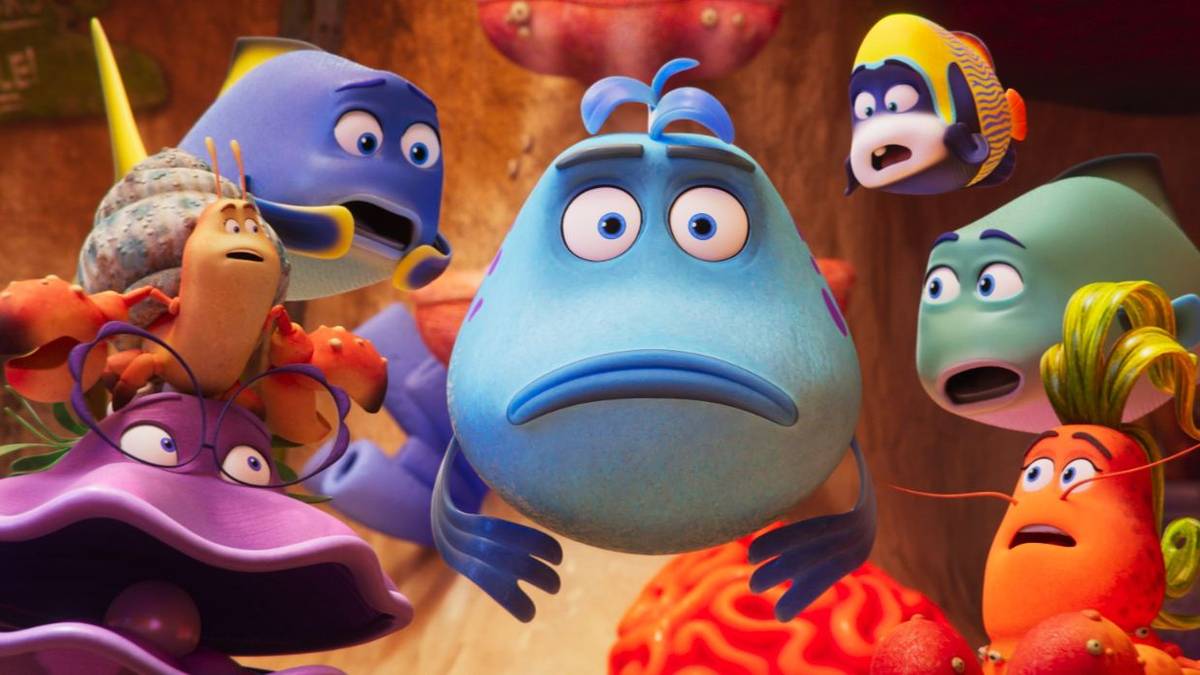
A Grumpy Nick Offerman Keeps This Fish Tale Swimming Along
Animated fish films have been done. Finding Nemo. Shark Tale. Ponyo. So to hear about another doesn't feel like anything new. However, The Pout-Pout Fish, starring Nick Offerman as a grumpy ocean pout named Mr. Fish, is a little different.…
Mar 15, 2026