The Kitchen Review: A Futuristic Take on Community Survival
Jan 28, 2024
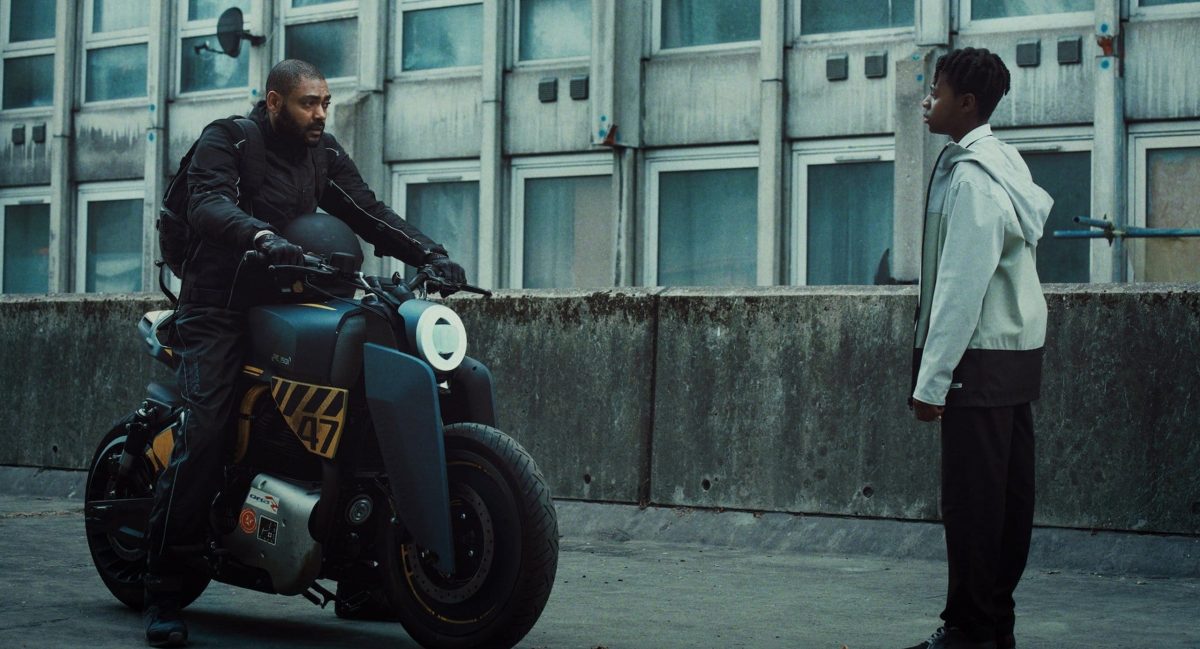
With a stylish cinematic charm that relies heavily on compelling storytelling and unique performances, Kibwe Tavares and Daniel Kaluuya’s collaborative work on The Kitchen sends a resounding yet mournful echo across the grey skyline of future London. Assembled on a formidable script by Kaluuya and Joe Murtagh, the film gracefully encapsulates the ironies of dystopian urbanization, weighed down by sociopolitical heaviness and the visceral echoes of a city in the throes of forced amnesia.The Good:Leading the fight in their somber urban sprawl is Kane Robinson as Izi. His every movement filled with unease yet countered by a steely resolve. Robinson has plunged himself into a gritty and thankless hero mould that sets the tone for the grim storyline. Alongside him, Jedaiah Bannerman as Benji strikes a memorable partnership, reeking of desperation as they combat the relentless erosion of their community’s identity.As the story unfolds in their post-apocalyptic bastion known as the Kitchen, other standout performances come from Teija Kabs and Demmy Ladipo. Kabs’s portrayal of Ruby exudes stoicism that penetrates the monochromatic bleakness with its tender subtleties. In contrast, Ladipo’s Jase adds the necessary friction, adding dynamic complexity to their rebel fight.However, while the film explores gritty social issues in a unique way, its appeal sometimes falters. A major fault lies within the narrative’s limited depth. There is ample room to delve further into individual character histories. Also, to explore the profound implications of the dystopian world and, in doing so, heighten emotional connectivity. This approach could’ve pushed it further beyond the limitations of a genre piece into a socio-political drama of considerable heft.Moreover, the dystopian lens often flutters into a form of gloom-filled surrealism that subtly jars the overall aesthetic tone. Scenes appear imbued with atmospheric noir yet inharmoniously yoked with striking surrealistic elements, pushing viewers out of immersive moments. While one could argue this as an artistic choice, its contribution to the storytelling ethos appears misplaced.In a bid to embed a dense dramatic layer to the unfolding story, Hope Ikpoku Jr. brings an interesting, although at times understated, element to the film. Playing the character Staples, he presents an additional layer of unease that sits intriguingly amid the principal cast, leaving an impression despite a rather inconclusive character arc.Interestingly, the musical score provided by Christian Sandino-Taylor and Maya Maffioli artfully traces the shifts and jolts of this visually stimulating dystopian landscape, giving depth to the ambiance and influencing the mood and pace.Overall:As directors, Kibwe Tavares and Daniel Kaluuya hold the fort sturdily despite narrative challenges. The amalgamation of striking visuals with complex social undertones adds an attractive distinctness to their shared directorial vision.Yet, what essentially keeps The Kitchen at the 3.5-star mark is the inextricable resonance it maintains with contemporary issues. The film touches on social displacement, the affordable housing crisis, and resistance against brutal state mechanisms. As much as it represents an exercise in visual storytelling, the movie propels itself as a call to action. The movie is asking audiences to respond empathetically to socio-economic complexities beyond their comfort bubble.In its dark heart, The Kitchen proffers a futuristic take on community survival, wavering individual loyalties, and systemic disillusionment, flavored with sporadic warmth and familiar grimaces. But as a vehicle of profound reflection or even sharp commentary, the film hesitates, faltering just short of full resonance. Nevertheless, as an entry into the dystopian genre and for the sheer vigor of its visual prowess and haunting score, The Kitchen earns its spot as a worthy cinematic experience. The Kitchen Review: A Futuristic Take on Community Survival Acting – 8/10 Cinematography/Visual Effects – 8/10 Plot/Screenplay – 7/10 Setting/Theme – 7/10 Watchability – 7/10 Rewatchability – 6/10
Publisher: Source link









The Last Airbender’ Season 2 Release Date Announced by Netflix
In February 2024, Avatar: The Last Airbender got its first chance to shine in a live-action format, as a live-action reboot debuted on Netflix after years of utilizing an animated setting. Starring Gordon Cormier as the titular Avatar Aang, next…
Apr 2, 2026

‘Agent From Above’ Images Tease This Week’s Release of Netflix Action Fantasy Series
In anticipation of its long-awaited debut this week, Netflix has revealed several new images from the streamer’s most ambitious action fantasy epic series. Nearly a decade after it was first announced, the popular streaming platform is hoping all that effort…
Apr 1, 2026

Maul – Shadow Lord’ Will Use Draw From George Lucas’ Original Plans for the Character
It sounds like Star Wars: Maul — Shadow Lord will revisit some of George Lucas' original ideas for Darth Maul before he sold Lucasfilm to Disney. Introduced in 1999's The Phantom Menace, Maul became an instantly iconic and recognizable character…
Mar 31, 2026

Ron Perlman Explains How His Role as Super Mutant in ‘Fallout’ Came to Be
Ron Perlman has a long list of impressive credits on his resume, including his fan-favorite portrayal of Hellboy in a pair of movies from 2004 and 2008. He also has a long history in video games, thanks to his work…
Mar 30, 2026