‘The Librarians’ Review: A Passionate and In-Depth Look at Book Bannings in the U.S.
Feb 12, 2025
For many, their first introduction to literature is at the school library. Whether it’s a story about a fantasy land full of faeries or a dystopia where a patriarchal totalitarian government has taken over the U.S., books transport us to new places, and we’ve all had that story that’s made us fall in love with reading or made us feel seen and heard. Found on the shelves, bound in plastic, with a Dewey decimal number on the spine, for many students, the library is a sacred place where they can read the stories that will shape them into the people they become in the future. It’s where the books that we want to read are there for us, free of charge, to dive into.
When it comes to book banning, it’s not hard to find who the bad guys are — just look at the people presenting and signing the legislation. But The Librarians works because it doesn’t just highlight the problem, but it highlights the heroes of the movement who are willing to risk their jobs and even their lives to give students access to influential and beloved books. In the documentary, director Kim A. Snyder shines a light on the rash of book bannings in recent years, specifically in Texas and Florida but across the country as well.
What Is ‘The Librarians’ About?
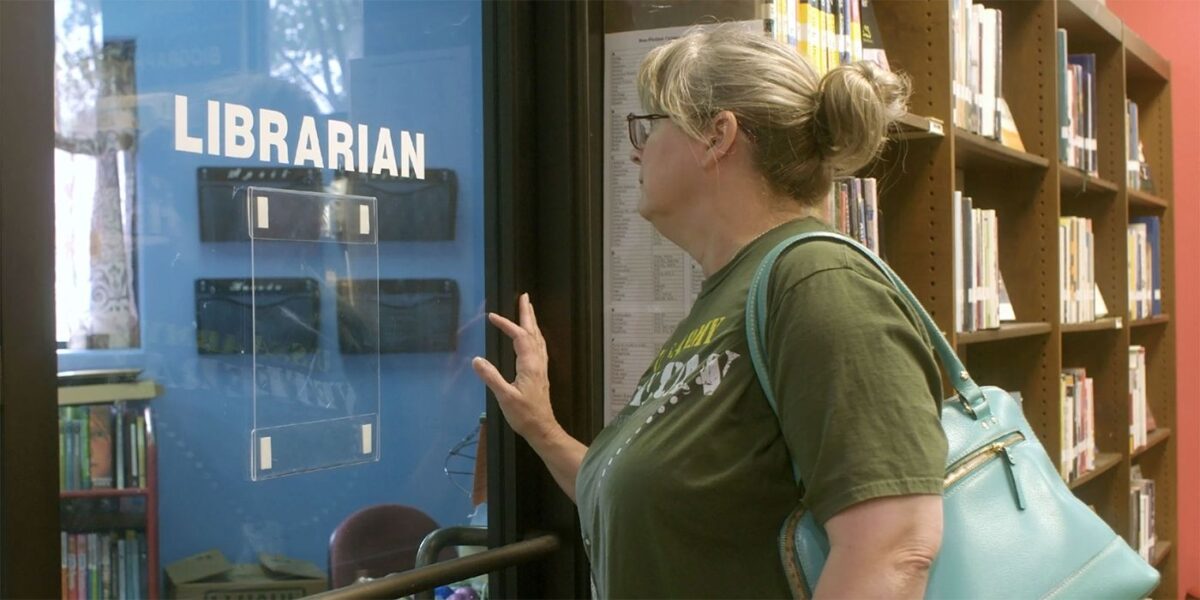
Image via Sundance
Throughout Kim A. Snyder’s documentary, we meet several librarians fighting on the frontlines of a culture war that threatens to stop the flow of information to students at school libraries. For the last three years, book banning has become more and more popular in the United States. Extremely conservative organizations have fought to ban books specifically on LGBTQ subjects, but also regarding race and gender. In their plea to ban these books that threaten their agenda, conservatives label books they don’t like as “pornography” and say that the books are “grooming” their children. The massive list includes unsurprising titles like The Handmaid’s Tale and All Boys Aren’t Blue but it also, bafflingly, includes the complete list of books by authors like Colleen Hoover and Sarah J. Maas.
We meet several librarians from different schools, some who have been fired for pushing back and some still working hard at their schools trying to speak up for the books that belong on the shelves. All of them are fierce advocates for their libraries and their students. It’s clear throughout the documentary that while their opposers are putting a political agenda at the center of this culture war, there are no egos with the librarians and their supporters, which include pastors, veterans, and local community leaders. There are multiple moments of librarians saying that they have first-hand knowledge that these books have saved the lives of students who read them. In a conservative area, where even someone’s parents could disown them for being who they are, a book reflecting their personal experience without judgment or shame can be the difference between life and death. As the doc slowly unveils some of the people spearheading the bans from the shadows, a greater conspiracy arises, and it becomes more and more important that the librarians get the support they deserve.
‘The Librarians’ Reveals That There’s Always Something More Insidious at Work
It becomes quickly obvious throughout The Librarians that the problem with these book bans is not merely a few angry mothers. Kim A. Snyder draws us in with compelling stories from local librarians before unveiling that the goal to ban these books comes from an extremely organized and well-funded group called Moms for Liberty. Snyder correctly dispels the idea that this is merely a local movement and points out that the political group has been maneuvering to put people in charge on the school boards that will control what children learn and read in classrooms.
As America becomes more conservative, schools have become one of the battlegrounds for political advocates on both sides of the aisle, but what becomes obvious with The Librarians is that there is always an ulterior motive. There’s always a larger presence at work, and while that might come off a bit too conspiracy theorist, it’s important to understand the forces behind these legislations so that we understand their purpose. Rather than getting pulled into the incendiary rhetoric — though she certainly highlights some — Snyder is more interested in uncovering the puppet masters, which offers new insight into the issue from a new and troubling perspective.
‘The Librarians’ Highlights the Dedication and Commitment People Have to Their Community
Image Via Sundance Film Festival
One thing that shines in The Librarians is the local dedication that some librarians and community leaders have for speaking up against book bans. On multiple occasions, Snyder references old book-burning tapes as documentary subjects point out the direct correlation between book burning and fascist regimes like the Third Reich. She also cleverly intercuts old footage with new footage in recent years of people gathering together to burn books in celebration. On this issue, it is the unlikely heroes on the front lines taking on school boards and well-funded organizations in a way that is inspiring.
One librarian who has publicly fought for her school even after being fired is afraid for her life says she’s gotten more than a few threats of physical violence from locals who believe she’s pro-disseminating pornography to kids. It’s a difficult road to walk, one that means isolating yourself from the community you live in and even grew up in to stand up for what is right. What’s worse is knowing that the people who so vehemently oppose these supposedly corrupting books haven’t even read a single page of them. It’s simply what the book represents that scares them.
Thankfully, these librarians aren’t alone. Students have stood up for their schools, supporting their librarians and making impassioned pleas to keep these books in libraries. Snyder follows her subjects through to board meetings, observing not only the students who are fighting the book bans, but the board members who snidely talk back to them or community members who scream their support for the bans. We feel very much like we are in the thick of it when watching, as if we’re in the room as the story develops.
There’s Much More To Still Explore Beyond ‘The Librarians’
Image by Jovelle Tamayo via Sundance Institute
One thing that Snyder repeatedly touches on in the documentary is the point that several librarians bring up: the books that are on the ban list have changed the lives of students. It has saved lives and could save more. However, the film never points out the confusing hypocrisy that comes with the book bans. After all, those opposed to keeping these books at school need only look at their children’s phones to see things much worse than what is on the pages of a book in a school library.
If the point is to point out that these books are “pornography,” a quick look at apps like Instagram and TikTok will reveal a lot more along those lines than what is written on the pages. Taking a wider look at information in general and how a curated collection of books that approach a subject such as sex and gender in a nuanced way is much better for a young person struggling with their self-identity than something they might find on social media. So why are conservatives targeting libraries? What is the real point behind it all?
Snyder touches on this, but The Librarians fails to look more at the larger picture, focusing specifically on the school libraries. At the end of it all, the film ends with hope and encouragement from librarians to librarians: to all stand up for what is right. It’s a positive outlook on a changing landscape, and despite a few shortcomings, it sends the right message to those who are curious or uninformed about the subject. If there’s one thing that Snyder’s doc shows, it’s that people can change, and maybe The Librarians is the first step in that process.
Publisher: Source link



Born Again’ Showrunners Detail How the Media Ties into Season 2
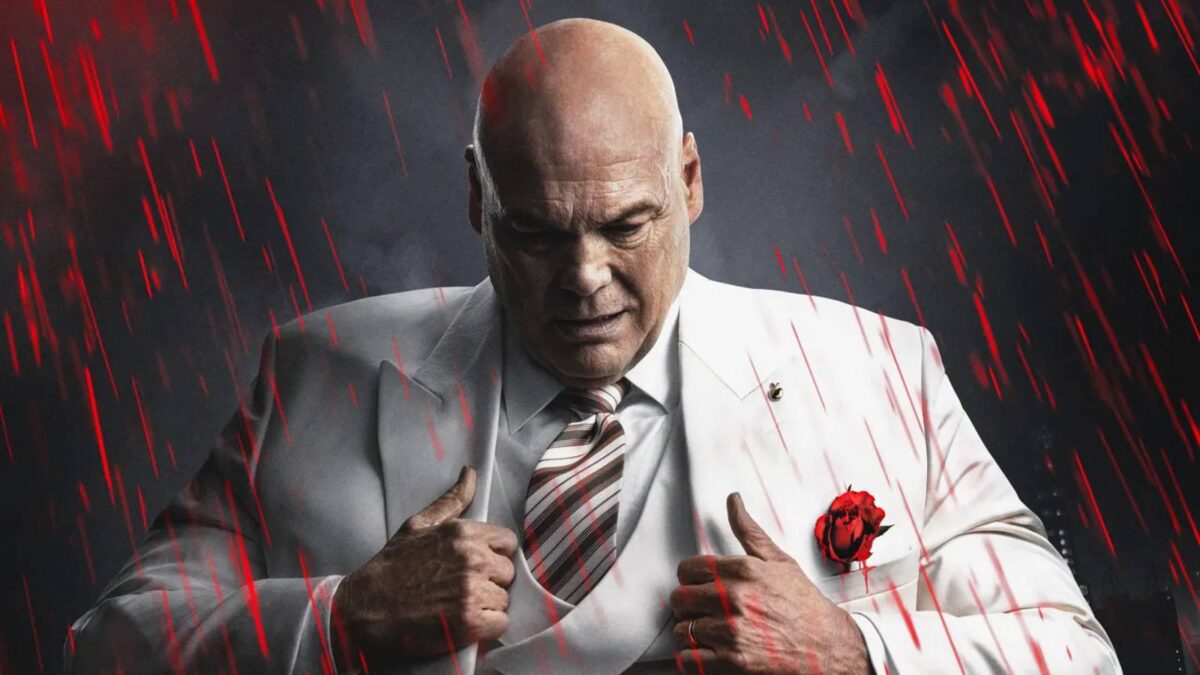
Marvel is fast approaching the release of Daredevil: Born Again Season 2, marking its second live-action Disney+ show of 2026. Bringing back Charlie Cox's Matt Murdock and Vincent D'Onofrio's Wilson Fisk, this season picks up where Season 1 left off,…
Mar 23, 2026
New ‘Wheel of Time’ Animated and Video Game Adaptations Are in the Works
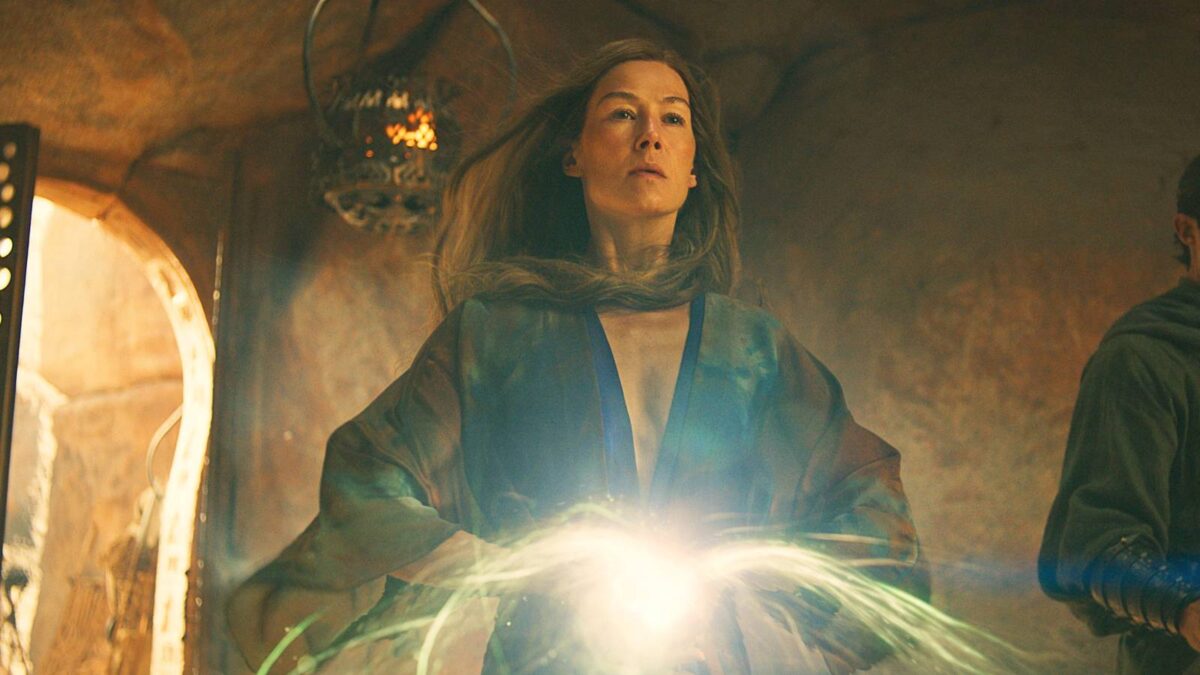
Amazon might be finished with The Wheel of Time, but we haven't seen the end of the story when it comes to adaptations of Robert Jordan's bestselling high fantasy saga. Fans were left blindsided when Amazon abruptly pulled the plug…
Mar 22, 2026
‘Off Campus’ Teaser and Release Date Revealed by Prime Video
No one expected a love story between rival hockey players to become one of the most talked-about TV shows of 2025, but there's a lot more where Heated Rivalry came from, as a new teaser for Prime Video's foray into…
Mar 21, 2026

Sarah Michelle Gellar Urges ‘Buffy’ Fans to Avoid Reading Leaked Reboot Scripts
Buffy the Vampire Slayer fans have had a rough few days after Hulu officially pulled the plug on a revival of the series, which would have brought star Sarah Michelle Gellar back as the titular heroine. Described as a continuation…
Mar 20, 2026