
The Life and Death of Brent RenaudâFilmmaker Magazine
Oct 23, 2025
Armed With Only a Camera: The Life and Death of Brent Renaud
As I wrote in my capsule review for this year’s SXSW curtain raiser, Armed Only With a Camera: The Life and Death of Brent Renaud is a film that Craig Renaud, Brent’s brother (and my friend for the past dozen years, ever since I met the tight-knit siblings covering their now defunct Little Rock Film Festival) should never have had to make and instigated by an event no family should ever have to live through. And that puts Brent’s loved ones in the grieving company of untold numbers of families around the world — the very same people the award-winning conflict zone documentarian (alongside his younger sibling) dedicated his life to, a life he lost on March 13, 2022 while covering Putin’s full-scale invasion of Ukraine. It’s a stunning 37-minute eulogy, made all the more palpable through Brent’s own words and cinematography, to a brother and lifelong filmmaking partner, a dogged journalist and ultimately a victim of war. In turn it’s also a powerful tribute to all conflict zone journalists and to all victims of our never-ending wars.
The week before the doc’s October 21st HBO debut, Filmmaker caught up with Craig and producer Juan Arredondo, a Colombian-American photojournalist who was seriously injured in the March 13th attack, at the Hot Spring Documentary Film Festival (where Craig presented the siblings’ mentor Jon Alpert with the Brent Renaud Career Achievement Award) to hear all about cinematically honoring Brent, a multi-award-winning documentarian who like his brother preferred to remain firmly offscreen.
Filmmaker: So I’m quite curious to hear about the partnership you two have developed since Brent was killed. How is the working relationship similar to and different from collaborating with Brent?
Renaud: Similar to working with Brent, my relationship with Juan goes much deeper than filmmaking. Since Brent’s death Juan has become like a brother to me and a part of the Renaud family. We spent over three years editing Armed Only With a Camera together, which was very difficult but also a healing process for us both — we lean on each other when one of us is having a bad day. In this line of work you have to deeply trust your team because they are the ones who help you survive both physically and emotionally. The bond you form is very deep.
Juan was with Brent when he died, and he is a very strong link for me to my brother. Brent was an incredible teacher, and he trained us all well. We often laugh when we are assembling our gear for a shoot in a methodical way, or massaging an edit meticulously, that we are like fine-tuned robots who Brent groomed. Brent is still very much with us every time we pick up our cameras and head out for a shoot.
Arredondo: I often say that I lost a friend and gained a brother. This is how I see Craig. Over the past three years we have gotten to know each other, healed together, and supported one another through the long process of producing and editing this film.
Before the attack that killed Brent I worked closely with him in the field, while Craig supported us behind the scenes — producing, editing and directing our projects. Now, having spent this time with Craig, I see how different the brothers are. Brent was intense, quiet and hyper-focused in the field, sometimes demanding but always driving our work forward with purpose. I admired that intensity; it made our collaboration both effective and deeply meaningful. Craig, by contrast, is the mellow one — easy to talk to, calm, and generous in sharing his experience and knowledge. Over these three years we’ve shared so much, both personally and professionally, and I’ve come to understand and respect his process, which strengthens our brotherhood.
Filmmaker: How much archival footage did you end up working with? And considering Brent was a rather private person, how did you decide what to include (and not)?
Renaud: The archival footage goes all the way back to our childhood growing up in Arkansas in the early 1970’s. Our parents Lou and Georgann had a Super 8 film camera and documented our childhood well. My mom had kept all of the film reels, so I was lucky to have a lot of perfectly preserved footage to go along with some of Brent’s most personal revelations.
Brent was very private, and I would not have been comfortable revealing anything that Brent had not disclosed publicly himself. A few years before his death Brent gave a speech to his Harvard Nieman classmates in which he revealed for the first time that he had been diagnosed with autism as an adult. I know this must have been incredibly difficult for Brent to stand in front of a room of people and open up in this way. He had actually prepared two endings to his speech, and at the last minute had the courage to talk about his autism. Fortunately, Juan was one of his Nieman classmates that day and filmed the speech. During it Brent said, “The diagnosis of autism tells you very little about a person. I can be as calm as a Zen monk in a firefight or a disaster zone, but for years a cocktail party in Brooklyn was absolutely terrifying.”
The archive also includes more than 20 years of footage that Brent and I captured in conflict zones around the world: places like Iraq, Afghanistan, Somalia, Haiti, Libya, Mexico, Honduras, Chicago, and Brent’s final footage from Ukraine. It was a long and challenging process to look back through this footage in search of Brent’s voice and presence on camera.
We are verité filmmakers trained by the legendary documentarian Jon Alpert, so Brent was very seldom on camera. Sometimes we would go down black holes for months, digging for those perfect moments that would best show viewers how compassionate a filmmaker Brent was. My favorite is a scene in Somalia that normally might have hit the edit room floor. Brent was in a hospital filming the aftermath of the worst car bomb in Somalia’s history when a severely wounded Somalian man called out and asked him his name. What he said to Brent next brings me to tears every time I hear it because it speaks volumes about him and gives me hope for humanity in the midst of war: “The way you hold that camera…you are doing it from your heart. It really means a lot. You and I, we can change this world if we wanted to. Believe that.”
Arredondo: I was helping Craig with the archival footage, and one of the most challenging parts was going through hundreds of hours of their work in Iraq. This was a year of footage, hundreds of hours of images, and what made it challenging was finding moments when Brent would appear on camera. Craig often pointed out scenes where Brent might have been filmed, and even in many of these moments he would be in the shot and not say much. However, spotting those moments, which you can see in the film, reveals his humanity and empathy for the people he was documenting.
Filmmaker: When it comes to keeping safe in conflict zones, how have things changed for journalists in recent years? (Obviously, identifying oneself as press not only doesn’t guarantee safety but can actually get you killed in many places.) Have the recommendations likewise evolved?
Renaud: According to the Committee to Protect Journalists (CPJ), this is the most deadly time for journalists since they began collecting data more than three decades ago. Since Brent’s death in 2022, more than 100 journalists have been killed every year.
I remember in 2010 Brent and I filmed a story for the New York Times called The Most Dangerous Beat: Juárez, Mexico. Journalists were being killed with impunity in Mexico, mostly for stories that connected politicians to the drug cartels. El Diario newspaper in Juárez had just lost another reporter — Armando Rodriguez had been gunned down in front of his eight-year-old daughter while taking her to school. Brent asked Pedro Torres, the editor of El Diario, What kind of responsibility do you feel as the editor as you send reporters out everyday? Pedro’s response has always stuck with me: “It’s a big responsibility, but I deal with it. I have to. Without journalists there is no democracy.”
After filming that story in Juárez, Brent and I walked over the bridge to El Paso and breathed a sigh of relief that we had survived another dangerous assignment. I always deeply admired journalists in places like Mexico, who were brave enough to keep reporting while being so vulnerable to having their loved ones at risk. I think I took for granted that I would always be able to get on a plane and return to the safety of the United States. I am very concerned about where we are heading at this moment — not just overseas as journalists are being targeted and executed, but at home where the First Amendment is being tested like never before.
Arredondo: The rules are shifting constantly, as we’ve seen in recent months, both here and abroad. Journalists are increasingly becoming targets. We are witnessing not only attacks on freedom of speech, but also direct assaults on press freedom — efforts to dictate what we can and cannot cover. In response, news organizations and advocacy groups such as the Committee to Protect Journalists and Reporters Without Borders are working to prepare and protect reporters. They provide training, resources and tools to help journalists recognize potential dangers, evaluate risks, and develop contingency plans.
Filmmaker: I’m also very curious to hear about the Brent Renaud Foundation mentorship program. How can potential mentors and mentees become involved?
Renaud: Our family really wanted to continue Brent’s legacy of mentorship through the foundation. Brent and I first learned how to be filmmakers from our incredible mentor Jon Alpert. Brent was also a great mentor to many emerging filmmakers throughout his career. My production team today is made up of filmmakers who were mentored by Brent, and they are serving as mentees for the foundation. Potential mentors and mentees can contact us through the Foundation website.
Our board has also recently been discussing what role the Foundation can play in giving support to journalists who cover conflicts, especially as they have come under increasing attack in the past few years. We have been partnering with the Committee to Protect Journalists and the James Foley Foundation during the rollout of Armed Only With a Camera to raise more awareness around this issue. We are also planning to create healing spaces for journalists after they return home from covering conflicts. Juan and I are still going through that healing process since we lost Brent, and we want to be there for other journalists who are coping with traumatic experiences.
Filmmaker: Besides serving as a tribute to Brent, what do you hope the film’s lasting impact will be?
Renaud: We ended the film with a card that reads, “In memory of Brent Renaud and the many journalists who gave their lives in pursuit of truth and peace.”
Brent was never focused on simply getting to the frontlines of conflicts, and I believe that is true for most of the journalists who gave their lives trying to shed light on the truth. Brent wanted more than anything else to tell the stories of innocent people who were caught in the middle of war. I hope that Brent’s story and his compassion for others can contribute to lasting peace in the world.
Arredondo: By offering an intimate portrait of Craig and his family’s loss we also hope to pay tribute to all fallen journalists and their loved ones. Since Brent’s death, these past three years have been among the deadliest for journalists worldwide. With this film we hope to leave a lasting reminder of the risks journalists take to bring truth to the public, and of the importance of protecting those who carry out this work.
Publisher: Source link



Wuthering Heights Review | Flickreel
As far as adaptations go, I’ve never viewed any source material as sacred, including The Bible. While a faithful adaptation is always welcome, I’m open to a filmmaker leaving their signature on a classic story, especially one that’s been told…
Mar 17, 2026
Amy Adams Sinks In Vapid, Misguided Alcoholism Drama By ‘Pieces of a Woman’ Director [Berlin]
For a solid decade, starting in the late 2000s with Disney’s charming fairytale comedy “Enchanted” all the way to Denis Villeneuve’s melancholy sci-fi “Arrival,” it was easy to trust Amy Adams, a six-time Academy Award nominee. Then, somewhere around Ron…
Mar 17, 2026
Mason Gooding & James Van Der Beek’s Bad Night Is Aggressively Dull
Ever since the Scream franchise helped put him on the map, Mason Gooding has been a great talent to watch. The genre-bending slasher Heart Eyes is still his best non-franchise role yet, but he's also branched outside of horror in…
Mar 15, 2026
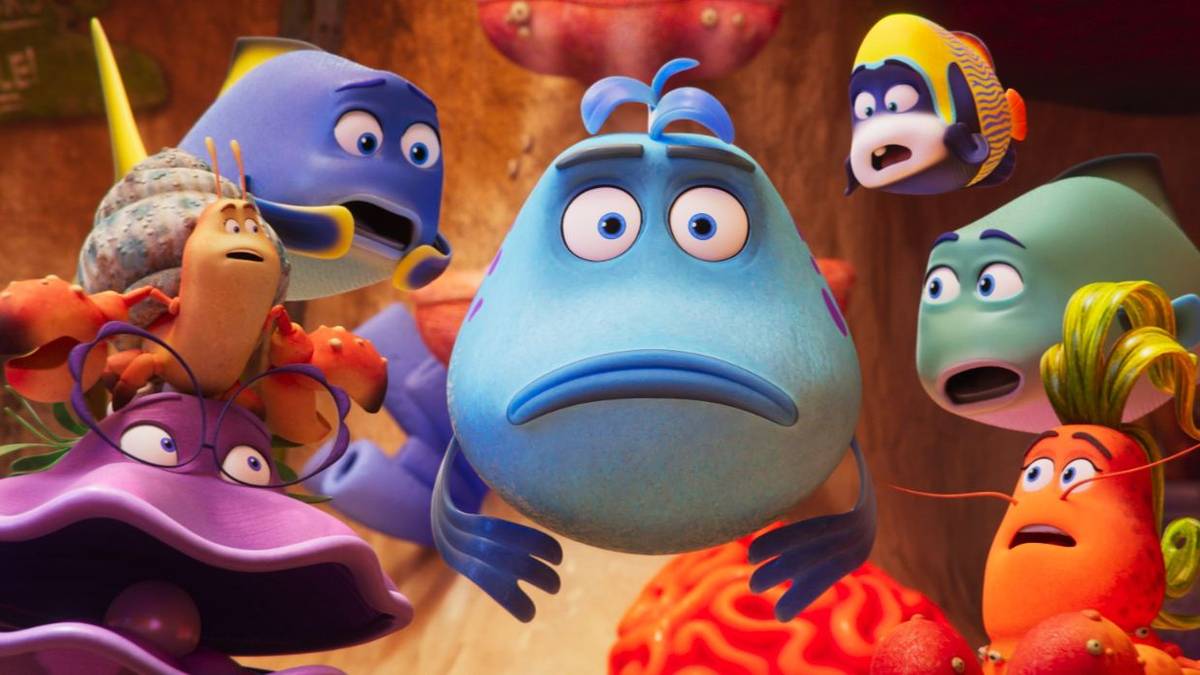
A Grumpy Nick Offerman Keeps This Fish Tale Swimming Along
Animated fish films have been done. Finding Nemo. Shark Tale. Ponyo. So to hear about another doesn't feel like anything new. However, The Pout-Pout Fish, starring Nick Offerman as a grumpy ocean pout named Mr. Fish, is a little different.…
Mar 15, 2026