
The Mire | Film Threat
Apr 4, 2023
Director Adam Nelson The Mire has great aspirations. Described as a “contained thriller” and financed predominantly through two years of crowdfunding, the film attempts a mature, nuanced story without a mainstream budget. And while much is accomplished within its intimate framework, the ambitions of Chris Watt’s script often overextend, resulting in a solid, if uneven, experience.
The film follows a loquacious cult leader, Joseph (Antony Knight), on the eve of his denomination’s defining moment — their ascension from Earth via mass suicide. But the game is truly afoot when his two most faithful converts, Marshall (Joseph Adelakun) and Hannah (Holly McLachlan), discover him in what appears to be the abdication of his duties. A mental game of cat and mouse ensues wherein the dauntless shepherd must convince his followers that everything is still happening according to plan.
The Mire was centrally filmed at King’s Church in Portsmouth, U.K. Reportedly, Watt was directly inspired by the location, and it shows in the cinematography. There are canny, reaching shots of the church’s cathedral-like interior, which add a lot of history to the conversations and actions of the central trio. This is buffeted by strong acting performances by all three main cast members. This combination of people and place adds a tangible richness to the film as it unfolds.
“…the dauntless shepherd must convince his followers that everything is still happening according to plan.”
However, The Mire is undone somewhat by characters who are always in flux. Their core personalities and motivations are never firm. For example, in the first scene, Marshall and Hannah are shown doubting Joseph in a way that, for the viewer, is intuitively incorrect: they do not think or act like the firmest members of a cult but rather as free-thinking individuals. Furthermore, our first glimpse of Joseph is confusingly meek, especially considering his stature.
Yet, these shaky moments are contrasted by scenes of authentic power. Much of the plot is comprised of displaced vignettes where the audience is given glimpses as to how Joseph systematically and diligently dissected the mental state of his followers leading up to their conversion. In these scenes, everything clicks — the characters and the greater world of the film resonate, uncovering authentic insight into how quotidian issues such as alienation and a lack of purpose can feed a cult’s influence.
Ultimately, the sense of unevenness comes from the back and forth between the presence and absence of believability. When the film errs, it does so by reaching beyond its own “contained” framework. This makes it so that their ideas are no longer extensions of the characters but rather axioms merely floating through King’s Church. But, when it succeeds, it does so with moments of powerful dialogue and stirring revelation, lending the greater whole impetus. Ultimately, the film showcases the talent of all involved despite its problems — less dire than its name, The Mire is more a mixed bag, one with more good than bad.
Publisher: Source link







The SpongeBob Movie: Search for SquarePants Review
It raised more than a few eyebrows when The SpongeBob Movie: Search for SquarePants was selected as a closing night film at AFI Fest. It made more sense within the screening’s first few minutes. Not because of the film itself, but the…
Feb 5, 2026
28 Years Later: The Bone Temple Review: An Evolving Chaos
Although Danny Boyle started this franchise, director Nia DaCosta steps up to the plate to helm 28 Years Later: The Bone Temple, and the results are glorious. This is a bold, unsettling, and unexpectedly thoughtful continuation of one of modern…
Feb 5, 2026
Olivia Wilde’s Foursome Is an Expertly Crafted, Bitingly Hilarious Game of Marital Jenga
If you've lived in any city, anywhere, you've probably had the experience of hearing your neighbors have sex. Depending on how secure you are in your own relationship, you may end up wondering if you've ever had an orgasm quite…
Feb 3, 2026
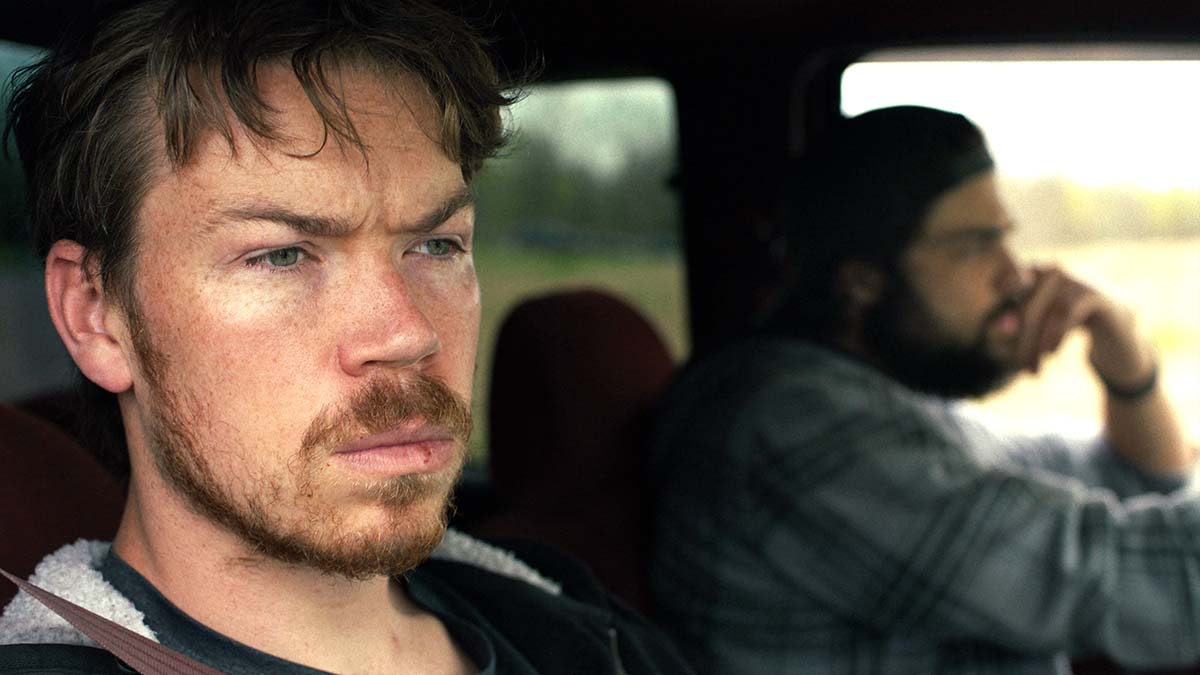
Will Poulter Is Sensational In An Addiction Drama That Avoids Sensationalizing [Sundance]
Despite all the movies made about addiction, the topic does not naturally lend itself to tidy cinematic narratives. (At least, when portrayed accurately.) While actors often visualize the condition of substance dependency through expressive physical outbursts, the reality of recovery…
Feb 3, 2026