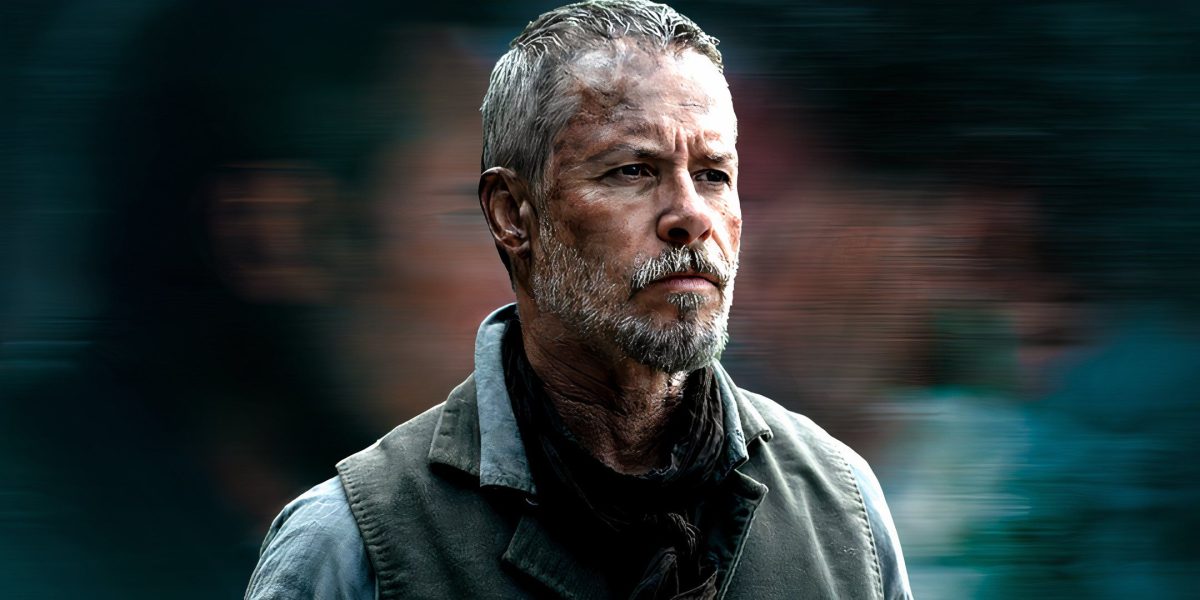
The White Savior Complex Is Completely Upended In Compelling Guy Pearce Drama
Jul 11, 2024
Summary
The Convert
offers an authentic portrayal of Māori culture, rich in emotion and historical significance.
Director Lee Tamahori’s visually stunning style immerses viewers in the world of early 19th-century New Zealand, even if the story’s pacing is occasionally too sluggish.
Stellar performances from Guy Pearce and Tioreore Ngatai-Melbourne showcase the talent of the cast in this compelling tale.
As Hollywood finds itself expanding its onscreen Indigenous representation, with everything from Reservation Dogs to Echo, Australian cinema has similarly been focusing more on Aboriginal culture, some of which has found international success, including the historical psychological thriller The Nightingale. With the Guy Pearce-led The Convert, the film not only looks to continue this meaningful trend, but it also comes fairly close to matching the heights of Kevin Costner’s similarly structured Dances With Wolves.
The Convert (2024) Director Lee Tamahori Release Date July 12, 2024 Writers Lee Tamahori , Hamish Clayton , Shane Danielsen Cast Guy Pearce , Tioreore Ngatai-Melbourne , Antonio Te Maioha , Jacqueline McKenzie , Lawrence Makoare , Dean O’Gorman , Ariki Turner , Duane Evans Character(s) Thomas Munro , Rangimai , Maianui , Charlotte , Akaterewa , Kedgley , Uenuku , Pahirua Runtime 119 Minutes Expand
Hailing from blockbuster filmmaker Lee Tamahori, himself of Māori descent, The Convert revolves around Pearce’s English preacher Thomas Munro, who is transported to Epworth, a British settlement in 1830s New Zealand that has a tenuous relationship with one of the neighboring Māori tribes. As Munro tries to forge a more peaceful coexistence between one tribe and the British settlement, many of whom have bigoted feelings towards the Aboriginal people, he finds himself caught up in a war between another neighboring Māori tribe, putting him on a conflicted emotional path.
The Convert Offers A Nicely Varied Depiction Of Māori Culture
With a story focused on a white population looking to expand into a country’s Native territory, too often does a creative look to portray the latter culture with a very narrow mindset, choosing to keep the line between the “good” and “bad” characters separate by making Indigenous groups the enemy. That said, there have been a number of stories that seek to break this mold by actually depicting the Native’s side of the story, one of the more memorable being that of Costner’s aforementioned Dances with Wolves adaptation.
The Māori tribes themselves are also offered an appropriately balanced depiction of how they were at the time of Britain’s attempted expansion to New Zealand.
Though not directly lifting from the 1990 Western classic’s story, The Convert does show it learned the right lessons from the movie while exploring similar themes. Father Munro can be seen as a fairly direct parallel to Costner’s Lt. John Dunbar, with the two finding themselves in an unexplored corner of the world for their people. One of the biggest and best differences between the two is that Munro’s devotion to his faith made for a uniquely compelling bridge when trying to understand both Māori tribes’ perspectives.
The Māori tribes themselves are also offered an appropriately balanced depiction of how they were at the time of Britain’s attempted expansion to New Zealand. Both tribes enact understandably brutal attacks on both the immigrating people, and each other, though it is done so in an in-depth way thanks to sympathetic and quietly emotional sequences. Tamahori and co-writer Shane Danielsen properly seek to understand the cultural reasons behind these tribal conflicts beyond just defending their lands.
Pearce Leads A Cast At The Top Of Their Games
With a Golden Globe nomination and a Primetime Emmy win to his name, it may not come as much of a surprise that Pearce delivers another fantastic performance in The Convert, one that is quietly compelling. Much like his character, Pearce nicely embodies the inquisitive and compassionate side of Father Munro, who is simply trying to keep the peace between warring factions, while also desiring to learn from the Māori tribes. As we learn more about his motivations for becoming a priest and his troublesome past, Pearce commands the screen even further.
And with The Convert giving just as much screen time to the Māori people as Pearce’s character, Tamahori’s casting decisions prove exceptional. Playing the emotionally devastated Rangimai, Tioreore Ngatai-Melbourne proves to be an absolute powerhouse, imbuing her character with more fascinating layers than what may have been on paper. Antonio Te Maioha’s Maianui and Lawrence Makoare’s Akatarewa are similarly shown to be far more than their brutal exteriors would indicate, making for intriguing foils to Pearce’s calm Munro.
Tamahori’s Direction Is Visually Stunning (Albeit A Bit Sluggish In Parts)
After having made his directorial debut with the acclaimed 1994 drama Once Were Warriors, which also deeply explored Māori culture through a then-modern lens, Tamahori became a go-to for helming a number of sequels to blockbuster franchises, ranging from the Morgan Freeman-led Alex Cross sequel Along Came a Spider to Pierce Brosnan’s infamous final James Bond outing, Die Another Day. While many of these films saw him adhere to the style established by their original installments, Tamahori has generally returned to reclaiming his own unique style with such recent efforts as The Devil’s Double and Mahana.
Re-teaming with his Mahana cinematographer Gin Loane, The Convert nicely continues Tamahori’s trend of delivering grounded, visually stunning stories. The filmmaker takes advantage of the various New Zealand locations to really ground us in this world of the past, finding a perfect mix of natural and artificial lighting to build some moody atmosphere for many of the film’s heavier sequences. The movie’s few major battle sequences are also remarkably intense, with the fight choreography and camera work keeping us glued to the screen, particularly with the movie’s “no one’s safe” story.
One of the few issues The Convert ultimately faces is with its nearly two-hour runtime, which at times feels a bit too deliberate. Quieter moments that do, admittedly, offer meaningful character development are still somehow sluggish in their pacing and execution, while some story beats feel as though they’re being unnecessarily revisited after concluding. But in spite of some of its pacing problems, The Convert is by far one of Tamahori’s best films in years.
Lee Tamahori’s action-filled historical epic stars Guy Pearce as Thomas Munro, a newly arrived preacher in a colonial town in early 19th-century New Zealand who finds himself at the center of a long-standing battle between two Māori tribes.ProsThe story offers a moving tale rich with cultural authenticity for the M?ori people.Lee Tamahori’s direction is visually superb.The cast are all at the top of their game, particularly Guy Pearce and Tioreore Ngatai-Melbourne. ConsThe pacing feels a bit sluggish in parts.
Publisher: Source link



Netflix’s ‘Jo Nesbo’s Detective Hole’ Debuts With Perfect Rotten Tomatoes Score
Anyone currently on the hunt for a new crime thriller to binge-watch may want to divert their attention to Jo Nesbo's Detective Hole, which is currently streaming on Netflix. The nine-part drama, adapting the fifth book in Jo Nesbø's bestselling…
Mar 29, 2026
Prime Video’s ‘God of War’ Casts ‘Lost’ Star Sonya Walger as Freya
Amazon's upcoming God of War series that is currently in production is also one of the most anticipated of the next couple of years. Film and television adaptations of popular video games have been on the rise, with creative teams…
Mar 28, 2026
Paramount+ Renews ‘Criminal Minds: Evolution’ for Season 19
The start of its new season is still weeks away, but fans of Criminal Minds: Evolution won't have to wait that long to learn the fate of the long-running hit crime procedural. Execs at Paramount+ have already decided what the…
Mar 27, 2026
‘A Tale of Two Cities’ First Look Reveals Kit Harington in MGM+ Series
The BBC and MGM+ are teaming up with a new four-part limited series adaptation of Charles Dickens' classic 1859 novel A Tale of Two Cities. Game of Thrones veteran Kit Harington will play Sydney Carton, a cynical English lawyer who…
Mar 26, 2026