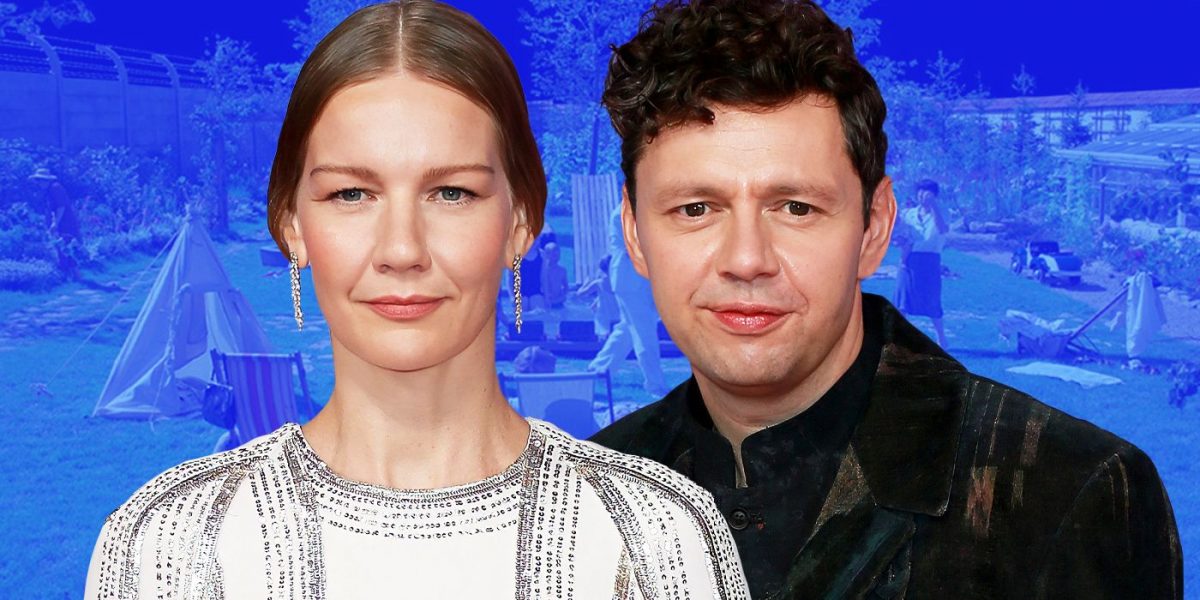
The Zone of Interest Stars Reveal the Unusual Way They Filmed the Movie
Dec 15, 2023
The Big Picture
Stars Christian Friedel and Sandra Hüller worked within a fully surveilled set on-site at Auschwitz for the film “The Zone of Interest”, utilizing improvisation around their lines. The movie focuses on the everyday lives of Rudolf Hoss and his wife Hedwig, rather than explicitly depicting the horrors of Auschwitz. The filming technique of using hidden cameras and long takes created a unique and immersive experience for the actors, keeping them constantly in character and adding emotional impact to their performances.
In order to stay connected to their characters and their scenes in A24’s The Zone of Interest, stars Christian Friedel and Sandra Hüller worked within the confines of writer-director Jonathan Glazer’s fully surveilled set. Throughout the production, which took place on-site at Auschwitz, Glazer kept multiple cameras set up and rolling and asked his cast to improvise around their lines. In this interview with Collider’s Steve Weintraub, Friedel and Hüller share what kind of environment and results a technique like that creates.
Based on the novel by the late Martin Amis, Friedel and Hüller play Rudolf Höss and his wife Hedwig, a couple whose idyllic home sits nestled near the banks of a river. Hedwig spends her days toiling in the garden and raising their children while her husband serves as the commandant of Auschwitz, brainstorming the best methods to dispose of bodies. Their lives take place just on the other side of the German concentration camp, though viewers are shown only the mundane day-to-day lives of the Höss family. The horrors are never explicitly depicted onscreen, but the haunting nature of what’s going on just beyond their garden wall marks every beat of the film.
In their interview below, Friedel and Hüller discuss the acclaim and emotional response the movie has received since first premiering at this year’s Cannes Film Festival, as well as their anticipation for its release in Germany. For The Zone of Interest, Glazer kept up to 10 cameras rolling, embedded on set; the costars recall what it felt like to constantly be in character and perform for “one-and-a-half hour improvisations” with nowhere to escape to, and little room for error. You can watch the video above the article or read the full interview transcript below for more on the filmmaking techniques and the impact this movie had on audiences and its stars.
The Zone of Interest The commandant of Auschwitz, Rudolf Höss, and his wife Hedwig, strive to build a dream life for their family in a house and garden next to the camp. Release Date December 15, 2023 Director Jonathan Glazer Cast Sandra Hüller , Christian Friedel , Freya Kreutzkam , Max Beck Rating PG-13 Runtime 105 minutes Writers Martin Amis , Jonathan Glazer
Read Our ‘The Zone of Interest’ Review
COLLIDER: I think I’m gonna start with the most important question upfront, which is Sandra, what is the proper viewing order of a double feature between The Zone of Interest and Anatomy of a Fall?
SANDRA HÜLLER: I’m not going to answer this. You can’t watch because it’s too long in a row. Go on separate days. That’s all I can say. I’m embarrassed.
Related ‘Anatomy of a Fall’ Director Juliet Triet and Star Sandra Hüller on Making One of the Best Films of the Year They also discuss getting the rights to 50 Cent’s “P.I.M.P.” & the French courts.
You never know when you’re making something what the reaction is gonna be from audiences and from critics, so for both of you what has it been like, the reception to this film, winning awards, and being the United Kingdom’s entry for the Academy Awards?
CHRISTIAN FRIEDEL: I think we are not doing or making art for awards, but I’m really lucky that Jonathan’s vision works, and this is really great. If you are recognized for your work, for all of our work, the whole team working on this movie and so on, this makes me really happy. And it’s helpful, hopefully, that many people watch this movie. We said it’s a movie for everyone. For me, sometimes it’s hard to say that, but it’s an important movie now in these difficult political times, [with] all these things that are happening now. It’s very helpful that people recognize this movie exists and are hopefully watching this movie.
HÜLLER: It didn’t open in Germany yet. I think that’s going to be interesting what’s going on there, because I think the experience that you have as someone who actually speaks the language that you hear in the film is different from people who just hear it as a noise, who don’t understand the language even if there are subtitles. So I think, yeah, that’s going to be interesting. But so far, people are mostly very emotional when they talk to us, and I’m very grateful that we could connect with them and have an impact on their way of thinking or even on their lives.
How Jonathan Glazer’s Filmmaking Approach Impacted ‘The Zone of Interest’
One of the unique things about this film is the way you actually shot it and the way Jonathan allowed you to do these long takes with hidden cameras. It’s not the norm for most movies. Can you both talk about that aspect of the filmmaking?
FRIEDEL: I really like to do this in this way, observing things. It was a luxury situation because when we came to the set everything was prepared, there were no technical interruptions, and we had all the time in the world. Sometimes there was someone who was yelling cut, sometimes there was no one who was yelling cut, and then we were surprised, “Okay, it’s continuing…” Sometimes we don’t know it’s still rolling or recording [or] if everything is important now, or what’s going on. Sometimes we were nervous or unsure of what we were doing here, but it’s a great situation because we were more searching than shooting sometimes, I had the feeling.
For example, we had the dinner scene and one-and-a-half hour improvisations, and the improvisations are not in the movie. Small parts of them are. But it was helpful because both of us said to Jonathan, “We are not authors. We cannot improvise in a historical context,” but sometimes the improvisation or the time helps you to better get into a situation, and I think that was really helpful to have no technical interruptions, all the time in the world, use your impulse. Sometimes you have the impulse, “Now I’m starting with the scene with a line, or surprising my colleague that I’m starting now.” Sometimes not knowing what’s going on, it’s great to start at zero. We all start from point zero and then figure out what’s going on. Sometimes we failed, sometimes it was not good, but I think that was a great experience, a luxury experience for me.
HÜLLER: It’s really unique, this technique, and I hope more people are going to use it depending on the story they want to tell, obviously. It makes it so easy for actors to be in that place in one way, and the other way, of course, the pressure is high because the surveillance does something to you. You cannot hide anywhere. There’s no place where you can put your actual feelings. You have to be in this situation all the time and, at the same time, be with your partner all the time, which is a great thing, so we would never lose the tension when the camera would turn around like they normally do. So, everybody’s in this together at the same time and that is a great experience in a way. And also, there’s so much space to experience the presence of even something else or people who have lived there before or whatever. There was a lot of time and space to think about the actual situation that you are in, not only filming-wise, but also in the place as a person.
It requires, obviously, a lot of trust towards the filmmaker, the director, and everybody involved, because they see everything, and they can use everything you do. You can not hide your mistakes or when you kind of drop out of something, or you have a laughing fit in between because of the nerves, or when you start crying, which the characters probably wouldn’t do. You couldn’t even go to the pantry where they store their food to hide. There was no place. And to be kind of imprisoned in a way like that, to be stuck in this situation, has an enormous impact on the acting and the experience.
I can’t imagine, as an actor, not having, essentially, downtime. You can’t shut it off; you’re in character at all times. It’s almost doing method. You’re essentially method.
HÜLLER: I don’t know anything about that, but maybe. If you say so.
‘The Zone of Interest’ Employed a Non-Traditional Acting Method
Image via A24
So you see the shooting schedule, what was the scene or sequence that you had circled in the script or on the shooting schedule, either because you were very nervous to film it or you were very excited to film it?
FRIEDEL: That’s a good question. For me, I was afraid of this last scene in the movie when Rudolf is throwing up, because that was a personal fear. The last time I threw up was 25 years ago. You said method acting; we both have a theater background and all of what we are doing is acting in a way, so sometimes we connect ourselves with characters or sometimes not, but method acting means sometimes the dream to do a documentary thing, or the realness, but I think our work is to create a realness you can believe. Sometimes here, Jonathan was searching for [us to] not act in a traditional way, that we are being in this situation, and I was really afraid of this scene because I know he wants [my throwing up to be real]. But then we decided to change this thing, and it’s more a battle between body and soul, and it was a tough shoot. But yeah, I was afraid of the shoot.
Some of the scenes, I was curious. I was thinking, “Oh, that could be fun in a way,” or I was curious to do this. For example, the scene of horseback riding. To be in nature and to know that there will be the same camera system, 10 cameras in an area of two kilometers hidden, and you are alone horseback riding. It reminds me of my first movie. There is a scene in The White Ribbon in a carriage, and we were alone in nature, only in the carriage, alone with my colleague. It’s really great to work on this.
HÜLLER: No, I didn’t circle a scene that I found particularly harder that I was afraid of.
As an actor, you’re always looking for your next role and I am curious, how much when you’re being asked to play a Nazi does that factor into your decision-making as to whether you want to take this role, or is it like, “Well, this script is really good…?” How much do you think about that as an actor?
HÜLLER: We both think about it differently, I think. To me, it’s an obstacle to go towards a project. It’s something that I don’t wanna be necessarily involved with.
FRIEDEL: Yes, and I hope my next Nazi will be in 10 years or later. Or maybe I’m stuck in this time because I had a lot of projects, but different characters and different subject matters. But for me, the most important thing is the vision of the director. There are many things that are important. Yes, the script [and] what he or she’s thinking about, this is the most important thing. If this is a new Nazi role or fascism, I don’t know… But I had an offer to do another Nazi movie and I said immediately, “No.”
HÜLLER: It’s so strange for you to even say it.
FRIEDEL: Yeah, it’s so strange because sometimes I don’t understand the fantasy… This project is, yes, it’s a Nazi, but for me, I want to give him a human face. For me, all the characters I play are human beings. If I’m thinking, “Okay, this vision is right,” or, “This is great,” or, “This could be a great opportunity for me,” yeah. But I’m done with Nazis.
The Zone of Interest premieres in theaters in the U.S. on December 15.
Get Tickets
Publisher: Source link


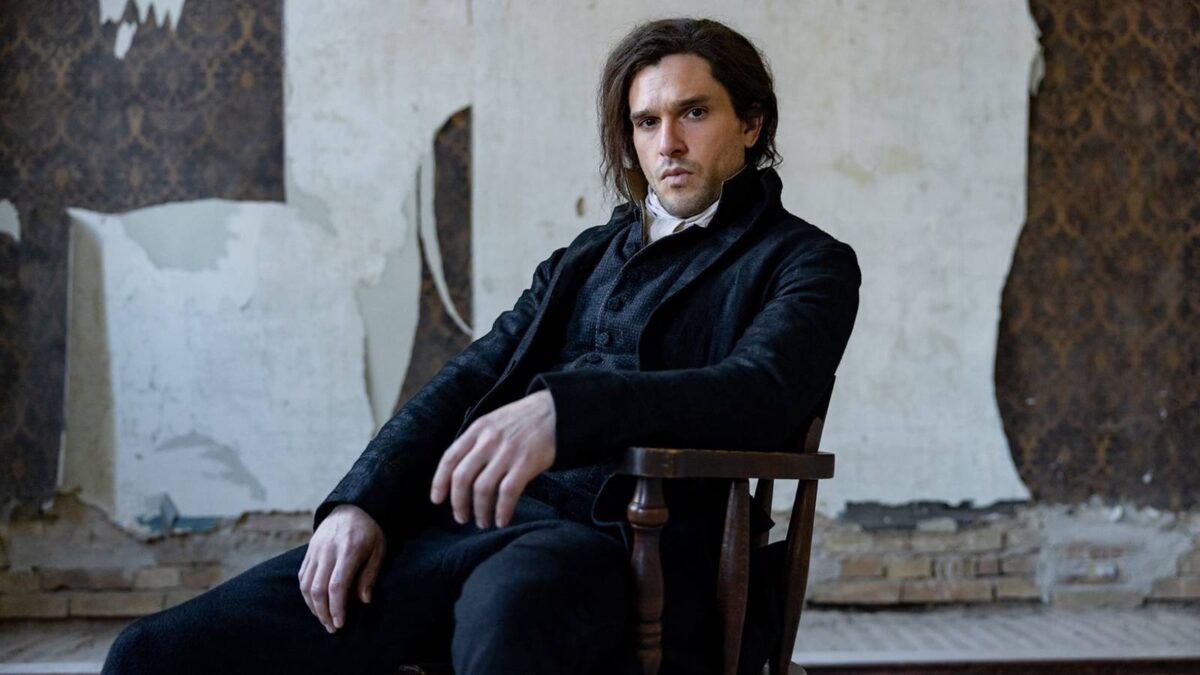
‘A Tale of Two Cities’ First Look Reveals Kit Harington in MGM+ Series
The BBC and MGM+ are teaming up with a new four-part limited series adaptation of Charles Dickens' classic 1859 novel A Tale of Two Cities. Game of Thrones veteran Kit Harington will play Sydney Carton, a cynical English lawyer who…
Mar 26, 2026

HBO ‘Harry Potter’ Series Image Reveals Dominic McLaughlin in Title Role
The first official look at HBO's upcoming reboot of Harry Potter has finally arrived, and it is already teasing a magical trailer release. As we inch closer to the show's expected 2027 release, the network has begun to reveal more…
Mar 25, 2026
‘Dutton Ranch’ Trailer Reveals ‘Yellowstone’ Sequel Release Date
Rip Wheeler and Beth Dutton gamble everything on a new life in South Texas in the first trailer for the Yellowstone spin-off, Dutton Ranch. The footage reveals all manner of gun fights, fist fights, explosions, galloping horses, and even mysterious…
Mar 24, 2026
Born Again’ Showrunners Detail How the Media Ties into Season 2
Marvel is fast approaching the release of Daredevil: Born Again Season 2, marking its second live-action Disney+ show of 2026. Bringing back Charlie Cox's Matt Murdock and Vincent D'Onofrio's Wilson Fisk, this season picks up where Season 1 left off,…
Mar 23, 2026