This Oscar-Winner Introduced Bradley Cooper to His ‘Maestro’ Cinematographer
Jan 27, 2024
The Big Picture
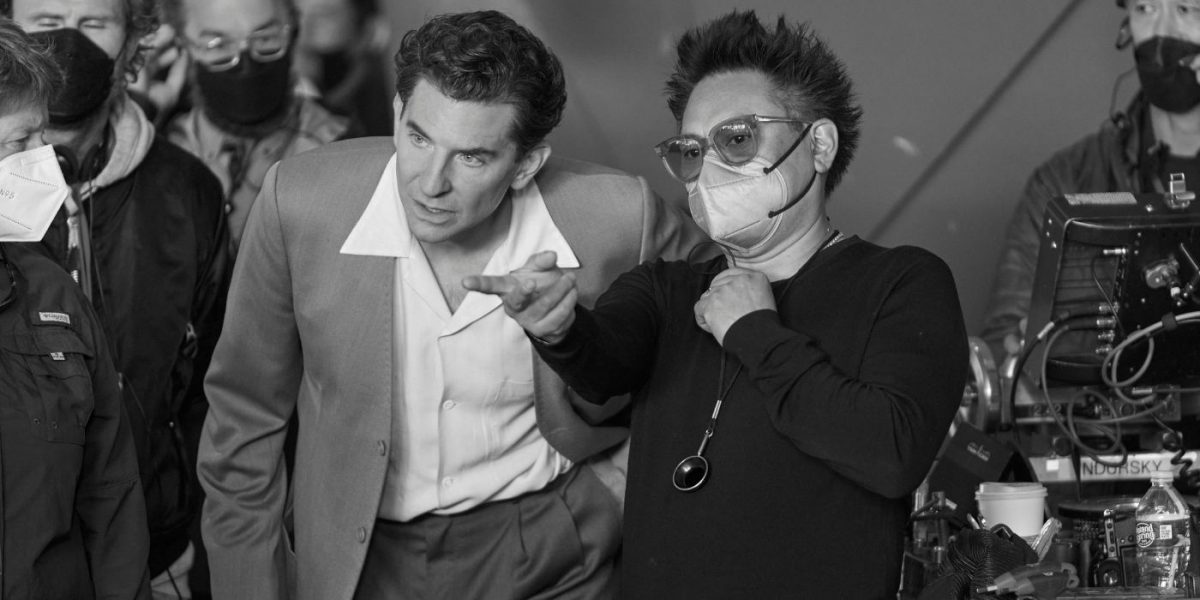
Maestro received seven Oscar nominations, including one for Matthew Libatique for Best Cinematography. Libatique has previously worked with Bradley Cooper on A Star Is Born and met him through a recommendation from Jennifer Lawrence. Working with actor-turned-filmmakers like Cooper and Olivia Wilde brings a unique passion and understanding of both acting and cinematography to the set.
There was a lot of noise about the big surprises and snubs after the nominations for the 96th Academy Awards were announced. While juggernauts such as Oppenheimer, Poor Things, Killers of the Flower Moon, and Barbie reigned supreme with their total nominations, Bradley Cooper’s Maestro wasn’t too far behind them. Among the film’s seven nominations was Matthew Libatique for Best Cinematography.
This isn’t Libatique’s first Academy Award nomination nor is it his first time working with Bradley Cooper, having received nominations for A Star Is Born and Black Swan. He worked with numerous acclaimed filmmakers and big names in the industry. He has worked on nearly all of Darren Aronofsky’s films, has collaborated with Spike Lee, has worked on superhero fare such as Birds of Prey and Iron Man, and has even worked on musical movies like The Prom. His work on Maestro is some of his finest to date.
We were able to talk with Libatique about working on the Leonard Bernstein biopic, the origin of the Snoopy balloon scene, how he was first introduced to Cooper, what it’s like working with actors-turned-directors, and more.
Maestro This love story chronicles the lifelong relationship of conductor-composer Leonard Bernstein and actress Felicia Montealegre Cohn Bernstein. Release Date December 20, 2023 Runtime 129 minutes Main Genre Drama Producer Martin Scorsese, Bradley Cooper, Steven Spielberg, Fred Berner, Amy Durning, Kristie Macosko Krieger Distributor(s) Netflix
Read Our ‘Maestro’ Review
Jennifer Lawrence Introduced Matthew Libatique to Bradley Cooper
COLLIDER: First off, I wanted to congratulate you on the movie. I’m a big fan. I’m also a huge fan of A Star Is Born, as well. That’s one of my favorite movies, probably of all time.
MATTHEW LIBATIQUE: Thank you.
I know this is your second time working with Bradley Cooper. I was wondering if working on A Star Is Born was the first time you met, or had you met prior?
LIBATIQUE: We met for the first time in the job interview for A Star Is Born. I was actually shooting the film Mother! with Darren Aronofsky and Jennifer Lawrence. I guess Bradley, who had worked with Jennifer Lawrence, asked Jennifer for a DP recommendation, and thankfully for me, Jennifer said me. So when I wrapped and got back to LA, I met with Bradley, and we hit it off right away.
How Working With Actors-Turned-Filmmakers Compares To Working With Established Directors
Image via Netflix
I know you’ve worked with your fair share of both filmmakers like Darren Aronofsky, but you’ve also worked with a lot of actors-turned-filmmakers, because I know you’ve also worked with Olivia Wilde, Blake Lively, and Jodie Foster. What do you think would surprise people the most about working with an actor-turned-filmmaker versus someone like Darren Aronofsky?
LIBATIQUE: It’s interesting, I think great filmmakers like Darren Aronofsky or Spike Lee are well tuned-in and prioritize a performance, but it’s another level when it’s an actor, especially when they’re in the film. I was fortunate enough to work with Bradley twice where he was in the film and he’s directing from within the scene, which is really rare and kind of cool. Olivia, as well, would do the same thing, direct from within the scene. There’s so much passion. I think acting is passionate. I think it’s a sort of foundational element of the craft. It’s a passion, and I think because of their desire to be filmmakers, it carried over into their desire to understand the camera. So, they’re great students of cinematography. They’re great students of filmmaking. But I think that what’s surprising is how they can direct — at least these two — can direct within the scene. Jodie could probably do it, as well, but in my case with Jodie Foster, she was a director-director, and she definitely personifies being a director. She’s a powerhouse.
There are two particular scenes in this movie that blew me away seeing it on the big screen. The first one is in the first five minutes where he runs out of his apartment and into the amphitheater. I was curious, because that seems like a pretty complex shot, how long did planning take and how long did it take to capture that?
LIBATIQUE: To be quite honest, we were preparing for that shot. I mean, it took a long time. We had, I think, maybe nine weeks of preparation, and one of the priorities was to try to figure that shot out because it was a very early idea from Bradley. In the script, it sort of describes this guide POV that brings Lenny into his destiny, which is what the idea was for the shot. So technically, we had to work with productions, and it was a team effort because I had the dolly grip working on the length of the crane and what kind of crane, how much track to use, do we have to build a platform for that, and working with the production designer and saying, “Can we lose this part of the ceiling? But we need that part of the ceiling, and we could use a little taller header here. The walls need to be a little taller. We need to drop the camera down.” So, all these things were literally constant discussions up until the point when we shot the shot. On the day, luckily, because it was so complicated, we didn’t schedule too much that day. We were concentrating on this particular scene. It’s two shots, actually, because what you have is taking him from his apartment into the corridor and around the bend, and then as he goes through that doorway, we transition to the actual Carnegie Hall and pull back, which was a thrill for sure.
You mentioned that that was in the script. How often does that happen where the shots are really described in the script?
LIBATIQUE: It doesn’t happen often. It’s interesting because Bradley’s able to communicate what he’s thinking, what he’s visualizing, in the screenplay and he incorporates it. I really appreciate that. It’s rare. That doesn’t happen all the time. Especially when it’s a conceptual idea that has to be articulated physically through the camera, he’ll explain it. He won’t go into the nuts and bolts of it, but it’s like the feeling of this shot and what that shot does. My first comment, actually, after reading my first draft of this was that I was really impressed at how much shot description there was. You can really see the movie, at least for me because I understand that language. I could see the film.
Matthew Libatique Shot On-Location at the Ely Cathedral
Image via Netflix
The other scene that really stood out to me was the cathedral midway through the movie. That was a scene where it felt like I was there, almost. It felt as intense as any action movie I had seen last year. I was curious, like the opening shot, was that in the script too? How long did that take?
LIBATIQUE: That was in the script. The interesting thing about that scene, I agree with you, I think it puts you in that place. When we were prepping that we were in Ely in the UK, at the Ely Cathedral, which is very close to Cambridge. We had a London Philharmonic there rehearsing days prior, and at one point they started to play the piece, and everybody stopped in their tracks. People were working and we’re doing things, my team, we were lighting, we were positioning things, we were talking about the camera, and I personally stopped and sat down because it transported me into a time where nothing else was important, and I needed to focus on this experience before me. I feel like the scene does that. And I think that largely the music is credited, for me, in transporting us, but I think that Bradley’s passion and his performance and the character of Leonard Bernstein, his spirit, I think connected to that piece of music which he actually had conducted in that space. So, there was a really good energy that day, and I attribute that energy, really, to the reason why people feel so transported by it. But to be honest, we had other shots planned. We shot over two days and we had other shots planned to bring us into the film, but, like he does, he did it in A Star Is Born and he did it here, he just finds the soul of a movie editorially.
Related Bradley Cooper Should Have Won His Oscar Years Ago Bradley Cooper has garnered a few Oscar nominations over the years and should have won one for this year.
Matthew Libatique Explains the Snoopy Balloon
Image via Netflix
There’s one shot I have been itching to ask about, and it’s the scene that takes place on Thanksgiving. There’s the big argument that they have and there’s that Snoopy balloon that floats by the screen. What was the origin of that? Was that, I’m guessing, also in the script? Did he ever explain to you why that was there?
LIBATIQUE: Well, we had talked about it because their apartment was in this famous building called the Dakota Building in New York on the Upper West Side. There is a famous photograph by a photographer by the name of Elliott Erwitt who shot this woman and a child sitting on a couch looking out the window towards Central Park, and the Snoopy balloon was floating by. It’s one of my favorite pictures, and Bradley responded to that picture, too. We talked about it, and he incorporated it into that scene. I think it works beautifully because, I don’t know, it makes a little bit of a mess out of this very intense, emotional thing. All of a sudden Snoopy is floating in the background. [Laughs] I think it’s a nice touch.
Usually, in some movies that wouldn’t work, but it felt so natural in that movie. It fit because it’s also Thanksgiving, as well. It would seem obvious that there would be balloons just passing by.
LIBATIQUE: And it’s an incredible building and an incredible view for the Thanksgiving Day Parade, so that was the idea there. Preceding that, you sort of hear the kids saying, “Snoopy, Snoopy!” Even when Lenny walks into the apartment, he picks up the Snoopy stuffed animal, and he’s like, “Who left Snoopy in the vestibule?” So, he’s setting it up, and that’s the main attraction of the parade, and then they end up having this huge fight and then there goes Snoopy. So, it’s cool.
Also, this movie visually, when you go through the different eras, it looks like a movie from a different era. I feel like there’s so many times where there’s movies that try to do that, but they don’t always work. There were two movies last year that I saw that really worked. It was this and also The Holdovers, and I was curious, did you ever look to other films or inspiration from those eras?
LIBATIQUE: It’s a good question. I didn’t really look at films, I’ll be honest with you. I have a list of references. At this point in my career, I have a lot of references in my head for time periods, and photographers that I looked at. I look more at photographers and art rather than films. I just don’t want to be derivative. I try not to be derivative. And I feel like what I didn’t want to do as a cinematographer is portray the movie as a movie. If it kind of looked like an old movie, great, but I wasn’t after it. I was after something kind of naturalistic.
There was a book called The Life and Times of Leonard Bernstein where a man by the name of John Gruen shot photographs and interviewed the family when they were on vacation in Italy. Those photographs in that were a huge inspiration for me because they’re so candid and natural, so I tried to carry that over into the black and white, and eventually into the color. Also, for the color work I was influenced, again, by photographers like William Eggleston, Fred Herzog, and Saul Leiter, and trying to get that color. Because I think that the success of it, really, is that the time period and the transportation comes from the set design, the color, and the palette and the costumes. For me from a cinematographer standpoint, I just wanted to render all those colors as honestly as possible with the ambition of both production design and costume design in mind.
This is also a Netflix movie, and while I was lucky enough to see this in the theater, I know a lot of audiences have seen it on Netflix. I know you’ve worked on another Netflix movie before with The Prom and I was curious, what is the difference between approaching a movie that you know is going theatrical, like A Star Is Born or Black Swan, versus prepping for a movie that you know is gonna be a Netflix production or an Apple production? Is there ever a difference? Do you approach it the same way?
LIBATIQUE: I approach it the same way. My aim is to make the film look amazing at its premiere, projected in the theater. That’s kind of my goal. And I want it to carry over into the theatrical release. I still had that same goal when I did The Prom. When we did The Prom, I thought that perhaps there might be a theatrical release because of the actors that were involved. It ended up not happening, but I approach it the same way. And this film, too. Just in my heart, I knew it would get some theatrical release, and in my heart, I knew that the film would be on a big screen, so I approached it exactly the same way I do any film.
Matthew Libatique on Meeting Steven Spielberg on Set
Image via Netflix
I love that answer. I’m a massive Steven Spielberg fan, and I’ve seen photos from the film of him on set. Did you ever work with Spielberg when he visited? Did he ever give you advice?
LIBATIQUE: Yeah. I can’t say enough about it. I mean, it’s a thrill even to this day. I’m just like, “Wow, I was hanging out with Steven Spielberg.” The first time I saw him and met him, because I never met him before, we were shooting at Tanglewood and we were standing on stage setting up a shot. I saw him out of the corner of my eye and turned around, and he was holding a video camera, like he’s shooting behind-the-scenes. I was like, “What the hell is going on?” And then I said, hello, introduced myself, and he couldn’t be more gracious. But the really cool time was when we were in Central Park shooting and we were just chatting because Bradley was in the scene and I was further away. Bradley and Carey were across the pond, I was on the other side of the pond, and Steve was with me, and we were just talking about movies and camera operators. I was just saying, “I can’t believe I’m sitting here talking to Steven Spielberg.” So, it’s a thrill. It was kind of a bucket list moment for me.
Since this movie is split between eras and it goes through different stages of his life, and most movies are not filmed in order, I was curious, how much of this movie was filmed in order since it’s such a different way of storytelling?
LIBATIQUE: It’s a good question. Not a lot of it. It wasn’t really in order. You know what we prioritized? Because of the makeup, the special effects makeup was so intense, we prioritized that. So if we were in Lenny at 40-years-old mode, we’d be prioritizing those shoot days together as much as possible, or sometimes they’d even make him young towards the end of the week to give him a break. It was super taxing. I look at him now, he looks healthy, and I feel really happy to see him. He looks really healthy and happy. He was very driven on the movie, but he had to undergo so much. I mean, he had to take on so much having to just sit in a makeup chair for 4 to 6 hours a day and then direct and act in the movie. It was like everybody just knew the effort that was being put out there, and we all shared in that appreciation for his efforts and tried to do the best we could, and tried to match his effort as closely as possible. But yeah, I think we couldn’t shoot it in order because the makeup really didn’t allow us to.
It was the makeup, but in theory, I guess you could say the makeup could have been in order, but there’s a myriad of factors why you can’t shoot there, so we didn’t even really try and it wasn’t even an ask. Some directors do ask at the very top of prep that they want to shoot as much in order as possible, but Bradley didn’t have that ask. I think he was just in full command of the character so he could bounce around.
For my last question, I always like asking this because you’ve worked with so many talented directors, obviously Bradley Cooper and Spike Lee and Darren Aronofsky, but is there a director on your bucket list that you haven’t worked with yet that you really would want to work with?
LIBATIQUE: Yes and no. I’ve gotten to a place where I don’t wish for things. [Laughs] I mean, I do wish for things, don’t get me wrong. I do wish for things, but I’m not a person who is trying to gun to work for a certain director. If it happens, it happens. I really believe in the work speaking for itself, and integrity. I just feel like if somebody I really admire wants to work with me, I’d be very happy to work with them, but I’m not chasing anybody.
You just said you’re not wishing for anything, but you need to win that Oscar soon enough. You need to.
LIBATIQUE: Thank you. I appreciate it. Thank you!
Maestro is now available to stream on Netflix.
Watch on Netflix
Publisher: Source link


‘A Tale of Two Cities’ First Look Reveals Kit Harington in MGM+ Series
The BBC and MGM+ are teaming up with a new four-part limited series adaptation of Charles Dickens' classic 1859 novel A Tale of Two Cities. Game of Thrones veteran Kit Harington will play Sydney Carton, a cynical English lawyer who…
Mar 26, 2026
HBO ‘Harry Potter’ Series Image Reveals Dominic McLaughlin in Title Role
The first official look at HBO's upcoming reboot of Harry Potter has finally arrived, and it is already teasing a magical trailer release. As we inch closer to the show's expected 2027 release, the network has begun to reveal more…
Mar 25, 2026
‘Dutton Ranch’ Trailer Reveals ‘Yellowstone’ Sequel Release Date
Rip Wheeler and Beth Dutton gamble everything on a new life in South Texas in the first trailer for the Yellowstone spin-off, Dutton Ranch. The footage reveals all manner of gun fights, fist fights, explosions, galloping horses, and even mysterious…
Mar 24, 2026
Born Again’ Showrunners Detail How the Media Ties into Season 2
Marvel is fast approaching the release of Daredevil: Born Again Season 2, marking its second live-action Disney+ show of 2026. Bringing back Charlie Cox's Matt Murdock and Vincent D'Onofrio's Wilson Fisk, this season picks up where Season 1 left off,…
Mar 23, 2026