
Walter Salles Renders Brazilian Injustice As Bland Historical Drama [Venice]
Sep 2, 2024
Over 30 minutes of Walter Salles’ “I’m Still Here” before its inciting incident, a 1971 apprehension of ex-congressman Rubens Paiva from his home by Brazil’s military dictatorship occurs. Any time before then is not entirely a waste, given Salles has a keen eye for how humanity finds the means to thrive amidst oppression. The film’s opening shot sets up this coexistence neatly as Fernanda Torres’ Eunice Paiva floats off the beach, and a helicopter disrupts her relaxing moment as it whirrs by.
READ MORE: Venice 2024 Film Festival Preview: 15 Must-See Movies To Watch
But the delayed arrival of the stakes in “I’m Still Here” speaks to a more frustrating element of Salles’ filmmaking: its lack of urgency. The legacies of the 20th century’s autocracies still hover like ghosts over the land, refusing to disappear entirely. When Salles picked up the rights to adapt the source material, Marcelo Rubens Paiva’s book documenting his father’s disappearance and murder by the state, Brazil’s Jair Bolsonaro was still in power, threatening to deploy the military in an undemocratic fashion that evoked the country’s most repressive days.
Yet, given the unhurried pacing and general underplaying of the situation’s gravity, the film feels like visiting a museum exhibit rather than living through a flashpoint of history. Here, the past’s horrors are but pictures nestled safely behind glass. “I’m Still Here” never whips up the frenzied fury generated by cinema from other South American countries that also dealt with mid-century dictatorships. Loss of freedoms and erosion of liberty seem remote rather than immediate here.
Get the latest news, reviews, interviews, and podcasts from The Playlist Team right in your Inbox. Sign up for The Playlist Newsletter today.
A more charitable read of the film might see this simple, straightforward structure as a tribute to its stoic heroine. Unlike her husband, a politician who endured several periods in exile for his beliefs, Eunice Paiva saw herself as a supportive matriarch above all else. Even at the grimmest moments of her family finding themselves in the crosshairs of the regime, including her brief period of incarceration, she insisted on maintaining a chipper and confident face for the young children.
As “I’m Still Here” moseys steadily onward, Torres adds gradual shadings to better illustrate the calcification of Eunice’s resolve. The film is never better than when Salles, who delivers a moving performance of steely determination, simply gets out of the way and gives his star the space to process her grief. Her outward stoicism masks a deep pain that begins to transform her understanding of activism’s importance.
However, these moments come few and far between, as Murilo Hauser and Heitor Lorega’s adaptation of Paiva’s source material favors a rote conveyor belt of plot over character development. The most intriguing thing to transpire in Eunice’s life gets elided over in a “25 years later…” title card and explained before the end credits. As an outgrowth of fighting for Rubens’ return, she puts herself through school to become a human rights lawyer and becomes one of Brazil’s biggest advocates for the indigenous. To have this constitute a mere footnote amidst an abundance of superfluous scenes involving family fun does a disservice to the subject’s legacy.
Eunice’s humanism gets buried under a hackneyed script structure that renders her extraordinary life as a rather ordinary one—at least when evaluated in cinematic terms. She’s too often reduced to a laundry list of things she does in the line of recovering her husband, but it’s the all too sparse glimpse of her evolving disposition that gives the film any dramatic heft. “I’m Still Here” feels all too familiar to watch unfold as a result, a fact equally depressing and distressing to consider.
This ultimately comes back to bite the film when Eunice gets some semblance of resolution to the saga in 1996. Standing before a sea of cameras, she rebuffs the idea that Brazil’s newly formed constitutional democracy should not waste time on redressing the open wounds of the past. The junta’s actions from a quarter-century prior have condemned her, alongside many others, to “a lifetime of psychological torture.” If only Salles had made a film that could have captured that anguish more palpably. In “I’m Still Here,” that constant present tense to which Eunice alludes manifests as a past tense trauma. [C+]
Follow along with all our coverage of the 2024 Venice Film Festival.
Publisher: Source link







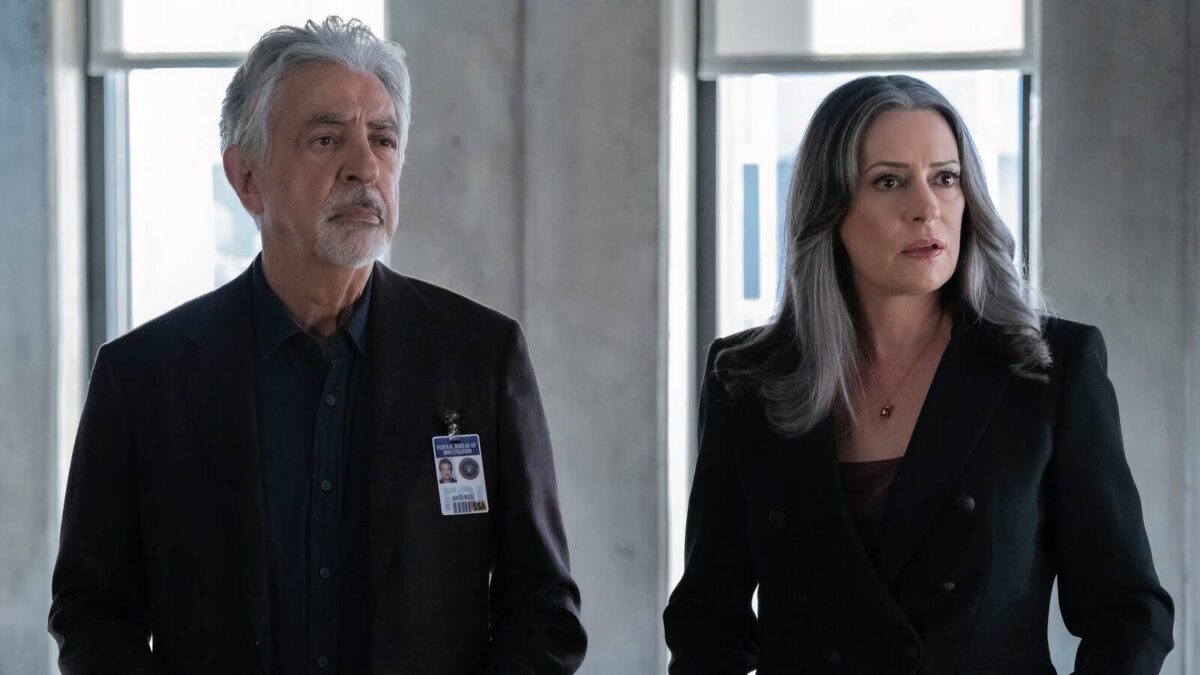
Paramount+ Renews ‘Criminal Minds: Evolution’ for Season 19
The start of its new season is still weeks away, but fans of Criminal Minds: Evolution won't have to wait that long to learn the fate of the long-running hit crime procedural. Execs at Paramount+ have already decided what the…
Mar 27, 2026

‘A Tale of Two Cities’ First Look Reveals Kit Harington in MGM+ Series
The BBC and MGM+ are teaming up with a new four-part limited series adaptation of Charles Dickens' classic 1859 novel A Tale of Two Cities. Game of Thrones veteran Kit Harington will play Sydney Carton, a cynical English lawyer who…
Mar 26, 2026

HBO ‘Harry Potter’ Series Image Reveals Dominic McLaughlin in Title Role
The first official look at HBO's upcoming reboot of Harry Potter has finally arrived, and it is already teasing a magical trailer release. As we inch closer to the show's expected 2027 release, the network has begun to reveal more…
Mar 25, 2026
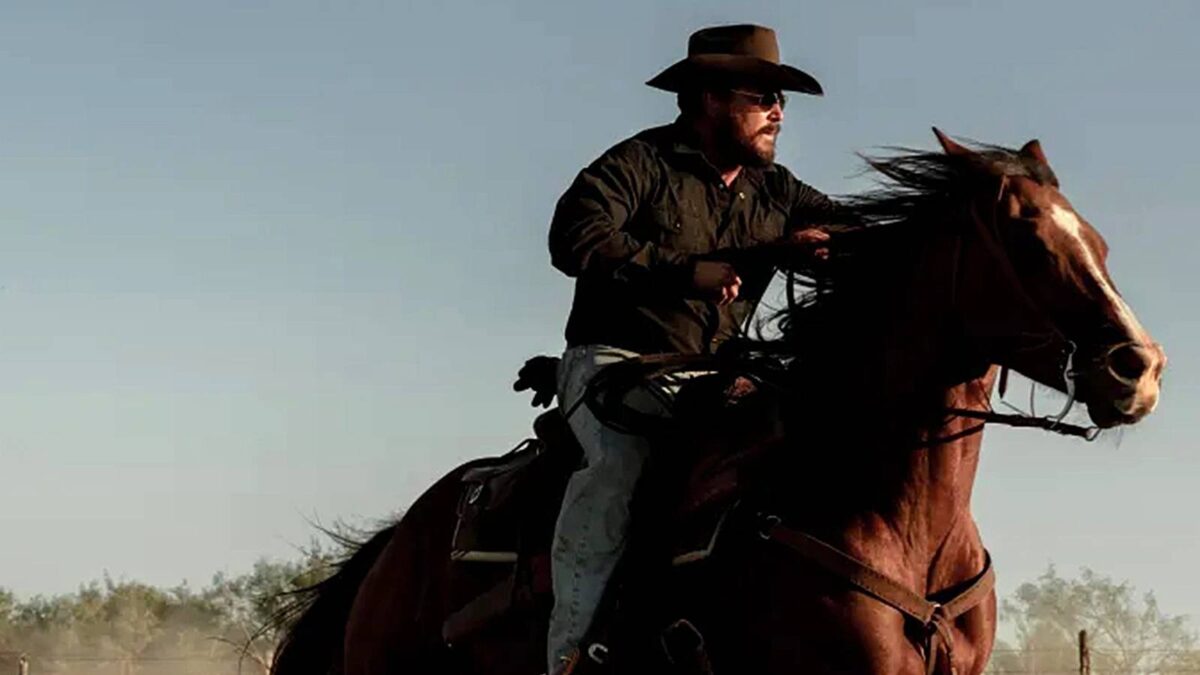
‘Dutton Ranch’ Trailer Reveals ‘Yellowstone’ Sequel Release Date
Rip Wheeler and Beth Dutton gamble everything on a new life in South Texas in the first trailer for the Yellowstone spin-off, Dutton Ranch. The footage reveals all manner of gun fights, fist fights, explosions, galloping horses, and even mysterious…
Mar 24, 2026