‘Warfare’ Co-Director Alex Garland Explains Why They Chose That Final Shot
Apr 13, 2025
[Editor’s Note: The following contains spoilers for Warfare]
Summary
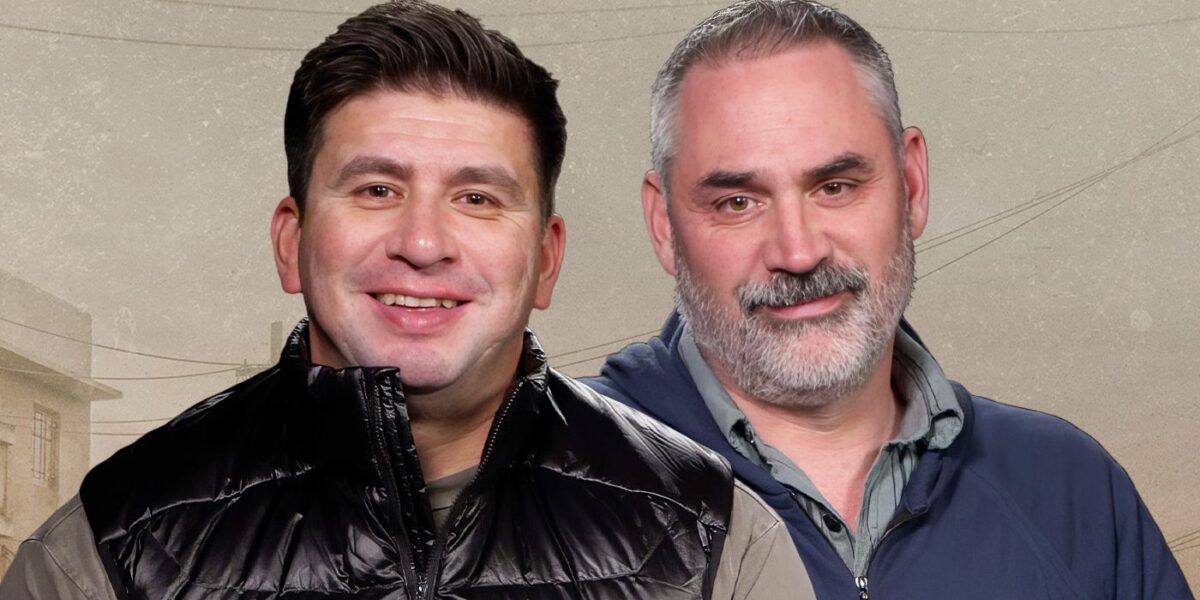
Warfare co-writers and directors Alex Garland and Ray Mendoza talk with Collider’s Steve Weintraub.
Warfare is an accurate retelling of a Navy SEALs mission gone wrong during the Iraq War in 2006.
Garland and Mendoza discuss the importance of that final scene, why this film was an editing first for Garland, how Mendoza cultivated a sense of brotherhood for the cast, and having the real-life counterparts on set every day.
A24’s Warfare is officially Oscar-nominated filmmaker Alex Garland’s highest-rated project to date. The film, which depicts a Navy SEALs mission gone wrong, is unique in a number of ways, and its blockbuster success is due in part to co-director and writer, and veteran Ray Mendoza.
The two creatives first collaborated on last year’s Civil War, where Mendoza shared the story of the Ramadi attack recounted in the film with Garland. In order to tell this story in the most authentic way, the duo tracked down Mendoza’s fellow Navy SEALs who were in that house that day to piece Elliott Miller’s (played in the film by Shōgun’s Cosmo Jarvis) story in real time for him.
In this interview with Collider’s Steve Weintraub, Garland and Mendoza explain the measures taken to ensure there was zero editorializing or invention throughout the telling of this story. They talk about the unique editing experience, how Mendoza played a major role in the training of cast members Joseph Quinn, Will Poulter, Charles Melton, D’Pharaoh Woon-A-Tai, Noah Centineo, and why it was imperative to have the SEALs they were portraying on set. They also break down why the ending includes the photographs of the soldiers involved. Check out the full conversation in the video above or the transcript below to find out why the pair chose that final scene and more.
There’s No Editorializing in ‘Warfare’
Alex Garland explains how the edit was unlike any of his previous films.
COLLIDER: I really want to start with congratulations on the movie. I’m so I’m fascinated by editing — Alex knows this about me — and everything in this film was so meticulously figured out and planned in advance. What was the edit like in terms of finding the cut? Did you have deleted scenes? Were there things removed? Or was it pretty much exactly what you guys envisioned?
ALEX GARLAND: The thing is that so many of the questions that often exist in a film just don’t exist in this film. I have never, prior to this, shot a film where you didn’t remove a scene or take a scene from one place and try it in another, reorder scenes, and none of that was an option here because we were very strictly following a sequence of events. We had a rule, which is we were not allowed to editorialize, which is slightly different from the actual editing. But then, within the scene, it would depend on the scene. So, for example, in moments of combat, Ray would have some very, very specific things that he wanted to make sure the viewers were able to see and also make sure veterans would be able to see. Ray, you should speak to your eye for detail.
RAY MENDOZA: In regards to the firefight, there is a language there that I think only anyone who’s been in gunfire or maybe in infantry will understand, and that’s just kind of these handoffs — the flow, the steps, setting up security, how to break it down, how to set up another corner, so on and so forth — and this rolling gunfight and the protocols and the principles of that, and just really getting into the idiosyncracies of that and showing that. The technical side came with just eyelines and not crossing the line, and when to cross the line, which, obviously, our editor, Fin Oates, was amazing at educating me, along with Alex. So, I was just like, “Hey, we need to get these little connective tissues because I really want it to be the best gunfight ever. That’s the goal.” So, they’re helping me understand how to connect all those things and trying to find the shots to connect it, and so on and so forth, which I’m sure you’re familiar with.
Alex Garland Explains that Final Shot in ‘Warfare’
“Nothing in the film is an invention.”
Image via A24
I’m so curious where you decided to end the film because everything in the film is what actually happened, memories of the people who were involved, but one of the last shots is the families coming out with the rubble and the smoke. How did you decide that was going to be the ending?
GARLAND: We didn’t put anything in the film that wasn’t in some way verifiable by a memory, wherever that memory was from. Nothing in the film is an invention.
How did you decide that was going to be the closing of the film?
GARLAND: Well, in some ways, the reason it ended up ultimately as the ending of the film is that there’s a strange way in which the house becomes a character. Once you’ve left the house, once you’ve left the street, in a sense, that street shot is like a wide shot of that character in some strange way. Once you’ve left it, the film just feels over. The story, this window of time that we were trying to recreate as accurately and honestly as possible, that window’s closing. So, it’s like it’s done.
On top of that, film and truth and representations of reality, or then romanticizing or overdramatizing in films, it’s such a complicated, long history with these things. Having spent a long time in the recreation, it felt important to add to that a sequence of images that, in a way, don’t just show the actors alongside their real-life counterparts, but also show the recreation of this. We don’t try to pretend that something was happening that wasn’t happening. You didn’t watch the event. You saw a recreation of the event, but the recreation you saw was informed directly by people who were there. It felt necessary to add that to the viewer’s understanding of the film. So, in some sense, for me, the film doesn’t actually end with the wide shot of the street; it actually ends with the last of those photographs. They’re not a credit sequence; they are actually part of the film itself.
Related
“We Had Three Weeks of Boot Camp”: Joseph Quinn Details Bringing Alex Garland’s ‘Warfare’ to Life
“The making of it was beautiful…”
The Cast’s Real-Life Counterparts Were Always “Just a Few Feet Away”
Garland and Mendoza discuss the on-set brotherhood and blurring the lines between reality and recreation.
There are going to be a lot of people who are going to love this movie. For both of you, what do you think would surprise soon-to-be fans to learn about the making of the film?
MENDOZA: I would say the amount of responsibility we allowed the cast to have. They had a lot of autonomy. I gave them objectives. Each character had their role and things they needed to do. There’s training, the weapons training, but a lot of it, the secret sauce for me, was giving them the ownership to embody this culture, the brotherhood, this frat-like environment, and I put a lot of things in place to ensure that happened. I set it up that way. But something special did happen. I’ve worked on sets with a semi-big, large cast, and they just don’t gel. Whether it’s because they’re older or they’re a little bit more established actor, they’d rather just spend time in their trailer.
What was special about these guys is that they were all young. They were chosen for being youthful, but they genuinely embodied… They just all clicked. Hopefully, they get to see that. There’s no way for anyone to know it other than maybe some posts and some things we may put out, but I think they would be surprised by how close they were and still continue to be, which I love to see, because that’s very much like how we are. It’s freaky. I mean, I was jealous because I wanted to be a part of it. It was like looking into a window into the past. It was surreal for me.
Image via A24
Do you want to add anything, Alex?
GARLAND: I can tell you one of the things that I found surprising, and maybe a viewer would find surprising if they had access to it, was the blurring of the lines between a recreation of something and the thing itself. Of course, it is just a recreation, but it would be for viewers to imagine that when they’re watching Cosmo Jarvis or Joe Quinn acting these incredibly vulnerable moments of extreme trauma and extreme injury, to imagine that that actor had the person that they were playing, their real-life counterpart, just a few feet away from them watching, either just standing on the side of the set or watching on a monitor with headphones on, and what that did to the atmosphere on the set, the sense of responsibility that already existed, but got exponentially magnified, and the weight that the actors were carrying, but also the weight we were all carrying, maybe no one more than Ray. I felt for those actors at that moment. That must have been quite intimidating, actually.
Warfare is in theaters now.
Warfare
Release Date
April 11, 2025
Runtime
96 minutes
Director
Ray Mendoza, Alex Garland
Writers
Ray Mendoza, Alex Garland
Producers
Allon Reich, Andrew Macdonald, Matthew Penry-Davey
Get Tickets
Publisher: Source link





Mason Gooding & James Van Der Beek’s Bad Night Is Aggressively Dull
Ever since the Scream franchise helped put him on the map, Mason Gooding has been a great talent to watch. The genre-bending slasher Heart Eyes is still his best non-franchise role yet, but he's also branched outside of horror in…
Mar 15, 2026
A Grumpy Nick Offerman Keeps This Fish Tale Swimming Along
Animated fish films have been done. Finding Nemo. Shark Tale. Ponyo. So to hear about another doesn't feel like anything new. However, The Pout-Pout Fish, starring Nick Offerman as a grumpy ocean pout named Mr. Fish, is a little different.…
Mar 15, 2026
‘The Rookie’s Best Season 8 Episode Goes Completely Different With Full Zombie Horror
Editor's Note: The following contains spoilers for The Rookie Season 8, Episode 10.It's crucial for procedurals to come up with a winning formula that entices viewers to tune in every week. But it's just as important for these types of…
Mar 13, 2026
Sidney Prescott Leads a Brutal Throwback
Walking into Scream 7, I wasn’t sure if this entry would be a new reinvention. I know I wanted tension. I know I wanted that uneasy calm before the snap. And most of all, I wanted to see why Sidney…
Mar 13, 2026