Yance Ford’s Visual Essay Is A Sprawling Overview Of The History Of Policing In America [Sundance]
Jan 22, 2024
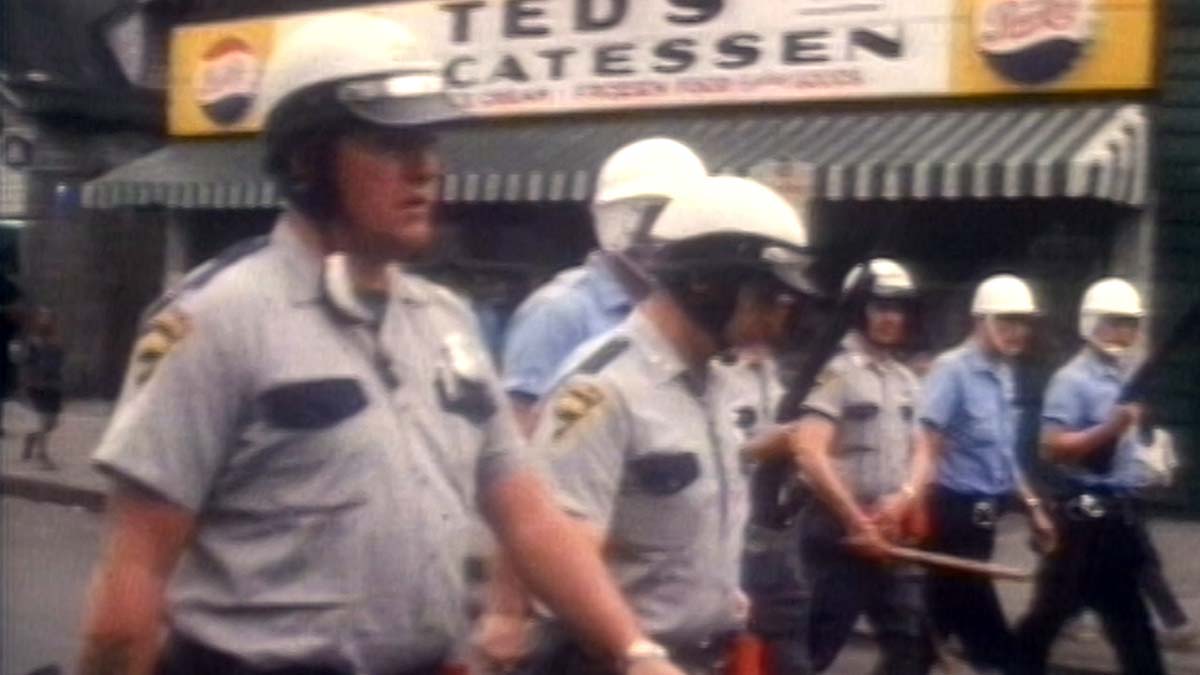
Early in Yance Ford’s visual essay “Power,” he tells the audience that the film to come either requires “curiosity” or “at least suspicion” from the viewer. It’s the type of bold claim that might pack a punch as a rhetorical hook, especially for a documentary that dives into the cultural, social, economic, and political history of policing in the United States. But the 85 or minutes that come afterward never live up to such a sweeping statement. Instead, Ford crafts an oddly distanced argumentative essay, tracing the history of modern-day policing back to its roots as a method of controlling enslaved peoples in the antebellum period, in addition to contextualizing the rise of police forces as unregulated paramilitaries, the history of “stop and frisk,” quick overviews of Stokley Carmichael and the Kerner Commission Report, and a portrait of a Black Minneapolis Police Officer, Charlie Adams, who runs a precinct only a few miles from where George Floyd was murdered.
READ MORE: Sundance 2024: The 23 Most Anticipated Movies To Watch
If the above list sounds sprawling, the visual essay — and Ford really is working more in the rhetorical, rather than narrative, tradition here — does manage to wrangle all of these ideas into a coherent, but nevertheless overwhelming, argumentative line. Its totality is more of a feature than a bug of Ford’s approach, which mixes interviews with various excerpts from archival footage, narrative films, and even police propaganda. Once one accepts that this Netflix documentary willingly sacrifices nuance for broad claims about policing in America, it’s a fascinating visual document that works as a compelling introductory piece about the ways that marginalized communities are othered and policed by an essentially unregulated military force. But, its highly schematic design — the film is split into six chapters of varying themes, including “Property,” “Social Control,” and “Status Quo,” among others — often takes on too much.
In its individual moments, however, Ford coaxes out a depressing through-line, moving succinctly from fugitive slave laws to the creation of the first police force in the nineteenth century into the rapid economy that develops around contemporary police forces. Drawing mainly from academics as its talking heads, “Power” underlines, then further highlights the tension between “law and order,” noting that those two terms are not, in fact, synonyms. Additionally, by treating minority communities as contagions that need to be treated, they’ve exacerbated tensions that make contemporary policing an untenable long-term solution for maintaining order.
The most compelling of these threads is Adams, an officer who can both lament the over-policing of minority populations in one scene and just as easily talk about the wonders of real-time CCTV footage that allows him to surveil anyone almost instantaneously. It’s obvious that Ford is also drawn to him as a contradictory figure, considering the film constantly returns to his precinct, and he’s one of the only non-academics who speaks in the movie. But, one wishes more time was spent on Adams and his ideals, highlighting the ways that the system of policing is so ingrained within the fabric of our society that calls to rethink this approach are dismissed outright or, often, too theoretical. “Power,” for all its rhetorical power, is not a film concerned so much with looking forward to the ways in which policing can be reconstituted.
Yet, while “Power” takes on enough content to fill a semester’s worth of material, it’s also never short on ideas, even if those ideas come and go at warp speed. The film, then, is a useful primer for historicizing and contextualizing the relationship between methods of social control and the rise of policing, both as an unchecked institution and a term associated with the history of the United States. One just wishes the film would slow down every once in a while. [C+]
Follow along for all our coverage of the 2024 Sundance Film Festival.
Publisher: Source link





The Last Airbender’ Season 2 Release Date Announced by Netflix
In February 2024, Avatar: The Last Airbender got its first chance to shine in a live-action format, as a live-action reboot debuted on Netflix after years of utilizing an animated setting. Starring Gordon Cormier as the titular Avatar Aang, next…
Apr 2, 2026
‘Agent From Above’ Images Tease This Week’s Release of Netflix Action Fantasy Series
In anticipation of its long-awaited debut this week, Netflix has revealed several new images from the streamer’s most ambitious action fantasy epic series. Nearly a decade after it was first announced, the popular streaming platform is hoping all that effort…
Apr 1, 2026
Maul – Shadow Lord’ Will Use Draw From George Lucas’ Original Plans for the Character
It sounds like Star Wars: Maul — Shadow Lord will revisit some of George Lucas' original ideas for Darth Maul before he sold Lucasfilm to Disney. Introduced in 1999's The Phantom Menace, Maul became an instantly iconic and recognizable character…
Mar 31, 2026
Ron Perlman Explains How His Role as Super Mutant in ‘Fallout’ Came to Be
Ron Perlman has a long list of impressive credits on his resume, including his fan-favorite portrayal of Hellboy in a pair of movies from 2004 and 2008. He also has a long history in video games, thanks to his work…
Mar 30, 2026