92% Rotten Tomatoes Thriller ‘Sweetness’ Is The Perfect Anti-Valentines Day Movie
Feb 15, 2026
Summary
Collider’s Steve Weintraub talks with the creative team behind Sweetness.
Sweetness follows a super fan’s chance encounter with her pop punk idol, who takes it upon herself to “save” him from himself.
During the Q&A, writer-director Emma Higgins, Olivia Swayze, Kat Webber, and Martin Macphail discuss indie filmmaking, their 18-day shoot, inspiration and influences, working with a low budget, the film’s music, and more.
Indie filmmaking should be celebrated simply for its existence, as dedicated artists put their lives on hold to produce a passion project alongside similarly devoted collaborators. It is festivals such as Sundance and SXSW that offer the perfect platform for these movies to get noticed, which is a fate that thankfully came the way of first-time feature filmmaker Emma Higgins and the rest of the team on the critically acclaimed new thriller, Sweetness. Already boasting a near-perfect 95% score on review aggregator Rotten Tomatoes, Sweetness is a dark, enticing new thriller that hinges on the remarkable lead performance from Kate Hallett (Women Talking), who Higgins describes as “absolutely amazing to watch.” Also starring Herman Tømmeraas (Ragnarok), Steven Ogg (The Walking Dead), Justin Chatwin (Shameless), and Aya Furukawa (The Midnight Club), among others, Sweetness has debuted in theaters and marks a perfect, disturbing alternative to the sickly sweet romance of Valentine’s weekend. Prior to Sweetness’ release, during Collider’s early screening of the movie, Collider’s Steve Weintraub held a Q+A with writer/director Higgins, associate producer Olivia Swayze, editor Kat Webber, and composer Martin Macphail. For a detailed insight into the unique demands of low-budget indie filmmaking, the importance of festivals, the impressive talent of the movie’s stars, and more, check out the video above or the transcript below.
‘Sweetness’ Marks an Impressive Directorial Debut
“It creates a sense of resilience.”
The Sweetness creative team pose with Steve Weintraub at Collider’s Q&A.Image via Trent Barboza
COLLIDER: We’re going to play “get to know your Sweetness filmmaker.” If you had a free year with no responsibilities, what would you do? EMMA HIGGINS: Do I have unlimited money? Let’s say you have a little bit, but not a crazy amount. HIGGINS: It sounds like COVID. I’d probably just write. I’d write scripts, and I’d travel. I want to think of something more exciting, but I don’t have it. I’d buy a bouncy castle, and then I bounce in it every day, and it would be fun. I think for a lot of people, having the time to write is everything. HIGGINS: It’s huge. I talk a lot about this. It’s like a barrier for entry for filmmakers; actually, income level is a huge thing. I think that the industry has got a lot of nepo babies in it for a reason, which is to say, if you have money to do this, it’s way, way easier. Money to just write and time to create. Huge. What’s something you are embarrassingly bad at? OLIVIA SWAYZE: Ooh, that’s a good question. Embarrassingly bad. I mean, I got some family in the crowd. They could probably answer that for me. Honestly, it’s doing this right now. Public speaking. I’m pretty bad at it. I can’t lie. I’m nervous. You’re doing pretty good so far. SWAYZE: Thank you. If you could swap lives with someone for a week, who would it be and why? KAT WEBBER: Holy shit. That’s a tough question. I mean, pre-the last little bit, it would be Lindsey Vonn at the Winter Olympics. I grew up downhill ski racing. She’s my hero. I feel like we always talk about the youngest people in the Olympics, and she’s one of the oldest people. But she did just injure herself, so that’s pretty tough. But I feel like competing at that kind of level in sports would have been pretty cool. What do audiences misunderstand most about your job? MARTIN MACPHAIL: The number one thing, when I meet somebody, and they find out I’m a composer, they say, have you seen The Holiday? WEBBER: Oh, my god, I love it. Trailer editor. Let’s go. MACPHAIL: And I say, “Yes, I have,” and they say, “Is it like that?” and I’m like, “Honestly, pretty much, yes.” HIGGINS: Kissing Kate Winslet. MACPHAIL: She won’t stop kissing me. [Laughs] It’s that or Forgetting Sarah Marshall, where there’s like the ominous tone that he’s adding over CSI. That’s also the job. So I guess maybe those are correct understandings, but that’s the understanding everybody has of the job, and they’re honestly not that far off.
Kate Winslet and Jack Black in The Holiday (2006).Image via Sony Pictures Releasing
Let’s jump into why I get to talk to you guys. Is the message of the movie don’t do drugs, or is the message of the movie stay away from your underage fans? HIGGINS: Stay away from your underage fans for one, because fuck those guys. But second of all, I think the message of the movie was clear in my intro, which is to pierce your tongue and get more tattoos. I don’t know what else to say. [Laughs] Emma, this is your feature directorial debut. What were the biggest challenges transitioning from music videos and commercials to a full narrative film? HIGGINS: Listen, I love music videos, and I met Martin because we were doing music videos together. I met Kat because we were doing music videos together, and Olivia. That’s how we met. Music videos are the way that you get in and meet your crew; you do the thing. To be honest, I didn’t feel that much different doing a feature. It was like 18 days of a music video, back to back to back. So, it creates a sense of resilience. It pounds you into the ground and defeats your ego in a way that you cannot recover from doing music videos. And then by the time you do an indie feature, you’re good to go. So you mentioned at the beginning that this is something you’ve been thinking about for 12 years. What was the initial inception idea, and how close does it resemble what we saw on the screen? HIGGINS: I mean, parts of it were still there. I was touring with bands. I worked for a record label at the time, and I was doing in-house media for them, so I had both sides of the coin because I was able to see the stars, and then I was able to also be a fan myself, and I was still a teenager. So, that’s the inception. But the film over those 12 years, apart from a couple of plot points, has really evolved. And I would say credit to the people I work with, too, because it’s a constant calibration of… when we got the actors on board, when we got these guys on board, it’s just evolved to be what you saw today. I love this quote: “It’s the film I’ve always wanted to see. One that lets you escape into another world for 90 minutes. It’s a world for girls and boys who wear black eyeliner and shop at Hot Topic.” HIGGINS: Shout out Hot Topic, we didn’t have in Canada, and I had to cross the border to Bellingham, Washington, and it was a big deal, and I would go there and get my Hot Topic and my Hollister. So, you don’t know how lucky you have it. I used to call Hot Topic the teenage angst store. HIGGINS: It still is. And I somehow am in my 30s, and I still have teenage angst, I don’t know when that’s going to resolve.
‘Sweetness’ Boasts Several Future Hollywood Stars
“She held the weight of this movie on her shoulders. It was absolutely amazing to watch.”
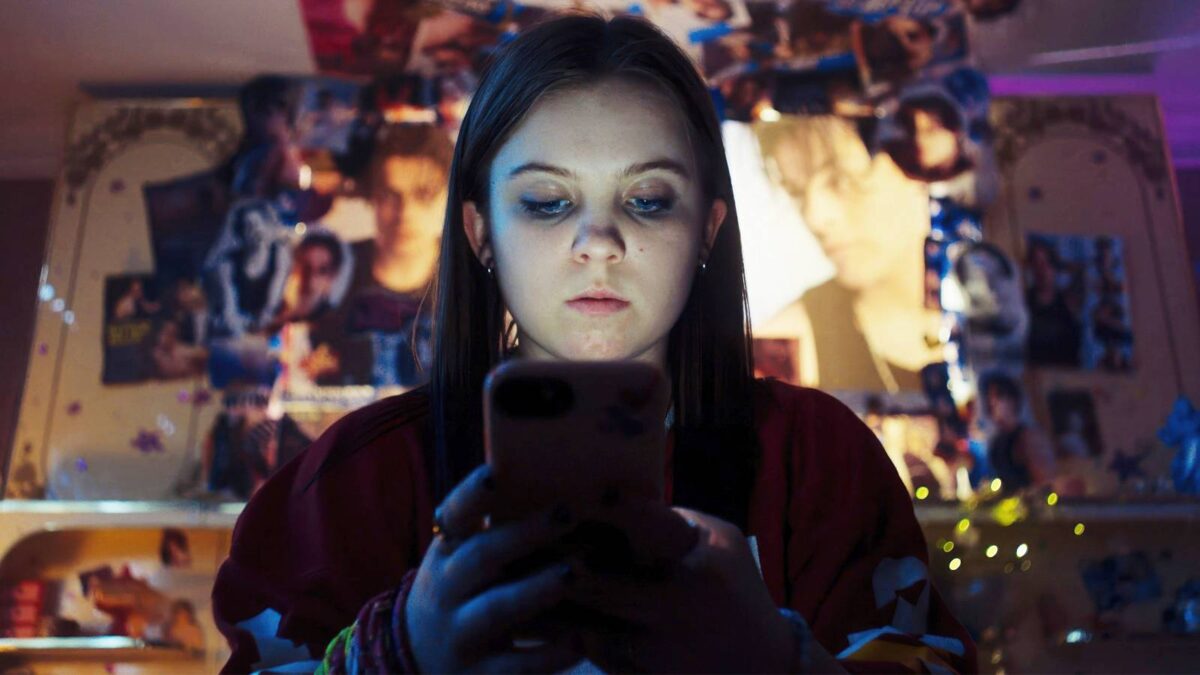
Rylee slightly smiling in front of her wall of photos of Payton.Image via Saban Films
How did you approach directing young leads, especially with emotionally intense material? HIGGINS: I appreciate you asking that question, because I did feel at times that I had, frankly, failed them. I think that there were scenes where it was really difficult, and I did not I wasn’t equipped to be honest to… There were scenes where it was really, really difficult for them, and I didn’t have the skills to bring them back. I would credit Amanda Brugel, who actually played Marnie. She actually gave me some of the better directing skills that I will take forward in my career, about just how difficult it is to go to those places, and I think that when you work with young actors, it just takes a toll. And I think that when you’re doing something on this scale, very quickly, an indie film, that kind of falls to the wayside. And then she was a reminder to me that these are young women. These are very difficult scenes. They are pulling from their darkest parts of their life, and we need to create space and give them grace, and also kind of be a therapist in a way as a director, and it was a big learning for me. I’m continuing to learn, and I don’t know all the answers, but it was beautiful to work with these young people. This movie rides or dies with Kate Hallett. When did you realize in the casting process that she was the one? HIGGINS: I need to give credit to my producer, Daniel Quinn, who’s here tonight as well, because he pointed her out to me. She was in Women Talking, and when we first spoke, and she read for the role, that was it. I mean, look at her face. She just won me over, and that was the first piece of the puzzle. So, she’s got a career ahead of her. I hope that you guys go and support her, because this girl was 19 when we filmed, and she held the weight of this movie on her shoulders. It was absolutely amazing to watch. One of the things that I commend you on is, and I think we’ve all seen it, where you’re watching a movie or TV show, and there’s someone who’s 35 playing 18. One of the reasons this works is because you believe that she’s a teenager. HIGGINS: Did anyone watch Degrassi? Because I’m from Canada, that was the show that was my benchmark for this. Everyone looks really young. And then on the opposite side was like The O.C. or something, where everyone looked really old. But, I thought it was really, really important that she felt young and looked young, and we were fully prepared to have to deal with horrible hours if we were actually casting someone who was underage. But then we found Kate, and she just looks young. And bless her heart, she can work adult hours. When I was watching this, I was expecting Herman Tømmeraas’ character to go after the underage girl, and what was refreshing was that that was not the case at all. Can you talk about not doing the convention that you’ve seen in a thousand films? HIGGINS: There’s a lot of things I didn’t want to do conventionally. I think that’s a story that should be told, and someone else will tell that. But for me, I really just wanted to stick to the fandom idea and give the Annie Wilkes-type character, the fan character, an empathetic eye, that’s not just that girls are crazy and that anyone who’s a super fan of anything is crazy. So that was my approach. And, yes, we definitely wanted to play it. I mean, Kat and I definitely played with that line when we were going into the car scene. We wanted to make everyone very nervous that something else was going to happen, and I hope that also makes everyone who felt that way examine why you felt that way. Why do we feel so nervous about Ben? We should feel nervous about men. They’re scary. Not you. Steve. [Laughs]
Payton handcuffed to a bed, turning to look over his shoulder at his pictures on a wall behind him.Image via Saban Films
Martin, how much time did you guys have to create the music and the songs? Can you discuss the behind-the-scenes of the music and making sure it felt like this is an up-and-coming rock star? MACPHAIL: Speaking of the development and the things that changed over the course of making this film, I’ve known Emma for a long time and we’ve worked on the film for a long time before we started shooting, originally it was going to be a pop punk band, so Floor Plan sounded more like My Chemical Romance or something, or maybe All-American Rejects is one of our early references for it. But then the whole Machine Gun Kelly thing happened, and pop punk kind of came back into pop culture in a way that wasn’t the right kind of throwback anymore. It felt like, “Oh, we’re trying to be really current with this sound.” So, it became a game of, as Emma said, calibration and figuring out how does this band sound in a way that’s going to make them sound current and exciting, but not like we’re just knocking on a specific genre or band. So that was really tricky, to be honest. We probably wrote like 30 songs for Floor Plan, and three of them made the cut. HIGGINS: It’s available on streaming right now. Go stream. We have an actual release of this album, which is fucking crazy. You can stream it on Spotify, Apple Music, or wherever the hell else you want to stream things. And we shot a music video for it, and it’s a secret band that Martin’s kind of behind, but we put Herman in front of. WEBBER: Black and Blue forever. HIGGINS: Black and Blue’s out on Friday. MACPHAIL: That’s right. It comes out on Friday. Which is the weirdest, most meta part of this process is that we created this fake band in the world of the film, and now, as part of the film release, a record label has signed that band in real life. So now they have a record deal, and the song is going to radio. HIGGINS: We got signed, everyone. We made it! What was your reaction when there was record company interest? HIGGINS: Martin wrote some good goddamn songs and Herman’s a sexy fucking front man. So yes, it made sense to me. MACPHAIL: Honestly, to put it in the most like marketing context possible, I think one of the reasons the interest came and people got excited about it was because of K-pop Demon Hunters working recently. So the idea of this fictional band also having a real-life hit song wasn’t that much of a stretch. So, yeah, how cool is that? We’ve got a record coming out. So how many songs are on the record? MACPHAIL: Just three. The three that made the cut. It’s just an EP, but they’re the three that you hear in the film. “Payback,” “Black and Blue,” and “Sick of It.”
Close-up of Payton singing into a microphone.Image via Saban Films
You came up with 30 songs. How brutal was the teardown to get to the three? HIGGINS: I called Martin, and I said, “You’re garbage and most of what you’ve done is garbage,” and then he cried for a while, and then we came to the three. No, frankly, it came to time. We had to record the songs before we got to camera, and we had three songs and three songs on stage, and that’s what you see in the film. MACPHAIL: But one thing to talk about the music for a moment as well, that I shouldn’t shortchange at all, is what Herman brought to this too. Because we started working on the music before that role was cast, and, as a composer who’s now creating a band in the world of the film, please tell me you’re going to cast a guy who could sing, because there’s only so much studio magic you can do if he’s not a vocalist. Turns out Herman is a wonderful singer. He does all his own singing in the film. A lot of that was his first take. He sent me demos that were like phone voice memos that, if they were on a better microphone, I could have used. So he’s got it. He’s got that magical talent, so he really made the band go from something that felt like a canned band in a movie. Now, it had this magical frontman presence and his vocal performance, which really made it into something special. I had no idea about this, and honestly, it’s cool.
Emma Higgins Admits She Was Too “Overindulgent”
“I think I was frankly scared to go in without it.”
Emma Higgins at the Sweetness screening.Image via Le Studio Photography
Given your limited schedule and limited budget, how did you figure out the scheduling? Did you try to film in order at all? HIGGINS: Liv can talk to this. We were at the whims of what was available to us. We did not have the money. We were a very, very small-budget film. The only reason this looks halfway decent is due to the love that everyone put into this. We had the most dedicated crew in the world, but we were fine by whatever was available to us, and it was challenging, and we had to make a lot of drastic changes, even during production, to make things work. Kat and Emma, I love talking about editing because it’s where it all comes together. So talk a little bit about the way you guys collaborated in the editing room and finding things that you didn’t maybe think you shot on the day, and all of a sudden realized, “Oh, that is perfect for that.” HIGGINS: Well, Kat and I have been working together for over ten years, and so I trust her so very, very deeply to look at performance. And she was beginning the edit while we were still shooting, and she and I would have conversations about what we still needed. Kat is an incredible, incredible artist. She’s also a director in her own right and knows story; She knows character, and she deserves all the accolades tonight as much as anyone. She made this film. I can’t express how much we changed in the edit. I love you, Kat. WEBBER: I love you so much, you have no idea. I mean, I read this film, the first iteration of the script, over ten years ago, when Em and I were working on music videos together, and we both had this dream to make movies and move to L.A. and I read the script ten years ago, and to be seeing this movie… having people see this movie, this is just such a heartwarming experience. In terms of the edit process, there’s the script that’s written, the script that’s shot, and the script that’s finished in the edit. There’s obviously so much amazing things from the script that was written, it made it to the final picture that you see tonight. For example, the opening scene, we decided on that in the edit. We were throwing around a few different endings and it’s a lot of trust and following our impulses and trying to make the best movie that we can make.
Kate Webber discusses Sweetness at the Collider Q&A.Image via Le Studio Photography
What did you guys learn from some friends and family screenings that impacted the finished film? HIGGINS: That’s where we found what worked and what didn’t. And I will actually say that there was a lot of people in the audience tonight who gave notes. I can see some of you around here who screened the film and gave us notes, and it was incredibly important because we’re too close to the page sometimes. I’d like to do even more of that. You know, Kat and I are locked in our, what we call, the goblin cave, which is where we would edit, and we were very close to it. Can you be specific in terms of what changes you made or lessons you learned? Or did you just learn, “Oh, it’s working”? HIGGINS: No. Hell no. We learned that it wasn’t working a lot of the times. I feel like we learned that there was just things that we didn’t need. I mean, it was my first film, so if I’m being very honest, I think I was overindulgent in a lot of things.
Sweetness director Emma Higgins on stage for the Collider Q&A.Image via Trent Barboza
I’ve never heard that from someone who’s directing their first feature. Never. HIGGINS: I thought I needed all these things. People told me to cut stuff, and I learned that I didn’t need all that extra flowery business that I needed. So, it was a good lesson. I think I was frankly scared to go in without it. I thought we’d we would need it, and, friends, family, thank you for telling me to just cut it and get to the good stuff. WEBBER: I think one really cool thing that Emma did was when we came into this, and I know that she had this in production, too, she had a Sweetness manifesto, and we put it on the wall and had certain phrases, which I’ll let her speak to her favorite ones. But we would add to them. So, you know, we had certain phrases that were kind of this manifesto of how we’re approaching this film, and then as we would share it with friends and family, we would add to it. And one of them was, ‘Don’t be afraid, don’t be scared.’ Like, go there, go big, and I feel like that one really helped us just kind of get out of our own indie debut, first-time filmmaker feel, and just go for it. We had this list of things that we could return to. Another thing that we did is we printed off every scene and had, across one huge wall in the edit suite, every scene. And we would rip it down, we would write, ‘What does the audience feel in this moment? What does the character feel in this moment? What is this serving the movie?’ And if it wasn’t giving us one of those things, if it wasn’t making the audience feel something, if it wasn’t serving the character, if it wasn’t serving the movie, wasn’t moving it forward, we would rip it off the wall. That tangible, visceral edit really helped us kill our babies and take it from that script to the next place. SWAYZE: I would say a more specific note that we got a lot is to stay on Kate, which obviously you see throughout the film, which worked amazingly. But there was definitely different edits and different cuts where we could have held on Payton more or given him more of a story. But at the end of the day, it’s really Kate’s story or Rylee’s, I should say. And I think that that shines through the film and was a really good decision that we made in the end, because as we said earlier, she carries the film. I mean, everyone’s performance in this film is amazing, but Kate’s is just out of this world. She’s going to do amazing things in her career, and consistently we got, “Stay on Kate more, stay on Kate more.” Because that’s the story we want to know, and that’s the story that’s on the screen today.
The ‘Sweetness’ Team Didn’t Expect the Movie To Be So Funny
“There’s this kind of underlying humor that was a new tone that we played into a lot in post.”
Sidney kneeling by a bed screaming, with blood coming from her nose.Image via Saban Films
Which performance or moment in the movie surprised you the most in post-production? WEBBER: What comes to my mind is Aya’s [Furukawa] nose bleeding, beautiful, expressive, “I fucking told you!” It’s this character that has kind of been a ride or die for her best friend. And every turn is just like, “What are we doing? Okay, okay.” And then every breaking point of, like, “I fucking told you.” It crosses the line of just relatable and camp and genre and fun. I feel like that was a quotable moment. I feel like there’s so many, but that one is the one that comes to mind. HIGGINS: Or when Kate says, “Just don’t look.” And she’s got these big eyes, and you’re like. “Oh my God, this woman’s dying beside you!” WEBBER: Or Peyton: “This isn’t love.” I feel like that’s one we all quote all the time, right? HIGGINS: It helped us find the tone of the film, which is a little on the line of humor and weird. WEBBER: To answer your question, I think that’s what surprised us the most in post was the humor in the movie. It’s this really dark film, and a lot of dark things happen, but there’s this kind of underlying humor that was a new tone that we played into a lot in post. Talk about the production challenges that every film has to overcome, and what were one or two things that you had to solve? SWAYZE: As Emma mentioned earlier, money was tight obviously, indie budget, and time as well because it all relates. HIGGINS: Every day I would wake up in terror at how I would accomplish the day. Terror. SWAYZE: I think, every single day, trying to get as much as we could in the day. It’s the biggest struggle constantly, and making sure we don’t go over time and get as much as Emma needs to craft the story, it was definitely a day-by-day situation. Like Emma said earlier, again, schedules shifted by day, scenes were cut by day. Honestly, it was like after every day we wrapped, we’d have a meeting and we discussed how the next day’s going to look and that the night before would get cut. We were just going by day by day and figuring out what’s most important to story, what’s most important to Emma, and how she wants to communicate the story. It was really just like we were flying every day. When you have a limited schedule, limited budget, were you allowing yourself sometimes to get five takes, or were you like, “We got two takes, and we got to go”? SWAYZE: I’d say again, maybe in the beginning, the first few days, we maybe took more of our time and then we learned that that wasn’t the best use of our time. So we adapted every day. Every day we switched it up, and it really depended on each scene. Some of them, we’d have to be like, “Emma, this is like your last take.” Some of them, we got to have more leeway. It kind of changed day by day. Honestly, it’s different every day.
Olivia Swayze speaking on stage at Collider’s Sweetness Q&A.Image via Le Studio Photography
If you’d had more time, what’s one part of the film that you would have expanded on or spent more time on?
SWAYZE: Well, the thing is, we actually shot so much that’s not in the film, you know what I mean? That happens with every film, obviously. But we shot so much more than what you see on the screen, honestly. We fit as much as we could in those 18 days. It was a mission. I feel like Emma, you could speak to that better if there was something maybe you want to dive deeper into. HIGGINS: I know my personal things, but I won’t bring them up. They’re for me. When you’re getting ready to do the final edit, what was the last thing that you guys cut out before picture locking, and why? HIGGINS: Good question. There was a different ending. Radically different? HIGGINS: No, no. There was a bit of a different ending. It’s tough. There’s no right answer. I think the one thing that we learned from this process was that there is… and it’s fucking scary. I’m sure there’s filmmakers in the crowd too, who, it’s just really, really scary to be here and have to defend your choices and have to defend what you did. At the end of the day, you’re taking accountability for this choice, and I did feel like there were things that it would work both ways. It would absolutely work both ways. And there is a lot of opinions on that. But I had strong feelings about things one way and that’s where I had the support of producers and our financiers, who actually gave me the final cut on this film. So that’s where it wound up. And, if you fucking hate it, then that’s on me, and I apologize. [Laughs] WEBBER: But you got the movie that Emma wanted you to get, which I think is such a beautiful thing and doesn’t always happen in this art form. So that’s really cool.
The ‘Sweetness’ Team Dish On the Difficult State Indie Filmmaking
“It’s so, so hard right now for indie films to get noticed.”
The creative team behind Sweetness on stage for Collider’s Q&A.Image via Trent Barboza
The movie got such a strong reaction at South by Southwest last year. What did that mean to you, even just getting into the festival? HIGGINS: That was life-changing to get into South By, because I had so much anxiety, especially being not from this country. There’s this feeling of this clique, like, how do you break into fucking Hollywood? So, I felt like everyone was like, “Oh, you need to know somebody, and that’s how that works.” But we truly just applied to South By, and they let us in on the merit of the film, and we’re incredibly supportive. And it has led us to being here today in this incredible way. It felt very nerve-wracking, but also beautiful because the exact same thing I said in my intro, we found the people who like the same thing I like. So it was a great journey. A lot of these festivals, such as South By and Sundance, say they want to support indie filmmakers. But the truth is, it’s the stars that walk the carpet that get people to sponsor. So it is really a finite, small amount of real indie movies that get in and get the golden ticket. The fact that you were one of the few who got that golden ticket says a lot about the quality of the movie. HIGGINS: Yeah, it’s fucking crazy. It’s so, so hard right now for indie films to get noticed, and I couldn’t get giant stars in my movie, and it was a huge part of the process, too. If you’re trying to get financing, everyone’s like, “Great, we want to finance you. Can you come back to us once you have Ryan Reynolds and Nicole Kidman in place?” I didn’t have the clout to get that. So it’s impossible to get that made. So you make the film with the best actors, and we had great fucking actors in this film. No, they’re not stars yet, but they will be stars. Mark my words. They are absolutely fantastic talents. And we made a good movie despite that. Thank you to this festival who gave us a shot. Did some of the money come from the Ontario Film Fund? HIGGINS: Yeah. So we had three funding bodies. It was Telefilm Canada, the Ontario Film Fund, and then we also had the Northern Ontario Heritage Fund. So we had three different funding bodies. Thank you so much to our funding partners because we are, again, a Canadian film, and without that funding, those first dollars in, that’s what allowed us to exist. How did you connect with Saban Films and have them pick up the movie? HIGGINS: It was at South By. I need to give credit to them because they came to us with a beautiful pitch for marketing, and they seemed to understand the film. And Heather, especially, who is here tonight, she understood what we were trying to make, and I that was the whole thing I was wanting to do was make sure that we were getting this film marketed in the right way. We all love Jennifer’s Body, right? And we remember in 2009 when it was marketed terribly, and no one went to go see it, and then it became this cult classic. So we needed to just market it correctly from the get-go. And that’s what Saban came to us with, was the correct understanding of the film.
Related
‘Jennifer’s Body’ Is Horror at Its Most Emo
Everyone remembers ‘Jennifer’s Body’ as a modern horror-comedy classic, but it’s also a masterpiece of the mid-2000s emo subculture.
Is there anything that you would like to share to fans of the film that they might be surprised to learn? Any cool behind-the-scenes facts, any Easter eggs? HIGGINS: There’s so many things. Okay, there’s some little ones. I’ve talked a little bit about Payton’s tattoos as being homage to certain favorite movies. If you look closely, you might put it together. It’s very niche. There’s like a nod to a Canadian band. MACPHAIL: That was going to be mine, that was my Easter egg! HIGGINS: So the tattoos and… that’s it. MACPHAIL: Yeah, here is a specific Canadian emo band. I grew up playing in bands, which is why making the band in this film was so fun. But we toured with this band. They’re a band called Ten Second Epic. They made emo pop punk music, and we love them. And actually one of the songs that made it in the film, originally, we were planning on being a Ten Second Epic cover, which we tried a bunch of versions of and never quite clicked. So we ended up writing an original song. But there’s still one lyric that stayed in there as a tribute to Ten Second Epic, which is “You don’t deserve to be unnoticed.” HIGGINS: It’s my first music video I was ever on. I was 15 years old. That wasn’t mine. Mine was going to be on the church. There’s a the church in the film is called Our Lady Peace. MACPHAIL: Oh, hey, that’s a good one. You guys know Our Lady Peace? WEBBER: I have a quick one. I feel like Em and I, every Friday in the edit suite we would do screenings of different films to kind of unlock the tone and stuff. HIGGINS: We would also do mushrooms. [Laughs] HIGGINS: One of them was the movie Teeth, and there’s a song when she’s walking down the hallway after… I don’t know if you remember the walking down the hallway moment in her school, but there’s a song by Dana Dentata called “I.U.D.” Sweetness is nowavailable on digital and on demand.
Release Date
February 13, 2026
Runtime
93 minutes
Director
Emma Higgins
Writers
Emma Higgins
Producers
Daniel Quinn, Taj Critchlow
Publisher: Source link



Stephen Curry’s Inclusive, Richly Animated Basketball Film Soars Above its Conventional Rim
Certain sports film formulas are formulas for a reason. There's the story of the underdog who defies all odds (Rocky), the story of the aging veteran who beats back father time (The Wrestler), the story of a plucky athlete with…
Feb 15, 2026
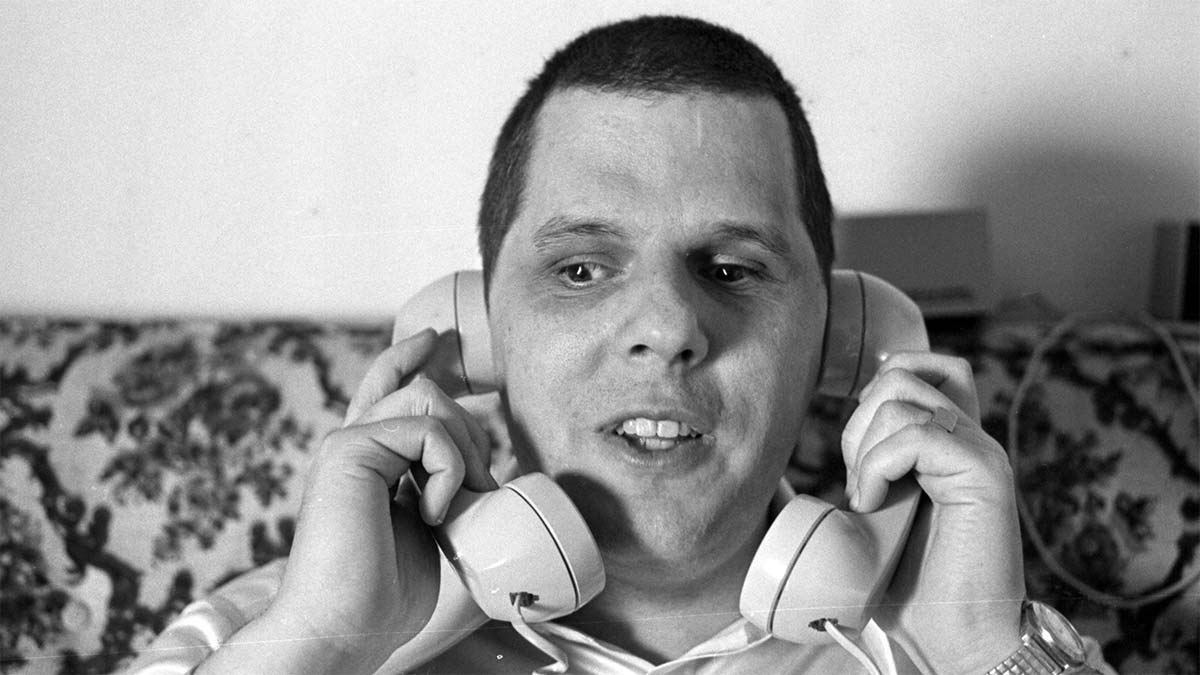
What Appears To Be A Look At An Early Hacker Hides Much, Much More [Sundance]
A documentary titled “Joybubbles,” with a premise focused on someone with a unique physical trait that, when applied correctly, can cause more than a fair amount of shenanigans. A life story just as fascinating. Where to begin? Captain Crunch, aside…
Feb 15, 2026
The Harsh Realities of Peak Millennial Activism
Imagine this: After months of finally coming to the conclusion that you want a divorce, you lay it out for your spouse, and then the next morning, Russia invades Ukraine. Okay, sure, perhaps if you don't live in Eastern Europe,…
Feb 13, 2026
In Case You Forgot, Climate Change Sucks
In the northern corner of the Canadian province of Manitoba lies the small town of Churchill, colloquially known as the "Polar Bear Capital of the World." Here, polar bears have become a common part of everyday life. Tourists come to…
Feb 13, 2026