A Meditation On Non-Linear Time Hiding Inside A Touching Family Drama
Jan 27, 2024
Summary
Tótem uses intimate camera work to study the actors, capturing their emotions and creating a child-like perspective. The film explores the dynamics of a family gathering, highlighting how each member copes with a loved one’s impending death in their own way. Time is a central theme in Tótem, portrayed as a spiral in Mesoamerican civilizations, and the film examines how trauma and grief can shape future generations.
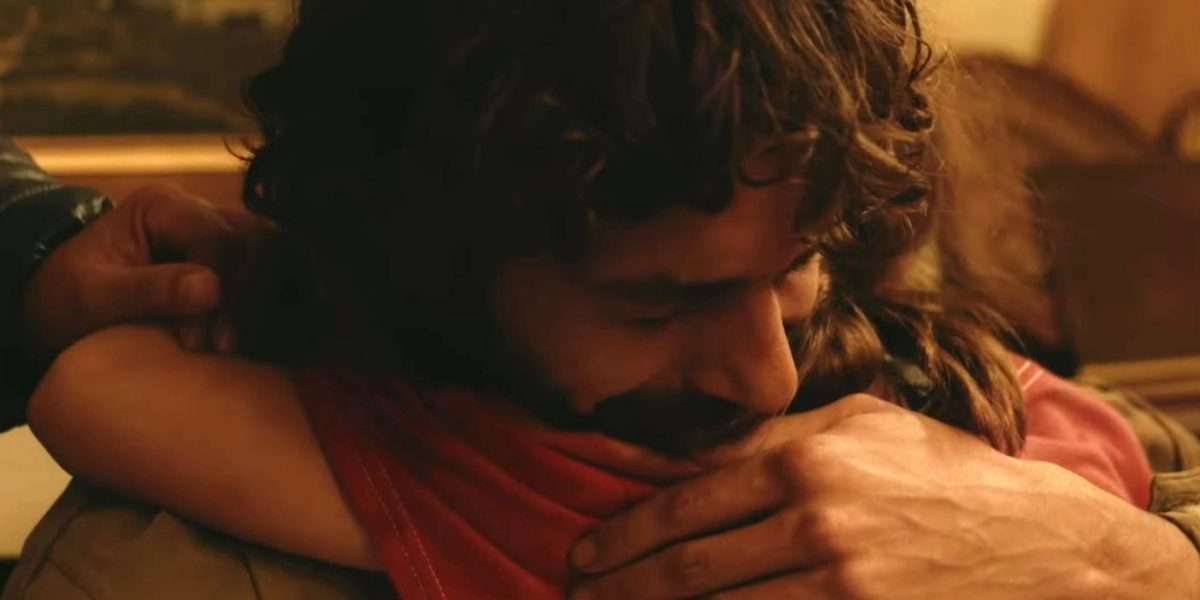
With the opening scene of Tótem, Mexico’s selection for the 96th Academy Awards, writer-director Lila Avilés subtly teaches us how to watch her film. Seven-year-old Sol (Naíma Sentíes) and her mother Lucía (Iazua Larios) are in a public restroom, practicing a song they’ll perform at a party that evening. Sol takes so long on the toilet that Lucía resorts to peeing in the sink, sending her daughter into a fit of giggles. It’s a loving, private moment, and the camera is intimate with them, interested chiefly in their faces.
In the car afterward, Sol insists they hold their breath and make a wish as they pass beneath a bridge. Lucía playfully indulges her, even saying, once they’ve exhaled, that her dream will surely come true. But when Sol says she wishes her father won’t die, her mother’s face falls. The stakes are clear now; despite Sol’s colorful clown wig and the balloons behind them, this occasion is not purely joyous. The young girl’s belief in things like wishes may not survive the night.
Directed by Lila Avilés, Totem is a 2023 Drama film that follows a young girl named Sol who spends a day with her grandfather. Sol, expecting to celebrate her grandfather’s birthday, soon learns as night falls that he may be passing shortly, leaving her to bear witness to the emotional turbulence of grief and acceptance through her family.
Tótem’s camera is always studying the actors, exploratory and intrusive in the manner of a child’s perceptive gaze.
To Get The Most Out Of Tótem, Pay Close Attention
From there, we know how best to pay attention. Avilés hid a touch of foreboding in their dialogue, revealing that their song, which a woman madly in love sings to the heavens, is part of a story that sees her suitor come to harm. That reference to legend and Sol’s invocation of superstition swirl together with the otherwise mundane, familial scene, and when the tone suddenly turns sullen, that feeling lodges in your stomach. New elements will be added to that mixture, even in lines that seem tossed off, and the more closely we listen, the better we understand.
Sol and Lucía’s early emphasis on performance is also instructive. Tótem’s camera is always studying the actors, exploratory and intrusive in the manner of a child’s perceptive gaze, but the prologue’s emotional shift lets us know the characters are acting, too, especially around Sol. Family and friends are gathering for her father Tona’s (Mateo García Elizondo) birthday, but he is very sick with cancer. There’s a prevailing sense this trip around the sun may have been his last. How and when his loved ones show their feelings is one of the movie’s primary interests, and thanks to some savvy filmmaking, one of ours as well.
While it’s on, the film feels so grounded in this moment with these people, but its scope gets more and more sprawling as it decants.
Once Sol arrives at the family home, more nuanced dynamics come into play, and Avilés is always giving us new pieces of the puzzle. Not everyone is behind this party: Aunt Alejandra (Marisol Gasé) is the driving force, and some even believe it comes at Tona’s expense. Aunt Nuri (Montserrat Marañón), whose attention is always partially on her young daughter Esther (Saori Gurza), is overwhelmed by it all. Sol’s grandfather (Alberto Amador) strongly objects, while Uncle Napo (Juan Francisco Maldonado) seems to just go with the flow.
Each is processing Tona’s illness in their own way. Alejandra leans spiritual, bringing someone in to cleanse the house of evil presences, but she is also the most focused on the impossible expense of Tona’s care. Nuri pushes for more scientific intervention, and seems the least accepting of his approaching death. Napo takes a New Age view, entering the movie halfway through because he was set on getting organic foods and having everyone collectively meditate on his brother’s healing. These all contrast with scenes of Tona with Cruz (Teresita Sánchez), his carer and Tótem’s most empathetic presence, that ground his health in medical reality.
In Tótem, Time Secretly Shapes Everything
Naíma Sentíes and Iazua Larios in Tótem
Add to these the overwhelming presence of animal life, art (Tona is a talented painter), and the introduction by party guests of Indigenous tradition’s non-linear understanding of space-time, and this family home seems to contain the entire world. While it’s on, the film feels so grounded in this moment with these people, but its scope gets more and more sprawling as it decants. To account for everything that registers as meaningful or is deserving of critical notice would require more space than I have here.
But time is worth dwelling on. For Mesoamerican civilizations, we are told, it can be thought of as a spiral — every new point on the timeline seems like a cyclical return, and vice versa. A birthday, say, is the same every year, and yet no two are exactly alike. This idea is central to Tótem. Sol’s grandmother died of cancer years ago, in the very same room Tona currently occupies. It’s possible to read his and his siblings’ choices as driven by their desire to make something about it, whatever has stuck with them, different this time.
And not only different for themselves. This may be Sol’s first time grappling with a parent’s likely death, but from her family’s perspective, the same trauma is reappearing in a new generation. As we see how their scars shaped their behavior, we are led to wonder how she will come away from this changed. I’d argue the movie’s ending offers us an answer, but if not that, then certainly a desire to understand in that way. That feeling has motivated me to keep poring over Tótem, and anyone who sees it would do well not to let it go too quickly.
Tótem opens begins a limited theatrical release in New York on January 26 and in Los Angeles on February 2. The film is 95 minutes long and is currently unrated.
Tōtem Director Lila Avilés Cast Naíma Sentíes , Monserrat Marañon , Marisol Gasé , Saori Gurza Runtime 95 Minutes Writers Lila Avilés Studio(s) Limerencia Films , Laterna Film , Paloma Productions Distributor(s) Alpha Violet
Publisher: Source link






James Gunn Officially Addresses Hal Jordan’s Shocking Fate on ‘Lanterns’
This article contains spoilers for Lanterns.Lanterns is a new series set in the DC Universe, an interconnected network of TV shows and movies based on DC Comics. The show follows veteran Green Lantern Hal Jordan (Kyle Chandler) as he trains…
Sep 23, 2026

Jon Hamm’s New Crime Thriller Streaming Hit Has a 90% Rotten Tomatoes Score
Jon Hamm remains the undisputed king of TV, as his latest crime thriller has a knockout Rotten Tomatoes score and is currently one of the biggest shows on streaming. When Hamm first played Don Draper in Mad Men way back…
Sep 22, 2026

Alan Ritchson’s New 8-Part Action Thriller Lands Solid RT Score While Dominating Streaming
Alan Ritchson has, somewhat quietly, become one of streaming's more dependable stars, which is not necessarily where you would have expected his career to land back when he was doing Smallville supporting work and Blue Mountain State. Reacher turned him…
Sep 21, 2026

HBO’s Harry Potter Reboot Is Officially Ditching the Most Iconic Part of Daniel Radcliffe’s Era
This December, audiences will be transported back to the Wizarding world of Harry Potter. Of course, those born in the mid-to-late '90s will have fond memories of the movie franchise. Starring Daniel Radcliffe, Emma Watson, and Rupert Grint as Harry,…
Sep 20, 2026